 SUNSET:

 0
0From pizza “flavor zones” around stars to therapy sessions for black holes, astronomers are in fine form on this April 1st.
It’s not a prank — NASA really is (finally!) set to launch Artemis 2 with a launch window opening this evening at 6:24 p.m. EDT to send four astronauts on a roughly 10-day journey to the Moon and back. (Stay tuned to S&T for a comprehensive post-launch look at the mission.)
Meanwhile, us Earthbound space geeks are up to our usual April 1st hijinks, taking a moment to poke some good-natured fun at research culture and dream up more imaginative (and even tasty) approaches to our day-to-day study of some of the greatest mysteries of the universe.
Aside from being a good laugh, April Fool’s papers are a peek into how astronomy research works—while a paper speculating on how close to a star you’d need to be to cook a frozen pizza may never make it into professional journals, it uses the universal lure of pizza to make sense of concepts like stellar flux, the habitable zone, and transit geometry.
These groundbreaking works gather under the masthead of the prestigious “journal,” Acta Prima Aprilia and show up late on April Fool’s eve on the astronomy arXiv preprint server. In recent years, the grad-student-run blog Astrobites has taken up another step in the academic publishing process, providing serious(ly funny) reviewer comments for a number of these April Fool’s papers.
Here are some of my picks for the best April Fool’s papers to hit the arXiv this year:
“On the Detection of Digiorno-like Objects in the Flavor Zone”
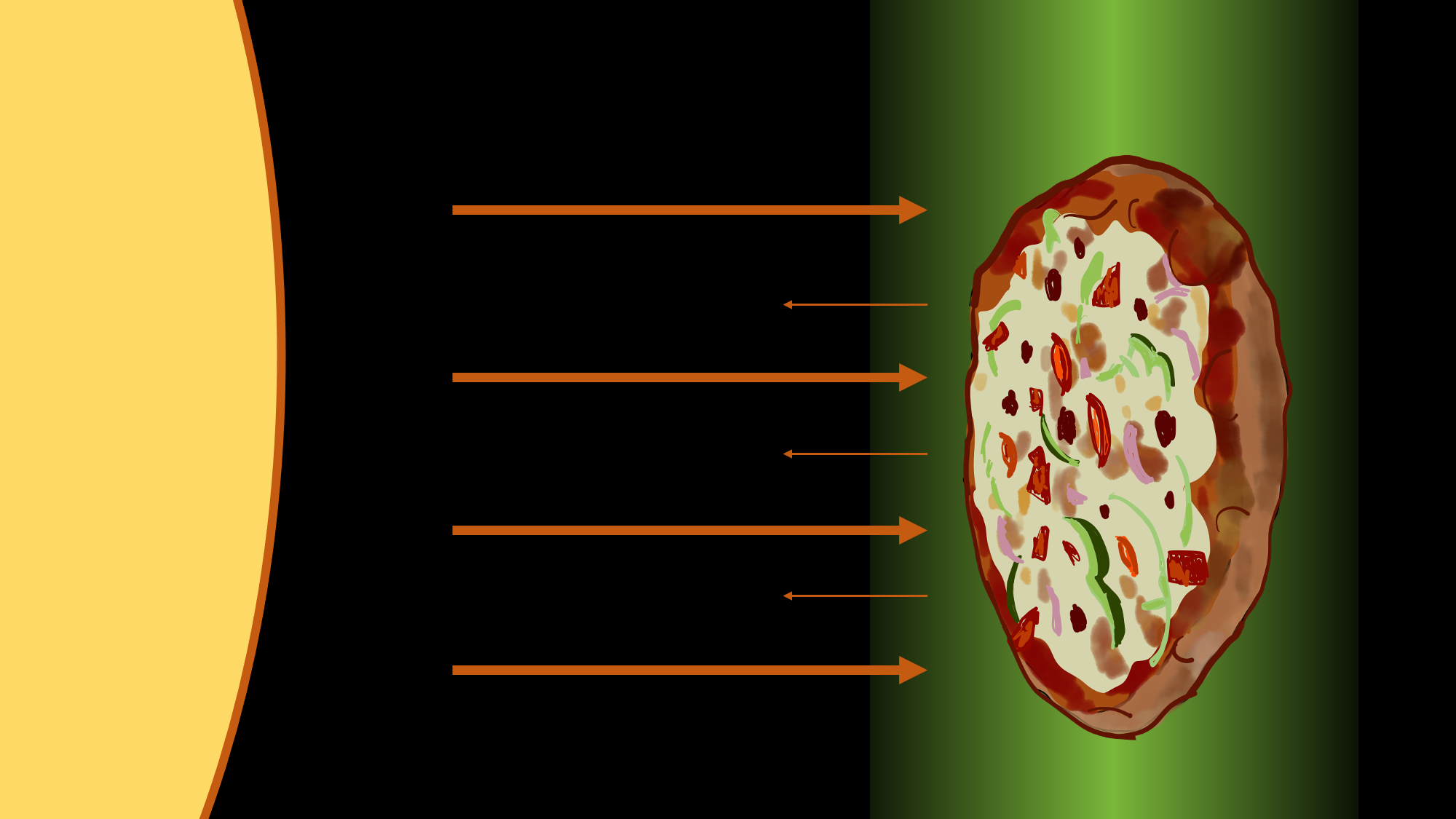
This was one of my top picks because, like many grad students, I love pizza — but also because of its rigor! For several nearby stars, the authors calculate the Flavor Zone—a play on the habitable zone around stars where liquid water could exist on rocky surfaces. But in this instance, flavor zone refers to the optimal distance from the star for cooking frozen pizza. The researchers also outline what observing resources would be needed to detect a Digiorno-like Object in orbit around one of these stars. My only critique would be that they missed the opportunity to make a “It’s not (ice and dust) delivery—it’s Digiorno(-like Object)” but maybe that joke’s too cheesy…
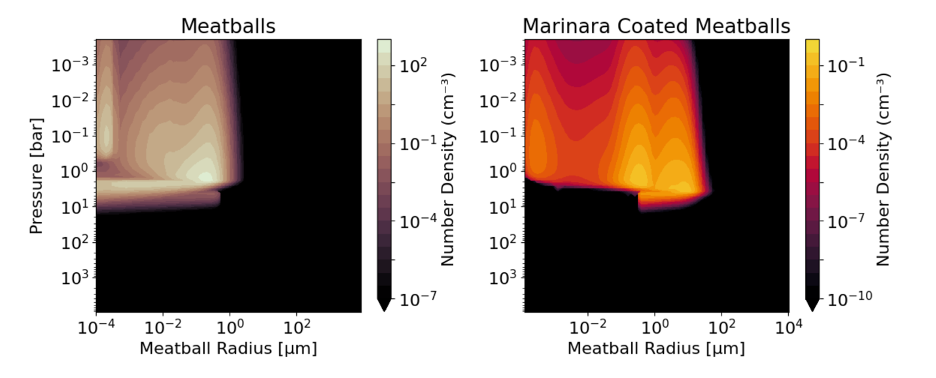
“Cloudy With a Chance of Meatballs”
This paper takes the proposition of the beloved children’s book to its natural scientific conclusion—carefully modeling what the atmosphere of a planet would look like if it’s primarily composed of meatballs (marinara sauce optional). The premise of this paper also maybe pokes fun at the many papers which have used this title format to report results on exoplanet atmospheres. The paper is one of my favorite kinds, combining theory with empirical measurements. It doesn’t hurt that, in this case, the empirical measurements involve making meatballs.
“A Therapy Session with Sgr A*”
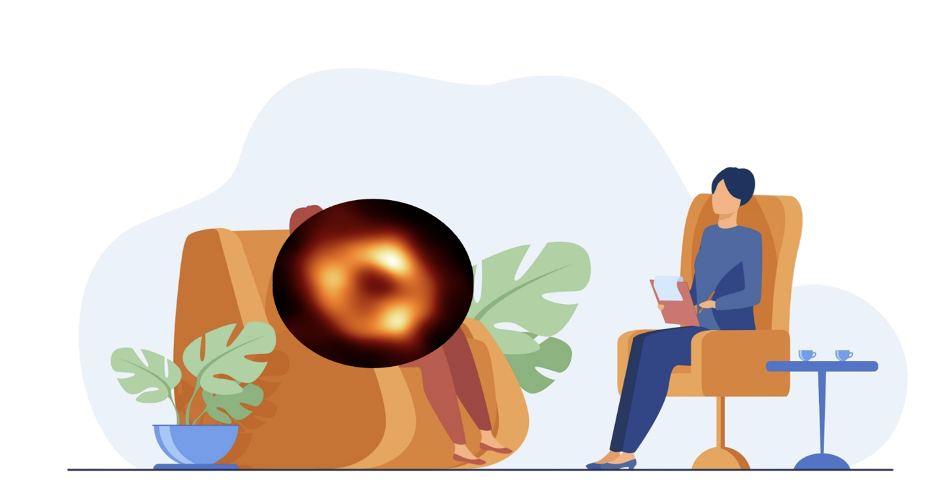
Everyone’s always asking “What’s Sgr A*?” but no one ever asks “How’s Sgr A*?” As a big fan myself of both the benefits of talk therapy and the supermassive black hole at the center of our galaxy, I was ready to hear what its thoughts were on its relatively recent (in the latest 1-billionth of its lifespan) rise to fame here on Earth, and I was not disappointed. Sgr A* has some thoughts and is not afraid to share them.
One such quip referred to the 2023 Event Horizon Telescope image that brought this glorious space donut to our eyes: “The only place I am not intruded upon is my event horizon. And you had to go ahead and build a planet-sized telescope array to get to it.” Fair point! Seems like even if you’re the center of the galaxy, you may not always want to be the center of attention.
“No Hair but Plenty of Feathers: Are Birds Black Holes?”
Astronomers often refer to the characteristic shape of the gravitational wave measured from the merging of two black holes as a “chirp” because of how it sounds when shifted into the range of audible frequencies. The authors of this paper draw a straight line between gravitational-wave chirps and another, similar-sounding chirp of a more familiar kind — from bird, who may or may not be doing this chirping at 3 a.m. I enjoy this kind of playful conspiracy-crafting so much, especially because the authors are committed to (1) being suspicious of birds and (2) adhering to the conventions of gravitational-wave studies.
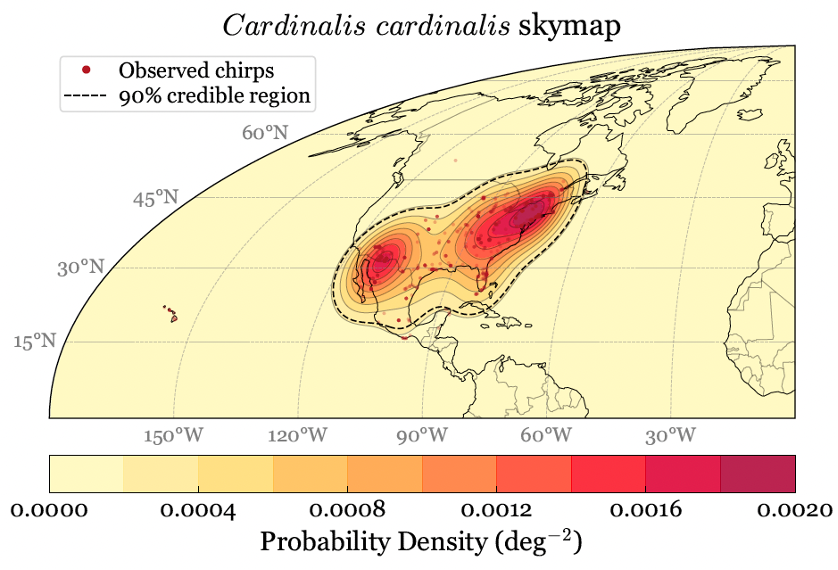
By far my favorite plot was the sky map of chirp observations for Northern cardinals, which mimics the more typical map of where the sky a gravitational-wave signal is coming from based on the triangulation of multiple detectors. Here, the map is localized on regions of North America rather than somewhere out in space.
Now every time I hear a cardinal chirping outside my window, I’m going to wonder whether it’s actually a black hole merger I’m hearing.
Bonus ancillary paper: “Do Papers with Titles Ending in a Question Mark Usually Have the Answer ‘No’?” I think this paper could be the exception that proves the rule.
“Your Outie Is a Wonderful Astronomer: Macrodata Refinement of the Astro-ph ArXiv Feed at Phermon Industries”

While I haven’t seen Severance, I have heard enough colleagues gushing about it and its humorous approach to work-life balance in a near-ish future to not be surprised that it showed up on April Fool’s. This paper is both a love letter to the TV series’ blithe-yet-unsettling corporate slogans of happy “innie” employees and benevolent, all-knowing managers, and to the Ohio State University’s lively Astro-Coffee discussions, in which graduate students, postdocs, and faculty present and discuss recent papers posted to the arXiv. This construction offers an acknowledgement of the unspoken overwhelm many astronomers experience when trying to keep up with the daily churn of new papers on arXiv.
Perhaps more deeply, it uses the Severance narrative to actually model what unseen roles AI agents could (and in many cases, already do) play not only in the everyday tasks but also in the big-picture thinking of today’s astronomy research.
Many more April Fool’s papers await on the arXiv, touching on everything from cryptocurrency to vampires. Every year, I love scrolling through them and delighting in how much curiosity and creativity there is in the astronomy community.
P.S. One more paper for the road—a tasty cookie recipe that will test your knowledge of units and measurements. (How long is 1.4 femto-Hubble times? Asking for a friend.)
About Natalia Guerrero
Natalia Guerrero is a graduate student at the University of Florida in both the Astronomy department and the School of Art+Art History. She studies exoplanet demographics and makes performance art which questions and subverts the norms of academic culture.


Comments
You must be logged in to post a comment.