 SUNSET:

 0
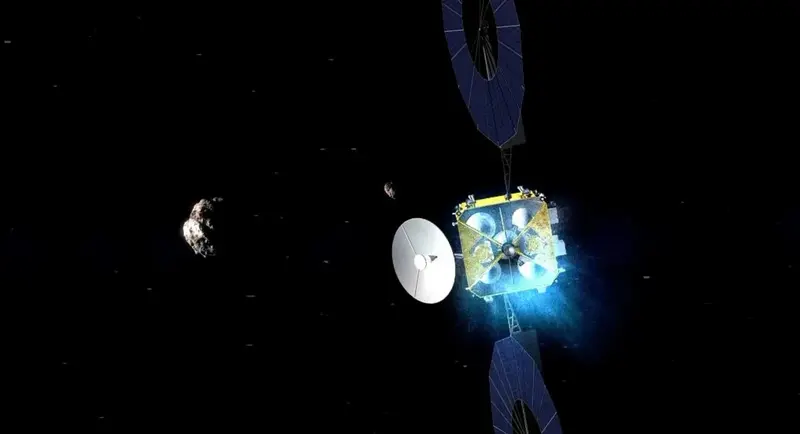
0China joins the asteroid sample return game, with the ambitious Tianwen 2 mission.
China National Space Administration
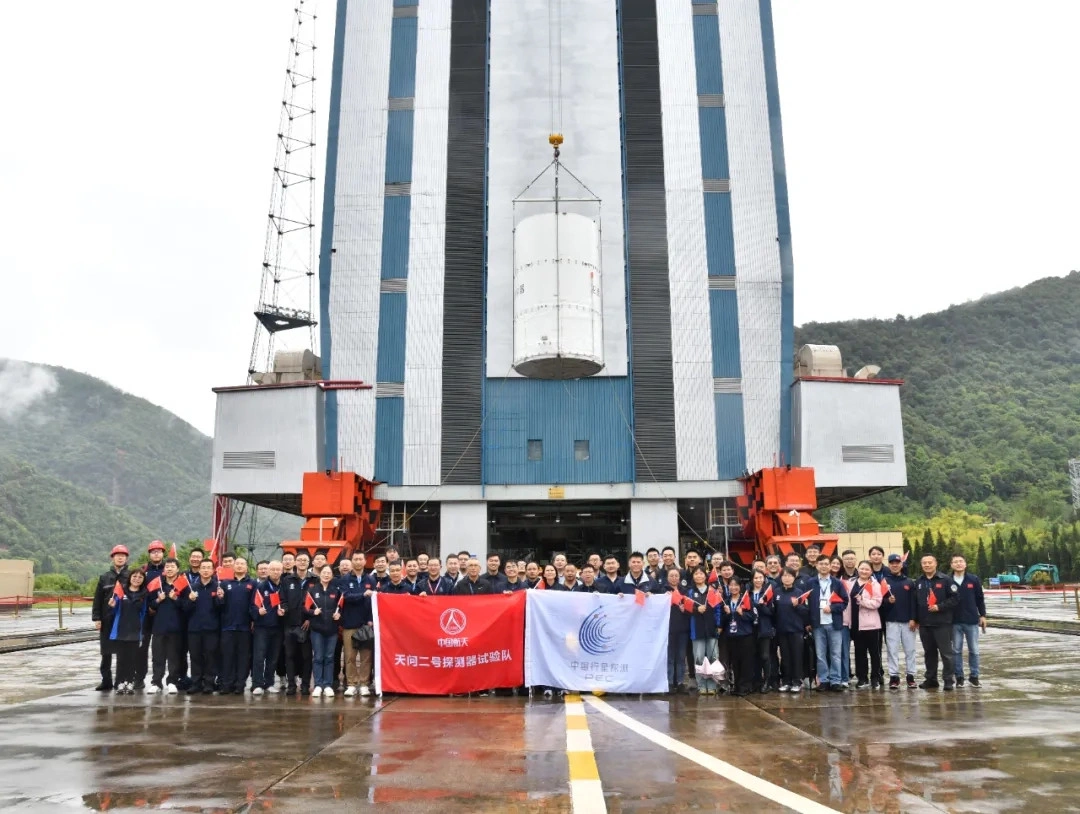
China’s first planetary exploration mission of 2025 lit up the morning skies early Thursday morning (1:31 a.m. local time) with the launch of the Tianwen 2 asteroid sample return mission. The mission launched on a three-stage Long March 3B rocket from Xichang Space Center in Sichuan province.
Launch: m.weibo.cn/u/7604660608...
— Andrew Jones (@andrewjonesspace.bsky.social) May 28, 2025 at 1:56 PM
The mission name Tianwen means "Questions to Heaven"; it was previously title Zheng He after a famous 15th-century admiral and explorer.
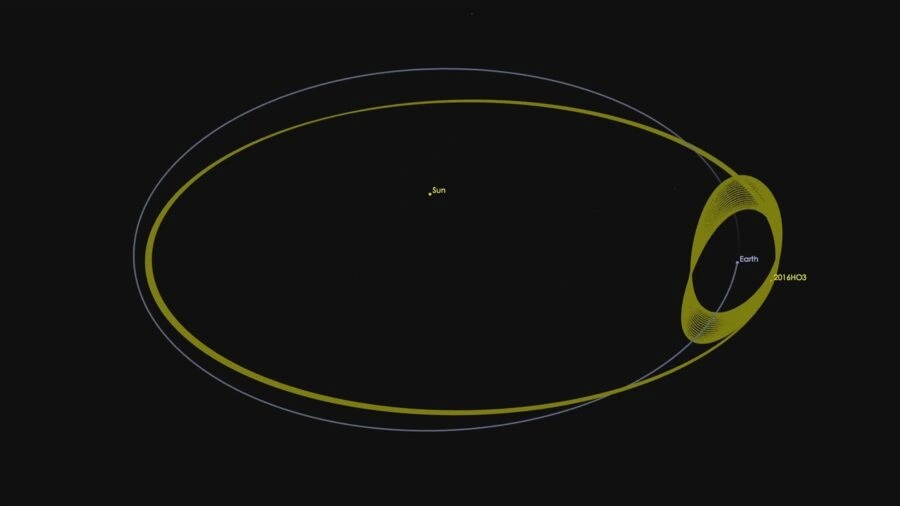
The primary target for the mission is the asteroid 469219 Kamoʻoalewa. Discovered by the PanSTARRS telescope on the Haleakalā summit on April 27, 2016, Kamoʻoalewa means "oscillating fragment" in Hawaiian. The asteroid is an intriguing object, as it’s thought to be a fragment of the Moon due to its resemblance to weathered lunar rocks. Recent studies suggest that the source for the object may have been the farside lunar crater Giordano Bruno. The object thus may represent a source of near-Earth asteroids that scientists hadn't previously considered.
NASA / JPL-Caltech
If not from the Moon, Kamoʻoalewa might instead be a main-belt asteroid that somehow migrated into a semi-captured orbit near Earth — still a fascinating possibility. The asteroid is between 40 and 100 meters (130 to 330 feet) across, making it the smallest asteroid to be visited by a space mission. It’s also the fastest rotator yet visited, with a rotation period less than 30 minutes long, presenting another challenge for the China National Space Administration (CNSA) team.
CNSA
The mission will not only circle the quasi-moon, but land on it and collect a sample. “The sample returned to Earth would help clarify the origin of Kamoʻoalewa and in particular it should give an answer to whether it originated as lunar ejecta or not,” says Marco Fenucci (European Space Agency). ESA is not involved with the mission itself, he notes, though CNSA will most likely share pieces of the sample return with international institutions.
Studying the asteroid will shed light on near-Earth objects as well as on fast rotators. “Everything we know about the internal structure of these fast-rotating asteroids comes basically from modeling efforts . . . but we never had the ground truth to check if the models are correct,” says Fenucci. “In situ studies can help in further refining the modeling of an asteroid this size.”
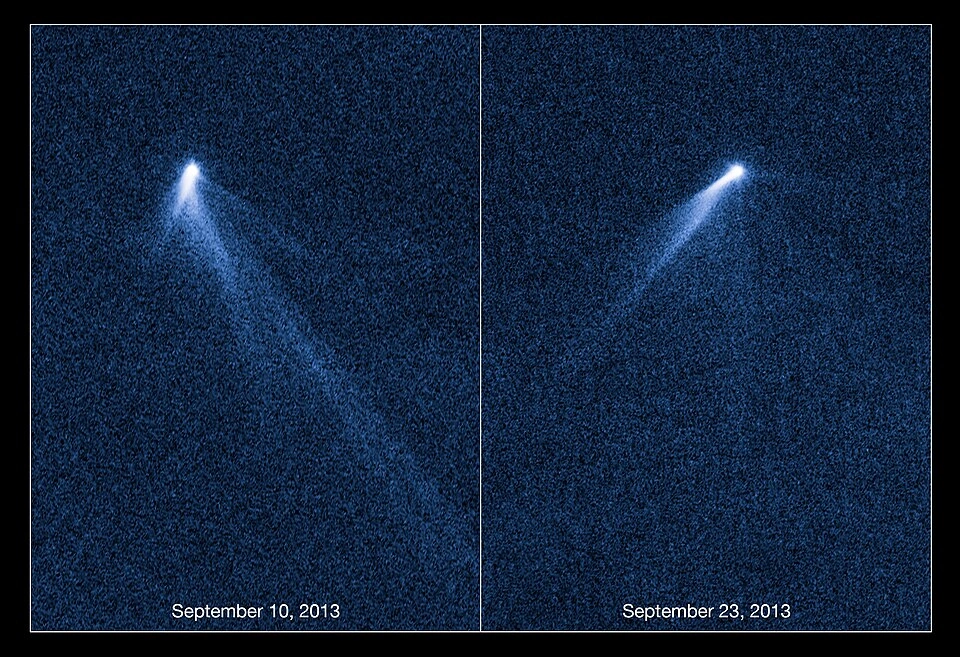
The mission has a second target, too: Comet 311P/PanSTARRS. In a 3.24-year orbit around the Sun, the periodic comet spends most of its time in the main belt region between Mars and Jupiter. Discovered as an asteroid in 2013, the object turned out to be actively outgassing, as revealed in the observations below, taken by the Hubble Space Telescope.
Learn more about active asteroids in the June 2023 issue of Sky & Telescope.
NASA / ESA / D. Jewitt
Tianwen 2 Mission Timeline
The mission will arrive in the vicinity of the first asteroid next summer on July 4, 2026, and depart just under a year later on April 24, 2027. The spacecraft will fly by Earth to return the sample capsule on November 29, 2027. Then, it’s on to a rendezvous with Comet 311P on January 24, 2035. CNSA has also left open the option for another asteroid flyby between the two primary objectives.
The mission calls for three types of sampling opportunities: One is to hover and sample the asteroid while the lander matches rotation with target. Another option is a touch-and-go (TAG) type sampling maneuver, similar to the one conducted by Osiris-REX and Hayabusa 2. Finally, the mission could use an anchored approach, using drills on the lander legs to attach to the asteroid. The Tianwen 2 team is aiming to return at least 100 grams (3.5 ounces) of material. The mission also carries a nano-orbiter and lander for remote sensing during the sample and acquisition process.
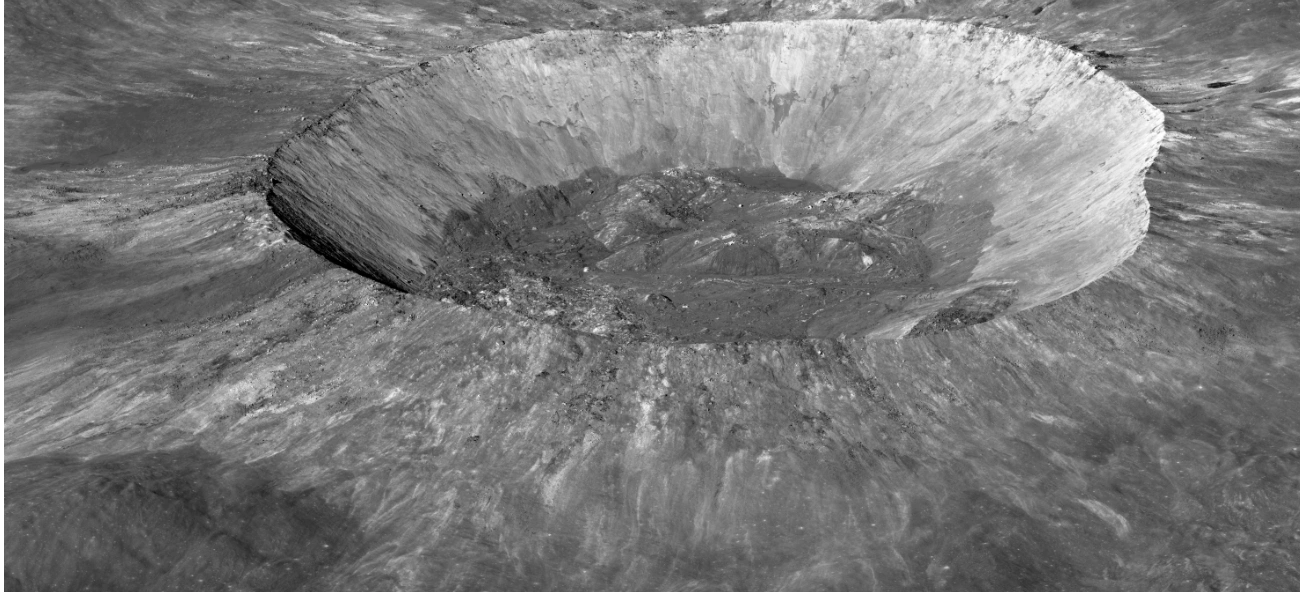
NASA/LRO
Instruments onboard include a magnetometer, infrared and multi-spectral spectrometers, high-resolution cameras, dust and gas analyzers, and a radar sounder. Russia is thought to have provided particle detectors for the mission. As is often the case with China’s space agency and activities, updates are often short of information.
This mission follows China’s string of lunar missions, the Chang’e program, which included lunar sample returns. the The Chang’e 2 mission also passed near asteroid 4179 Toutatis in 2012.) There will be some differences, most notably the reentry speed: Reentry for Tianwen 2's sample will be much faster than for the Chang’e sample returns, with a speed of about 12 kilometers per second (27,000 mph). China carried out a high-altitude parachute test in 2023 in preparation for the mission.
The next planned mission in the Tianwen series (which also included Tianwen 1, an orbiter, lander, and rover combination that landed on Mars in 2021) is a planned Mars sample return in 2028. Farther afield, the agency is also planning a Tianwen 4 mission to Jupiter, including a Callisto lander, as well as a possible Uranus flyby mission in 2030.
It will be exciting the follow Tianwen 2 as the mission unlocks the secrets of Kamoʻoalewa and worlds beyond.
About David Dickinson
David Dickinson is a freelance science writer, high school science teacher, retired enlisted U.S. Air Force veteran and avid stargazer. He currently resides with his wife Myscha in Bristol, Tennessee. David also writes science fiction in his spare time. He posts as @AstroDave on BlueSky about space news and sky-watching worldwide.


Comments
You must be logged in to post a comment.