 SUNSET:

 4
4In a move that’s concerning astronomers and environmental groups alike, the Federal Communications Commission (FCC) has proposed reducing environmental oversight of space-based operations.
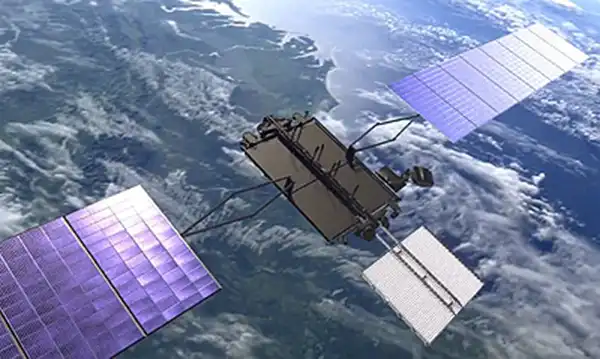
T-Mobile
In a proposed rulemaking issued last month, the Federal Communications Commission (FCC) announced plans to exclude space-based operations from the National Environmental Policy Act (NEPA), calling them “extraterritorial activities” whose effects are “entirely outside of the jurisdiction of the United States.” If enacted, the changes could ease regulations on satellite licensing, allowing new hardware to be launched with minimal FCC oversight. FCC and analogous international agencies are already handling some 1 million proposed satellites.
The notice, labeled “FCC 25-47,” is a direct response to the Trump Administration’s executive order titled “Unleashing American Energy,” which aims to expedite permitting processes. That order revoked a number of environmental protections, some reaching as far back as 1977. Several organizations have submitted comments to the FCC opposing this change, including DarkSky International, the American Astronomical Society, and the American Bird Conservancy.
Earlier this year the FCC issued another proposed rulemaking aimed at expanding the bandwidth available for satellite communications. In their comments on the recent notice, the American Astronomical Society wrote “both intended and unintended radio emissions from satellites can disrupt sensitive radio astronomy observations, including those conducted within the National Radio Quiet Zone.” They explained that “telescopes are already experiencing the contamination of astronomical data by satellites” and argued against excluding space-based missions from NEPA review.
The effects of radio communications are just one example of how unregulated human-built systems can disrupt natural patterns, and many experts are looking at how unchecked growth in space could impact our environment and the future of space travel.
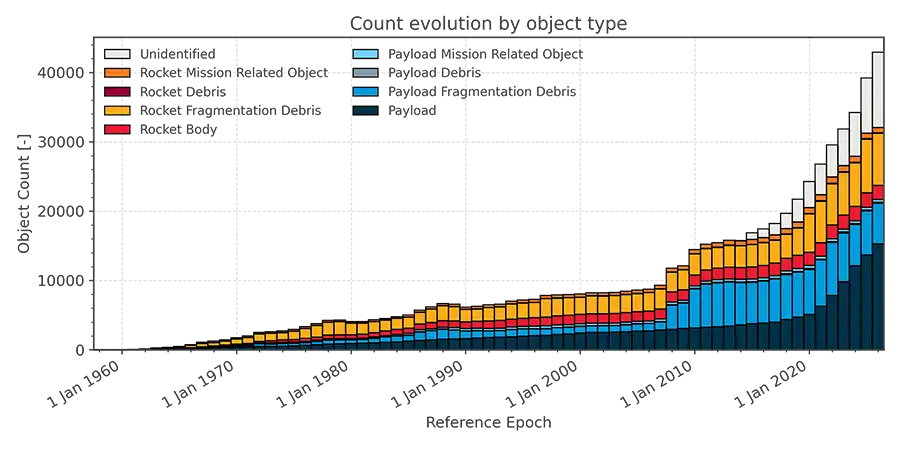
With lighter regulations, the number of satellites going into orbit will likely increase. The European Space Agency’s 2025 “Space Environment Report” drew attention to the fact that Earth’s orbit is a “finite resource.” In the past five years the amount of active payloads circling our planet has more than doubled, reaching an estimated 11,000 satellites in 2025, and with fewer restrictions the number would likely swell.
ESA
With this increase has come an even greater increase in space debris. Such debris poses a threat to the safety of human space travel and to active satellites which must navigate to avoid collisions. Some scientists are also concerned that reflections from satellites and clouds of debris are interfering with our view of the stars, adding noise to the observable night sky.
In their submitted comments, the American Astronomical Society wrote that reflections from satellites and satellite constellations, in addition to radio transmissions “can impact astronomical observations, degrading data quality and potentially causing data loss. They may also contribute to increasing night sky brightness, diminishing the efficacy of astronomical observations from ground-based observatories that will now require more telescope time to achieve the same scientific goals.”
Danielle Wood, Director of the Space Enabled Research Group at the MIT Media Lab, says she would like for government agencies to require a certain level of performance of sustainability before licensing: “It’s actually quite evident that the need for environmental protection in space is only growing, not decreasing,” she adds.
Wood, who previously worked with NASA, is part of an international team tasked with designing a “Space Sustainability Rating,” encouraging space-based projects to factor environmental impact and sustainability into their development. The FCC’s proposed NEPA changes frustrate a decade of efforts.
“This is actually quite a reversal of the vision I've been working on for like 10 years,” Wood says. “No, we shouldn't reduce the requirements for NEPA and for environmental protection –– we should be increasing them.”
About Lucie McCormick
Lucie McCormick is an emmy-nominated filmmaker, an eclipse chaser and a science journalist. She is also a graduate fellow at MIT studying science writing.


Comments
relh
September 19, 2025 at 7:43 pm
I once felt the need to rant about irresponsible third-world countries. Now it's my own country failing to act responsibly. Sad!
You must be logged in to post a comment.
Anthony Barreiro
September 19, 2025 at 8:53 pm
Dark Sky International sent members instructions for how to submit a comment to the FCC and how to contact your federal senators and representative. I tried to post links here, but my post disappeared into the aether.
Please subscribe to the Dark Sky International email list (darksky dot org) for news and advocacy opportunities.
You must be logged in to post a comment.
Andrew James
September 20, 2025 at 12:48 am
In January 15 2025 I highlighted about the Chairwoman Jessica Rosenworcel retiring from her position as head of the FCC. [What she says that the FCC has achieved is surmised here: https://docs.fcc.gov/public/attachments/DOC-408866A1.pdf ] Since this date, the usual weekly reports have disappeared. I already said in January here: "All of this looks like another nail in the coffin of keeping the astronomical environment pure. I feel they're worrying times ahead, where the international community has no say in mitigating these issues. Pity." Seems even all Americans are now out of the loop.
Just like Musk's Starlink, the environment suffers, while those greedy corporations profit. They work by using the little chinks, chiselling away at the world, which falls into ruin more and more and day by day. Worse they hide behind legalistic arguments, mainly to the stall and prevaricate or use inauthentic discussions so they can hide the damage that they're actually doing.
As usual, any minority of people are exploited, who have their hands tied, while government and industry do what they please and unfettered by any moral obligation or decency.
Already: “They are aware that they’re going to damage us, and they have essentially ignored us.” means we've already lost.
It just stinks.
You must be logged in to post a comment.
William Gable
September 22, 2025 at 2:22 pm
"Easing regulations..., allowing new hardware to be launched with minimal FCC oversight." Is there another danger here in addition to those for astronomy? Could this easing lead to new hardware meant to hack into the many communications, banking transactions, and password information that now zip around the globe? In other words, cyberwars with great financial consequences for everyone.
You must be logged in to post a comment.
You must be logged in to post a comment.