 SUNSET:

 3
3A small space telescope may signal a big new trend for modern astronomy.
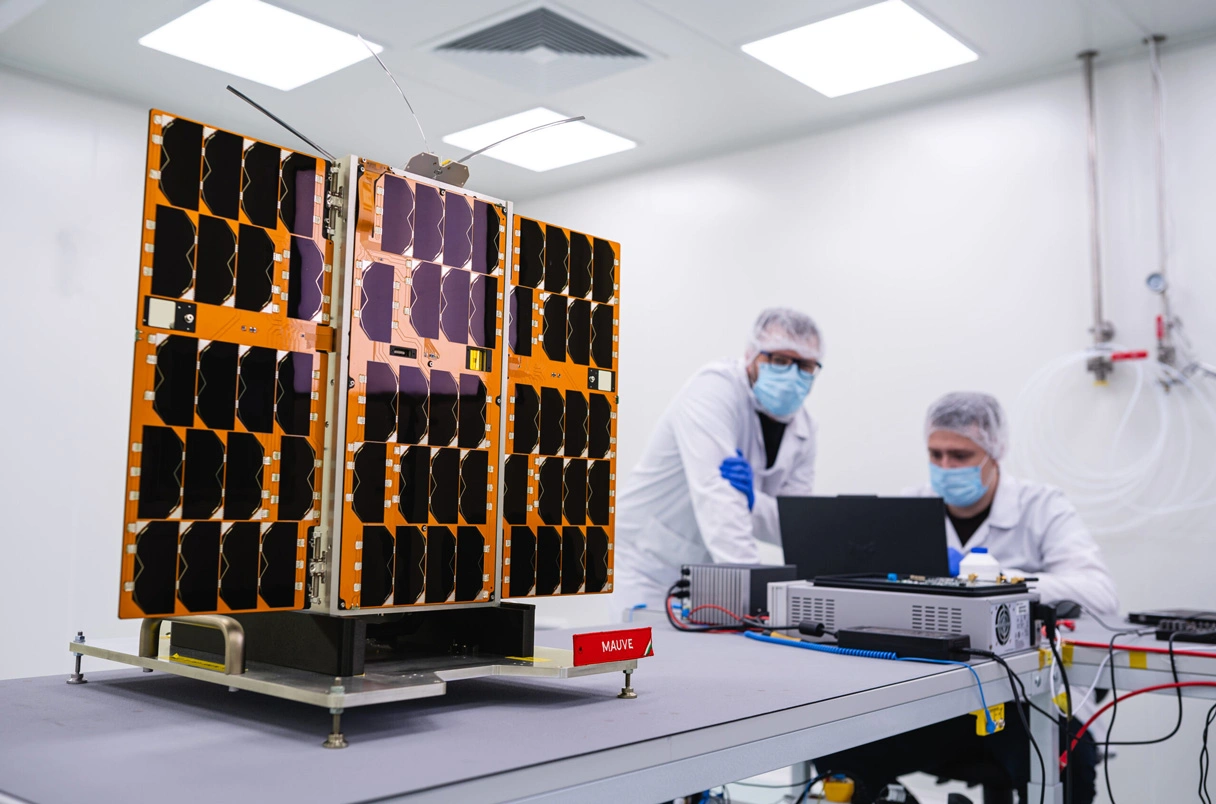
Blue Skies Space
A new mission the size of a mini-fridge could mark big changes in space-based astronomy. As SpaceX’s Transporter 15 rideshare mission launched on Friday, November 28th, it carried 140 payloads onboard, including a CubeSat named Mauve. Mauve is an ultraviolet-visible telescope, but unlike other space observatories, it's owned by a private company, and that means its data will be private, too. The ultraviolet spectra it provides will be available only to researchers who subscribe.

SpaceX
After multiple delays on previous dates, the launch on a SpaceX Falcon 9 rocket went off without a hitch, lifting off of pad SLC-4E at Vandenberg Space Force Base in southern California at 1:44 p.m. EST / 18:44 Universal Time (UT).
The small satellites aboard will separate from the upper stage Exolaunch dispenser starting at 54 minutes after launch; Mauve deploys a few minutes later. The Falcon 9 first stage booster landed on the Of Course I Still Love You ocean-based platform around eight minutes after launch.
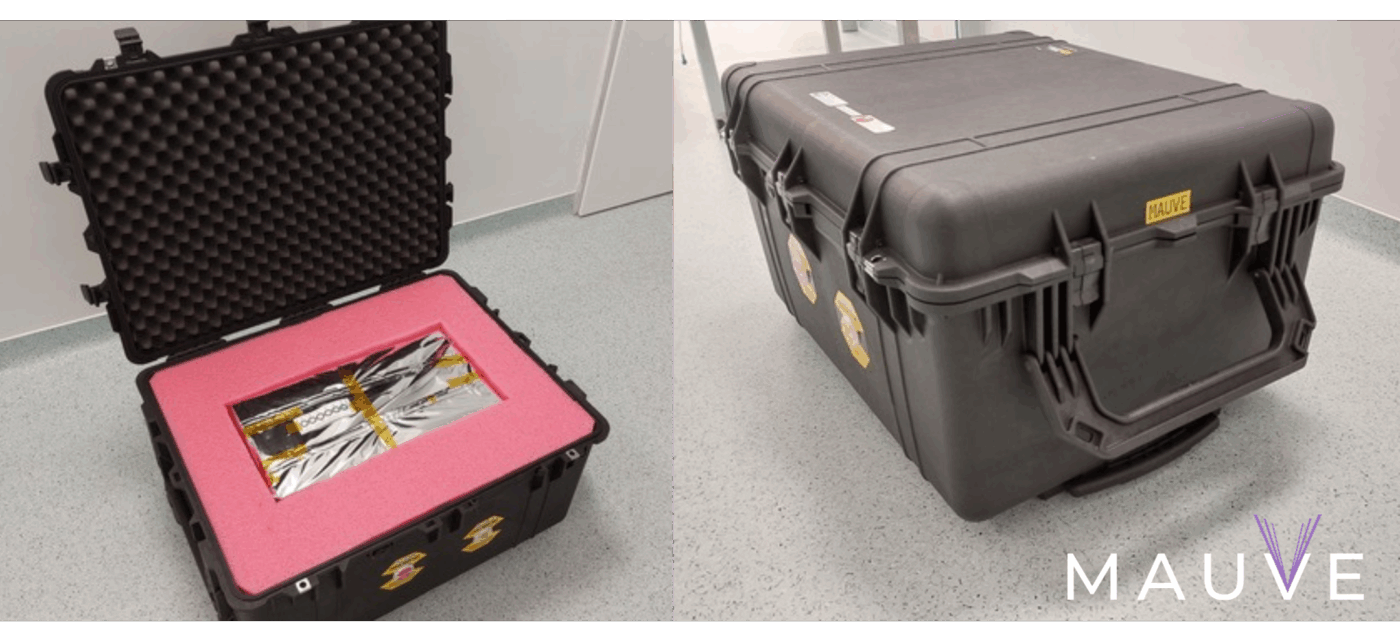
Blue Skies Space
Built by the UK-based Blue Skies Space company, Mauve is headed to a low-Earth orbit at an altitude of 500 km (300 miles), where it will observe large swaths of the sky at ultraviolet wavelengths for a nominal mission of three years. (Note: Mauve is not to be confused with the Mission to Analyze the Ultraviolet Universe (MAUVE) mission concept; MAUVE isn't being developed further.)
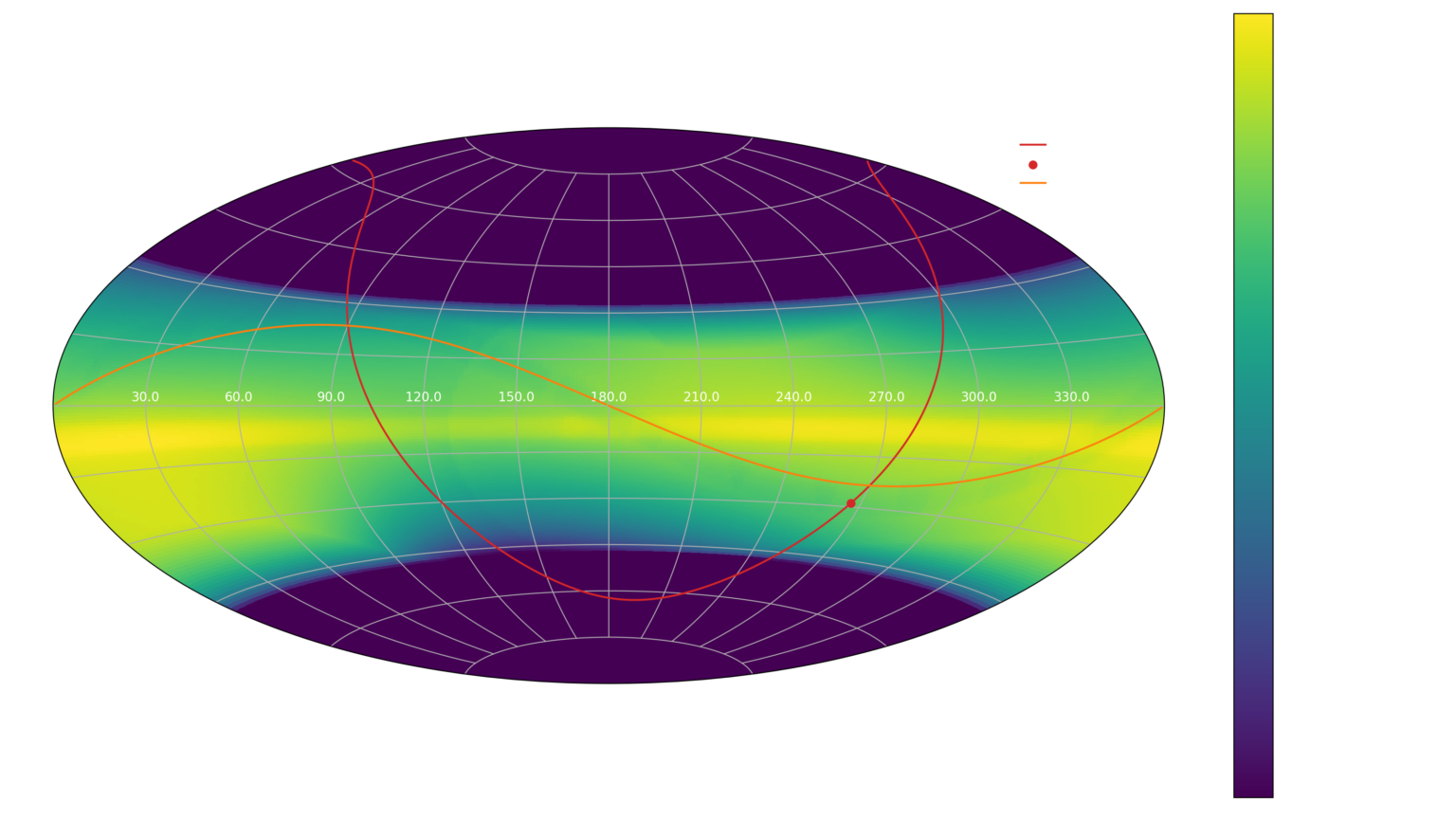
Blue Skies Space
Mauve was funded by a $1.4 million grant from the European Union, along with private funding. Contrast that with NASA's exoplanet-detecting Colorado Ultraviolet Transit Experiment (CUTE) mission, which cost $5.5 million. Mauve is built on a 16U CubeSat chassis, which has the dimensions of 20 × 20 × 40 centimeters (8" × 8" × 16"). Integrating astronomical operations into such a small package was a challenge, as the platform must handle optics, power, and orientation. Mauve's telescope has a 13-centimeter aperture, coupled with a UV-to-visible spectrometer. Mauve’s objectives include surveying for stellar flares and monitoring the long-term stability of hundreds of stars as well as investigating impacts on those stars' exoplanets.
Blue Skies Space
“Mauve will be the first partially-privately funded UV space telescope, targeting a range of topics in stellar astronomy,” says Kevin France (University of Colorado Boulder), who is the principal investigator of CUTE. “There are only a small number of astronomical smallsats flying today.” However, NASA does have plans for more UV CubeSat missions, such as ULTRASAT launching in 2027.
Subscription-based Astronomy
Few telescopes collect ultraviolet wavelengths, which is only accessible above Earth's UV-absorbing atmosphere. What's more, time on these telescopes, such as the Hubble Space Telescope, runs at a premium. Plus, there are many more observing proposals than there are observatories to carry them out. Mauve's subscription-based data, even if from a much smaller telescope, has a certain attraction.
Blue Skies Space will collect and provide data to members who will subscribe for ongoing access. The venture opens the market to other missions looking to do the same. Based on the number of astronomers already signed up, the tiny telescope could well create a precedent. The miniaturization of technology and falling launch costs promise to make this approach a viable option in the near future.
“I am thrilled to begin this journey with Mauve and excited about the research possibilities it opens,” says Emma Whelan (Maynooth University, Ireland). “My work to date has relied largely on ground-based eight-meter-class telescopes, so Mauve marks an exciting new direction. Its monitoring capabilities will give us a fresh perspective on star formation and unlock valuable new insights.”
The Mauve science team, made of researchers such as Whelan who joined the program early, has already constructed a survey program with a set list of targets. As science operations start up early next year, those targets and the full science program will be shared publicly. Data access will be provided via Blue Skies Space's Stardrive platform.
"An annual subscription to the Mauve science program gives researchers access to all the data collected within the program," said Blue Skies Space in response to a press query. "Researchers also have the opportunity to collaborate with fellow scientists from around the world on their topics of interest." Thus far, the company states that 10 institutions have signed up for the Mauve science program.
Blue Skies Space has another similar observatory in the pipeline: the Twinkle mission, due to launch in 2027. Twinkle will take infrared spectra of transiting exoplanets to retrieve data on their atmospheres, and it will also study comets and asteroids in our own solar system. That data would likewise be available on a subscription basis.
Blue Skies Space
Mauve may not be the only astronomical CubeSat to launch this year. The Star-Planet Activity Research Cubesat (SPARCS), fielded by Arizona State University, aims to study the space weather environment around nearby low-mass stars, in an effort to assess habitability on orbiting planets. SPARCS might launch on an as-yet unnamed rideshare mission by the end of 2025.
These astronomical CubeSats and subscription-based observations could signal big changes for modern astronomy.
About David Dickinson
David Dickinson is a freelance science writer, high school science teacher, retired enlisted U.S. Air Force veteran and avid stargazer. He currently resides with his wife Myscha in Bristol, Tennessee. David also writes science fiction in his spare time. He posts as @AstroDave on BlueSky about space news and sky-watching worldwide.


Comments
tgreene
November 28, 2025 at 4:24 pm
SPARCS is co-manifested with Pandora and other payloads for a scheduled SpaceX launch on Jan 5, 2026
You must be logged in to post a comment.
David DickinsonPost Author
November 29, 2025 at 10:15 am
Thanks... I'd been following that one as well, watching for a launch date.
You must be logged in to post a comment.
James Eadon
November 29, 2025 at 5:09 am
This is the future, because the private sector (DEI-mad Boeing aside) is much more efficient and effective than the lazy, low-pressure public sector.
You must be logged in to post a comment.
You must be logged in to post a comment.