 SUNSET:

 0
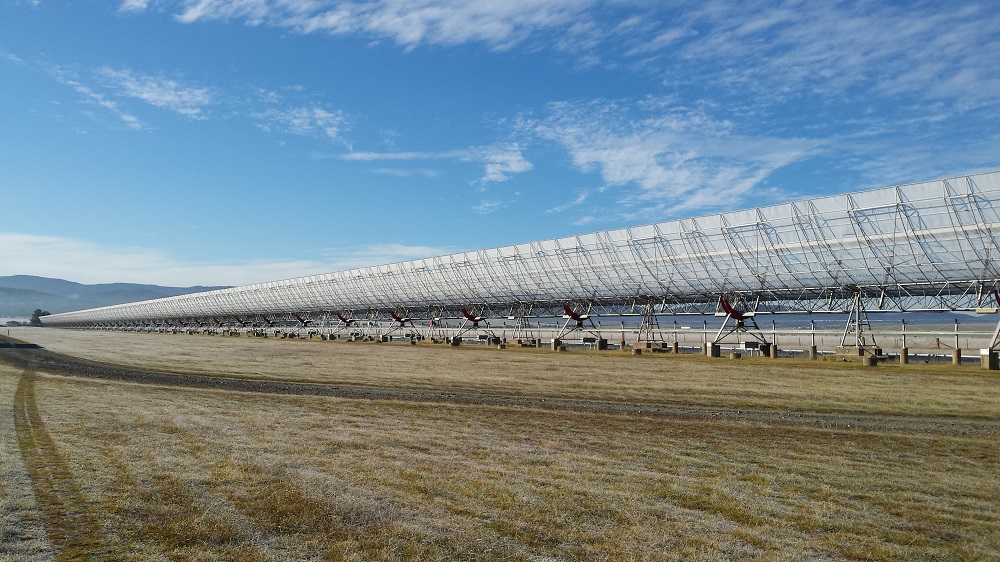
0Australia’s Molonglo Observatory was saved from retirement; now, it holds the promise of future radio observations.
University of Sydney
The venerable Molonglo radio telescope in Australia has received a new lease on life.
In late 2023, the University of Sydney officially retired its 60-year-old observatory and removed most of the supporting equipment. Last year, the whole facility, including its 84-hectare of grounds, was put up for sale.
Luckily, Molonglo wasn’t bought by a scrap metal merchant but by aerospace consultant and IT entrepreneur Johann Bell. Bell plans to use the observatory mainly for space domain awareness observations, which involves detecting and tracking satellites. Bell says radio astronomy observations will also become possible again.
Enochlau / Wikimedia Commons
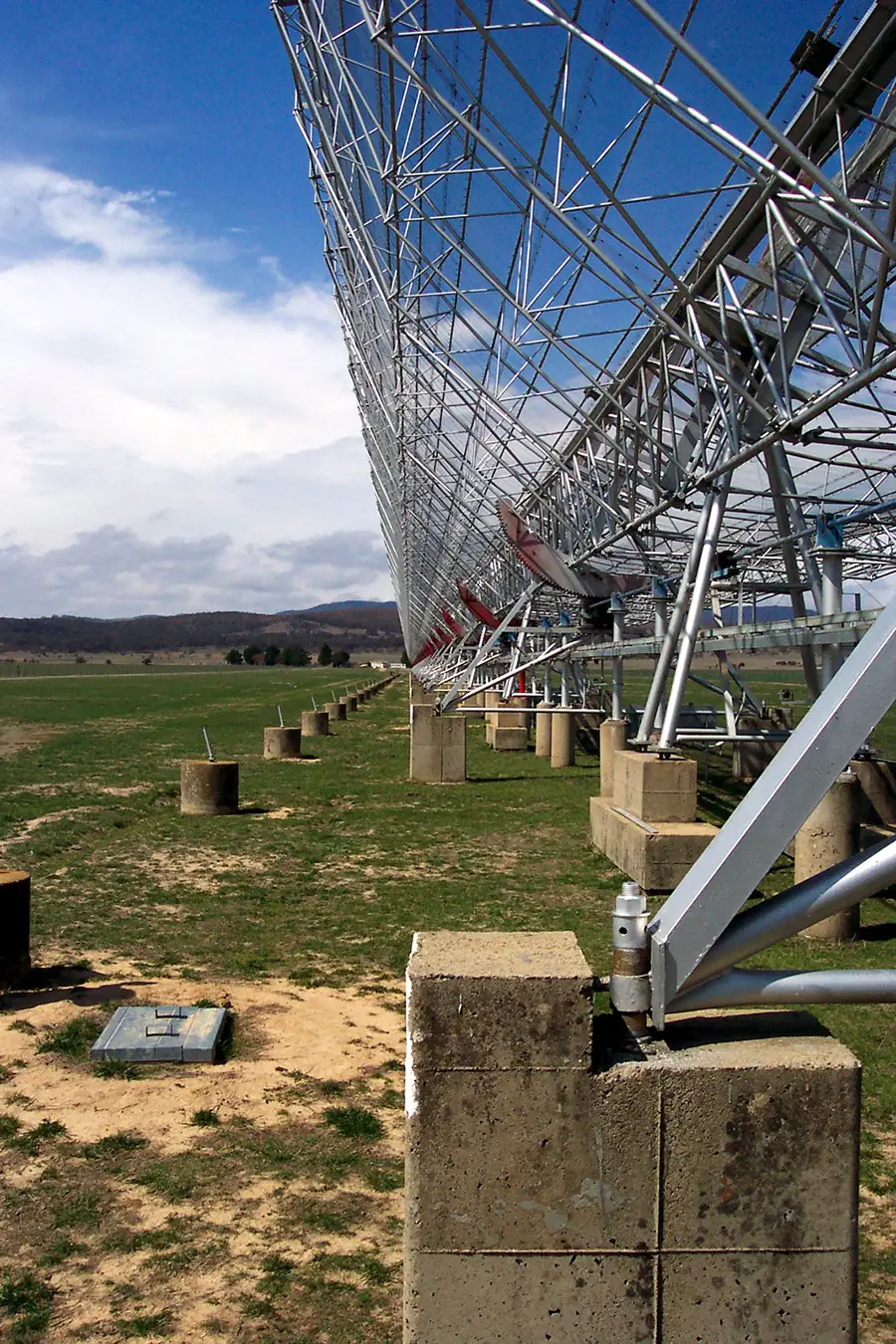
The Molonglo Cross Telescope (named after a nearby river) was constructed in the early 1960s by radio astronomer Bernard Mills. Located some 30 kilometers (20 miles) east of Canberra, Australia’s capital, it has two perpendicular arms, each about a mile long, that consist of cylindrical antennas with many hundreds of radio receivers.
Over the decades, the observatory carried out pioneering surveys of the southern radio sky at relatively low frequencies. In 1968, it discovered the Vela pulsar (the brightest pulsar in the sky), and after an upgrade in 2015, it was a prolific hunter of fast radio bursts –millisecond-duration explosions, likely from distant magnetars.
With the advent of new facilities, including the giant Square Kilometre Array (SKA), the University of Sydney felt it was time to retire the old telescope. At a public auction in 2025, Bell bought the observatory for A$1.25 million (equivalent to $890,000 in the U.S.).
Within months, thanks to the help of radio astronomers Duncan Campbell-Wilson (University of Sydney) and Tim Bateman (University of New South Wales), large parts of the observatory were up and running again. In early April this year, the team detected and measured the Vela pulsar in a case of “second first light.”
“I wanted to make sure that the telescope is not going to be mothballed or demolished,” says Bell. Although he’s not sure yet how often astronomers will have the opportunity to use the facility, Bell believes Molonglo will at least continue to play an important role in training and education.
About Govert Schilling
Sky & Telescope Contributing Editor Govert Schilling lives in The Netherlands but loves to explore his home planet. In May 2022, Harvard University Press published The Elephant in the Universe: Our Hundred-Year Search for Dark Matter. His latest book is Target Earth - Meteorites, Asteroids, Comets, and Other Cosmic Intruders That Threaten Our Planet.


Comments
You must be logged in to post a comment.