 SUNSET:

 0
0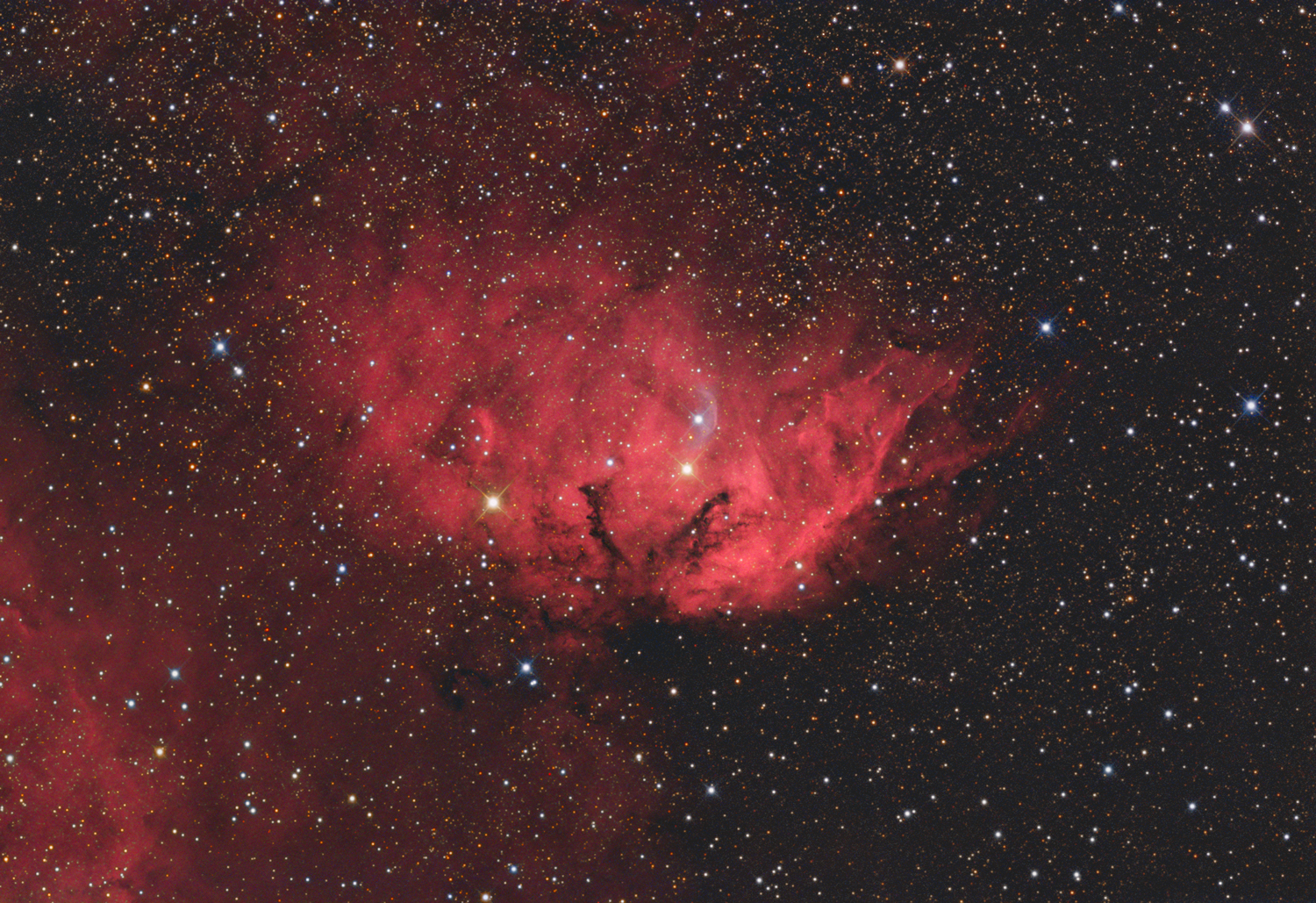
Photographer:
Rod Pommier
Location of Photo:
Pommier Observatory, Portland, OR, USA
Date/Time of photo:
2024-06-24 through 2024-07-01
Equipment:
PlaneWave CDK17 on L500 mount, SBIG STL 11000 CCD camera with Baader Planetarium H-alpha, R, G, and B filters
Description:
Sharpless 2-101 is an emission nebula known as the Tulip Nebula because it bears a resemblance to the flower in images. The brighter yellow star of the pair in the very upper right corner marks the location of Cygnus X-1, one of the first black hole candidates. The bright star is actually HDE 226868 a blue supergiant variable that is Cygnus X-1's companion star. The star betrays the existence of the black hole because it is being whipped around an object every 5.6 days at a radius of 0.2 au. This indicates a mass of 14.6 solar masses in a compact area that can only be explained as a black hole. Exposures Ha:R:G:B = 525:35:35:35 minutes = 10 hours, 30 minutes total exposure, completely unguided.
