 SUNSET:

 0
0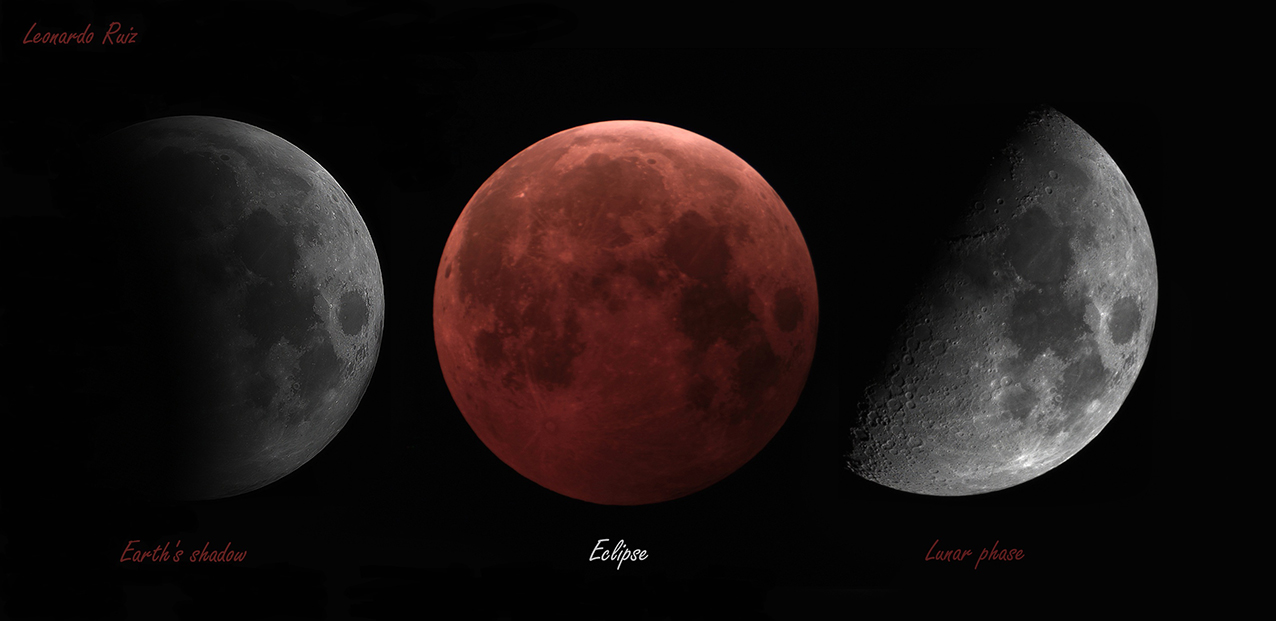
Photographer:
Leonardo Ruiz
Location of Photo:
Guadalajara, Jalisco, México
Date/Time of photo:
03-14-2025
Equipment:
Radian 61, ASI2600MM, Ioptron Cem70
Description:
During regular lunar phases, sunlight creates sharp shadows that highlight mountains and craters. However, in a lunar eclipse, these shadows vanish. Why? Because the darkness isn’t just the absence of direct sunlight—it’s Earth’s shadow, filtered and scattered by our atmosphere. This has two key effects: ✅ Crater shadows disappear due to diffuse illumination from refracted light. ✅ The eclipse shadow appears more curved than a lunar phase, as it follows Earth's larger profile. This image compares the March 14 lunar eclipse with an equivalent phase, revealing how the light source dramatically alters our perception of the Moon.
