 SUNSET:

 0
0Astronomers are building an array of intriguing telescopes that will enable them to detect the highest-energy gamma rays — from the ground.
Manuela Mallamaci / CC BY-NC-ND 2.0 Deed
“Tourists!” Paolo Calisse complains as he maneuvers past a rental car that has stopped in the middle of the road. The astronomical observatory at the Roque de los Muchachos, on the Spanish Canary Island of La Palma, is busy with cars and visitors wandering in small groups. Unlike at many other observatories, here road access isn’t restricted, and locals and foreigners alike can drive up to the mountaintop to see the telescopes, enjoy the newly opened visitor center, or even catch an organized tour to peek inside some of the facilities.
Calisse is the La Palma site manager of the Cherenkov Telescope Array Observatory (CTAO), a planned ensemble of 64 telescopes that will hunt for very-high-energy gamma rays, the most powerful type of electromagnetic radiation. These rays are only produced in the most extreme environments of the universe, such as supernova explosions or colliding stars. The array, currently under construction, will be split between two locations, one part here and the other part in the Atacama Desert of northern Chile.
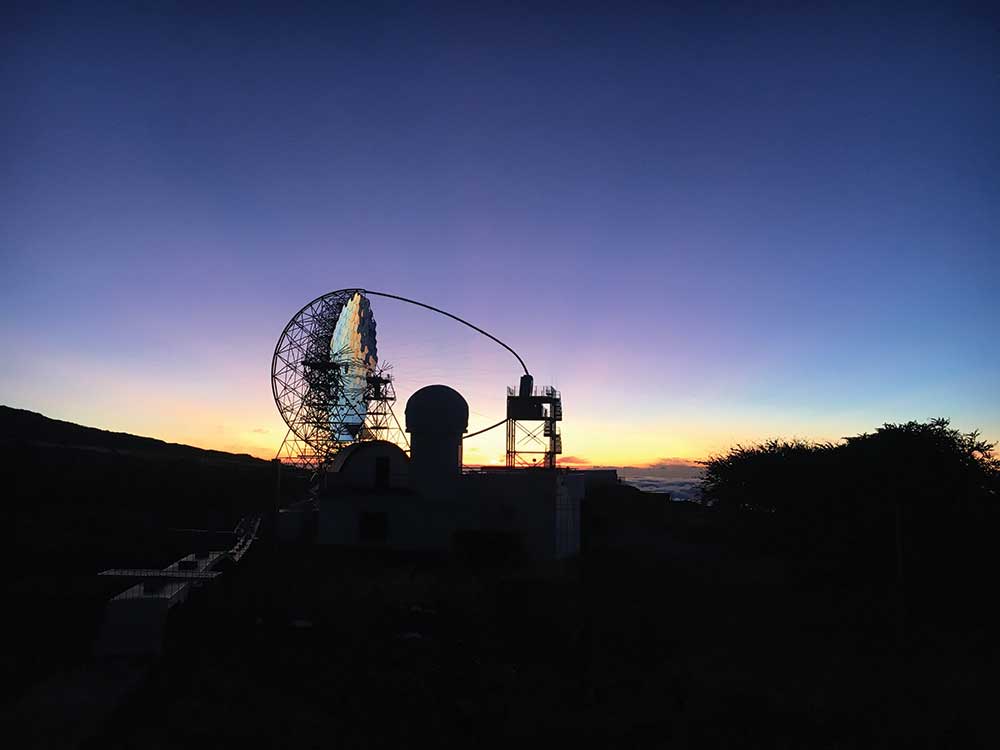
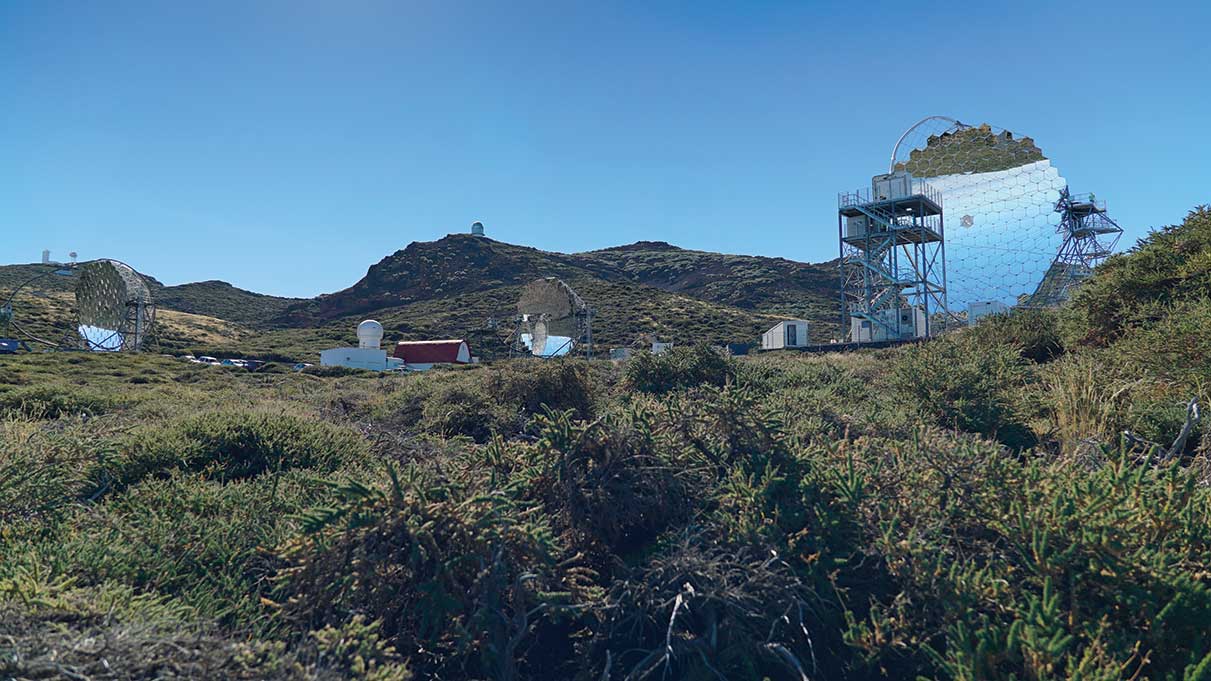
Despite his earlier complaining, Calisse enjoys giving impromptu talks to curious visitors. And the site certainly attracts curiosity. Both CTAO’s first prototype, the 23-meter (75-foot) Large-Sized Telescope (LST), and its smaller Palmeran predecessors, the twin MAGIC telescopes, use an unusual type of instrument called an imaging atmospheric Cherenkov telescope (IACT). These telescopes consist of a large, segmented mirror and a detector in the main focus. The telescopes don’t have domes, making their massive, naked mirrors conspicuous amongst the mountaintop’s white and silver observatories. The open design enables them to rapidly reposition to catch transient events such as gamma-ray bursts, which appear suddenly and last for minutes at best.
The gigantic prototype, already built and currently under commissioning, gleams in the intense sunlight of the Canaries. In its parking position, the mirror points towards the horizon, its 2-ton camera resting in a special enclosure atop a five-story tower. The reflection in the mirror segments forms a broken image, like a scrambled sliding puzzle.
“A lot of visitors ask why the mirrors aren’t aligned during the day,” Calisse says. Caught by the mirror’s intended parabolic shape, Calisse answers, concentrated sunbeams could very easily set the surrounding vegetation on fire. “It could possibly even melt a car,” he adds.
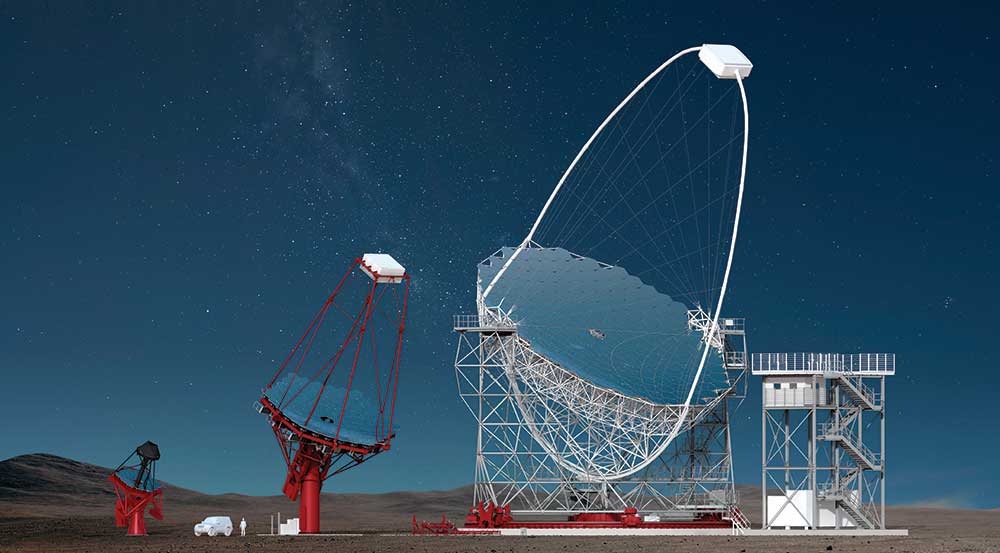
When completed, La Palma’s CTAO-North will host four such behemoths; the other three are under construction on nearby plots, their circular foundations already in place. Nine 12-meter telescopes, called Medium-Sized Telescopes (MSTs), will complete the northern array. In Chile, meanwhile, construction will soon begin for two LSTs, 14 MSTs, and 37 “small” 4.3-meter telescopes that won’t have counterparts on La Palma.
The differences between the two arrays are practical — there’s no room for so many telescopes on the crowded slopes of el Roque — but also scientific. Astronomers need larger telescopes to detect the lowest-energy sources, which are more abundant outside of our galaxy, and the Northern Hemisphere offers a clearer view of the extragalactic sky. The Milky Way, on the other hand, hosts the sky’s most energetic gamma-ray sources, and these are best studied from the Southern Hemisphere site with an extended array.
When finished, these two arrays will form the world’s most sensitive instrument for studying high-energy phenomena in the cosmos.
Faster than Light
Both La Palma and Chile offer very dark skies. Darkness is necessary in this case because these telescopes aren’t looking into the infinity of space; instead, they point at our atmosphere, waiting to catch faint flashes of blue light produced when gamma rays hit atoms high up in the air.
Gamma rays are extremely energetic photons, occupying the highest range of the electromagnetic spectrum. Visible blue-light photons have energies of around 3 electron volts (eV), while more energetic X-ray photons are in the 100 to 100,000 eV range. Gamma rays, on the other hand, often carry millions or billions of electron volts (MeV and GeV, respectively), and the most energetic gamma rays can reach petaelectron-volt (PeV) energies, or quadrillions of eV. (Yes, that’s a real number: 1015, which is a 1 followed by 15 zeroes.) While radioactive decay, thermonuclear explosions, or particle accelerators can produce lower-energy gamma rays, nothing on Earth can boost photons to the high energies the universe produces.
Beatriz Inglessis / S&T, source: R. White (MPIK) / K. Bernlohr (MPIK) / DESY and J. A. Hinton and W. Hofmann / Annual Review of Astronomy and Astrophysics 2009
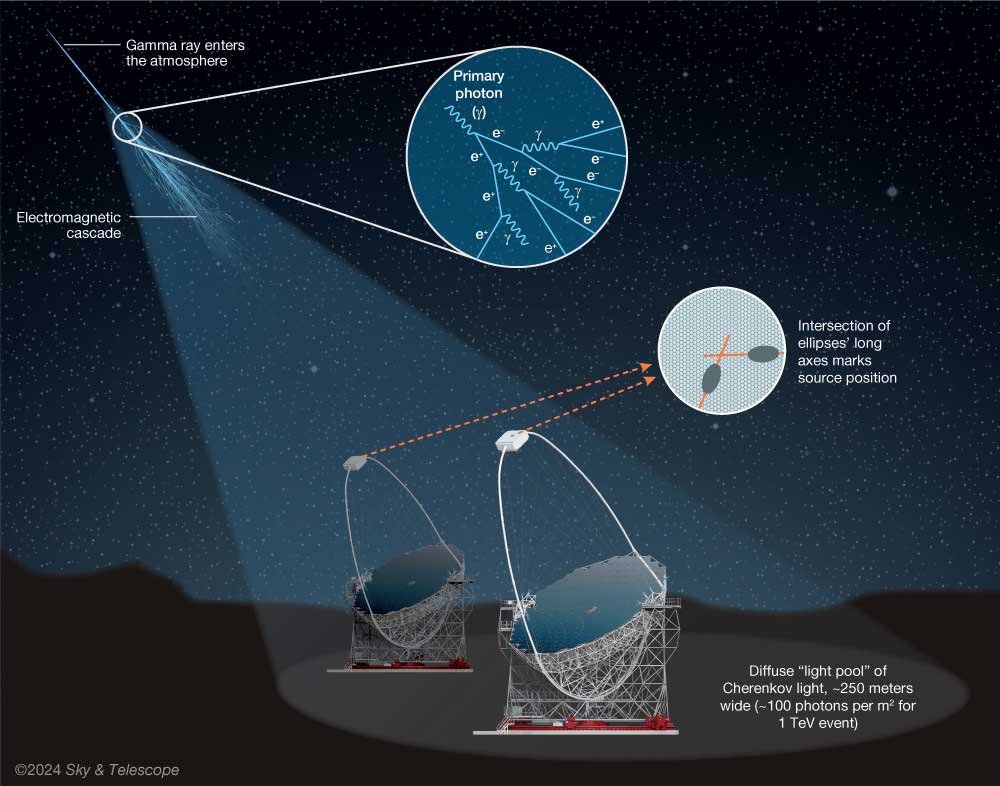
Earth’s atmosphere blocks gamma rays. This otherwise fortunate circumstance — gamma rays can damage living cells and their DNA — prevents ground-based telescopes from observing these photons directly. But when gamma rays hit atoms in the upper atmosphere, the photons transform into electron-positron pairs. These, in turn, interact with other particles and produce lower-energy gamma rays, which transform again, resulting in cascades of subatomic particles called particle showers.
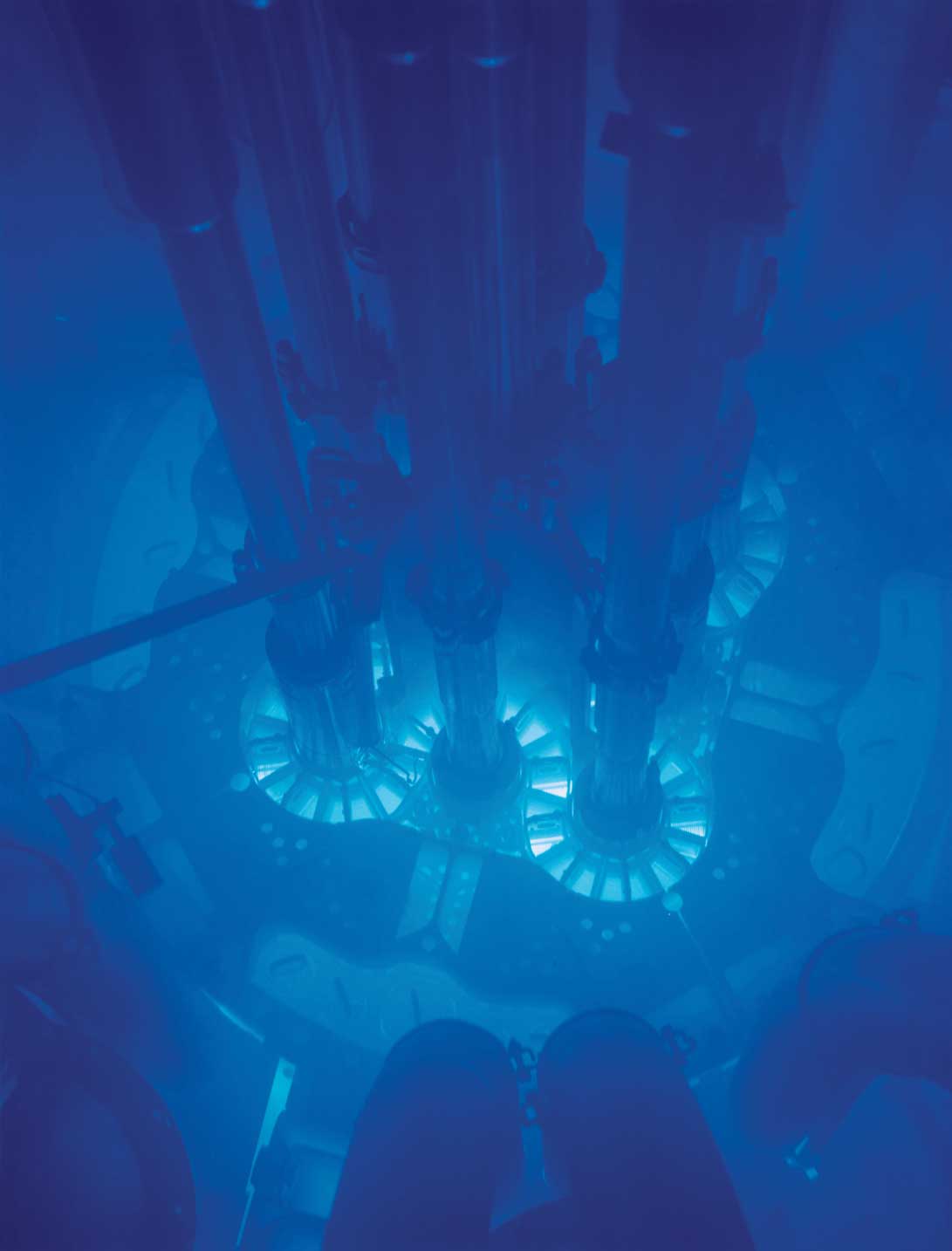
For a brief period, these particles move faster than the speed of light in air, which makes them emit Cherenkov light, an eerie blue glow produced by particles that move faster than light’s speed limit in a given medium. “In a broad sense, it’s similar to a sonic boom produced when breaking the sound barrier,” says Rubén López-Coto (Astrophysics Institute of Andalucía, CSIC, Spain).
Argonne National Laboratory / CC BY-SA 2.0
These Cherenkov flashes are faint and short-lived, lasting just a few nanoseconds, and thus can’t be seen with the naked eye. To detect them, Cherenkov telescopes need large mirrors to collect enough light and fast electronics to record such brief events. In the LST’s case, that means recording between 5,000 and 7,000 images per second, López-Coto adds.
Most of these images, however, contain only noise. Much of the noise comes from cosmic rays, charged particles such as protons or helium nuclei sent shooting through the cosmos by energetic processes. Cosmic rays also cause particle showers and Cherenkov light and are thousands of times more abundant than very high-energy gamma rays.
Unlike gamma rays, cosmic rays are deflected by magnetic fields. Since they don’t travel in a straight line, it’s difficult to link them to a specific source. So to learn about extremely energetic goings-on, astronomers must weed out the abundant signals from cosmic rays in order to find the few from gamma rays.
“Cherenkov telescopes are more software machines than hardware machines — if you look at them, they are pretty simple: just one detector, a primary mirror, no dome, nothing fancy,” Calisse says. Their power lies in their computing abilities. “We receive a huge amount of events that only last billionths of a second, every single second, and these events must be filtered out, because nobody can save this amount of data for later analysis.”
Cascades
Particle cascades created by gamma rays reach a shower maximum (the altitude at which the highest number of particles is produced) roughly 10 km above sea level. Higher-energy gamma rays make it lower into the atmosphere. Showers are about 5 km long.
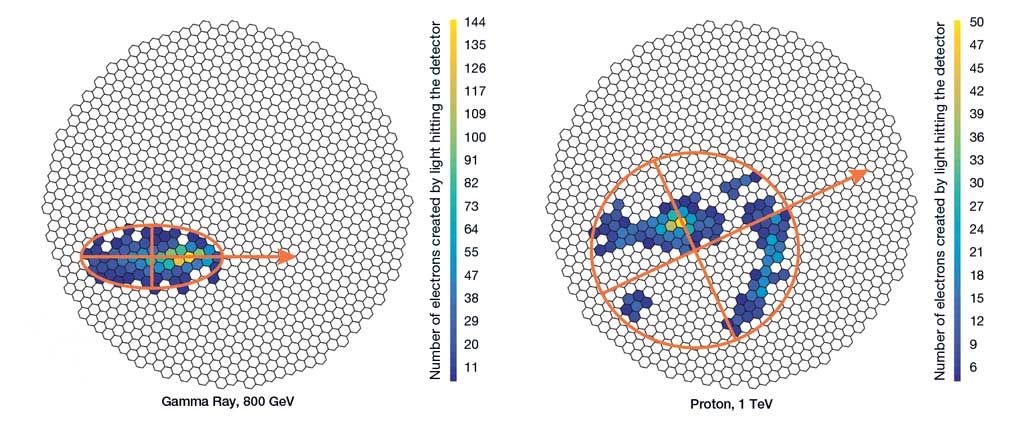
To reduce the deluge of information to manageable levels, the images are processed in real-time using machine-learning algorithms trained with simulations. The most important task is classification: to determine if a particle shower was caused by a gamma ray or not. This requires extensive simulations, following everything that happens when a gamma ray or a cosmic ray reaches the atmosphere, from the interaction it has with particles and the millions of particles produced in the cascade, to the light those particles produce and how the mirror and other equipment respond to these photons, López-Coto says. Luckily for astronomers, cosmic-ray showers look very different from gamma-ray showers.
By simulating gamma rays of different energies, researchers train the algorithm until it’s able to recognize useful signals instantly and save them to the hard drive. The rest are deleted.
These shower images, however, don’t look anything like the actual object being studied. “What you are observing are these kind of ellipse-like features which don’t look like anything, it’s just the image of the [particle] showers,” says Elina Lindfors (University of Turku, Finland). “My background is in optical astronomy, so I initially found the concept of Cherenkov astronomy very strange, because in optical we are used to seeing what we are observing.”
Based on how extensive the shower is, astronomers can determine the energy of the gamma ray that produced it. The shape of the ellipse can reveal the direction the photon came from. Having several telescopes is very useful for both tasks, thanks to stereoscopic effects that allow a better estimate of the direction and intensity of the particle showers, increasing precision and sensitivity significantly.
With this information, researchers can chart how many photons the source emits over a range of energies, generating a spectrum. By tracking how this spectrum evolves over time, they can also build a light curve. Based on the spectra and light curves, they can start modeling the astrophysical processes that produce the high-energy photons, Lindfors says.
Slow-Growth Science
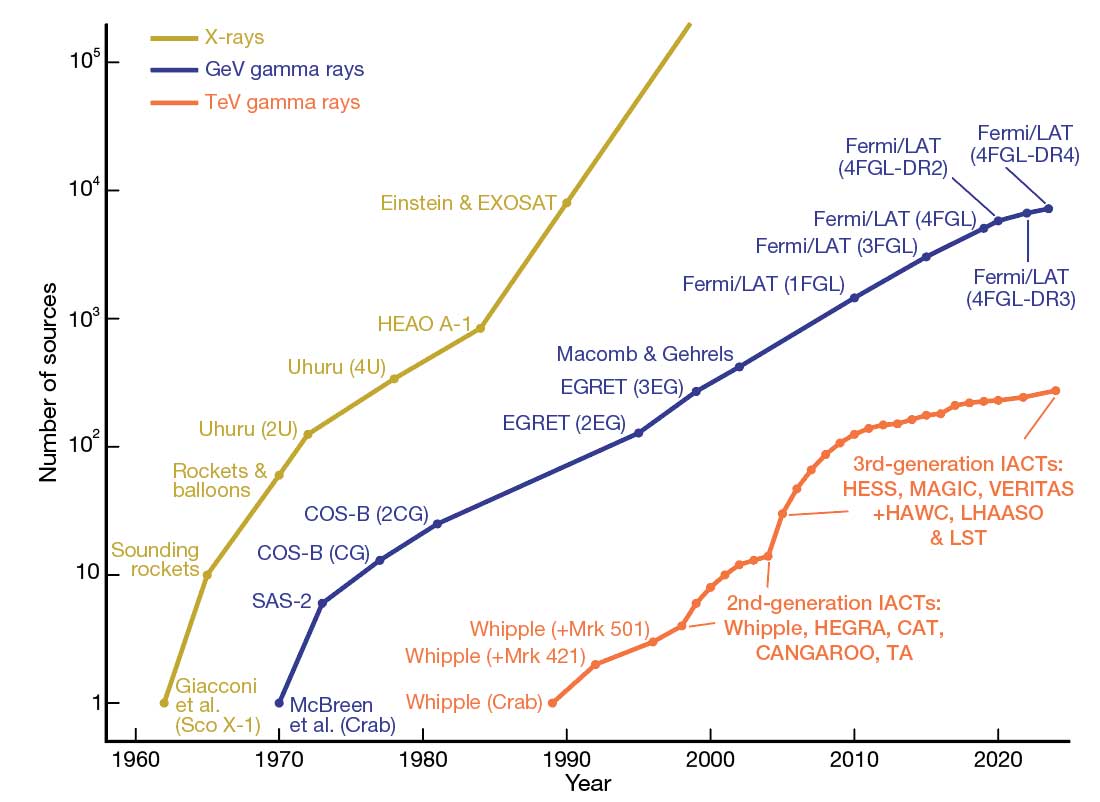
It took decades for Cherenkov telescopes to detect high-energy gamma-ray sources. Soviet scientists installed the first array in Crimea in the 1960s, but their search was unsuccessful. A few research groups — mostly in the Soviet Union, the U.S., and Japan — persevered until the first confident detection was accomplished in 1989 using the Whipple 10-meter telescope in Arizona. Using Whipple, astronomers measured teraelectron-volt emission (that is, trillions of electron volts, or TeV) from the Crab Nebula, a supernova remnant that we now know is the brightest steady source in the sky at TeV energies.
“For a long time this was a science without any sources to study,” says astroparticle physicist Razmik Mirzoyan (Max Planck Institute for Physics, Germany). Even before the Whipple detection, Mirzoyan was developing a Cherenkov array in his native Armenia. However, the collapse of the Soviet Union forced him to pack up the array and move it to La Palma. A collaboration with German astronomers allowed him to secure funding and access to the site.
“The astronomers in La Palma were smiling at us a bit, not laughing, but smiling,” Mirzoyan says. “All we had were these cheap telescopes without domes, standing outside, so they were a little bit . . . you know.”
Alexander Hahn / Max Planck Institute for Physics (2)
However primitive the array might have looked, it worked very well. In 1992, after just two months of operations with a single telescope, it detected the Crab Nebula’s emission — the first independent confirmation of the Whipple results. Mirzoyan attributes the success to the maturity of the Cherenkov technology. “We measured it in two months because everything was ready, the know-how was ready, everything was understood,” he says. Named HEGRA (High Energy Gamma Ray Astronomy), the completed array included six 5-meter telescopes and operated for 10 years, detecting 10 additional sources.
HEGRA’s success led Mirzoyan and his colleagues to plan for a more capable instrument. They spearheaded the Major Atmospheric Gamma-ray Imaging Cherenkov (MAGIC) project, a 17-meter telescope also constructed on La Palma. “Our competitors only wanted to do proven things, but we wanted to go below 100 GeV, maybe 20 or 30 GeV,” Mirzoyan says. That required many changes, including building larger telescopes and improved hardware. “It was very challenging because nobody knew what kind of problems we were going to find.”
MAGIC started routine operations in 2004, receiving a second telescope and a complete overhaul of its camera and electronics between 2009 and 2012. Elsewhere, other teams have built VERITAS, heir of the Whipple telescope and also built in Arizona, with an array of four 12-meter telescopes, and HESS, built in Namibia, which also started with four 12-meter telescopes but incorporated a single 28-meter unit in 2012. These three projects are usually referred to as the third generation of IACTs. They’re capable of observing photons made by gamma rays with energies from a few tens of billions to tens of trillions of electron volts.
MAGIC included a series of novelties. Not only was it the largest of its generation, at least initially, but it was the only one designed with rapid repositioning in mind. The goal was to be able to point anywhere in the sky in less than 25 seconds. This was important to catch transient, short-lived events, such as flares from the centers of distant galaxies that host massive black holes, cosmic explosions observable as gamma-ray bursts, and eruptions known as novae.
To achieve this rapid repositioning, both MAGIC telescopes had to be as light as possible. This meant using unconventional materials, such as carbon fiber, for its lightweight design, achieving a weight of 64 tons per telescope. In comparison, the neighboring Gran Telescopio Canarias, a 10.4-meter optical-infrared telescope, weighs around 400 tons. This featherweight construction in turn brings other complications, such as a wobblier structure that makes it more difficult to keep the mirrors aligned. A system of lasers and motors enables the mirrors to align automatically, Mirzoyan explains.
Other tricks to increase sensitivity included superfast electronics. MAGIC checks for cascading particles several times per nanosecond. Once it detects a cascade, it records up to 300 images per second. In this way, it can capture the light from the cascading particles while reducing the amount of background light that infiltrates each snapshot, just like increasing the shutter speed on a photographic camera lets less light in.
Twenty Years of MAGIC Discoveries
The twin MAGIC telescopes have enabled researchers to gain numerous insights into the workings of the violent universe. MAGIC observations have yielded more than 200 refereed papers, some of them paradigm-shifting.
The most awaited result, the detection of long gamma-ray bursts (GRBs), took more than 15 years to achieve. These bursts are brief flashes of gamma-ray emission produced when a massive star collapses to form a black hole.
On January 14, 2019, two space satellites, the Neil Gehrels Swift Observatory and the Fermi Gamma-ray Space Telescope, independently discovered a GRB and sent an alert to astronomers worldwide. On average, one GRB occurs every day, but this was the first time everything was just right for MAGIC to start observing just 50 seconds after the initial detection.
Powering Up
In order to move the Large-Sized Telescope (LST) to point to anywhere in the sky within 20 seconds, the telescopes are equipped with an energy-storage device that can release the equivalent of 1 megawatt almost instantly. Lithium batteries are too slow and too expensive; in fact, there isn’t enough power in the electrical grid of the entire island of La Palma to power the device.
Instead, the telescope uses an inertial mechanism. A massive wheel spins in a vacuumed enclosure and, when necessary, electromagnets engage and slow the wheel, releasing kinetic energy that is converted to electricity. The exact same technology, albeit much more compact, is used in Formula 1 cars, called KERS (Kinetic Energy Recovery System). The LST’s KERS devices are housed in shipping-like containers, next to the telescopes.
While MAGIC’s design was optimized precisely to catch GRBs, it turned out to be more difficult than expected. “Even if there’s one gamma-ray burst per day, it has to be observable during good weather, with a very dark night — so no Moon — and significantly above the horizon,” Lindfors says.
In addition, the explosion has to happen relatively close to Earth because when traveling over long distances, high-energy gamma rays end up being “absorbed” by other photons suffusing the universe. “Gamma-ray bursts have an average redshift around two” — corresponding to a travel time of some 10 billion years — “and those are beyond what we can catch.”
Iván Jiménez (IAC) / CC BY-NC-ND 2.0 Deed
MAGIC probes higher energies than space-based gamma-ray telescopes do, and it revealed that the 2019 source had emitted high-energy photons that reached 1 TeV. Those energetic photons were 100 times more abundant than the same emission from the Crab Nebula. As usual for GRB afterglows, the emission faded quickly, falling under MAGIC’s detection limits within half an hour. Follow-up observations revealed that the GRB came from a galaxy located several billion light-years from Earth.
Against the Elements
The LSTs are designed to withstand winds up to 200 km/h (more than 120 mph) in their parked positions, lest they become giant windsails and be blown away. In 2020 the prototype survived winds above 170 km/h with minimal damage.
The high-energy photons MAGIC detected were unexpected. Astronomers had thought the photons in these bursts were synchrotron radiation, which is caused by electrons spiraling along magnetic field lines. But synchrotron radiation cannot reach such high energies. The finding prompted researchers to think that a different process could be at work: inverse Compton scattering, in which photons gain energy after colliding with speedy electrons. This is the first evidence of this process occurring in GRBs.
MAGIC has also dipped into the realm of multi-messenger astronomy by determining the source of a cosmic neutrino detected by the IceCube experiment in Antarctica. Neutrinos are extremely hard-to-detect subatomic particles with no electrical charge and barely any mass (S&T: May 2023, p. 14). Astronomers are actively trying to track cosmic neutrinos back to their sources in order to understand energetic physical environments in the universe, but they’ve had minimal success.
On September 22, 2017, IceCube detected a very high-energy neutrino and pinpointed its arrival direction with some accuracy. The Fermi satellite revealed that the arrival direction of the neutrino aligned with the location of a flaring supermassive black hole named TXS 0506+056, whose light had traveled nearly 4 billion years to reach Earth. MAGIC then measured the gamma rays the black hole emitted, which reached 400 GeV, making the TXS 0506+056 black hole the most probable neutrino source candidate to date.
Gabriel Pérez Díaz / IAC / CC BY-NC-ND 2.0 Deed
“It’s very important to try to pinpoint the sources,” Lindfors says. The neutrino’s high energy suggests whatever made it was an extreme particle accelerator. “Of course you want to know if it’s some violent phenomena in the universe you already know, or if it’s something completely new.”
MAGIC also revealed that pulsars can emit high-energy gamma rays. There are a few thousand known pulsars, but only about 400 of them emit gamma rays. In 2008, MAGIC was the first telescope to measure gamma rays above the 25-GeV range coming from the Crab pulsar, the neutron star whose supernova in 1054 produced the Crab Nebula. In 2016, MAGIC scientists announced they’d detected even higher energies coming from the Crab pulsar, clocking in at a whopping 1.5 TeV.
These findings created a lot of trouble for the models that explain how pulsars produce gamma rays, directly ruling out some of those scenarios. Theoreticians are still trying to come up with new models that could account for such high photon energies.
The remnants of smaller stars can also produce gamma rays, it turns out. Novae are thermonuclear explosions that occur when a white dwarf — the corpse of a star like our Sun when it has burned through all the fuel in its core — steals too much gas from a companion star (S&T: Apr. 2023, p. 36). The gas builds up on the white dwarf’s surface until the extreme pressure and temperature incite a runaway nuclear reaction. These explosions are luminous, temporarily shining as brightly as 10,000 Suns, but not cataclysmic. Sometimes, astronomers see the same white dwarf erupt multiple times.
On August 8, 2021, the light of one of these explosions from the object RS Ophiuchi reached Earth, after traveling for nearly 9,000 years. Again, the Fermi satellite alerted MAGIC, which was able to detect gamma-ray emission in the 60 to 250 GeV energy range.
By combining the Fermi and MAGIC observations, researchers concluded that the gamma rays detected by MAGIC were from protons accelerated to near the speed of light by powerful shockwaves produced by the nova explosion. This discovery helps explain the origin of a portion of cosmic rays out there, because it shows that novae can accelerate protons to these high energies.
“For galactic cosmic rays, we still don’t know how or where [they] are accelerated or how they propagate,” says López-Coto. “There are lots of open questions, and being able to add one piece to the puzzle, to say, ‘There, what is being accelerated are protons,’ is very important.”
Looking Forward
Given MAGIC’s ongoing discoveries, scientists are eager to start working with the new CTAO. However, after navigating both a global pandemic and a volcanic eruption in 2021 that halted operations for months, those in charge are wary of giving dates for the beginning of science observations.
“I expect in my best dreams that the first telescope will be opening for early science by 2026 or late 2025,” Calisse says. La Palma’s three remaining LSTs and the smaller telescopes should follow soon thereafter. In the meantime, in Chile, the access road to the observatory has just been completed, and the construction of the inner roads and telescope foundations will begin soon. Construction of the first telescopes there won’t start until 2026.
Gabriel Pérez Díaz / IAC / CC BY-NC-ND 2.0 Deed
That isn’t stopping astronomers from doing research now, though. The LST-1, still under commissioning, is already making discoveries. In December 2023, scientists reported the detection of the most distant quasar emitting at very high energies that’s been found to date. It’s the second most distant gamma-ray source ever observed, with a redshift of 0.997, meaning its light has traveled nearly 8 billion years to reach us.
When completed, CTAO will be the largest and most sensitive detector of gamma rays in the world. It will cover a wide range of energies, from 20 GeV up to 300 TeV, pushing the edge of the observable electromagnetic spectrum. Researchers expect that it will add more than 1,000 new sources to the roughly 250 known today.
“For everybody in the field it’s evident that we are seeing only the tip of the iceberg,” Lindfors says. “There are a lot of sources that we can only see when they are brightly flaring, because the current telescopes aren’t sensitive enough.” Then there’s the unexpected, she adds. “The history of science shows that in addition to the guaranteed, you will see some things that you didn’t expect, and of course that is the most exciting part.”
This article appeared in the August 2024 issue of Sky & Telescope.

Comments
You must be logged in to post a comment.