 SUNSET:

 0
0Sky & Telescope’s Chile tour offered magnificent views of the southern sky, professional observatories, and one of the world’s most remarkable deserts.
Jeffrey Martin
There are good reasons why northern Chile has the world’s largest concentration of giant professional telescopes. Routinely cloudless skies, sub-arcsecond seeing, and superb infrastructure make the location irresistible. In addition, its latitude is ideal for studying our own Milky Way Galaxy and the two substantial galaxies closest to it – the Large and Small Magellanic Clouds (LMC and SMC).
Those same factors make northern Chile a paradise for amateur astronomers. That’s why I jumped at the chance to lead Sky & Telescope’s tour to the region in October 2025.
My wife, Carla Procaskey, was eager to come along for different reasons. She had fallen in love with the area’s unique scenery, ecology, and history when, after viewing the July 2019 total solar eclipse from San Juan, Argentina, we traveled by bus through most of the places that the 2025 tour was due to visit. We were both excited to return.
Observatories
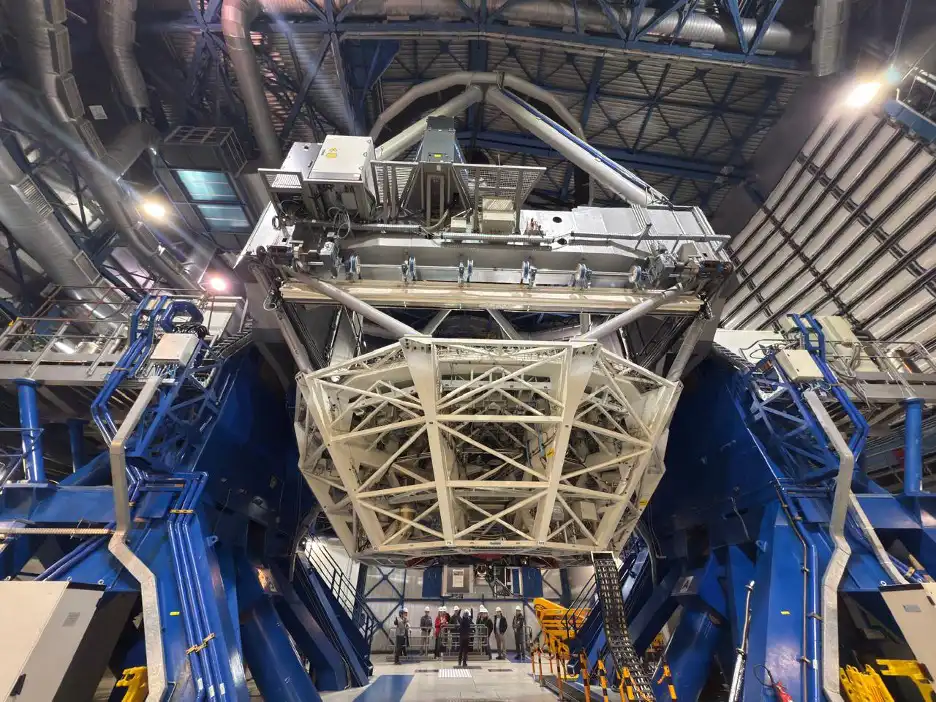
The tour’s main daytime activity was visiting professional observatories – the 8.1-meter Gemini South telescope near Vicuña, the twin 6.5-meter Magellan telescopes at Las Campanas, and the four 8.2-meter scopes that, together with their small outriggers, constitute the Very Large Telescope (VLT) on Cerro Paranal.
Jaime Droguett
It’s awe-inspiring to be inside the dome of an 8-meter-class telescope, especially when the telescope is moving, which was the case at the VLT. The mirror is huge, but it’s dwarfed by the structure that carries it, together with the secondary and tertiary mirrors and two huge, liquid-nitrogen-cooled instrument clusters on either side of the tertiary. The entire assembly is massive, yet the whole thing remains completely rigid while it tracks the sky with sub-arcsecond precision.
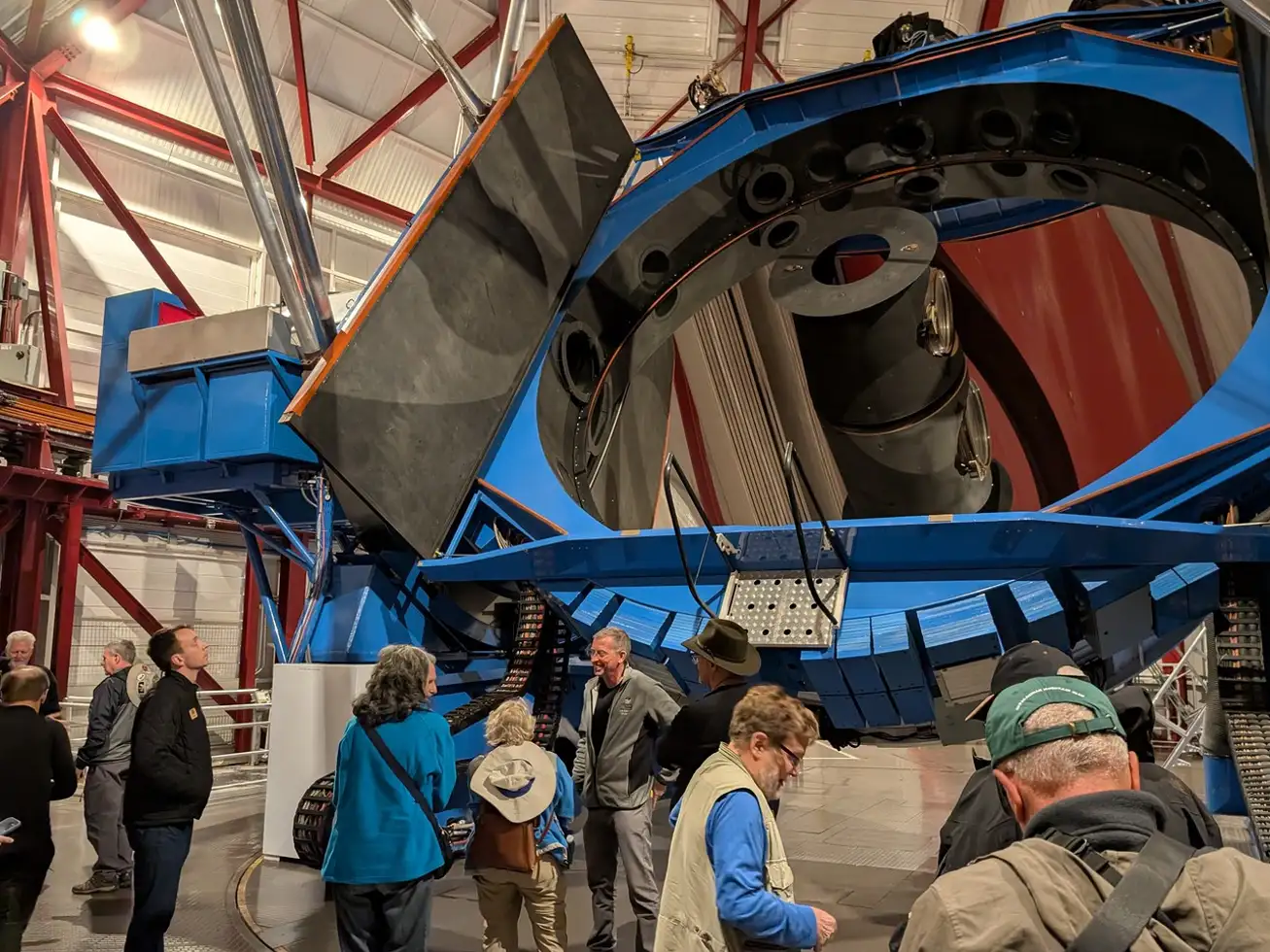
Our best tour by far was at the Magellan telescopes. That’s because it was conducted in person by David Osip, Associate Director of the Las Campanas Observatory. He gave a splendid presentation on the observatory’s history, capabilities, and social dynamics, and answered a broad range of questions. One of the tour participants asked if Osip could show us how the scope moved, and he obligingly pointed it all around the dome as we watched.
Despite their smaller apertures, the Magellan telescopes’ enormous fields of view coupled with the site’s superb seeing allow them to capture more data per hour than any of the 8-meter scopes that we visited.
Tony Flanders
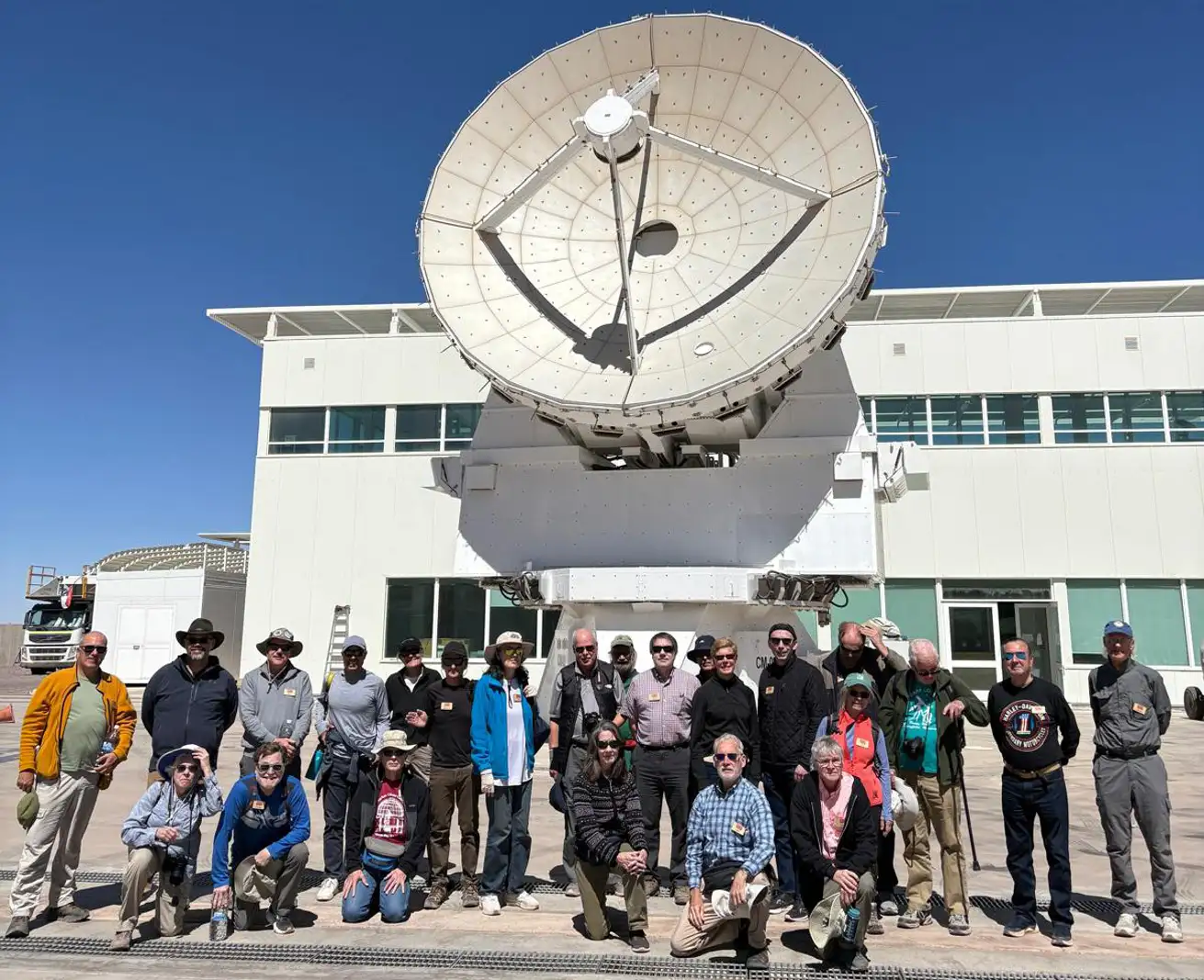
On a completely different front, we visited the Operation Support Facility (OSF) for the Atacama Large Millimeter/submillimeter Array (ALMA). The actual radio dishes that constitute the array are up on the Chajnantor Plateau at 5,000 meters (more than 16,000 feet), where the air is thin and microwave-absorbing water vapor is virtually non-existent. But when the dishes need to be serviced, they’re brought down to the OSF, just below 3,000 meters, where it’s possible to work and live for indefinite periods without supplemental oxygen. The dishes are also controlled from the OSF; in fact we spoke with the astronomer who was scheduling observations at the time. (Operating as it does in radio frequencies, the array is hard at work both day and night.)
The Land
Chile is a spectacular country, nestled between the towering peaks of the Andes and the Pacific Ocean. We were fortunate to have a guide, Royal Adventure’s Jaime Droguett, who is deeply knowledgeable about the area’s history, culture, geology, meteorology, and ecology, as well as being brilliant at logistics and altogether charming.
North of Santiago, the capital and biggest city, the country becomes increasingly arid. The largest concentration of observatories is near the lovely town of Vicuña, which averages around 6 inches of rain per year. The landscape is reminiscent of southern Arizona, dominated by shrubs and cactus at low elevations, with some trees at higher elevations and along streambeds. The observatories are in the coastal range, which is very rugged but only about 8,000 feet tall.
Vicuña itself is watered by the Elqui River, which descends from the heights of the Andes. It is in fact a hotbed of agriculture, famed for its grapes, which are used to make a brandy called pisco. We had a fascinating tour of the country’s largest pisco distillery on the afternoon we arrived.
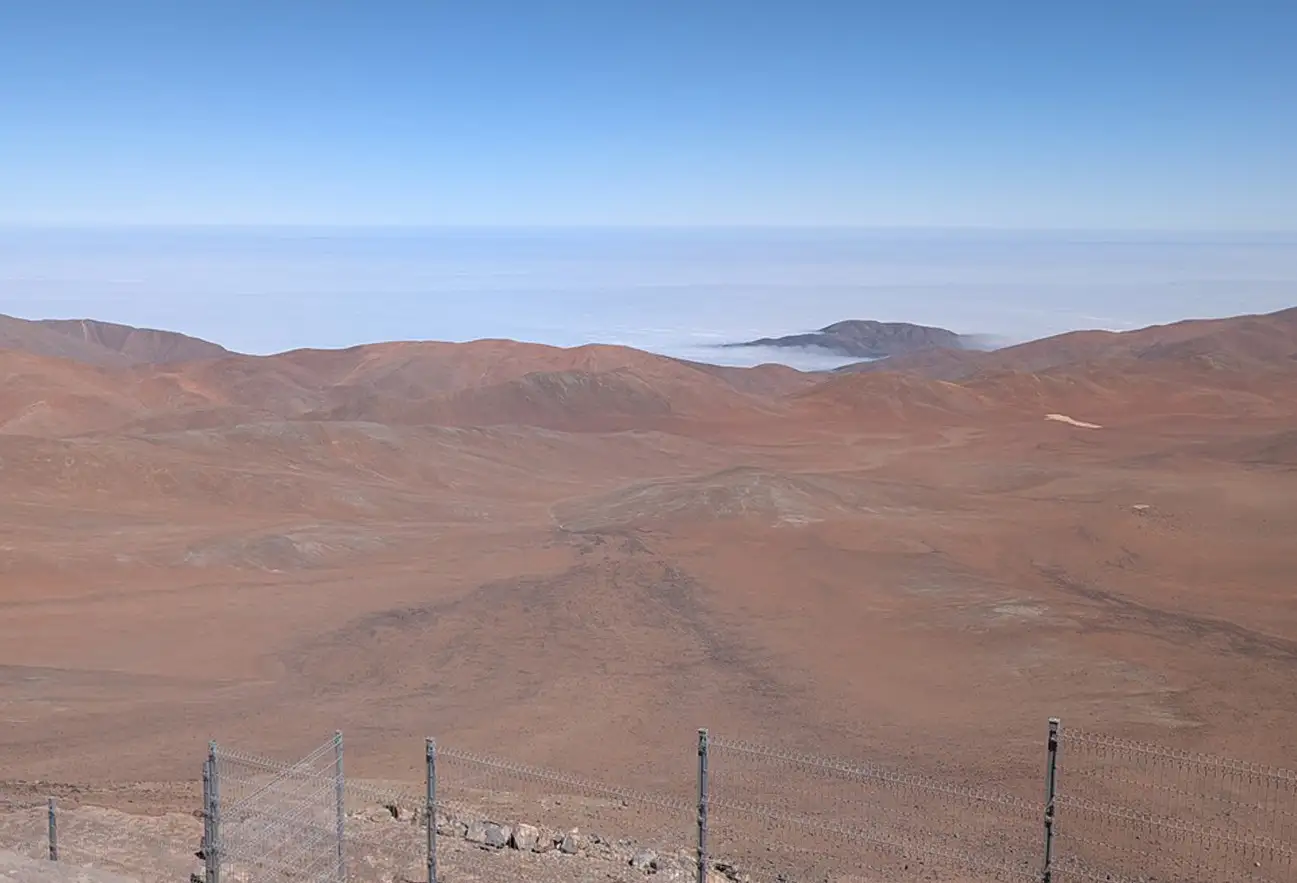
Cerro Paranal, home of the VLT, is also in the coast range, but almost 400 miles farther north, in the heart of the Atacama Desert. When we were there, a sea of fog extended from the foot of the mountain to far out over the Pacific Ocean. The cold marine air creates the perpetual thermal inversion that gives the observatories their outstandingly steady air.
Tony Flanders
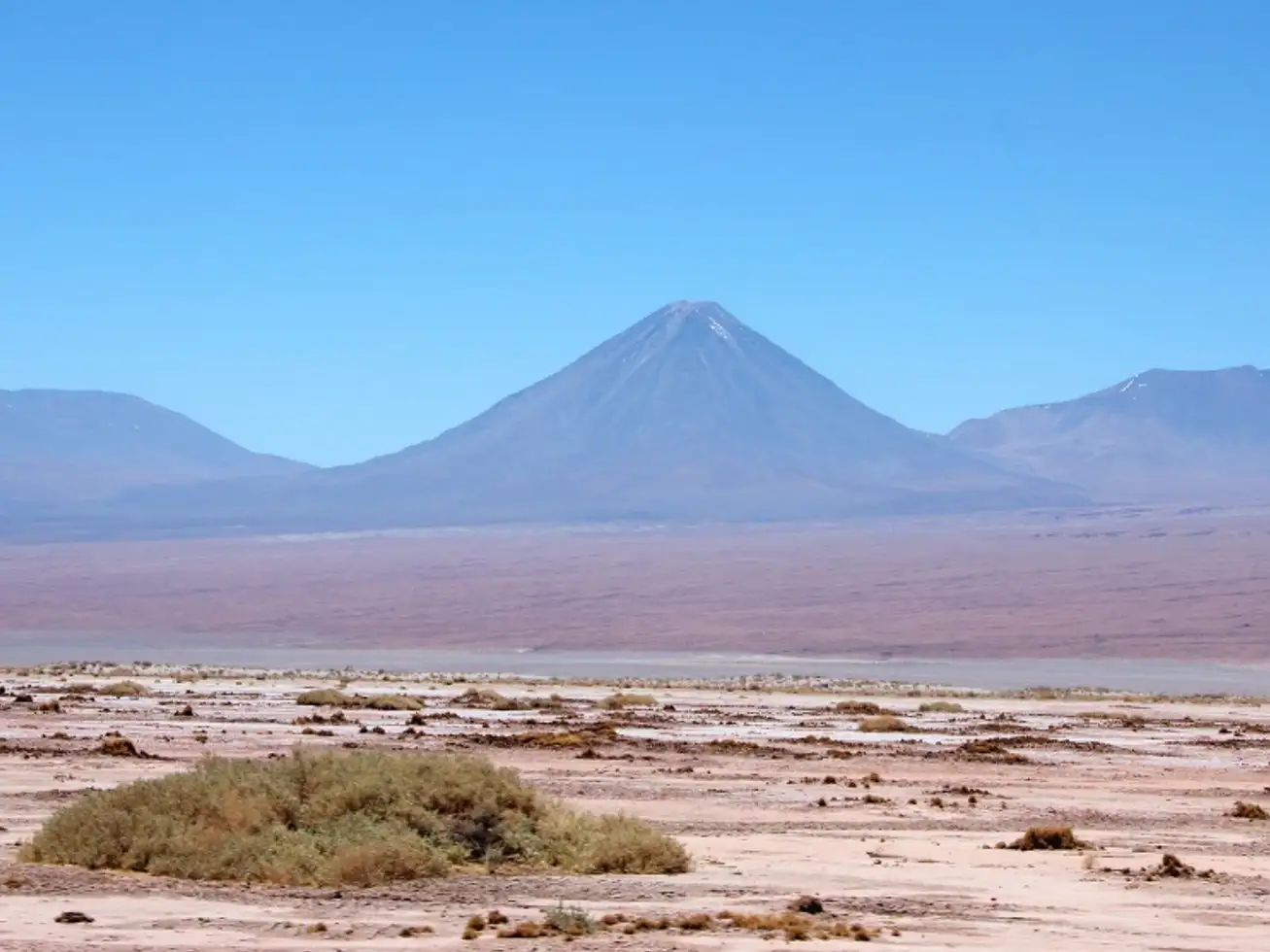
Wherever the fog reaches, a few shrubby plants grow. But to the east of the coast range, where rain falls only once a century if you’re lucky, there’s no macroscopic vegetation whatsoever. But Jaime assured me that if you dig down below the surface, you can still find bacteria in most areas.
Tony Flanders
The landscaped changed again as we approached our final destination, the oasis town of San Pedro de Atacama, which has been a gathering point for travelers since Pre-Columbian times. Sited at the junction of two rivers on a vast 8,000-foot plateau, beneath the line of huge stratovolcanoes that marks the crest of the Andes and surrounded on all sides by unique geological formations and wildlife habitats, San Pedro is endlessly fascinating and enticing.
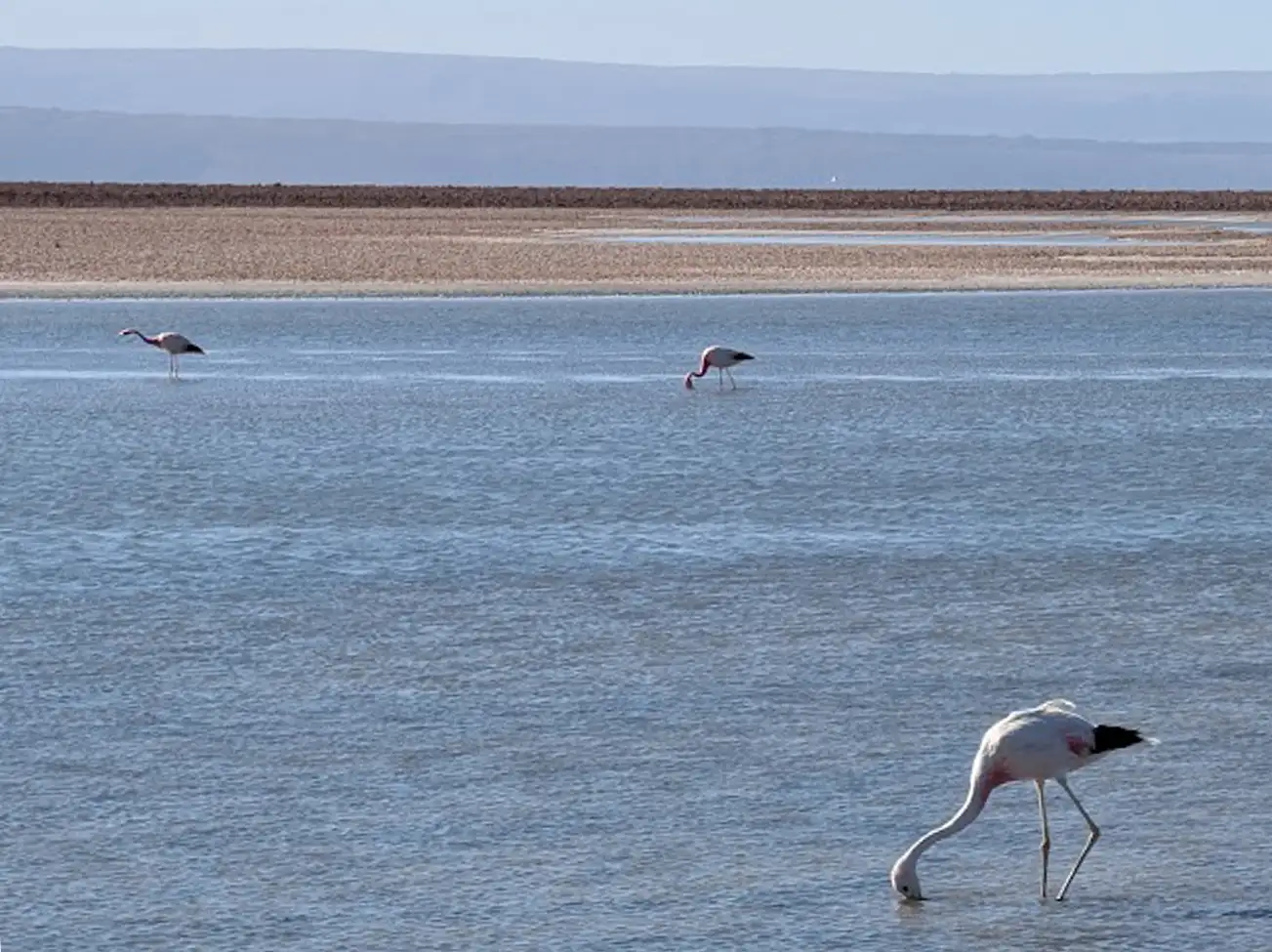
My own favorite excursion from San Pedro was to view the flamingos at nearby Chaxa Lagoon. The meteorite museum in town also got great reviews.
Tony Flanders
Southern Skies
We spent our nights viewing Chile’s skies. October offered us views of several objects that far surpass any counterparts in the northern sky. Leading the list are the Magellanic Clouds. At less than one-tenth the distance of the Andromeda Nebula, they display a wealth of nebulae and star clusters even through small binoculars.
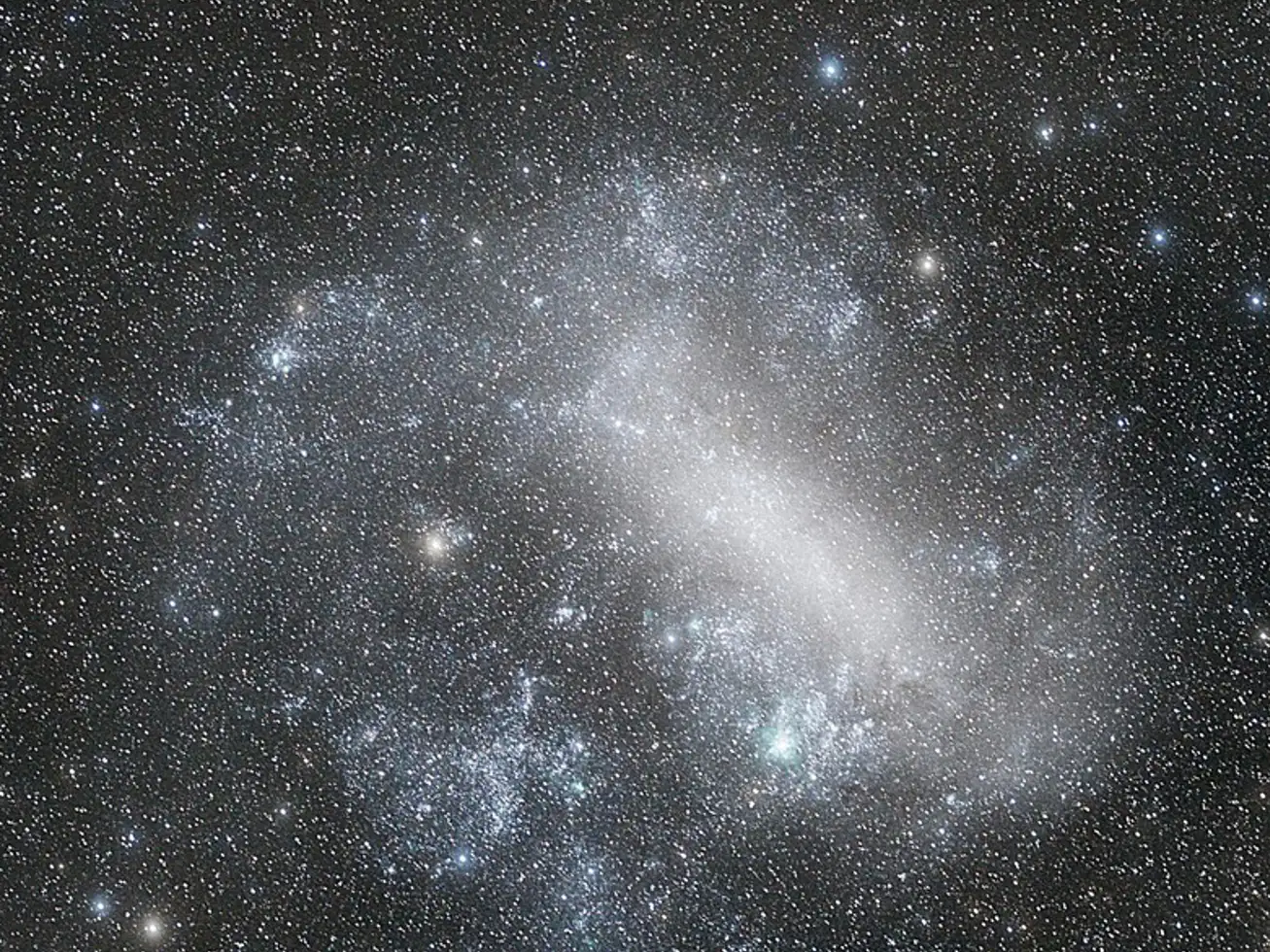
Greatest of all is the LMC’s Tarantula Nebula (NGC 2070), the most luminous star-forming region in our entire Local Galaxy Group. It’s readily visible to the unaided eye despite its staggering 160,000 light-year distance, more than 100 times farther than the Orion Nebula, and it appears fantastically complex and beautiful through a large telescope.
Our group viewed many celestial objects through large telescopes, first through the 25-inch Dobsonian at the El Pangue astro-tourism facility near Vicuña and later at the San Pedro de Atacama Celestial Explorations (SPACE) facility, whose scopes range from big (17.5, 24, and 28 inches) to gigantic (45 inches, one of the biggest amateur scopes in the world). By unanimous consensus, the view of the Tarantula Nebula through the SPACE facility’s 45-inch Dob was one of the highlights of the entire trip. The view through the same scope of 47 Tucanae, the sky’s second-brightest globular cluster, gave the Tarantula a good run for its money. We also viewed many lesser galaxies, clusters, and nebulae, including some that are visible but very low from the United States but appear overhead in Chile. Prominent among those were the Sculptor Galaxy (NGC 253) and the incomparable barred spiral galaxy NGC 1365 in southern Fornax.
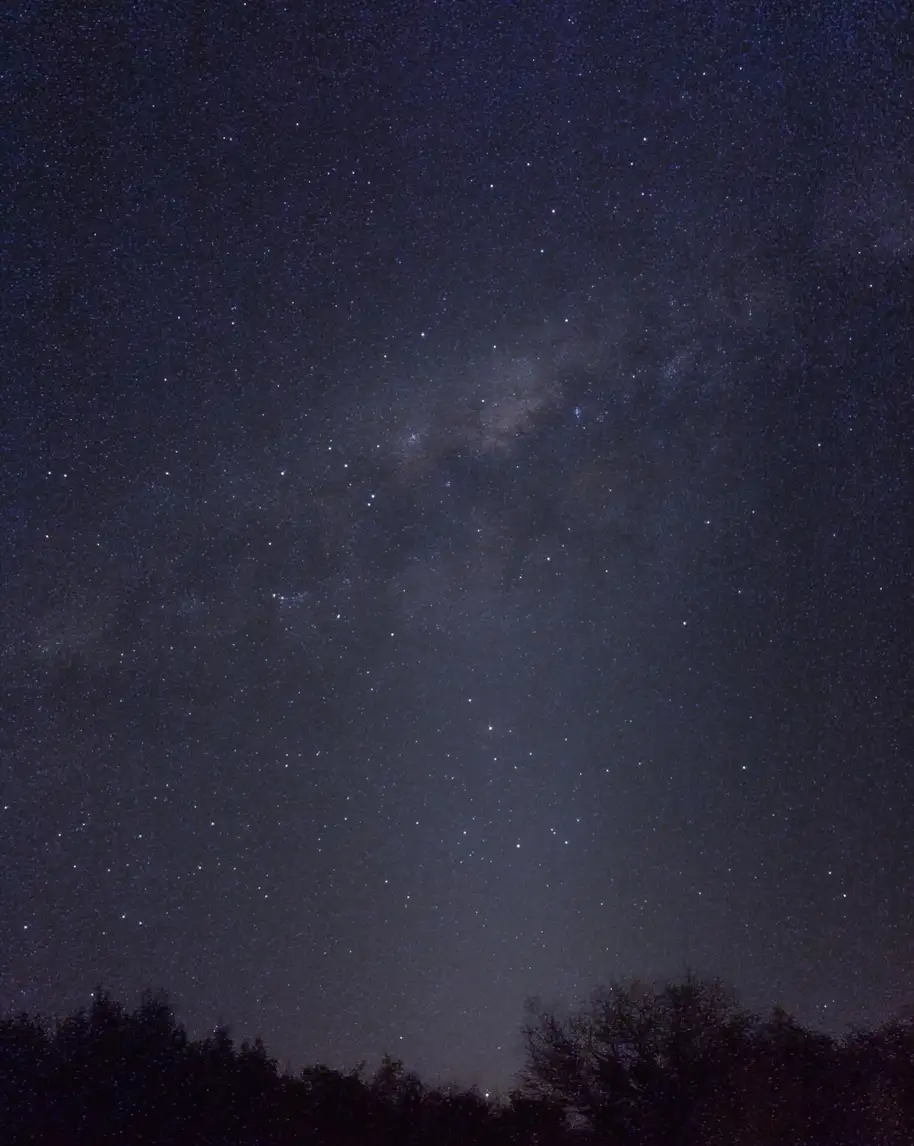
A substantial number of people brought smart scopes and DSLRs. Others took surprisingly good photos with their smart phones. In addition to deploying their instruments during our scheduled three nights at astro-tourism facilities, our astrophotographers were thrilled to find spots dedicated to astronomy at our hotels in Vicuña and San Pedro de Atacama. The open-air “observatory” at Hotel Cumbres in San Pedro was especially good – dark enough to get a superb view of the zodiacal light intersecting the brightest and broadest section of the Milky Way.
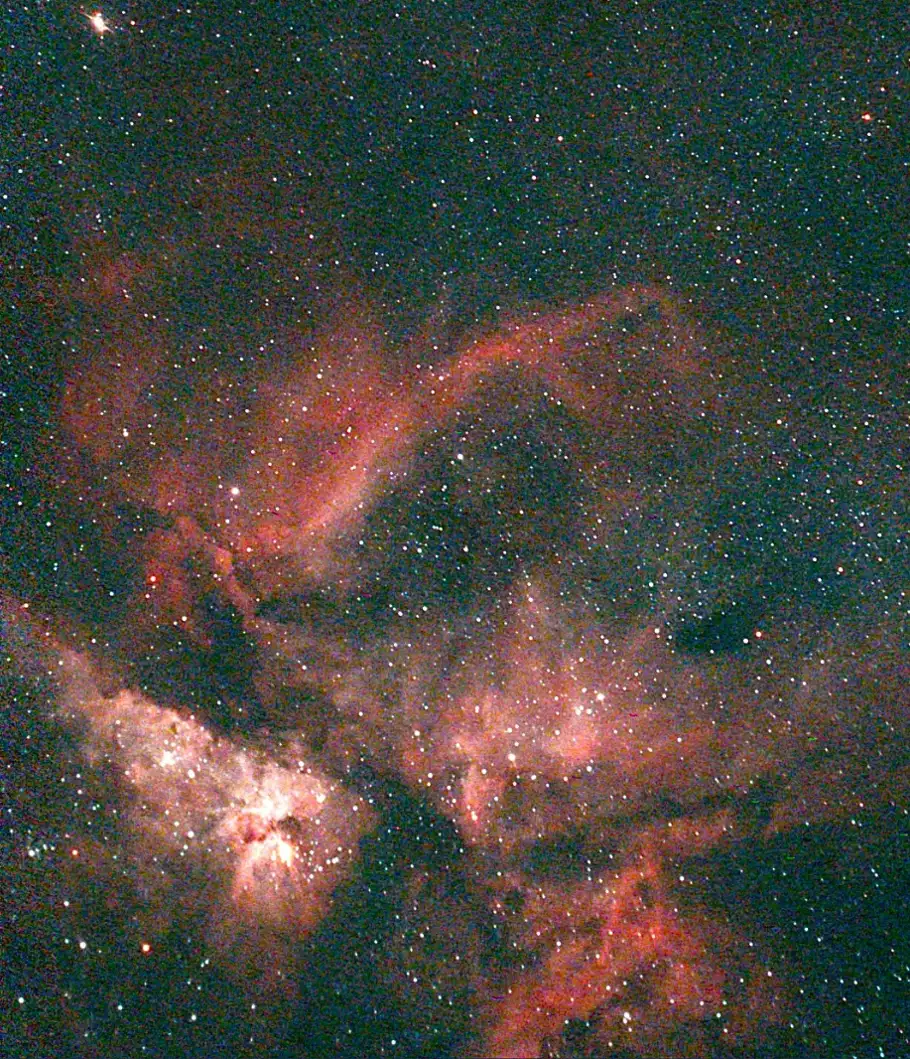
Our guide, the ever-resourceful Jaime Droguett, was even able to locate a 14-inch Dob that we could use at the hotel. Together with the small 80-mm refractor that I had brought, the Dob provided a sleep-deprived group of enthusiasts magnificent views of the Eta Carinae Nebula and its entourage of star clusters as they rose in the pre-dawn hours.
The Group
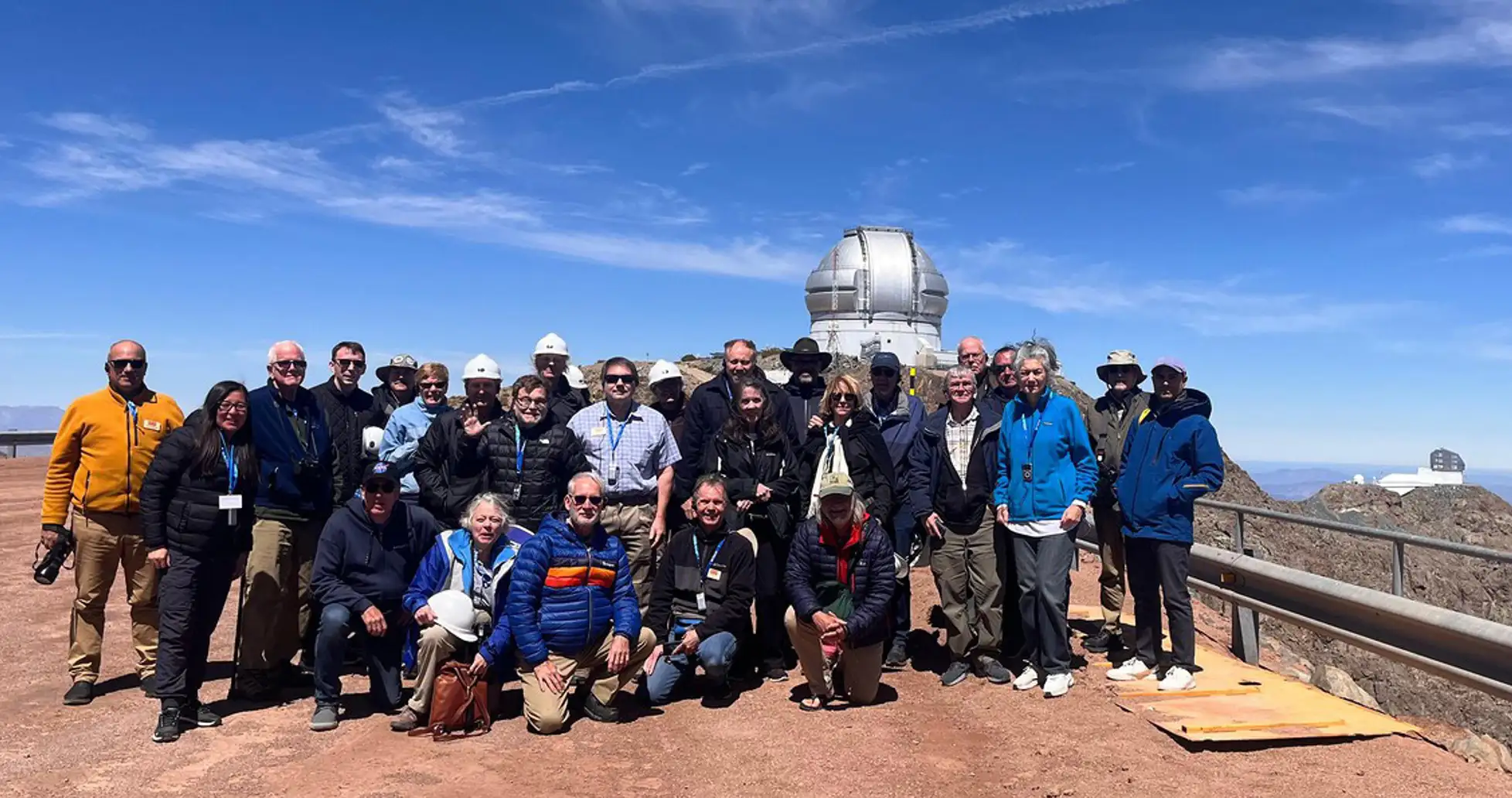
This was my third Sky & Telescope tour, and it reminded me yet again that the best thing about these tours isn’t the places we go or the sights we see, but the group itself. Drawn from all over the United States — and one from Canada — our group included astronomy professors and a retired observatory director as well as people who had barely looked through a telescope before. We were all united by a lively curiosity about the world around us, boundless enthusiasm, and good cheer.
ESO
Join a Sky & Telescope tour — see our astronomy adventures coming up in 2026, 2027, and 2028!
About Tony Flanders
Contributing editor Tony Flanders has been working with S&T in some capacity since 2003.


Comments
You must be logged in to post a comment.