 SUNSET:

 1
1The Federal Communications Commission (FCC) has approved the launch of Reflect Orbital’s Earendil 1 satellite — a space mirror 18 meters wide designed to reflect sunlight to the ground.

Reflect Orbital
The U.S. Federal Communications Commission (FCC) has approved the launching of Reflect Orbital’s Earendil 1 satellite over strong objections from the astronomical community. This spacecraft is essentially a large mirror that will reflect sunlight to Earth’s nightside.
The American Astronomical Society (AAS) warned the FCC that Earendil 1 poses a “potential for eye damage to amateur astronomers looking through reasonably sized telescopes.” The FCC stated in their ruling that such concerns are outside of their role in allocating use of radiofrequency spectrum. They added that harm from the reflector is not likely to occur.
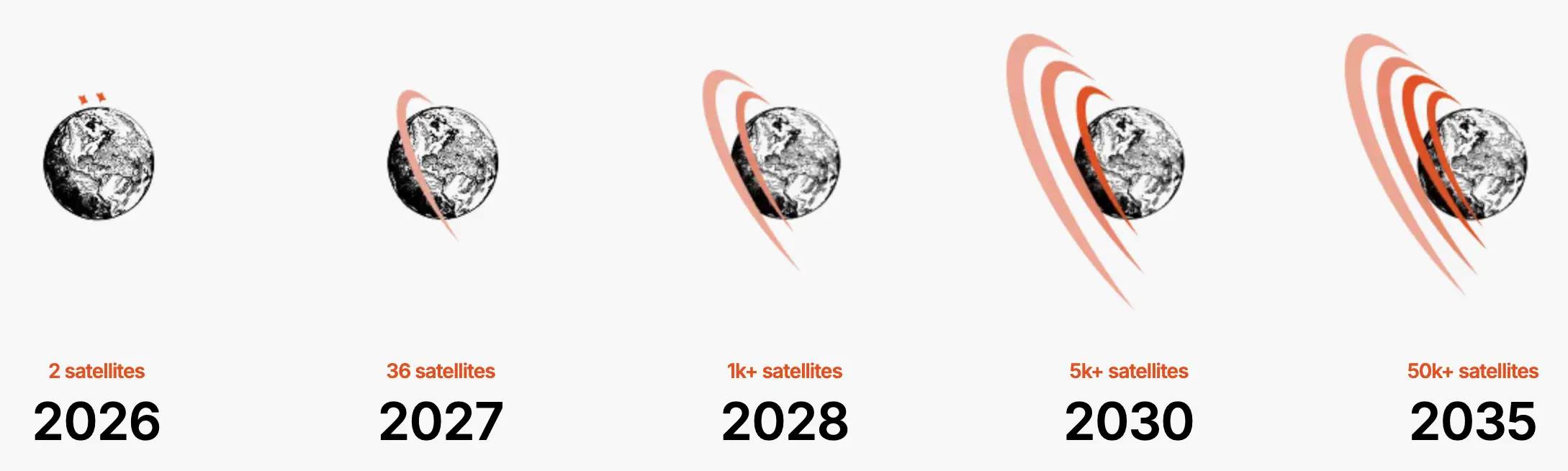
Earendil 1 is a test satellite being manufactured by Reflect Orbital, which is headquartered in California. The reflective surface is glossy mylar plastic measuring 18 by 18 meters (59 by 59 feet). The spacecraft will orbit at an altitude of about 625 km (390 mi) and reflect sunlight to a spot on the ground that’s 5 km wide. The company intends to launch 50,000 Sun-reflecting satellites in the coming years.

Reflect Orbital
Reflect Orbital would sell reflected sunlight to parties wanting nighttime illumination and to solar energy farms. The company’s CEO, Ben Nowack has stated, “It would be really great if we could get some solar energy before the Sun rises and after sunset, because then you could actually charge higher prices and make a lot more money.”
Besides the potential for retinal injuries, the AAS also advised the FCC about the detrimental impact on astronomical research. While reflected sunlight would not be aimed at observatories, scattering of the intense lightbeams in Earth’s atmosphere would increase the sky brightness even at remote locations. Research by Oliver Hainaut (European Southern Observatory) finds that the full population of Reflect Orbital satellites would increase sky brightness by a factor of 2 to 3.
Reflect Orbital
Aesthetic appreciation of the night sky would also suffer. The intense light from Reflect Orbital satellites would render stars invisible for people within illuminated areas. Children in particular would be deprived of the starry sky.
In response to a query about the impact of their satellites on astronomy, a Reflect Orbital representative replied, “Reflect Orbital is actively commissioning independent, third-party research on the impacts of its technology through both independent researchers and federal partners. This includes working to develop a coordination agreement with the National Science Foundation. The company is committed to ongoing dialogue with scientists, astronomers, environmental researchers and any community that has a legitimate interest in how its technology develops.”
After the FCC approved Earendil-1, the AAS expressed “dismay” at the decision. Their response goes on to state, “The AAS is also deeply concerned by the statement from the FCC that the deployment of a solar reflector is beyond the scope of the Commission’s authority to regulate. While the current license is for a single satellite, this logic implies that the Commission would also have no ability to consider the severe implications of a constellation of 50,000 solar reflectors like that envisioned by Reflect Orbital. In the absence of another licensing agency that could take these considerations into account, we believe that it is critical for the FCC to consider all of the impacts of the satellite's use case.”
Telescopes for amateur astronomers already come with a warning to avoid looking at the Sun. Now they will need another one for Reflect Orbital satellites.


Comments
Michal
July 15, 2026 at 12:46 pm
And when the company goes belly-up we will have 50K uncontrolled reflectors pointing aimlessly down into our night skies. I hope there is a lawsuit pending to stop this - soon!
You must be logged in to post a comment.
You must be logged in to post a comment.