 SUNSET:

 0
0Despite inopportune clouds, Sky & Telescope’s first tour to Greenland offered unforgettable adventures with enormous icebergs, sled dogs, and more.
Monica Young
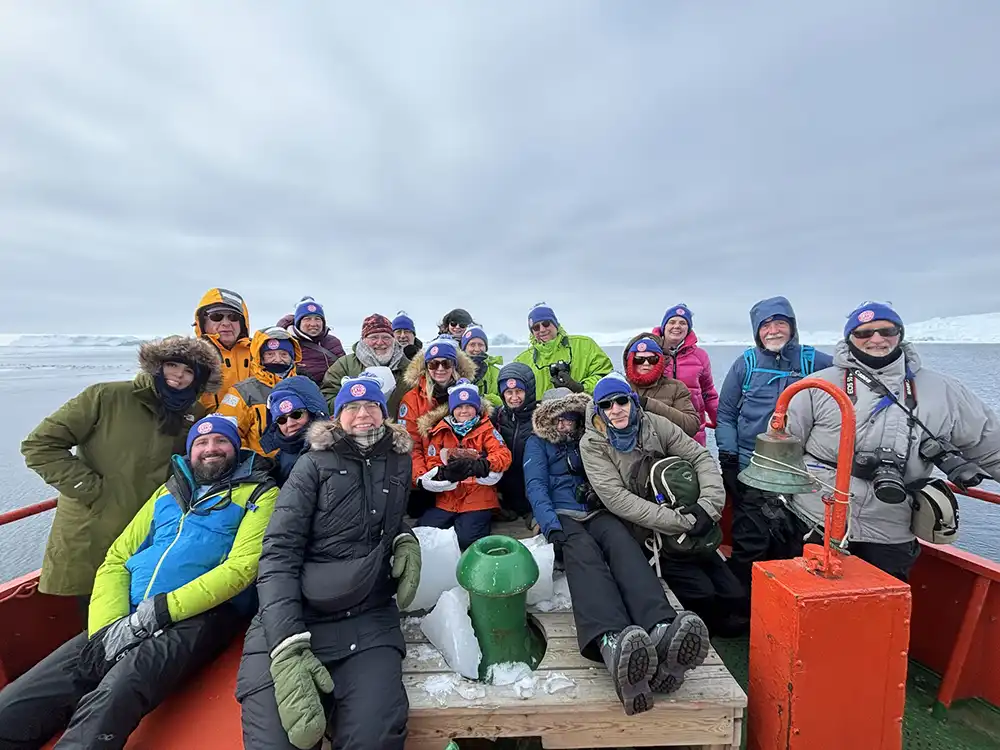
For a chance to see a deep partial solar eclipse and northern lights, Sky & Telescope organized a first-time tour to Greenland in March/April 2025. As luck would have it, we didn’t see either the eclipse or the lights — but what the 21 of us were able to participate in was a once-in-a-lifetime experience in a land of extremes.
We came prepared for Greenland’s arctic climate, with warm sweaters, jackets, boots, and gloves. A typical spring day while we visited had a high of 20°F and a low near 10°F, so multiple layers helped keep us comfortable during excursions. Our local guides, on the other hand, were warm and welcoming, offering us a first-person perspective on the history and culture of Greenland.
Gordon Fesenger
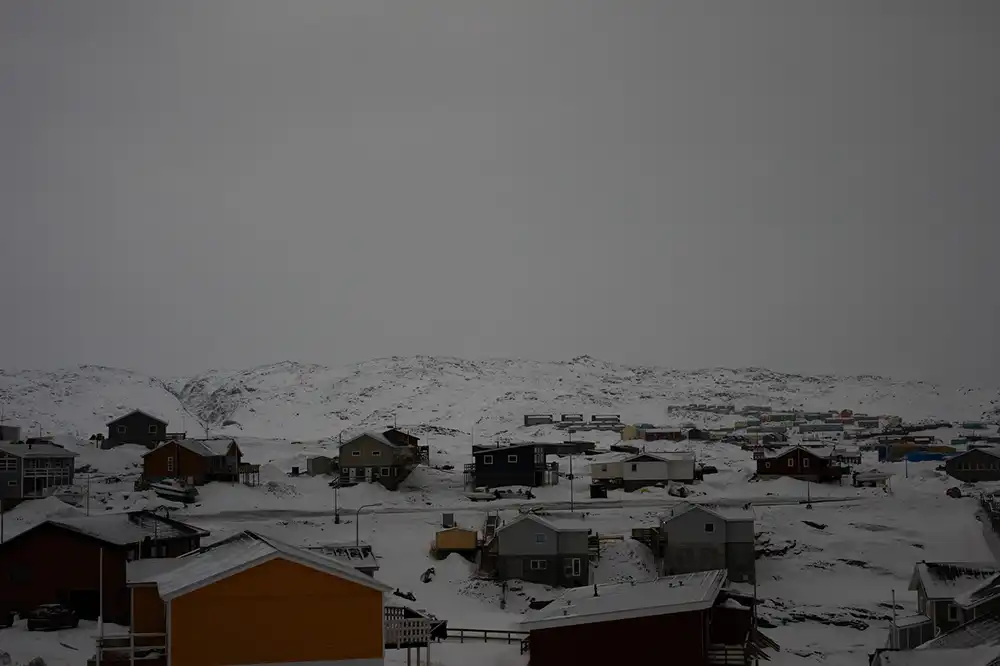
Of the island’s people, almost all are Inuit, and Greenlandic is the primary language spoken. Our walks through Ilulissat and, later in the tour, through Greenland’s capital, Nuuk, showed us some key places and moments in the country’s history. Annika, one of our guides from World of Greenland, also shared with us stories of her grandfather, who grew up in a peat house in Uummannaq, a village north of Ilulissat, and shared many Inuit traditions with her. When she was younger, she helped him with his team of dogs; sled dogs were then a primary mode of transportation. Caring for sled dogs now still brings her a sense of belonging. (We were happy to hear that now, at 89, her grandfather is still doing well!)
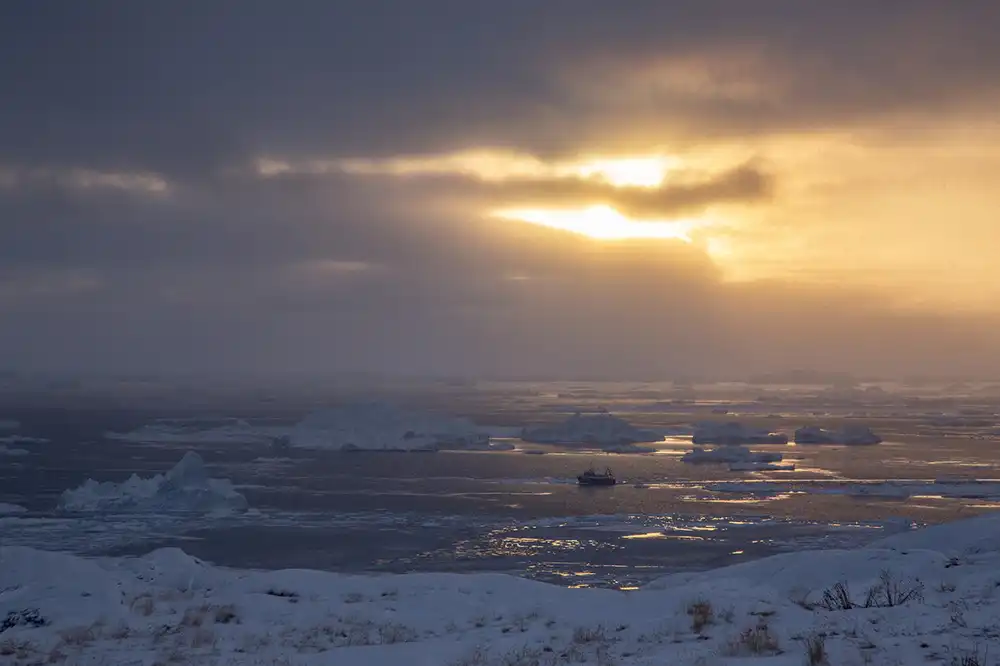
After our walk through Ilulissat that first day, tour participants had free time to explore sites such as the Icefjord Center, take coastline walks with views of the icebergs in Disko Bay, or even ride a helicopter to the Jacobshavn Glacier.
Eliot Herman
On the morning of March 29th, the day of the partial solar eclipse, the Sun rose behind thick clouds. Nevertheless, our group gathered outside to see if the clouds would thin (taking breaks inside with hot tea and coffee). The clouds didn’t heed our desires, but the eclipse was deep enough — with the Moon covering 85% of the Sun’s face at maximum — that the skies became noticeably darker for 10 minutes or so before lightening again into full daylight.
Clouds likewise covered our evenings, and an unusual geomagnetic calm meant that we saw only the briefest of auroral glimmers one night. Would that Sky & Telescope editors could control the weather! But while the astronomy of this tour would have been icing on the cake, the cake itself was scrumptious. We had no chance to brood about clouds, because that afternoon we went with our local guides to go dogsledding.
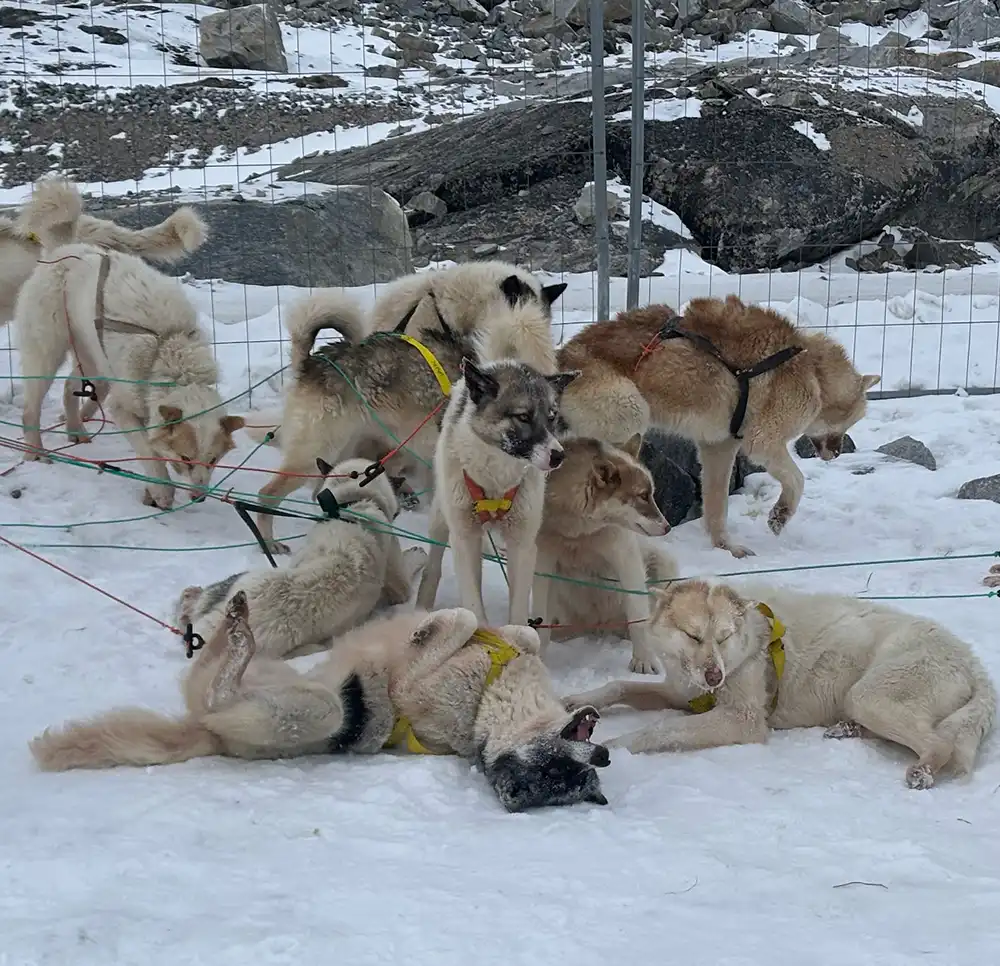
Dogsledding makes for a rugged ride in the spring, as melting snow reveals short grass and rocks, but the views of the snow-covered countryside — not to mention the views of the Greenlandic dogs themselves — are worth the bumps.
Monica Young / Sky & Telescope
Even as I and my sled-riding partner awaited our musher, the much-anticipated national dogsled race in nearby Sisimiut was just finishing — and Henrik Jensen from Ilulissat had won. Hometown pride lit up the faces of our guides, and fireworks went off in the daytime. Folks in nearby apartments opened their windows to shout with glee and, as we took off in our sled, we could hear cars honking their horns in celebration.
The next day offered more adventure: First, we hiked to the UNESCO World Heritage Site of Sermermiut, where the Inuit used to live for hundreds of years (initially, only Danes lived in Ilulissat). Annika and another guide told us about the settlement’s history, as well as its more recent past — some Inuit continued to live in Sermermiut until the 1950s. Past the settlement, a short walk up through hills offered us a panoramic view of the icebergs filling Disko Bay.
Later that afternoon afforded us an even closer view of the icebergs as we set off in a boat to explore the bay. Seeing the giant slices of ice up close put their sheer size into some perspective. Once we reached the icebergs, the captain set the boat into a slow drift that allowed us to take in their magnificence in silence, punctuated by murmurs and laughs. Even the iPhone user among us (ahem, that was me) was able to capture stunning photographs. The excursion was topped off with an indoor drink of gin and Labrador tea (qajaasaq in Greenlandic, which translates literally to “little kayaks” for the shape of the herb’s leaves).

Gordon Fesenger
Our flights back took us through Nuuk, where we stopped for a night with chance to visit the fascinating National Museum, and then back to Copenhagen for our flights home (or, for some, a few extra days in Denmark). On the way, we reminisced about the sights we had seen, but also about the great friends we had traveled with. Astronomy tours tend to attract fascinating people, and this group was no exception. We had so many good conversations alongside our adventures — and now that I’m back home, I have a few more places to visit!
If going on an astronomy tour is on your bucket list, check out the Sky & Telescope tours coming up this year and next:
About Monica Young
Monica Young, a professional astronomer by training, is News Editor of Sky & Telescope.


Comments
You must be logged in to post a comment.