 SUNSET:

 0
0During December you can watch for some impressive shooting stars and spend some time with the “Demon Star,” which can’t decide how bright it wants to be. Bundle up, grab your curiosity, and head outdoors for this month’s fun and informative Sky Tour.

Listen Here:
Podcast: Play in new window | Download
Subscribe: Apple Podcasts | Spotify | Email | RSS | More
Check out the illustrated version of this podcast on Sky & Telescope’s YouTube channel!
December is the month of the solstice, which occurs at 10:03 a.m. Eastern Standard Time on the 21st. The December solstice signals the beginning of winter for those of us north of the equator, and it also brings the longest stargazing night of the year!
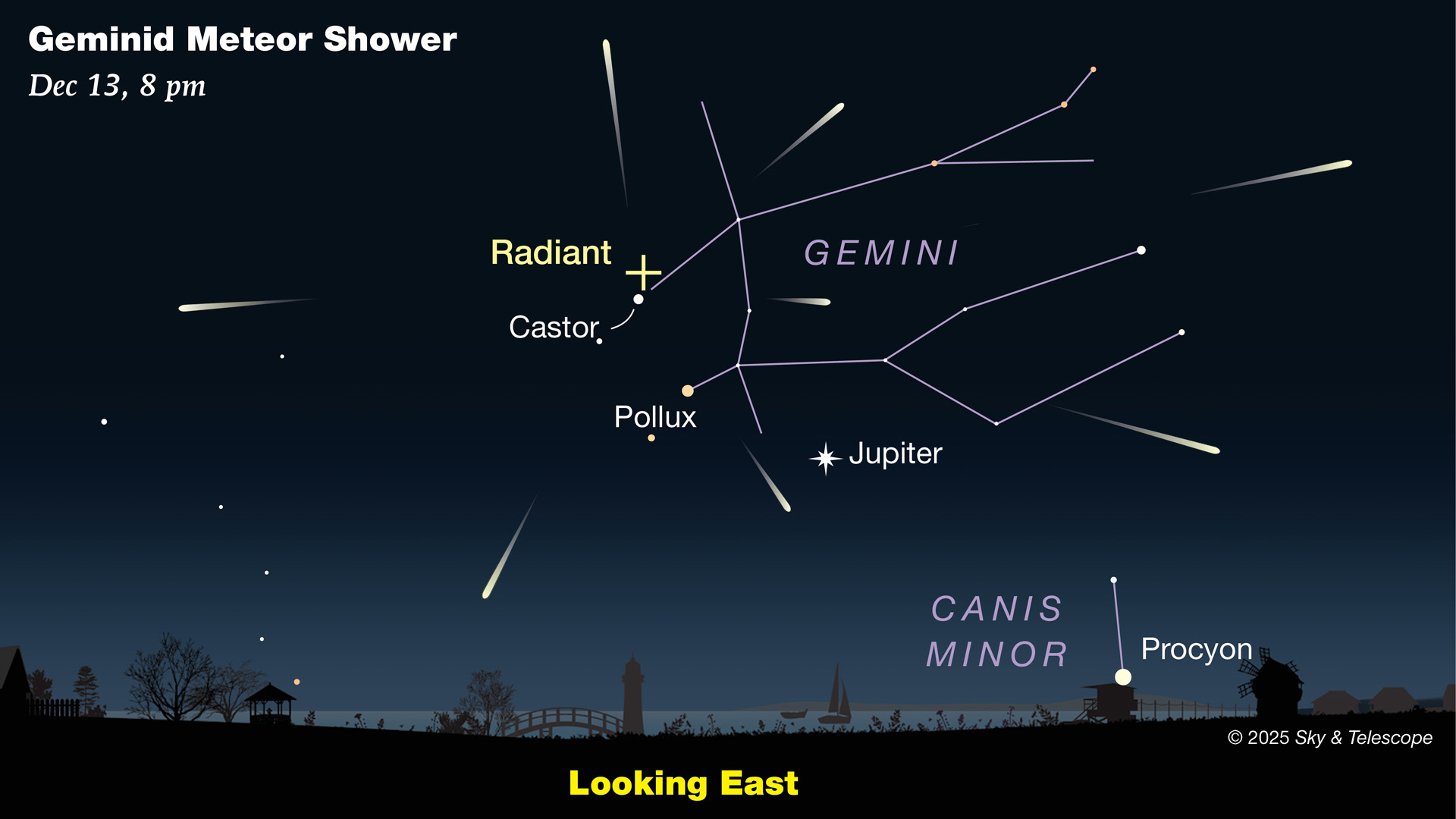
The annual Geminid meteor shower peaks this month, and this under-appreciated display can often produce the year’s best meteor event. Ordinarily you can count on the Geminids to deliver maybe one meteor per minute from a really dark location. To learn the best night to watch for them — and how best to watch — check out this month’s Sky Tour episode.
While you’re waiting for the Geminids to appear, you can easily track down a couple of planets. The most obvious is Jupiter, a brilliant beacon that rises in the east a couple of hours after sunset. The other bright planet to look for is Saturn, which looks much dimmer than Jupiter — but it’s not hard to find. At nightfall, it’s roughly due south and about halfway to overhead. There’s one more planet you can hunt for, and that’s Mercury. Look for it low in the east before dawn throughout the first two weeks of December.
With all this planetary action going on, are there any stars worth viewing? You bet! Around 9 p.m. early in December, and by 7 p.m. at month’s end, you can take in six of the 10 brightest stars in the nighttime sky! Those are Vega, Betelgeuse, Rigel, Sirius, Capella, and Procyon. This month’s Sky Tour episode tells you where to find them in the evening sky.
Sky & Telescope
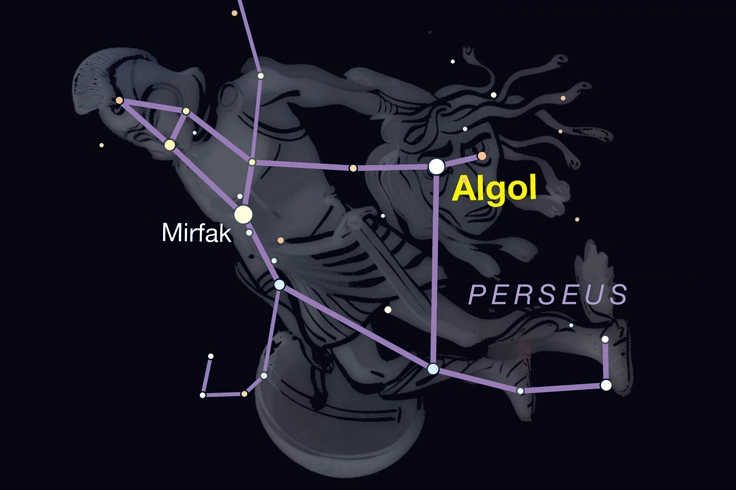
A star that’s not on that top-10 list — but fascinating in its own right — is plainly in view on December evenings. Arabic skywatchers of old named it “head of the ghoul (or ogre).” In Hebrew folklore, it was known as the Devil’s Head. It’s also known as the Demon Star. So which star is this, and how can you find it? You guessed it: This month’s Sky Tour has all the answers!
Of course, there’s lots more to see, so if you’ve never listened to the Sky Tour podcast, you’re missing out on a fun, informative romp across the December night sky. So why not give it a try?
About J. Kelly Beatty
J. Kelly Beatty, S&T Senior Editor, joined the staff of Sky Publishing in 1974 and specializes in planetary science and space exploration. Learn more about him here.


Comments
You must be logged in to post a comment.