 SUNSET:

 10
10Experts are concerned that the satellites could ruin dark skies, pollute the atmosphere, and worsen the space debris. The public has a limited time to comment.
SpaceX
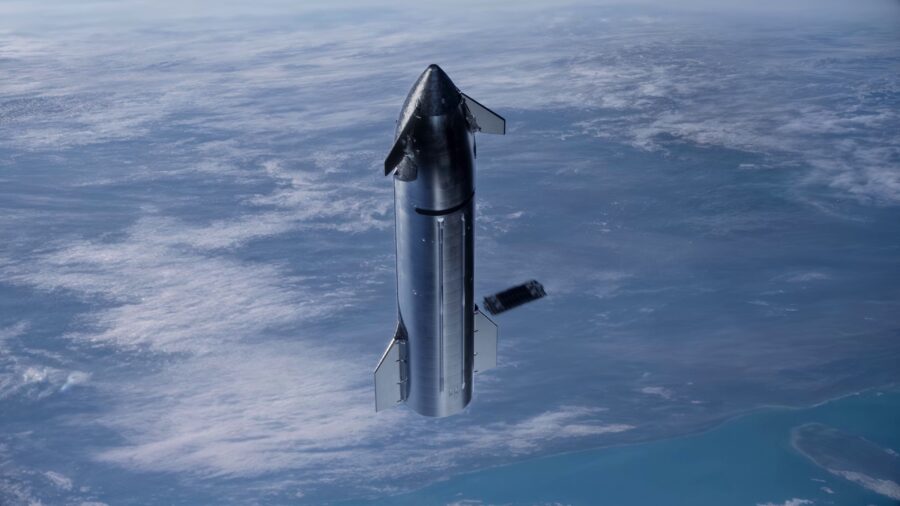
SpaceX has asked the Federal Communications Commission (FCC) for permission to launch up to 1 million new satellites that will act as data centers to run AI. Let that number sink in for a moment. That’s 100 times more satellites than the company’s current Starlink constellation.
Elon Musk, founder of SpaceX, claims that data centers in space will be better than ones on the ground, where they take up land, devour electricity, and guzzle water for cooling. Space has lots of room, abundant solar power, and it’s cold. Musk wrote in a statement, “In the long term, space-based AI is obviously the only way to scale.”
That conclusion isn’t at all obvious to other experts, including Jonathan McDowell, an astronomer and space sustainability expert who recently retired from the Harvard-Smithsonian Center for Astrophysics. He’s not convinced that SpaceX’s plan is “a good idea or even a viable idea.”
“The industrial scale of this is staggering,” he says, adding that this may be a publicity stunt. “I don’t think it’s going to happen in the next few years.” SpaceX did not respond to requests for comment.
Blocking out the stars
To imagine a single orbital data center, start with a low-Earth orbit communications satellite. Move it up to a higher orbit of 1,000 kilometers (600 miles) to put it in a Sun-synchronous orbit that allows continuous access to solar energy. Increase the size of its solar panels and add computers and heavy radiators for cooling. It would be a “ginormous” structure, says McDowell, “probably 100 meters (330 feet) tip to tip.”
(SpaceX's application calls for altitudes ranging from 500 to 2,000 km, as well as orbits at both 30° inclination and Sun-synchronous. Recent details unveiled by Musk suggest the satellites' actual size might be even larger, 170 meters across.)
That high orbit is good for powering computers, but it’s bad if you care about dark skies and stargazing. Astronomer John Barentine (Dark Sky Consulting) says that these orbital data centers “would be visible probably all night long over much of the Earth over much of the year.”
Right now, there’s not enough technical detail available to calculate exactly how bright they would be, Barentine adds. But simulations based on the data have alarmed him. “It is so potentially transformational to the night sky that I think it would really endanger the hobby [of stargazing]," he says. The science of astronomy would become far more difficult, too, with increased visual and radio interference from so many satellites.
Blasting off and breaking down
Space does make it somewhat easier to power and cool a data center, McDowell acknowledges. But building and managing something meant to zip around the planet takes energy in other forms.
Currently, a SpaceX rocket blasts off every few days. Musk’s plan calls for hourly launches each carrying 200 tons. Those would be with the powerful Starship rocket, which belches out greenhouse gases and pollution. With our current technology, these emissions would outweigh any carbon savings from space-based solar power and cooling, a 2025 study found.

ESA
Once the satellites are up there, they need to avoid each other and all the space junk left over from the Cold War. New satellites are designed to dodge obstacles. But just “a few bad collisions” could trigger a runaway cascade of crashes, McDowell says, leading to a belt of debris that renders much of space completely unusable.
Finally, all of these satellites eventually need to be scrapped. The most common way to dispose of a satellite is to burn it up in Earth’s atmosphere, where it would leave behind metals. Scientists are still studying the environmental impact of our current rate of launches and re-entries, says McDowell. Increasing both by a factor of 100 would certainly raise the risks of damaging the ozone layer and polluting the upper atmosphere.
A way forward
Space is a resource that the whole world shares. China and the European Union have their own plans for orbital data centers, as do a number of other companies. So even if SpaceX never actually reaches its audacious million-satellite goal, some number of orbital data centers are likely to become a reality.
“Innovation in space is the next frontier,” says public policy expert Karthik Kannan (University of Arizona). He’s collaborating with engineers in a project called AZSCI (pronounced AZ-Sky), investigating how to build orbital data centers safely and sustainably.
“I enjoy the sky,” says Kannan. “It’s mesmerizing to look at the stars.” But he thinks that orbital data centers will be important for all kinds of future uses of space, including space travel. So it’s important to set guidelines and discuss policy surrounding our use of space now, he says.
In order for SpaceX to move forward with its plans, the FCC must grant permission. Through March 6th, anyone can submit a public comment regarding the proposal. The comment period for the SpaceX filing closes on March 6th, while the Reflect Orbital comment period closes on March 9th.
Editorial note (March 27, 2026): Information was added regarding the FCC application as well as the satellites' possible size.
About Kathryn Hulick
Kathryn Hulick is a freelance journalist and author of The UFO Files and Welcome to the Future. She runs the Substack Wow! Tech & Nature.


Comments
Rich P
February 27, 2026 at 9:34 am
Space is not cold, it is an excellent insulator. Solar power is low density and expensive to collect. Time to switch to decaf.
You must be logged in to post a comment.
Monica Young
February 27, 2026 at 11:27 am
Yes, space is an excellent insulator because there's not much in it. Heat would need to be radiated away, and that would require large surface areas. And those surface areas would not only be visibly bright, if angled such that they reflect light from the Sun to Earth, they'd also be bright in the infrared!
You must be logged in to post a comment.
Elofson
February 28, 2026 at 12:18 pm
Exactly.
You must be logged in to post a comment.
-xx-
February 27, 2026 at 6:00 pm
Anytime I hear about these types of plans, I feel like their should be a public component requirement. In many cities, if you plan to build a large residential or commercial complex, you are required to add some amount of public asset. Sidewalks, bus stops, public art, things like that. If you plan to launch a million satellites, perhaps you should be required to also build and launch a new space telescope. Or a system of satellites designed to capture space debris. Or...?
You must be logged in to post a comment.
gzotti
February 28, 2026 at 3:01 am
This satellite pandemonium is tech billionaire hybris at its best. Profit for one, and complete destruction of a cultural and recreational space of enjoyment and solemnity for all mankind. This cannot be compensated with a few space telescopes. It sounds like deforesting and creating an oil field plus refinery in Yosemite or so, just worse as its consequences are global and in practice perennial. You may want to landfill Grand Canyon. The rest of the world disapproves being landfilled.
You must be logged in to post a comment.
Bill
February 28, 2026 at 11:05 am
One million satellites is nearly 25 per square degree of sky -- terrible for astronomy and esthetics. Space is hard to get to, a difficult environment to operate in, and limited options for repair service -- you should only deploy there if absolutely necessary, and I'm not convinced that data centers are a compelling case. Anything they need can be done more easily on earth.
Other thoughts: One launch per hour sounds like a range safety nightmare. Is their launch vehicle reliability good enough to keep catastrophic failures within an acceptable range? Once they reach steady state population, satellites will be failing and reentering at the same rate they went up. Where are they going to get the communications bandwidth for a reasonable data rate on a million satellites?
You must be logged in to post a comment.
Elofson
February 28, 2026 at 12:34 pm
Yes, that's a dumb idea.
1. It will destroy Earth-based astronomy.
2. Solar power is low-density, demanding enormous collection areas to generate enough energy.
3. Space is an excellent insulator, making it difficult to cool the AI.
4. It's very short-sighted. Within a few years, fusion energy will be abundant on Earth.
But Elon Musk loves solar panels and chemical batteries.
You must be logged in to post a comment.
Daniel Crowe
March 2, 2026 at 10:01 pm
Commercial fusion power has been 10 years away for the last 75 years. The only stable fusion reactors humans know are stars. I would be ecstatic if we could develop fusion reactors to power electric grids, but I’ll be surprised if it happens in my lifetime.
You must be logged in to post a comment.
[email protected]
March 3, 2026 at 12:28 pm
Seems like a kludge.
Come on Elon YOU ARE ACTUALLY SMARTER THAN all that.
Seriously, is there another way to do this?
Do we REALY need AI data centers in space?
But----over the years I have seen idle speculation about giant microwave relay satellites, Space Elevators, large objects in orbit of all types, giant mirrors for sunlight at night, orbiting bright containers of "human cremains" etc. In these articles, the aesthetic effect of these is almost never discussed. In a way we have been conditioned by all this.
Hope this idea does NOT come off. I have no hostility to Musk, indeed I approve of his entrepreneurship and innovation---and if he accelerates our becoming a mufti=planet species then he will have increased our chances of long-term survival as a species. His rockets landing on their tails is brilliant----NASA should have done this YEARS ago. He IS our pot smoking Edison. BUT even Edison had some weird impractical ideas that never came off! I HOPE THIS ONE DOES NOT
You must be logged in to post a comment.
[email protected]
March 3, 2026 at 12:30 pm
In above comment read "multi-planet" where I wrote accidentally "mufti=planet".
You must be logged in to post a comment.
You must be logged in to post a comment.