 SUNSET:

 0
0The groundbreaking mission designed to observe our Sun and its interactions with Earth celebrates three decades in space this week.
NASA / ESA / SOHO / ATG Media Lab
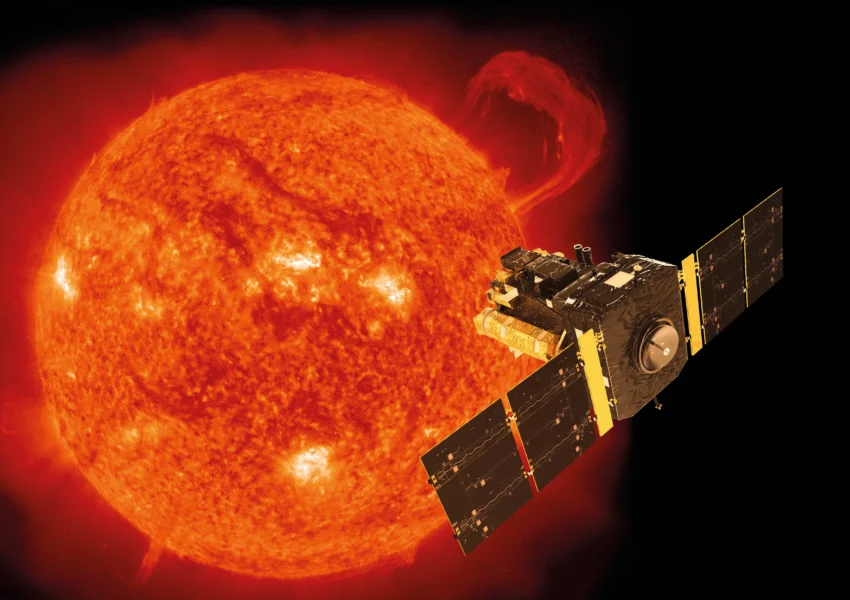
A pioneering mission in solar astronomy and space weather science has passed a key milestone: The Solar and Heliospheric Observatory (SOHO) crossed an amazing 30 years in space.
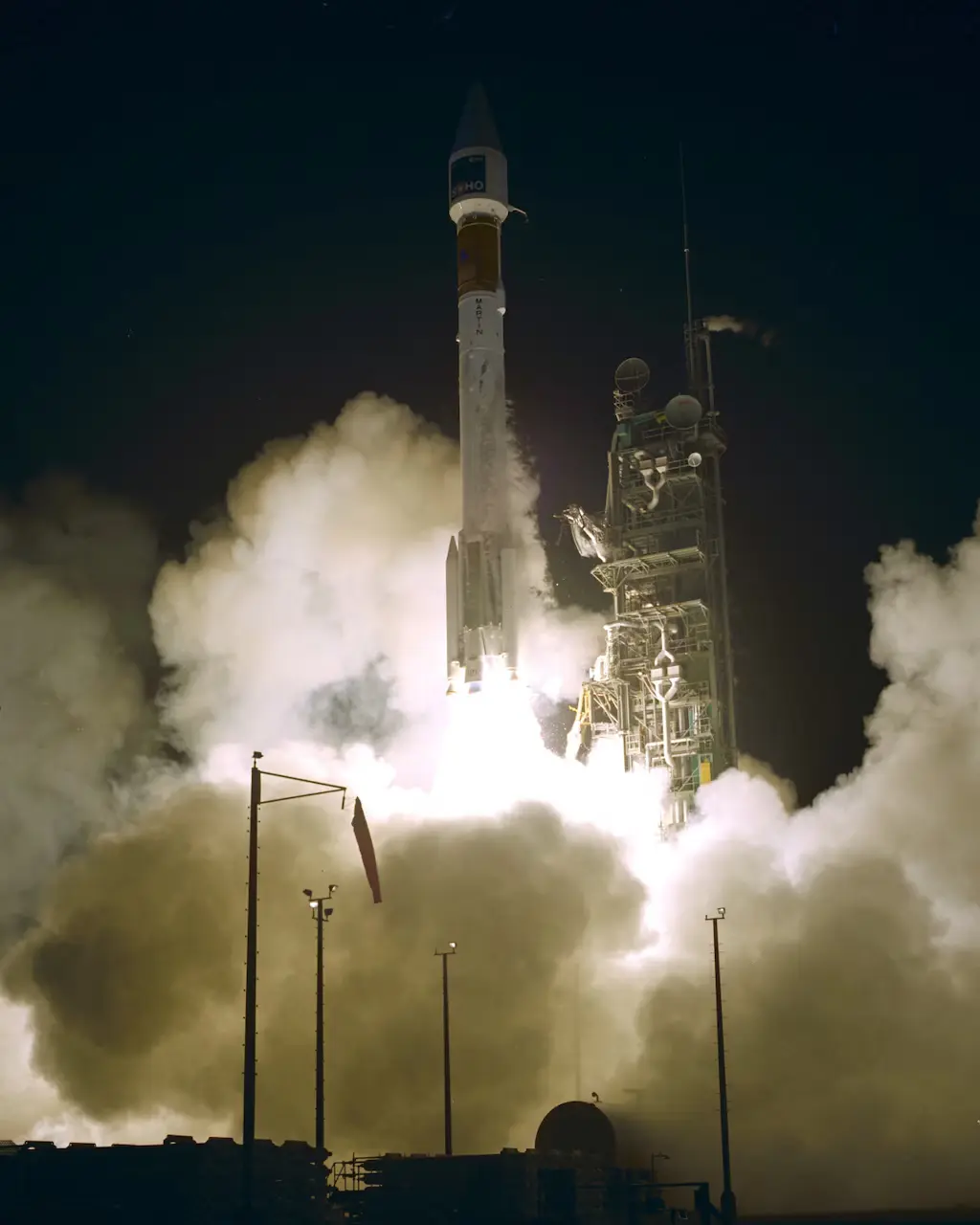
SOHO, a joint European Space Agency (ESA) and NASA mission, has far exceeded its original three-year nominal lifespan. Launched on December 2, 1995, on an Atlas IIAS rocket, SOHO parked in a Lissajous halo orbit around the L1 Lagrange point, 1.5 million kilometers away from Earth in the sunward direction. That vantage point has afforded it an uninterrupted view of the Sun.
NRL
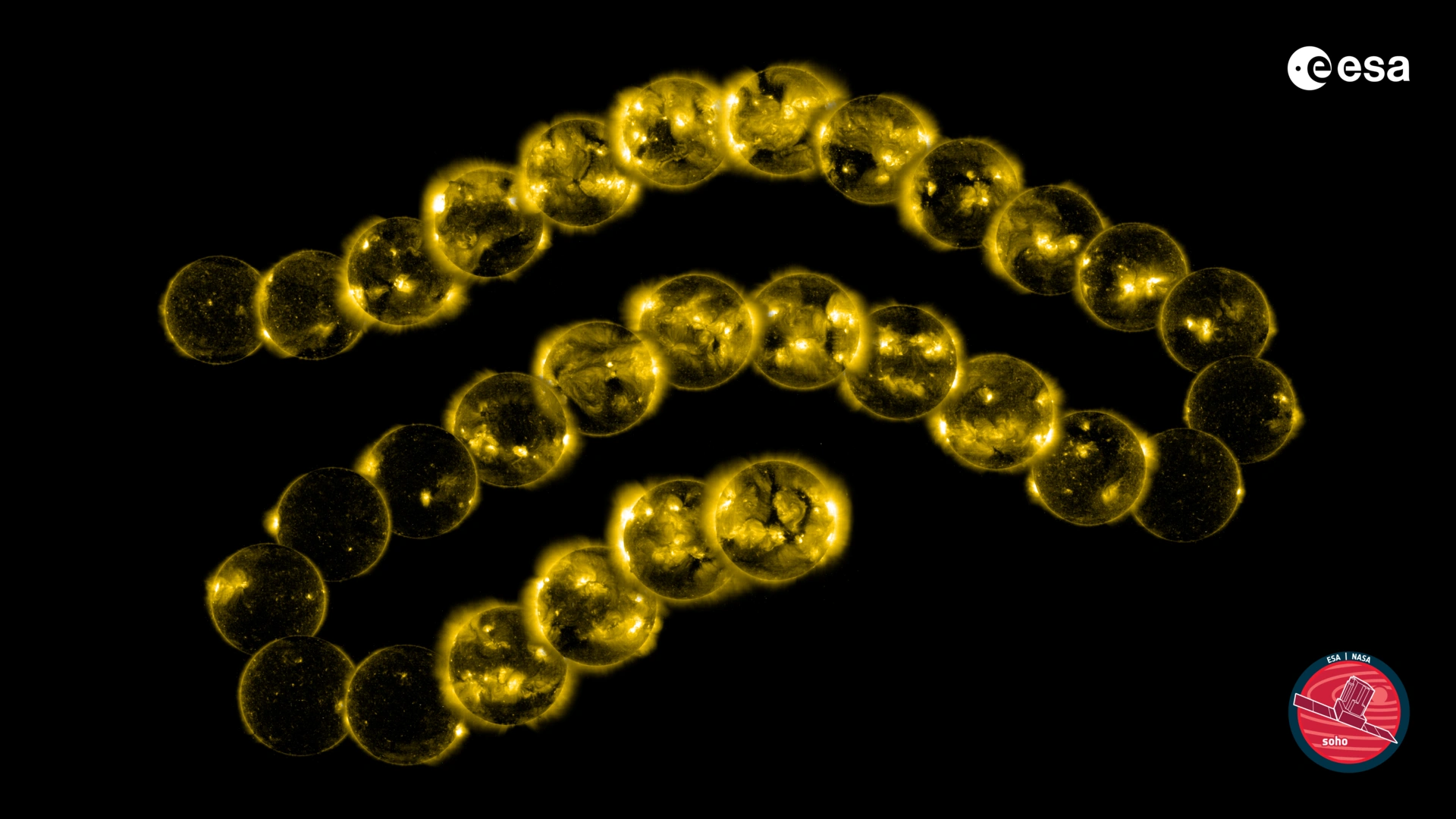
With 30 years in space, SOHO observations span almost three 11-year solar cycles (Cycles 23, 24, and now the ongoing Solar Cycle 25). That timespan covers the Sun's complete switch in polarity — swapping north-south poles to south-north and back again — enabling researchers to better understand our nearest star in all its phases of activity.
Rewriting the Textbooks
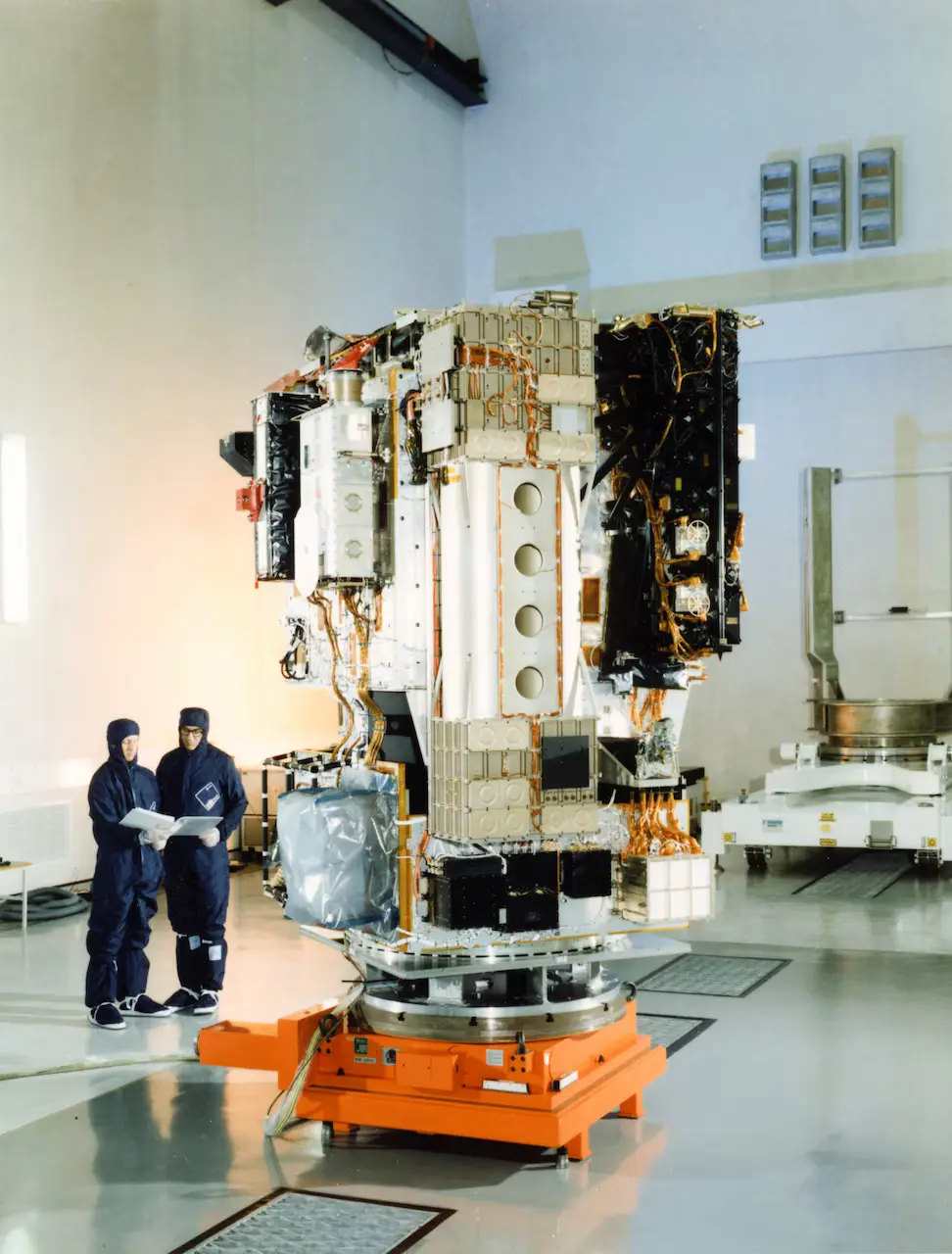
SOHO has revolutionized the study of space weather and our tempestuous Sun. With a suite of a dozen instruments onboard, the mission has monitored solar activity and space weather across the spectrum. SOHO really grew up with the internet and the worldwide web. The mission's data, including its image archive, are free to access online, a precedent the SOHO mission set early on. That data has helped produce more than 7,000 scientific publications and minted 250 doctorate theses. As with the Hubble Space Telescope, a whole generation of solar physicists has grown up with SOHO.
ESA
The current principal investigator of the Large Angle and Spectrographic Coronagraph (LASCO) coronagraph, one of SOHO's instruments, Karl Battams (Naval Research Laboratory), recalls learning about the mission's influence on solar physics as an undergraduate student: “When discussing class texts, I vividly remember [the professor] told us: ‘If any of you have solar physics textbooks published before SOHO was launched, please do not use them for this class.’"
ESA / NASA
Yet the near-loss of SOHO in the late 1990s almost brought the mission to an end before it had time to make its full impact. In 1998, just as the mission had completed its nominal mission and entered an "extended mission" phase, Earth-based controllers lost contact with the spacecraft. The gyroscopes needed to stabilize and point the spacecraft had stopped working. The spacecraft lost its lock on the Sun and started spinning.
Such a failure has doomed many a mission, but fortunately, that wasn't the case with SOHO. Using ground-based radar, from the Arecibo telescope as well as Goldstone dish in NASA's Deep Space Network, mission controllers found the spacecraft not too far off from where it was expected to be. It was spinning around every 53 seconds, though, and it took months for controllers to first reestablish contact and then implement upgrades. When the last gyroscope failed in December 1998, the team had to figure out how the mission could continue without gyroscopic control. By early 1999, they had pioneered a method using onboard reaction wheels as a sort of virtual gyroscope, and the mission was able to continue.
From Sun to Earth
NASA / ESA
SOHO's continuous view of the Sun revolutionized the existing technique of helioseismology. Using “sunquakes,” primarily acoustic waves that roil on the solar surface, solar scientists can peer inside our star, much like seismologists use earthquakes to model Earth's interior. From helioseismology, solar physicists could detect plasma flows beneath the solar surface moving in single, large looping cells like conveyor belts ,spanning each of the north-south hemispheres of the Sun.
The technique has many applications. One of these is amazing to think about: Using helioseismology, we can now accurately model sunspot activity on the Sun's farside — though we have no direct view — simply by looking at its nearside.
SOHO's observations also demonstrated that our Sun is remarkably stable. While the output in the extreme ultraviolet doubles from minimum to maximum of the 11-year solar cycle, the total energy output over the same span only varies by 0.06%. Our Sun is a placid star, compared to what we see out there in the universe — especially the prodigious output from active red dwarf stars.
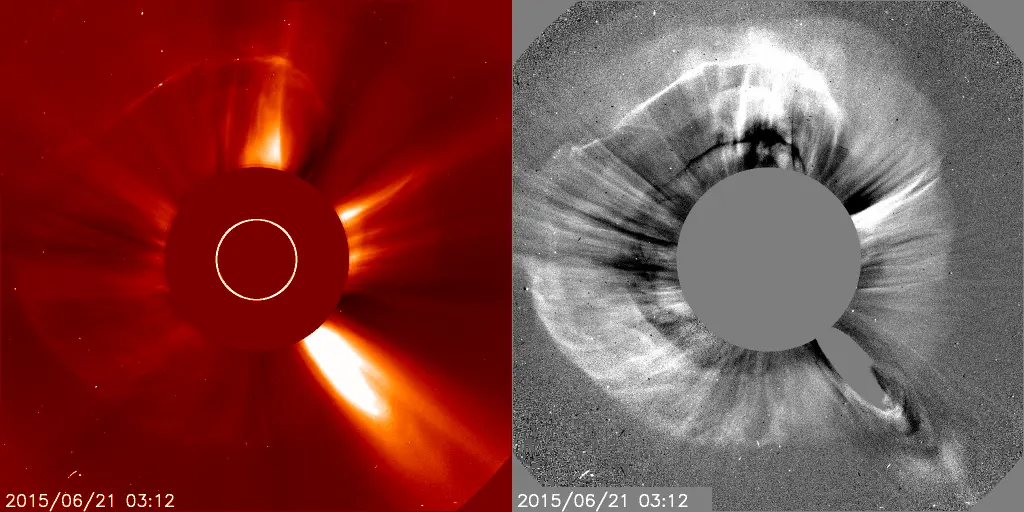
In addition to helping us understand the Sun itself, the spacecraft has become a crucial asset for real-time monitoring of space weather — the interaction the solar wind and Earth. SOHO has two LASCO coronagraphs (C2 and C3; C1 failed shortly after its deployment) that have the unique capability of seeing eruptions of charged particles, called coronal mass ejections (CMEs), near their origin, long before they approach our planet. In fact, the U.S. Naval Research Laboratory recently recognized SOHO's crucial role in protecting not only national security infrastructure but also our entire technological society.
Not only does SOHO monitor those conditions, but those data allow scientists to understand and forecast space weather. “One of the really big key science results was LASCO's observations of [Earth-directed] halo CMEs and the definitive demonstration of their impact on Earth and orbiting spacecraft,” says Battams. “It also enabled the discovery of the 3D structure of, and definition of a realistic model for, CMEs (the "flux rope" model). This remains the standard in the field.”
Now for Something Completely Different: Comets
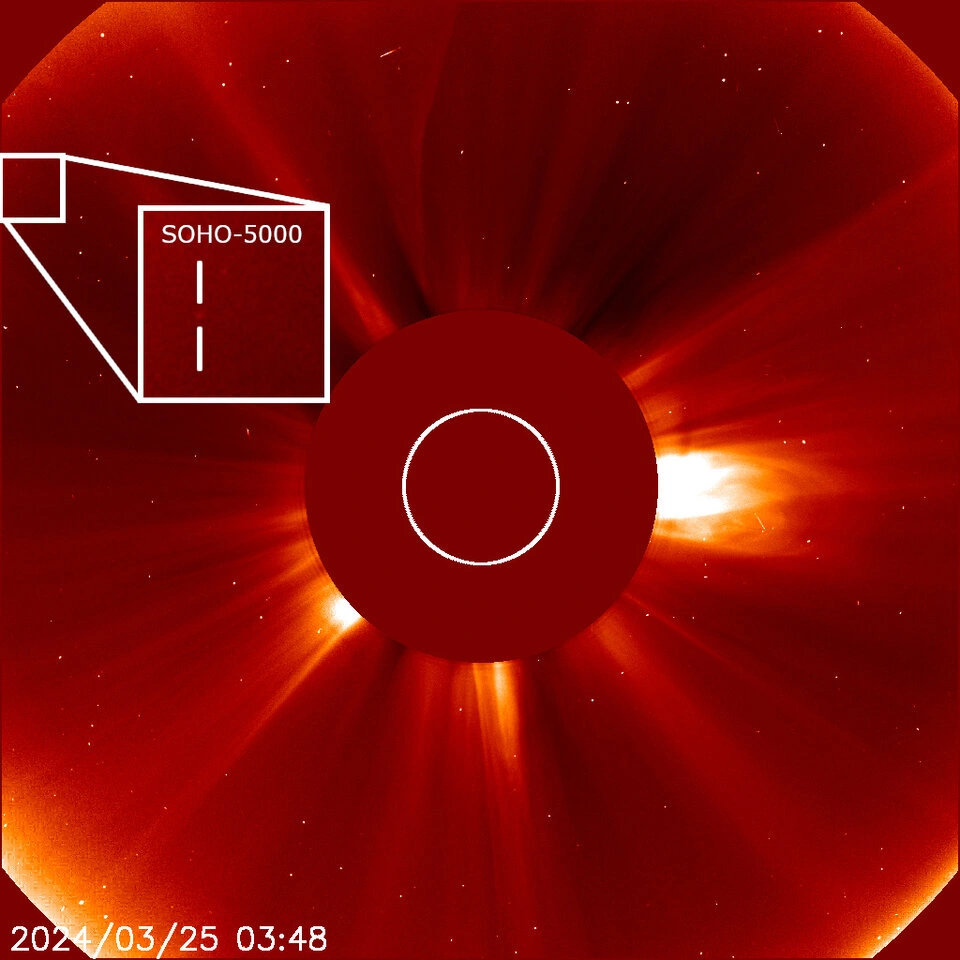
Though it wasn’t designed for it, SOHO has proven itself a tireless hunter of comets. The mission tallied an amazing 5,000 comets by March 2024, with 5,176 discovered to date. Many of these discoveries are thanks to the dedicated efforts of volunteer online sleuths, who see the majority of these comets as they enter the views of LASCO C3 or C2 imagers. Most of them don't last long before meeting their ultimate demise, either diving straight into the Sun or disintegrating before they have the chance.
NASA/ESA/SOHO
Watchers have also caught first sight of comets in the wider view of the Solar Wind Anisotropies (SWAN) instrument, also onboard SOHO. A fine example of this was Comet C/2025 R2 SWAN, spotted approaching Earth from the Sun earlier this year. SOHO instruments have also spotted comets after their detection, monitoring their graceful, if catastrophic swings around the Sun. Of this, Comet Tsuchinshan-ATLAS (C/2023 A3) is a prime example.
Prior to SOHO's launch, space-based observatories had only seen 16 sungrazing comets. Now, SOHO has led to the study of whole families of these comets.
The value of the mission's data has only become more important in recent years. Since 2022, mission controllers have improved the cadence at which data are returned to Earth, from every eight hours to every four hours. Battams notes that it's the stable baseline of precisely calibrated observations that make SOHO so valuable: “A dataset like that is pure gold, scientifically,” he says. “Yes you can 'stitch' observations from different missions together — and the cross calibrations will allow us to do that. But there is no substitute for having the same instrument making those measurements for the entire time.”
That legacy data set will continue for at least a little while longer. Battams stated on the Comets-ml message board that SOHO is expected to continue operations at least until September 2026; no formal end to the mission has been announced.
Meanwhile, there's now a whole fleet of spacecraft observing the Sun, including NASA’s Solar Dynamics Observatory and Parker Solar Probe and ESA’s Solar Orbiter. SOHO frequently makes multi-point observations of ongoing solar activity to supplement these missions. Newly launched missions, including SWFO-L1, PUNCH, Proba 3, and NOAA’s CCOR 1 aboard the GOES-19 satellite all incorporate lessons learned from SOHO.
The mission has had an amazing run to date, with more to come.
About David Dickinson
David Dickinson is a freelance science writer, high school science teacher, retired enlisted U.S. Air Force veteran and avid stargazer. He currently resides with his wife Myscha in Bristol, Tennessee. David also writes science fiction in his spare time. He posts as @AstroDave on BlueSky about space news and sky-watching worldwide.


Comments
You must be logged in to post a comment.