 SUNSET:

 0
0
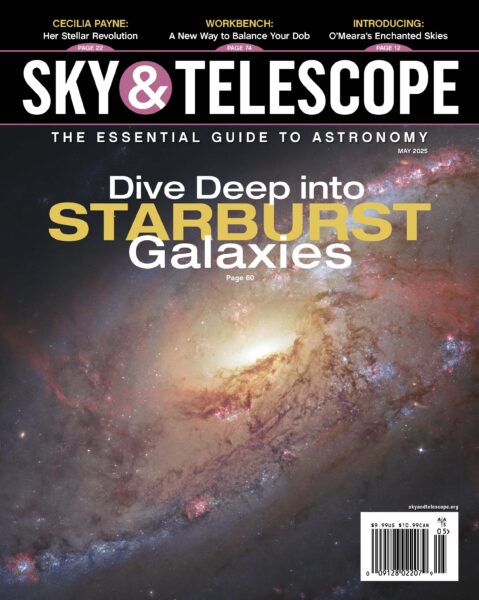
Starburst Galaxies, Cecilia Payne, and EROSITA
In the May 2025 issue of Sky & Telescope, follow along as we traverse a series of star-forming regions in distant galaxies. If you would like to photograph such star factories, this issue also offers a guide to high-resolution imaging. Then extend your vision to other wavelengths as we explore new results from the Extended Roentgen Survey with an Imaging Telescope Array (EROSITA), which briefly surveyed the X-ray sky. (We’ll explain why it’s now paused in its mission, perhaps indefinitely.) Go even deeper as we learn how astronomers combine radio telescopes across the globe through interferometry, creating a telescope that is essentially the size of Earth. Faraway, newly formed stars, not to mention many other astrophysical phenomena, won’t be able to hide from us for long.
FEATURE ARTICLES:
Interferometry has enabled astronomers to see far beyond the resolution limit of any single telescope.
By Govert Schilling
A Stellar Revolution Turns 100
In 1925, pioneering astronomer Cecilia Payne found hydrogen in stars and disbelievers on Earth.
By Douglas MacDougal
How to be a High-Resolution Imager
Follow these tips to improve your success at resolving fine details on small targets.
By Ron Brecher
Astronomers’ X-ray vision received a major boost from this space telescope — until its eyes closed.
By Arwen Rimmer
Observing Extragalactic Starburst Regions
Take a trip to stellar nurseries separated by space and time.
By Scott Harrington
Beyond the Printed Page:
Watch the evolution of a light echo near Cassiopeia A.
See more of Ron Breacher’s incredible astrophotos.
Learn more about the history of astronomy and the culture of scientific inquiry.
Check out our collection of astronomy, observing, and telescope making books.
ALSO IN THIS ISSUE:
Mars Dances Through the Beehive
The Red Planet has a busy month with several highlights.
By Stephen James O’Meara
Take advantage of an infrequent opportunity to watch the satellite’s shadow transit the Ringed Planet’s disk.
By Bob King
Visual astronomy has an enduring legacy of discovery.
By Thomas A. Dobbins
The front end of the celestial serpent rises every May evening.
By Ken Hewitt-White
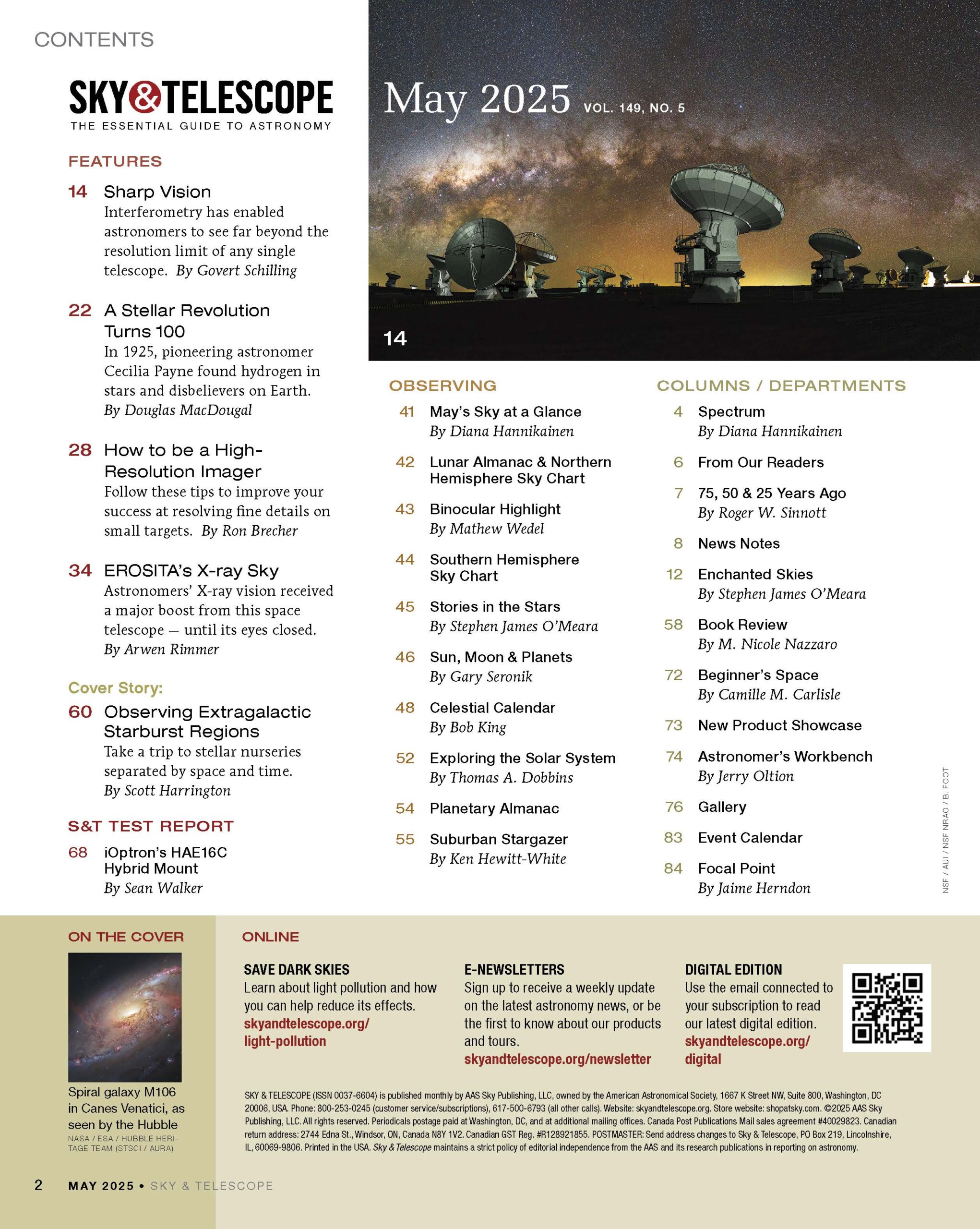
Table of Contents
See what else May’s issue has to offer.

Comments
You must be logged in to post a comment.