 SUNSET:

 0
0This year's display of Leonid meteors peaks on November 17th, but they'll be largely washed out thanks to strong interference from the Moon.
[caption id="attachment_255429599" align="alignright
This year's display of Leonid meteors peaks on November 17th, but they'll be largely washed out thanks to strong interference from the Moon.
[caption id="attachment_255429599" align="alignright
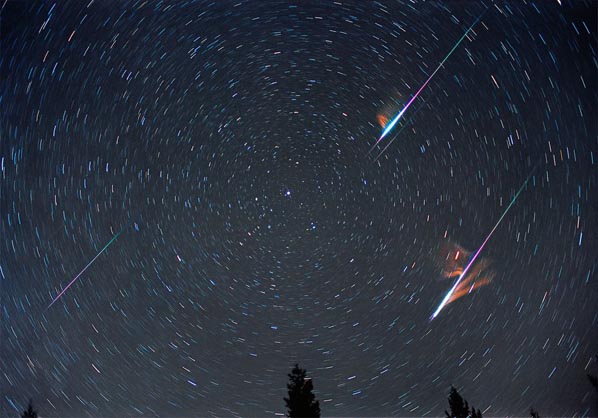
The direction to watch is wherever your sky is darkest, and it will certainly help to pick a spot where the Moon is blocked from your view by a building or tree.
Notice the meteors' flight paths; only those streaking away from the direction to the constellation Leo are Leonids. They're incredibly fast-movers as meteors go, striking Earth's atmosphere at 71 km per second (160,000 mph). Sometimes they create dazzling fireballs with an afterglow (technically known as a train) that can linger as a ghostly thread in the sky for up to a minute.
For more information, read our article Basics of Meteor Observing. And you can also download S&T's free eBook on meteor observing.
J. Kelly Beatty, S&T Senior Editor, joined the staff of Sky Publishing in 1974 and specializes in planetary science and space exploration. Learn more about him here.


Comments
You must be logged in to post a comment.