 SUNSET:

 0
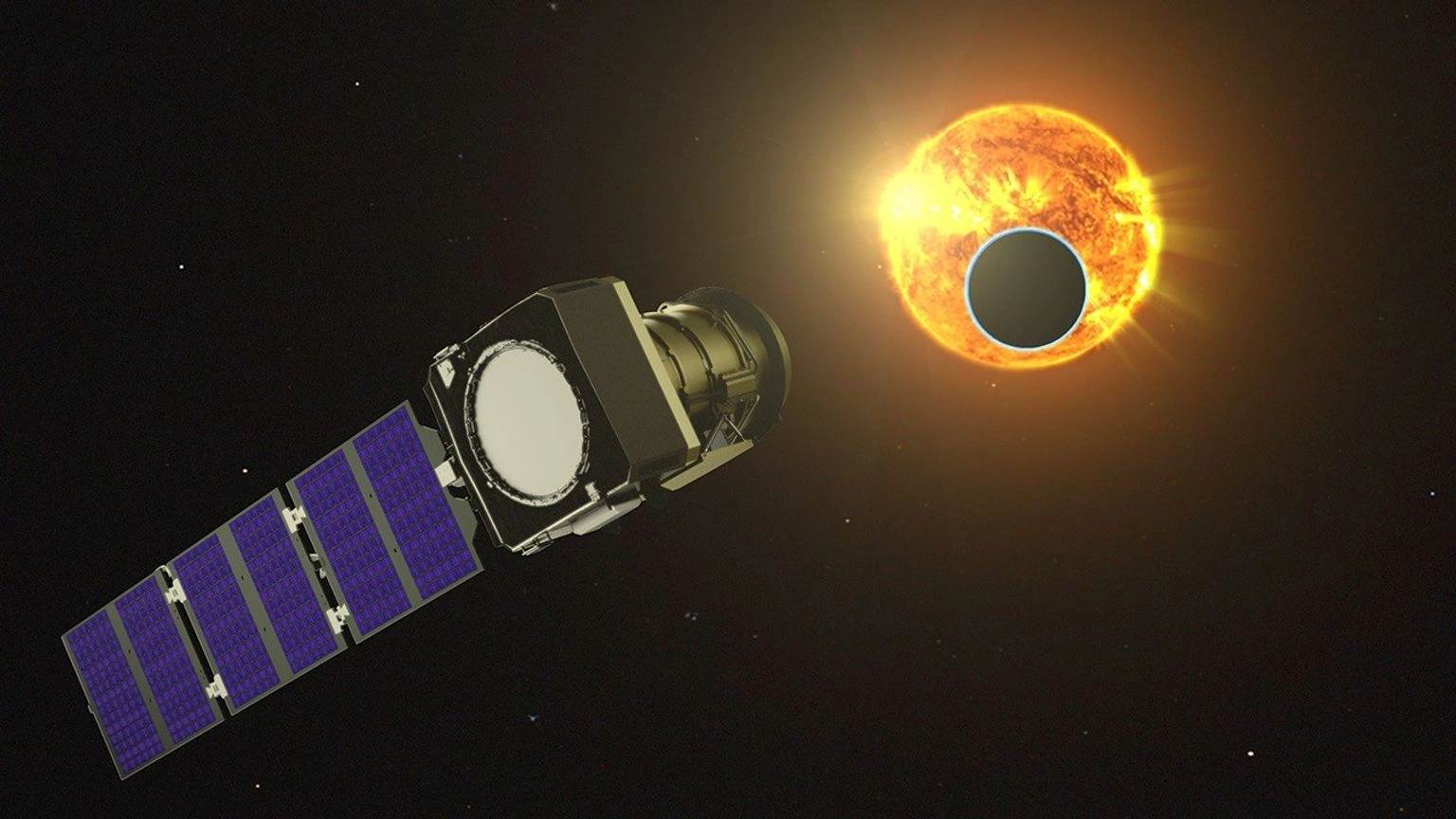
0NASA’s new, small observatory — launched successfully on January 11th — has a big mission: to characterize exoplanet atmospheres.
NASA
On January 11th, SpaceX successfully launched the first astrophysics spacecraft of the year.
A Falcon 9 rocket lifted off from Vandenberg Space Force Base in California at 5:44 a.m. PST / 13:44 Universal Time (UT). It was a dramatic pre-dawn launch, and the first stage booster returned to LZ-4 just under eight minutes after launch.
The overall mission, dubbed Twilight, is a rideshare payload, incorporating several smallsats under one fairing. Among the 40 satellites for seven nations is Pandora, a unique exoplanet mission.
Built by Blue Canyon Technologies and operated by NASA as part of the agency’s Astrophysics Pioneers program, Pandora was selected for development in 2021. All of the Astrophysics Pioneers spacecraft have a $20 million cost cap to get the mission to the launch pad.
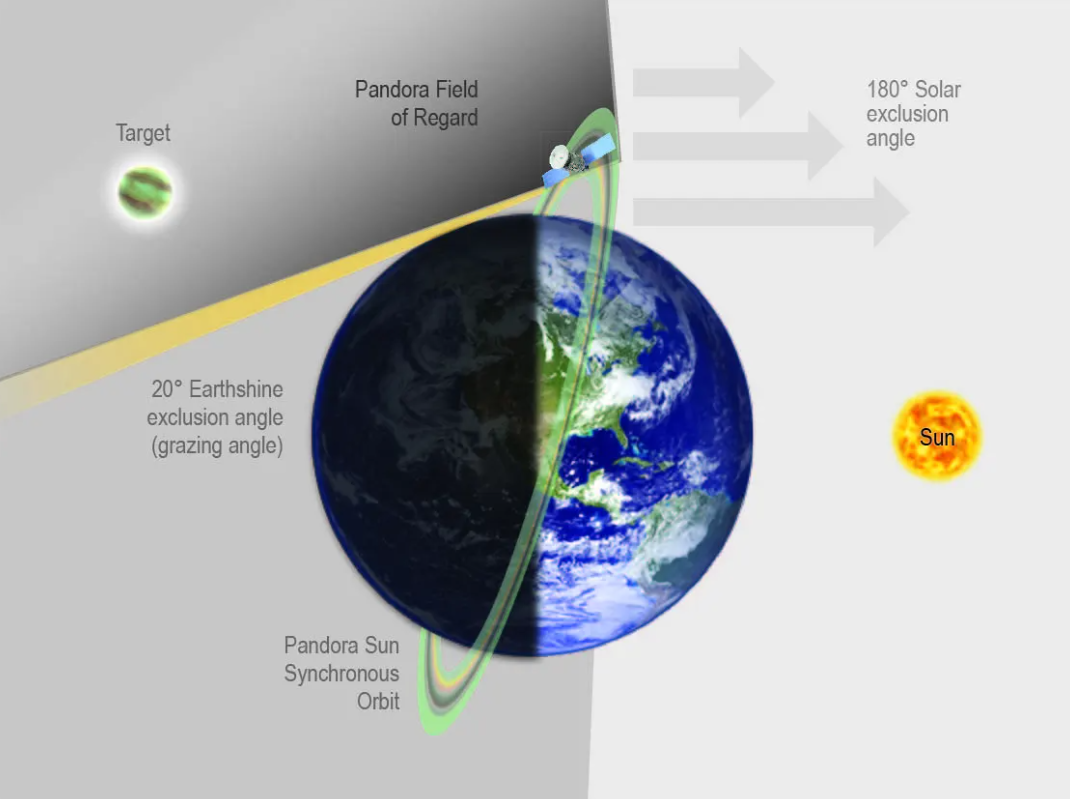
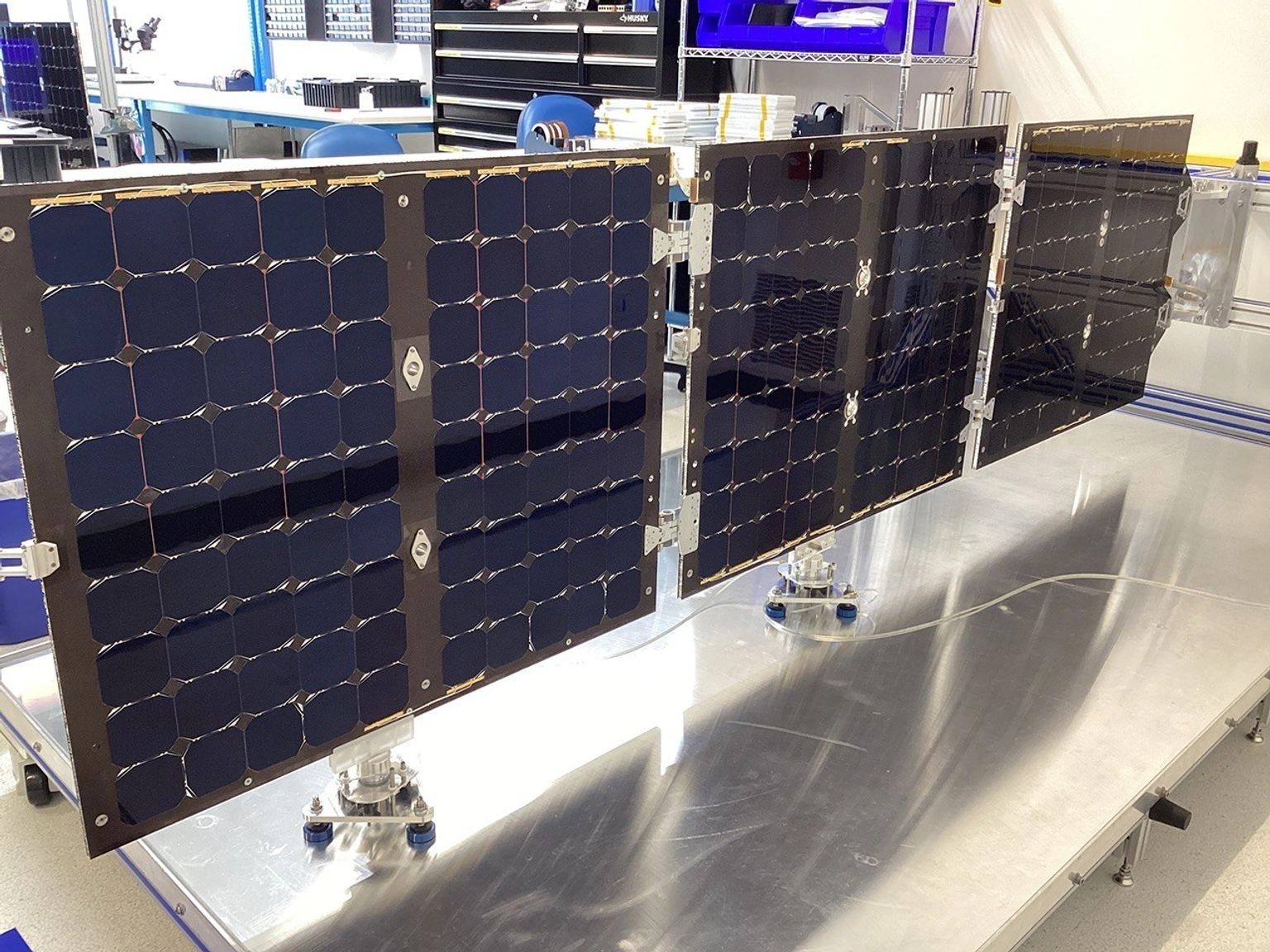
The timeline calls for Pandora to separate from the upper stage 2 hours, 28 minutes after launch. Along with the other rideshares onboard, Pandora is headed for a Sun-synchronous orbit with a steep inclination of 98°. This will enable the telescope to make long, uninterrupted observations of target stars, as it aims away from the Sun-exclusion zone. Orbiting in this zone of full illumination will also continuously power the solar-paneled mission.
NASA / GSFC
Pandora is part of a new generation of space missions promising big results from small, low cost packages. Other recent examples include Mauve, CUPID, CUTE (the Colorado Ultraviolet Transit Experiment), and Aspera.
NASA / GSFC
A SmallSat With a Big Mission
Pandora's objective is to observe 20 separate planet-hosting stars during a one year nominal mission.
"Pandora aims to study exoplanet atmospheres in the presence of stars known to have variations on their surfaces," says Ben Hord (NASA/GSFC). "These stellar surface variations can affect our ability to measure and interpret spectra of planet atmospheres, since the signals from the variations on the stellar surfaces sometimes mask and mimic the signals of compounds such as water in exoplanet atmospheres."
"By observing exoplanets and their host stars simultaneously in multiple wavelengths of light many times over the course of a year, Pandora will be able to separate the signals produced by the surface features on the host stars from the signals made by chemical compounds, such as water, in the exoplanet atmospheres."
To that end, the mission will indirectly observe 20 known exoplanets, measuring 10 transits of each one. The target stars are all less massive than the Sun, from late-stage-M dwarfs to mid-K main-sequence stars. Their planets are already known to range from Earth- to Jupiter-size. In case you're curious if your favorite exoplanet is on the list, here they are: GJ 3090 b, GJ 3470 b, HAT-P-11 b, HAT-P-12 b, HAT-P-18 b, HAT-P-26 b, HD 73583 b. L 98-59 c, TOI-2076 b, TOI-244 b, TOI-270 d, TOI-3629 b, TOI-3884 b, TOI-674 b, TOI-942 b, TOI-942 c, WASP-107 b, WASP-52 b, WASP-69 b, and WASP-80 b.
Astronomers will compare spectra measured during planet transits with spectra of the host stars themselves, teasing out details about the exoplanet’s atmosphere. Specifically, the Pandora team aims to find exoplanet atmospheres dominated by water and hydrogen. Though traces of such atmosphere have been seen in the past, finding a water-dominated world would be a first.
Of the 20 prime-mission targets, 16 have already been observed by the James Webb Space Telescope. But time on the flagship telescope is limited. When the host star is active — producing starspots on its surface — that activity can mimic or confuse the signals of a transiting planet.
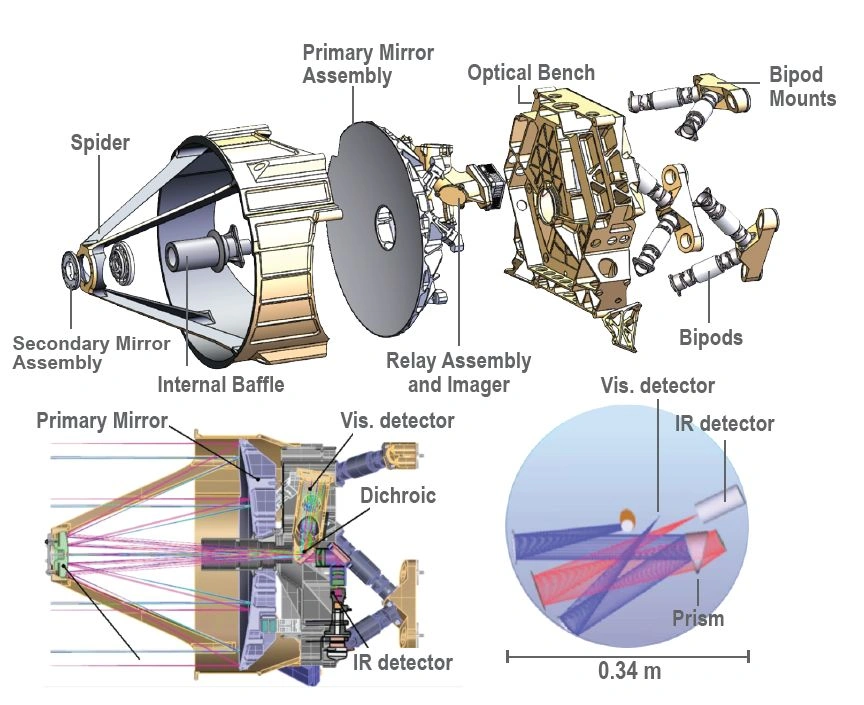
To overcome these limitations, Pandora will make simultaneous multi-wavelength observations in visible and infrared light. This will help untangle stellar activity from exoplanet atmosphere signals. Each transit will also include 24 hours of baseline observation, which will further help differentiate atmospheric signals from stellar activity. And, for those planets already observed by Webb, Pandora’s observations will be immediately useful as a complementary data set.
NASA / GSFC
Pandora has a half-meter diameter Cassegrain telescope as its primary instrument. Data from Pandora will be hosted at IPAC and be freely available on the NASA Exoplanet Archive. Commissioning will take one month, and data will be available five months after data acquisition.
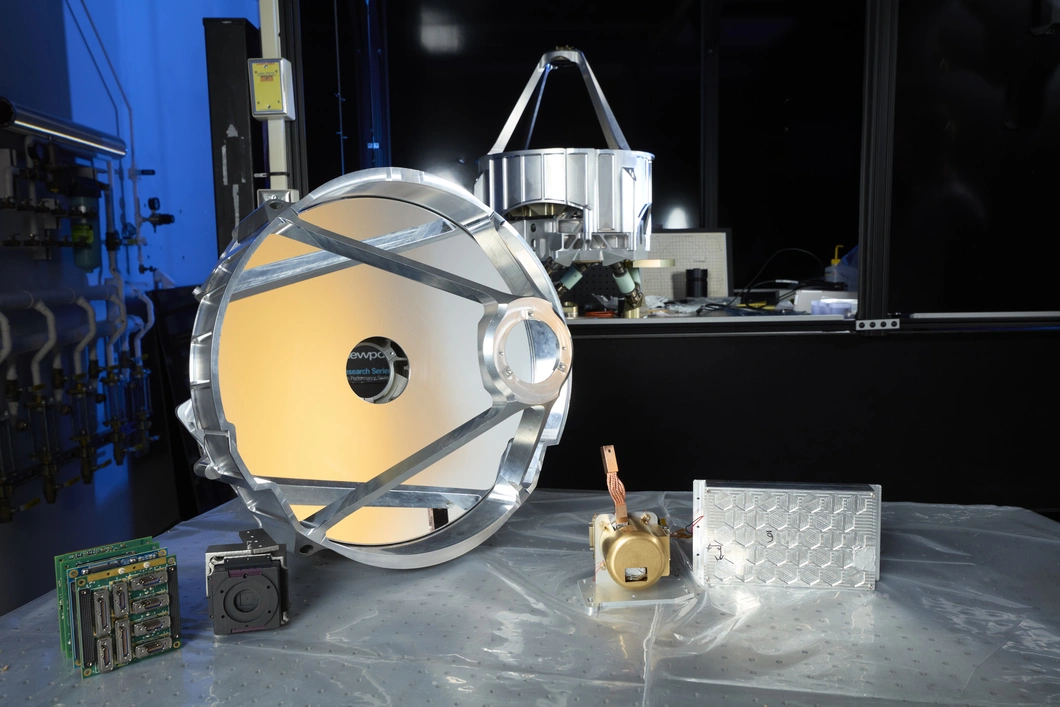
NASA/GSFC
Pandora could point out targets for future follow-up with the James Webb Space Telescope and the Nancy Grace Roman Space Telescope. (Roman is set to launch later this year.)
Like its mythological namesake (albeit with a more positive outcome), Pandora promises to open the box on exoplanet science and research. The mission may demonstrate that small satellites can compete with larger flagship missions in addressing specific astronomical questions.
About David Dickinson
David Dickinson is a freelance science writer, high school science teacher, retired enlisted U.S. Air Force veteran and avid stargazer. He currently resides with his wife Myscha in Bristol, Tennessee. David also writes science fiction in his spare time. He posts as @AstroDave on BlueSky about space news and sky-watching worldwide.


Comments
You must be logged in to post a comment.