 SUNSET:

 2
2The highlights of spaceflight in 2025 have included missions to explore the Moon, Mars, and the Sun — and more is coming in the New Year.
NASA / Josh Valcarcel
This year has certainly been a year of crisis and opportunity for spaceflight worldwide. Last year set records for orbital launches worldwide and offered lessons from successes and setbacks. Now we’re looking ahead to a year that could reshape our view of space exploration. But before we dive into what’s in store for 2026, it’s fun to look back at what was predicted for 2025 — and see how the year actually stacked up.
Record Launches in a Year of Uncertainty
The record-long 43-day government shutdown in October and November stalled NASA, which conducts a lion’s share of space exploration. Much of the agency's spaceflight plans are on hold, or at least in flux, going ahead into 2026. And while Congress hasn't set appropriations yet, the president's FY2026 budget request for NASA was set for only $18.8 billion — the lowest since before the start of the Apollo program. NASA does finally have a new administrator now: billionaire Jared Isaacman was confirmed to lead the agency as of December 17th. Still, the effects of the shutdown and radical government downsizing will resonate for years to come.
These developments for federally funded spaceflight are ironic, as 2025 has already broken the record for overall orbital launches worldwide, with 313 launches as of December 29, 2025… 57 more than 2024, which was also a record-setting year. Over half (165) of these were conducted by SpaceX alone, a majority of which (122) were launches of satellites for the Starlink space-based internet provider. Starlinks now litter the sky and frequently photobomb deep-sky images — even those taken from space — as the web of satellites enmeshes Earth.
Mission Launch Highlights for 2025
Commercial Lunar Payload Highlights
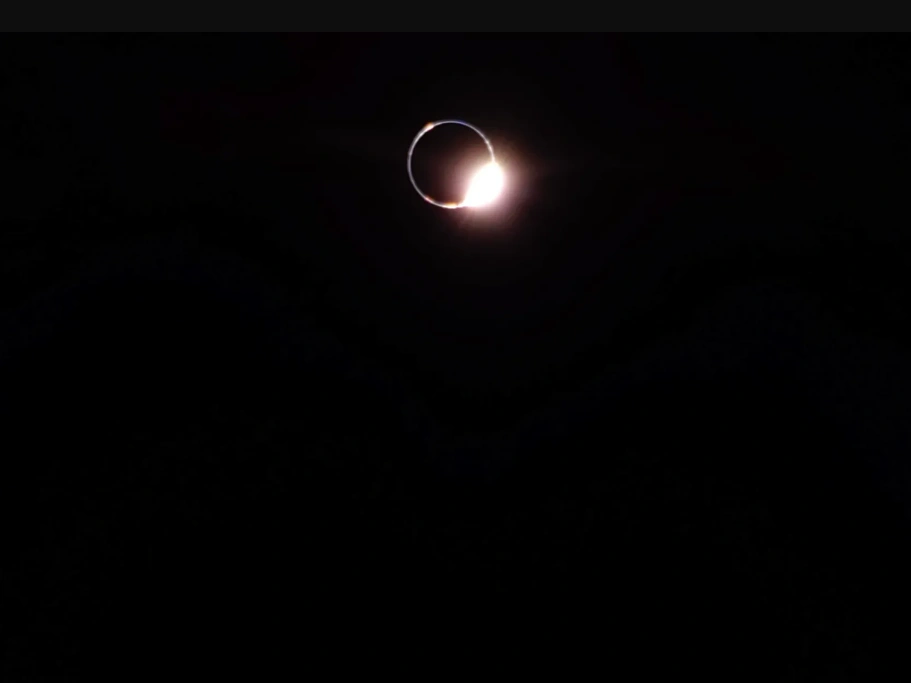
This year, NASA’s Commercial Lunar Payload Services experienced both tragedy and triumph. Firefly Aerospace’s Blue Ghost lander experienced the program's only complete success thus far, landing at Mare Crisium on March 2nd and operating until lunar sunset two weeks later. The mission snapped an iconic image of the March 14th total lunar eclipse, viewing it as a solar eclipse as seen from the surface of the Moon.
Firefly Aerospace
Intuitive Machines’ IM-2 Nova-C lander Athena was less successful, landing lopsided near Mons Moulton on the Moon and only partially transmitting data back to Earth. A similar fate befell Japanese startup ispace’s Hakuto R2 Resilience lander, which crash-landed at Mare Frigoris on June 5th. The Astrobotic's Griffin lander as well as the European Space Agency's Lunar Pathfinder have both been delayed and are now expected to launch in mid-2026.
NASA’s Solar Missions Make Strides
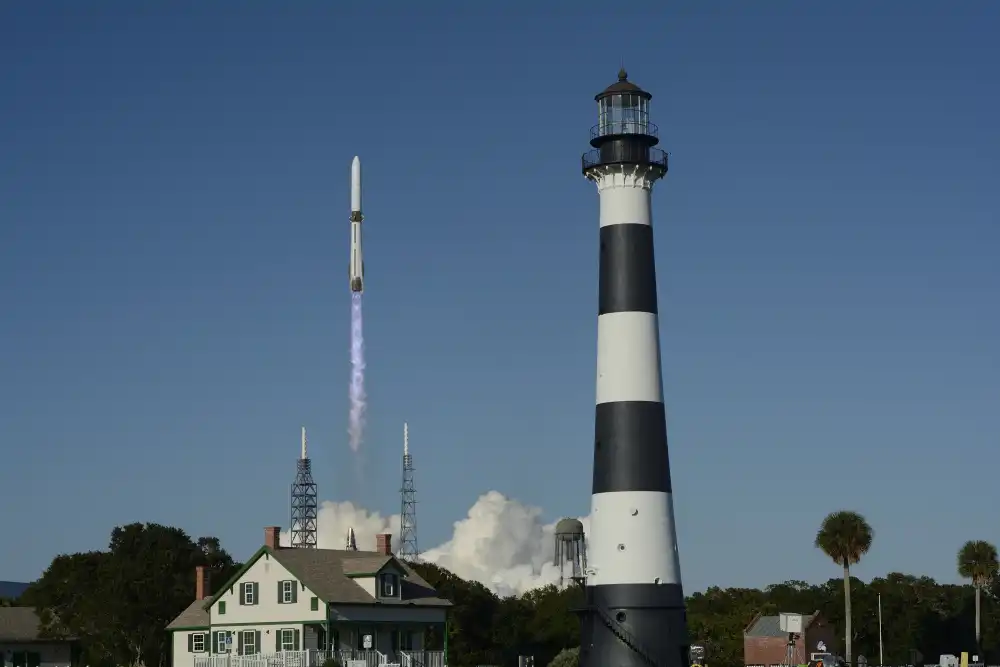
NASA solar missions saw more success. No less than four heliophysics missions were launched in 2025, including NASA's PUNCH, IMAP, SWFO L1, and the Carruthers Geocorona Observatory. (The latter three all lifted off together.) These missions will monitor the Sun, the solar wind, and their effects on Earth. NASA also launched SPHEREx, a space telescope that will survey more than 450 million galaxies along with more than 100 million stars in the Milky Way.
Kirby Kahler
Planetary Exploration: ESCAPADE Mission to Mars
NASA launched one planetary mission this year: the Escape and Plasma Acceleration and Dynamics Explorers (ESCAPADE) mission launched on Blue Origin’s New Glenn rocket, ultimately heading toward the Red Planet. Since delays forced lift-off to happen outside the usual launch window that allows the most direct route to Mars, ESCAPADE is instead heading first for a temporary home at the Sun-Earth Lagrange point (L2), before changing trajectory toward the Red Planet in late 2026.
ESCAPADE consists of two spacecraft, dubbed Blue and Gold, which will work in tandem to study how space weather interacts with Mars's tenuous upper atmosphere. (While ESCAPADE provides data complementary to NASA's MAVEN mission, which also studies the planet's atmospheric loss, MAVEN is currently lost in space — ESCAPADE's data will be studied on its own unless MAVEN can be recovered.)

CASC / NAOC
China’s first asteroid sample return mission, Tianwen 2, also took off this year on its way to the asteroid (and minimoon) 469219 Kamo’oalewa. Watch for the spacecraft's arrival and rendezvous on June 7th in 2026 and a sample return to Earth on November 29, 2027.
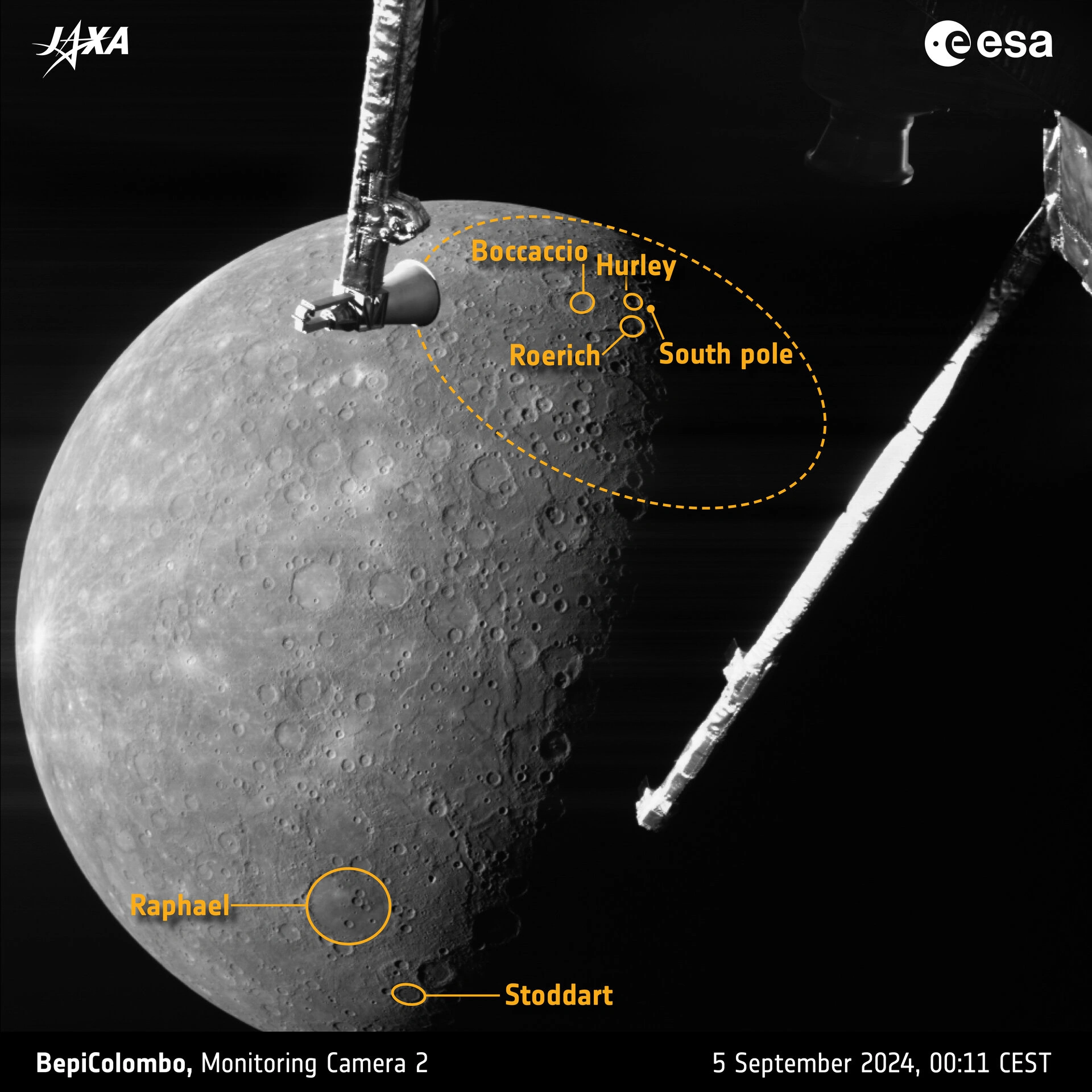
BepiColombo, a joint European and Japanese mission, completed its sixth (and final) Mercury flyby on January 8, 2025. BepiColombo has suffered delays due to thruster control issues but is expected to finally enter orbit around the innermost planet in November 2026.
ESA
Top Missions to Watch for in 2026
The next year promises to be an exciting one for spaceflight. Missions may come and go, slipping into 2027 and beyond, but as of late 2025, here are the top highlights to look forward to in the coming year.
NASA’s Artemis II Sets Stage for Moon Landing
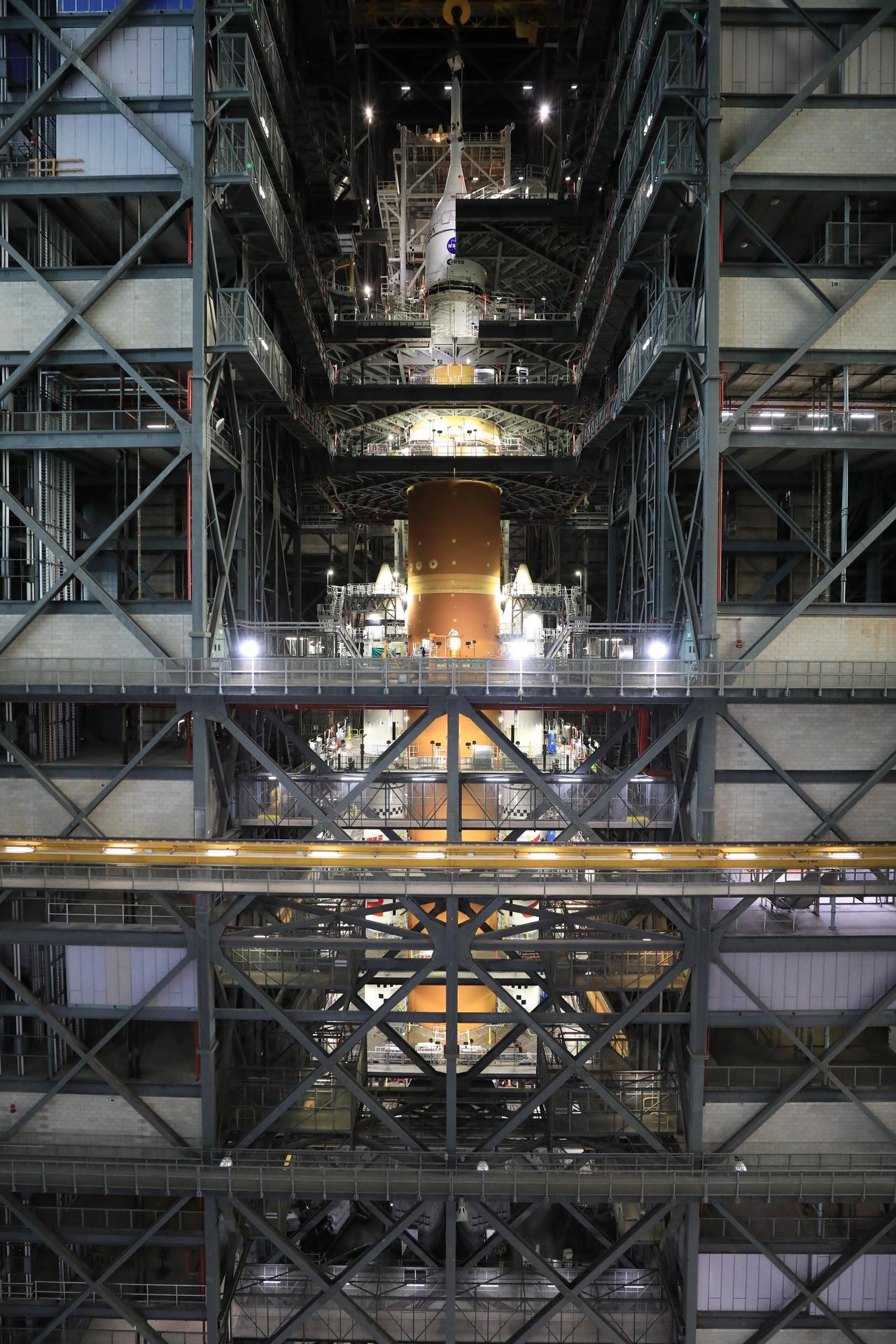
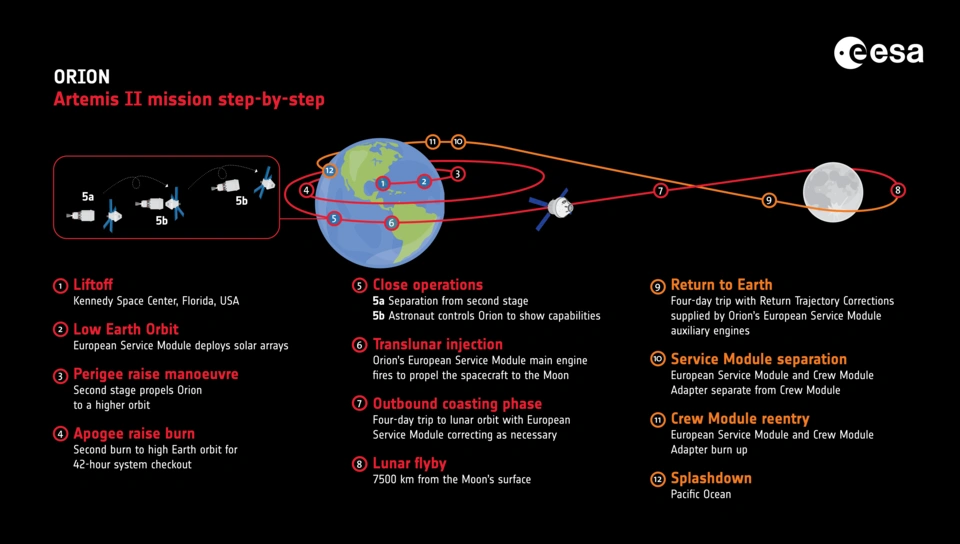
Artemis II is the main event for 2026, and it’s coming right up with a launch from the Kennedy Space Center set for February 5th. The 10-day mission will be the first crewed launch featuring the SLS rocket and Orion capsule. The crew includes NASA astronauts Christina Koch, Victor Glover, Reid Wiseman, and Canadian Space Agency astronaut Jeremy Hansen. The flight will take a free-return trajectory around the Moon, marking several milestones for the Artemis initiative. Successful completion will set up the first Moon landing for the program, with Artemis III, planned for mid-2027.

NASA
NASA announced in September 2024 that five CubeSat payloads from Artemis Accords partners will also fly with Artemis II to the Moon. NASA's 'organ-on-a-chip' AVATAR (A Virtual Astronaut Tissue Analog Response) experiment is also flying on Artemis II.
NASA / Kim Shiflett
ESA
Commercial Lunar Missions
We can also expect to see more commercial missions head moonward in 2026. These include Blue Origin’s Blue Moon lander, which could launch as early as January 2026. Blue Moon is the company’s flagship for its own Human Landing System, which is now in the running as a possible lunar lander for the Artemis initiative. (SpaceX’s Starship HLS was supposed to carry the crew of Artemis III down to the lunar surface, but Starship still needs to make orbit in 2026 for the complex mission architecture to succeed.)
Next, Firefly’s Blue Ghost Mission 2 will head to the lunar surface in July 2026. This mission features the company’s Elytra orbital vehicle, which will put both Blue Ghost 2 and ESA’s Lunar Pathfinder into orbit. Blue Ghost 2 will then touch down on the farside of the Moon.
Astrobotic and Intuitive Machines will also make bids for lunar landings, pushed to 2026 due to delays. Another player, ispace won’t be heading to the Moon next year, as they're preparing launches for 2027 and 2028 instead. The company is working to learn from the crash-landings of two previous missions, Hakuto-R1 and R2 in 2023 and 2025, respectively.
CASC/NAOC
China’s Lunar and Space Telescope Plans
China has big plans for 2026. The Chang’e 7 mission is aiming for the rim of Shackleton Crater in the lunar south pole region in 2026. It will carry a lander and a rocket-propelled hopping rover, which will scout for water ice on the permanently dark regions of the crater.
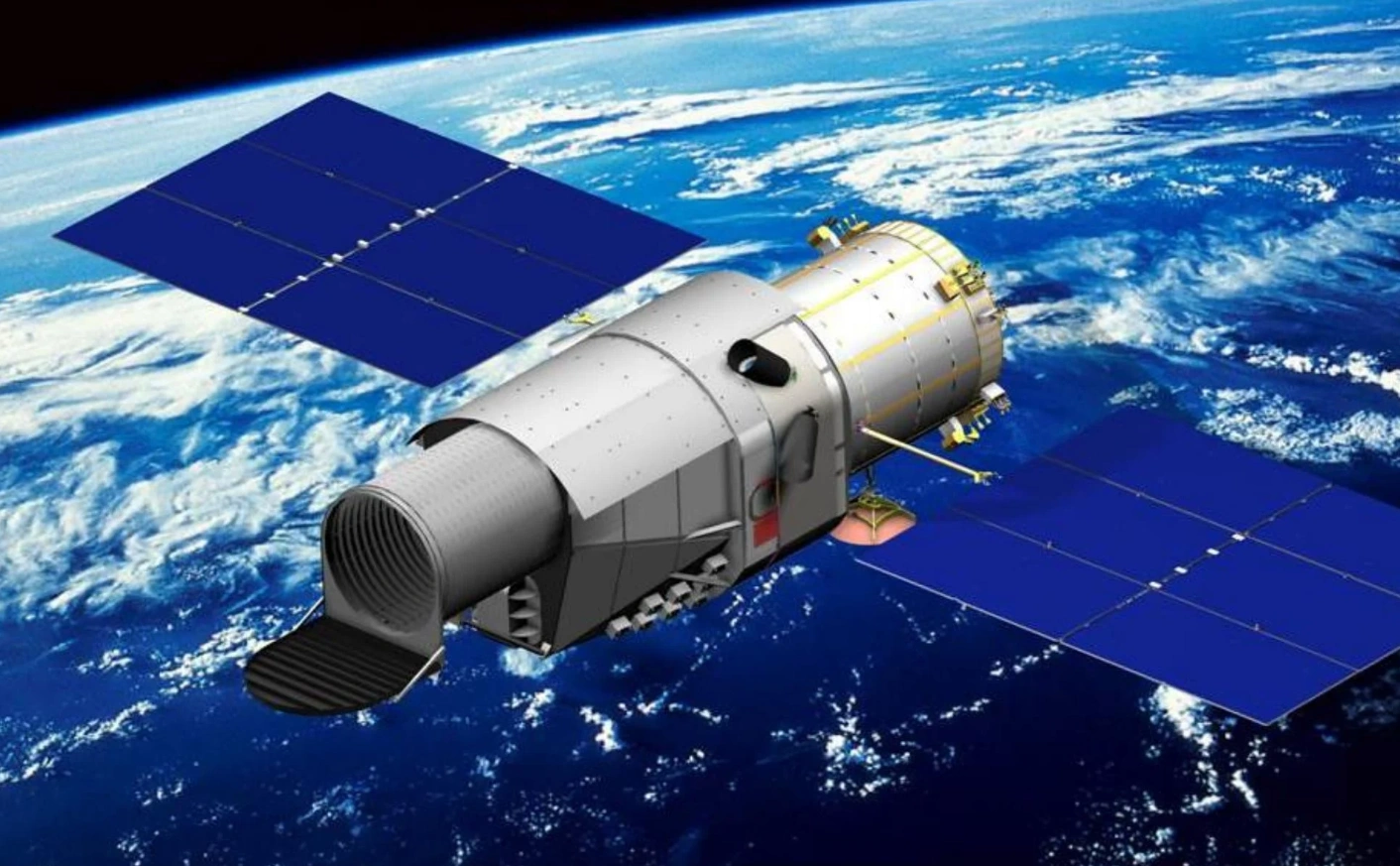
China’s Xuntian space telescope may also launch in 2026. The China Space Agency’s answer to the Hubble Space Telescope, Xuntian sports a 2-meter mirror and will work as a wide-field survey instrument. Xuntian will station-keep near the crewed Tiangong Space Station for routine access via docking with the station, enabling maintenance and upgrades.
NASA’s Nancy Grace Roman Space Telescope
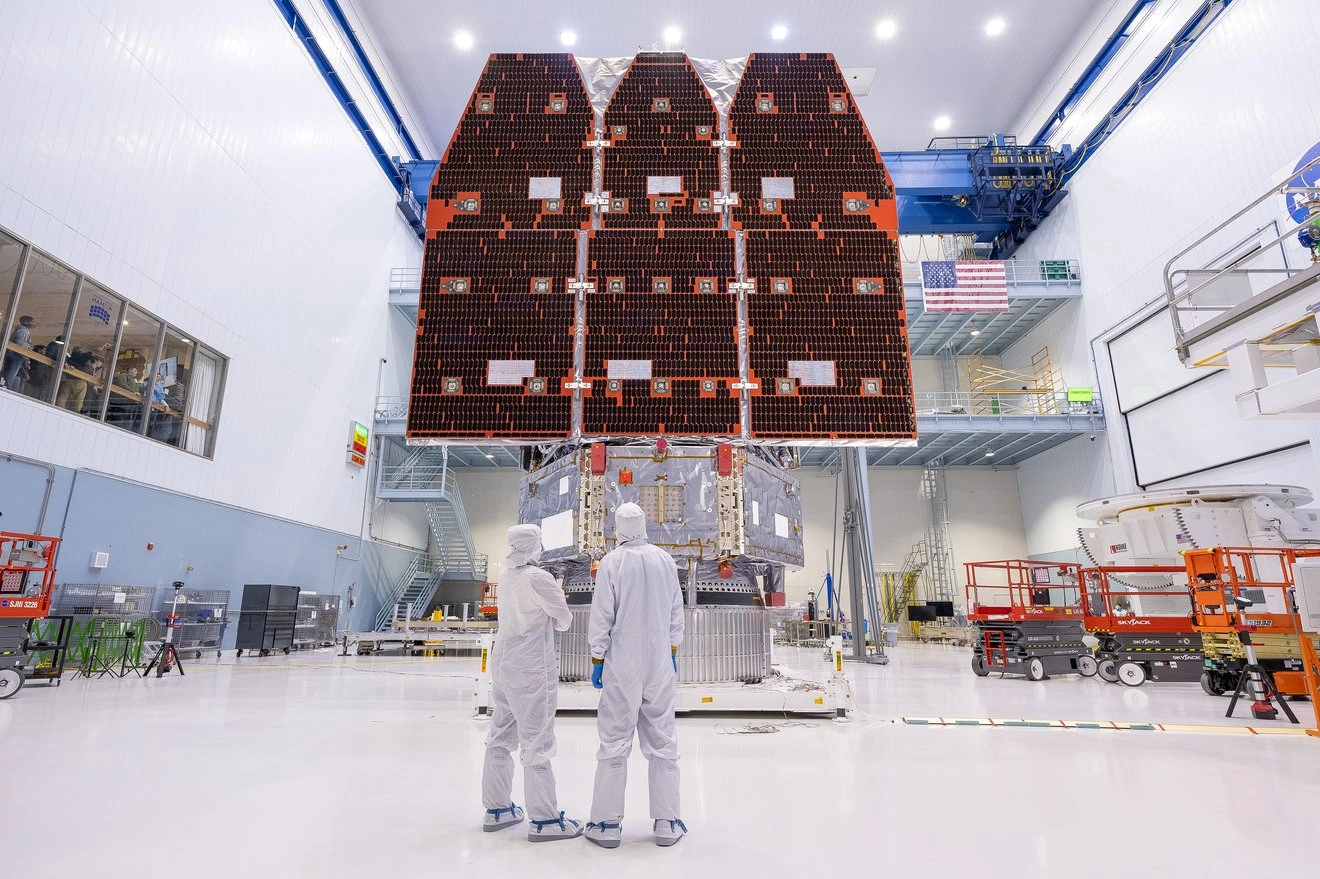
Another possible launch to watch for in 2026 is NASA's Nancy Grace Roman Space Telescope. Current plans call for a launch in the late 2026 to early 2027 time frame aboard a SpaceX Falcon Heavy rocket. As of press time, NASA engineers have fully assembled the space telescope, and it's undergoing final testing at NASA’s Goddard Spaceflight Center.
The Nancy Grace Roman Space Telescope will work as a wide-field infrared instrument. Originally known as WFIRST, the mission was built around one of two 2.4-meter mirrors donated to NASA by the U.S. National Reconnaissance Office. The other mirror is still awaiting a mission — even with a donated mirror ready to go, building a space telescope around it and getting it into space is still hard.
NASA / Jolearra Tshiteya
Japan’s Martian Moons Exploration Mission
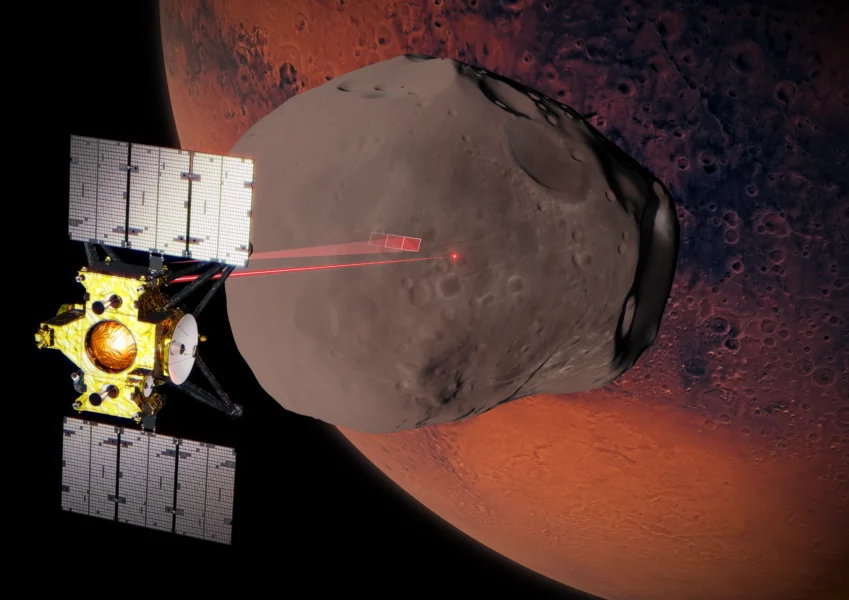
The Japan Aerospace Exploration Agency’s Martian Moons Exploration mission may also launch in 2026. This mission will investigate not the planet but its potato-shaped moons of mysterious origin. NASA is contributing an instrument to this mission as well. “Everyone on the project continues to work hard, and we are looking forward to the fall 2026 launch,” says David Lawrence (Johns Hopkins University Applied Physics Laboratory), lead researcher on the Gamma rays and Neutrons (MEGANE) team. MEGANE is NASA's contribution to MMX. “Across the planetary science community, excitement is certainly building for the MMX mission as the data from the mission will address some longstanding and fascinating questions about Phobos and Deimos, for which our current answers are mostly speculation.”
Ongoing Missions With Uncertain Futures
The fate of some ongoing missions is uncertain. In addition to the possibly lost MAVEN mission, funding uncertainties may affect NASA’s New Horizons and the Voyagers, all of which are active and returning data about the environment far from the Sun as they escape the solar system. Budgetary constraints may likewise affect NASA’s Juno mission, which is still active around Jupiter but reached the end of its current mission extension in September 2025.
Staying Up-to-Date on Launches
Things have certainly changed when it comes to tracking the fast-changing launch schedule. Until just a few years ago, I’d be watching individual launch company accounts on Twitter and NASA TV for all of the latest updates. These days, many organizations, such as ESA, have moved to Bluesky to share information. NextSpaceflight covers launches, and it’s nearly always up-to-date, and Spaceflight Now offers deep dives into nearly every mission that’s out there. Gunter’s Space Page also has up-to-date information. We'll need those resources to keep up with the fast-paced year ahead in spaceflight for 2026!
Follow Sky & Telescope for More on Space-based Astronomy
Sky & Telescope provides timely news, observing tips, and in-depth coverage of astronomy-related space missions. Whether you’re tracking lunar landings or exploring the night sky, it’s a reliable resource for astronomers of all stripes — arm-chair, amateur, or professional. Subscribe today and stay on top of the latest in astronomy and space exploration.
About David Dickinson
David Dickinson is a freelance science writer, high school science teacher, retired enlisted U.S. Air Force veteran and avid stargazer. He currently resides with his wife Myscha in Bristol, Tennessee. David also writes science fiction in his spare time. He posts as @AstroDave on BlueSky about space news and sky-watching worldwide.


Comments
Jim Hartley
December 31, 2025 at 10:48 pm
I am surprised to not see any mention of SpaceX in this or in the article by Govert Schilling in the December issue. Is not the fact sufficient that SpaceX launched 90% of the global cargo into orbit in 2025, as well as their Dragon servicing the ISS, even when the Boeing craft could not be safely used to deorbit, to warrant at least some mention? Granted, SpaceX's stated goal is to leapfrog the Moon and establish a colony on Mars, but I thought they had won a contract for one of the Artemis Moon missions, a landing craft or such.
You must be logged in to post a comment.
Monica Young
January 2, 2026 at 10:37 am
Hi Jim, we're focusing primarily on spaceflight for astronomy in this piece!
You must be logged in to post a comment.
You must be logged in to post a comment.