 SUNSET:


Green Comet 45P Makes Close Earth Flyby
Green-glowing 45P/Honda-Mrkos-Pajdusakova will make an unusually close pass by Earth on Saturday. Watch it boogie across the morning sky this week!
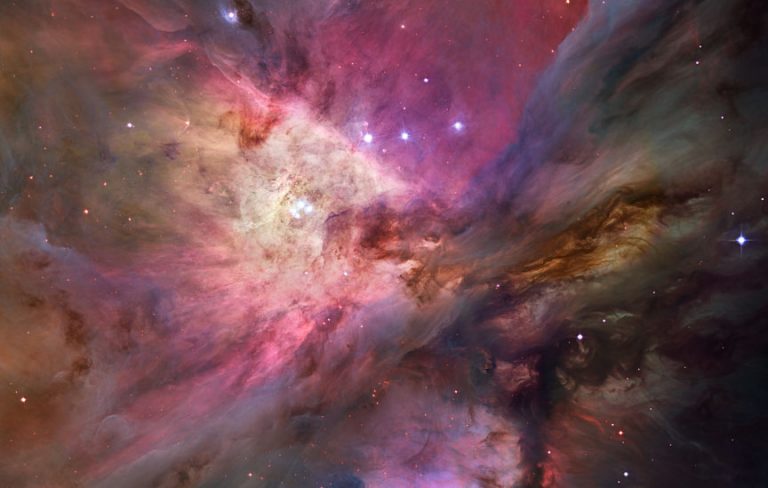
Star-Trapping in Orion's Trapezium
Take a high-power ride to seek out baby stars and clotted clouds within the heart of the Orion Nebula.
Explore the Night with Bob King
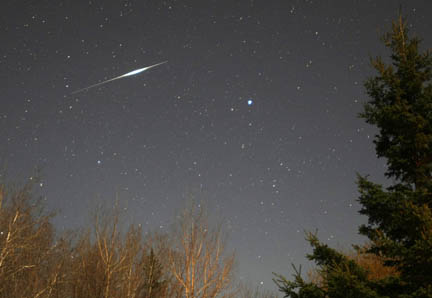
Get Your Iridium Fix Before It's Too Late!
The shock and dazzle of Iridium flares will soon be a thing of the past. Here's how to make the most of seeing them before they're replaced by a new generation of satellites.

See Mercury First, Then Have Breakfast
Late sunrises make it easy to follow the parade of planets at dawn, including a nice apparition of Mercury this week with three successive lunar conjunctions.

Bright Prospects for Comets in 2017
Comet lovers have much to look forward to in the new year with six potential bright binocular comets and at least two others for modest backyard telescopes.

Explore the Night with Bob King
Mars Meets Neptune on New Year's Eve
Doing anything on New Year's Eve? Before you start toasting, don't miss an exceptionally close conjunction of Mars and Neptune.

Explore the Night with Bob King
Swing Low, Sweet Sun: It's Solstice Time
Daylight ebbs to a minimum on Wednesday's winter solstice, but not for long. The very next day, the Sun turns back north and the cycle of light begins again.

Colored Double Stars, Real and Imagined
Colorful lights twinkle everywhere during the holiday season, including up above in some remarkably tinted double stars. Find out what makes them so alluring.

Supermoon and Geminids Duke it Out
In a spectacular case of bad timing, the full Moon coincides with the annual Geminid meteor shower. Don't feel put out. There's still something for everyone, including a consolation prize.

Comet Campaign Seeks Imagers Worldwide
Calling all imagers! Three comets will make close flybys of Earth over the next two years. Join a new pro-am effort to make the most of this rare triple play.

Explore the Night with Bob King
Uranus: In Seventh Heaven with Planet Seven
With our eyes often glued to the bright classical planets, Uranus is easy to overlook. Now well-placed for viewing at a convenient hour, why not pay this pale blue dot a visit the next clear night?
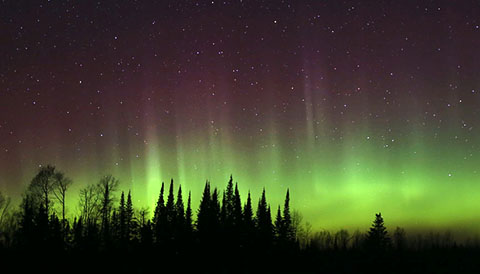
More Auroras Coming to Northern Skies
Keep your eye on the northern sky. Auroras are in the forecast for the next couple nights courtesy of a "hole" in the Sun's corona.

Halley On Fire! Orionids Peak This Week
The annual Orionid meteor shower is active all week, peaking Friday morning October 21st. If you're up before dawn, you might just see these Halley's Comet castoffs come to life.

Plant Your Eyes In Delta Cephei's Fertile Triangle
The famous variable star Delta Cephei unlocks a box deep-sky treasures in a little-visited corner of Cepheus, the King.

Explore the Night with Bob King
Resolving Andromeda — How to See Stars 2.5 Million Light-Years Away
At 2.5 million light-years away, you might think it's impossible to see individual stars in the Andromeda Galaxy. Let its largest star cloud, NGC 206, show you the way.

Explore the Night with Bob King
Mercury Punctuates The False Dawn
Early risers get a triple treat this week and next: a ravishing dawn Moon, an excellent apparition of Mercury, and a hint of Halloween in the ghostly zodiacal light.

Will the Real Albireo Please Stand Up?
A stunning double star, Albireo is also a bit of an enigma. Is it a true binary or the result of a chance alignment?

Why Are There So Many UFOs?
In an age when UFO sightings are rife, we look at other possibilities that may help to explain the strange apparitions many see.

Explore the Night with Bob King
Enjoy Orion in Shirtsleeves
Throw open the door and welcome back Orion at dawn. The Hunter's return brings relief from the heat and gives us a fresh shot at exploring untouched winter deep-sky objects in comfort.

Polarized Light: From Blue Sky to Egg Nebula
Bees see polarized light and use it to navigate to honey. Learn how you can use it to crack the Egg Nebula.
