 SUNSET:

 0
0
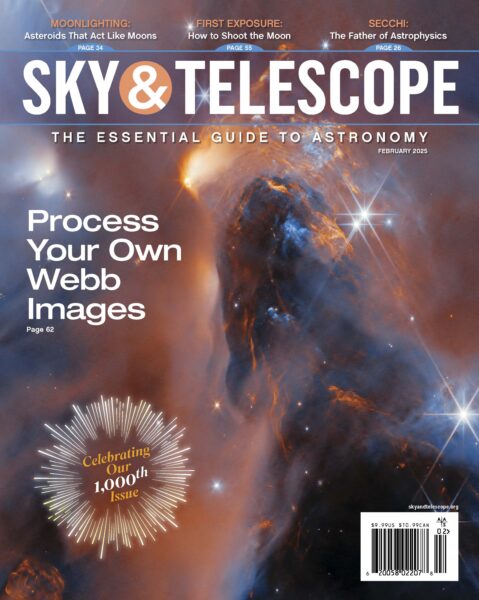
Process Iconic Images, Black Hole Revolution, and the Father of Astrophysics
In the February 2025 issue of Sky & Telescope, we’re celebrating our 1,000th issue and welcoming our new Editor in Chief, Diana Hannikainen! The first images from James Webb Space Telescope (JWST) in our 973rd issue wowed audiences around the world, but how amazing would it be to put one’s own personal spin on the data from this revolutionary telescope? This month, we provide a guide to doing just that, so you can try your hand at processing your own JWST images. Webb isn’t the only wildly successful, recent space mission. The Gaia mission has also produced incredible results over the past decade, including sussing out three especially elusive black holes, with more to come. But who says the space telescopes get to have all the fun? We’ll grab our telescopes and do things the old-fashioned way, like Angelo Secchi in his rooftop observatory over the Church of Saint Ignatius. Who’s up for a look at a few of winter’s best reflection nebulae? The Pleiades anyone?
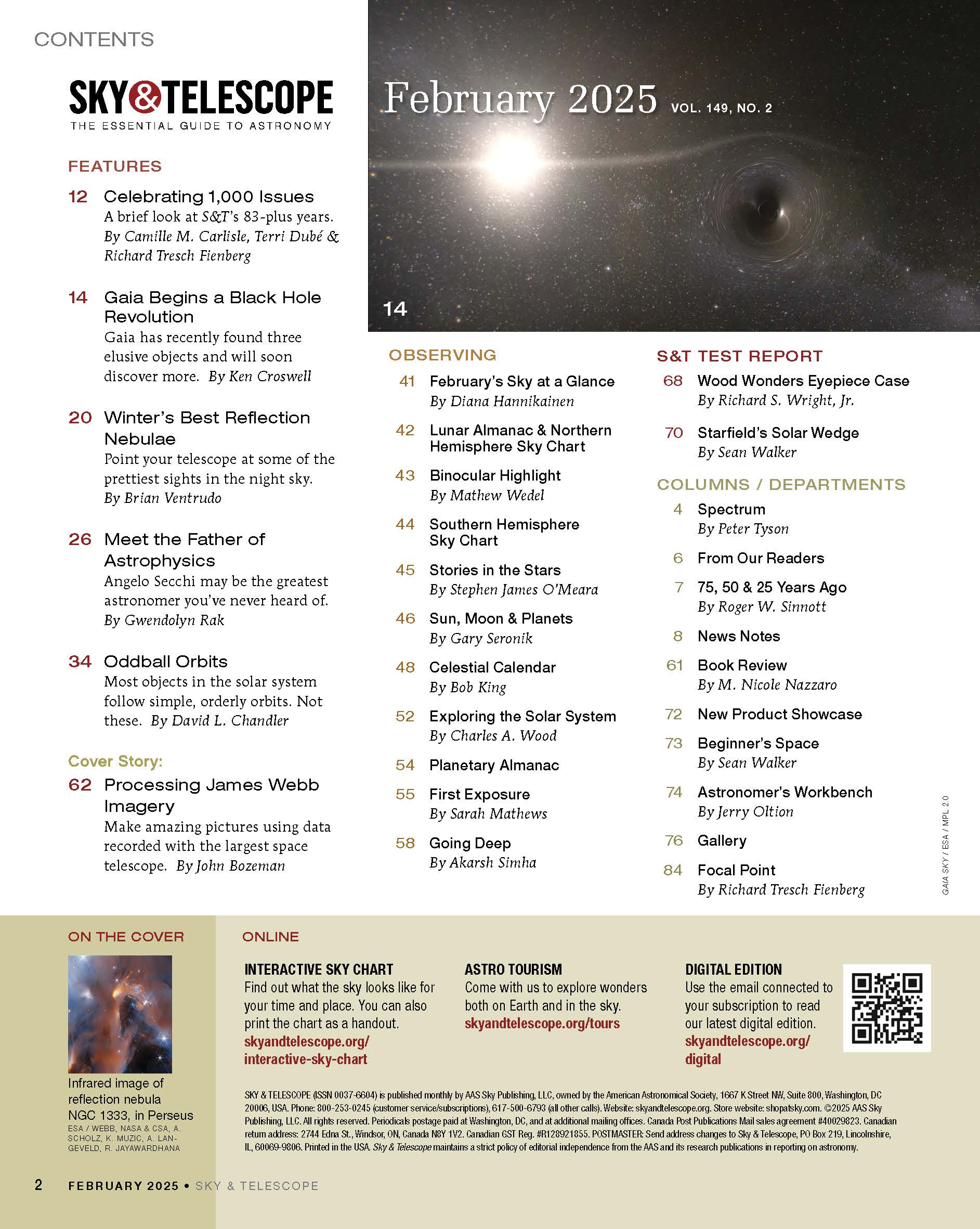
FEATURE ARTICLES:
A brief look at S&T’s 83-plus years.
By Camille M. Carlisle, Terri Dubé & Richard Tresch Fienberg
Gaia Begins a Black Hole Revolution
Gaia has recently found three elusive objects and will soon discover more.
By Ken Croswell
Winter’s Best Reflection Nebulae
Point your telescope at some of the prettiest sights in the night sky.
By Brian Ventrudo
Meet the Father of Astrophysics
Angelo Secchi may be the greatest astronomer you’ve never heard of.
By Gwendolyn Rak
Most Objects in the solar system follow simple, orderly orbits. Not these.
By David L. Chandler
Make amazing pictures using data recorded with the largest space telescope.
By John Bozeman
Beyond the Printed Page:
Learn all about the first confirmed exoplanet orbiting Barnard’s Star.
Explore historical drawings of our Sun to help astronomers understand how it has changed.
Watch Venus’s quasi-moon orbit the Sun.
Follow along with this guide to creating a mineral Moon image.
ALSO IN THIS ISSUE:
The Invisible Wonder of Perseus
You don’t need a telescope to see a remarkable cluster hidden in plain sight.
By Stephen James O’Meara
A modest collection of faint, icy visitors awaits enthusiasts
By Bob King
Possible Origins for Young Volcanics
China announces evidence of recent lunar eruptions. So where did they originate?
By Charles A. Wood
An Easy Moon Shot
This basic approach to lunar photography uses equipment you probably already have
Table of Contents
See what else February’s issue has to offer.

Comments
You must be logged in to post a comment.