 SUNSET:

 0
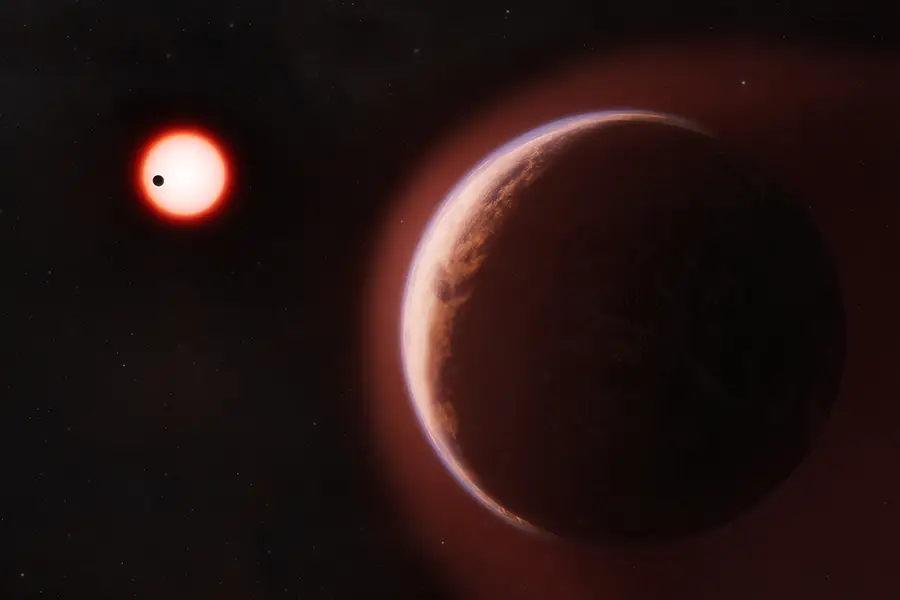
0Astronomers have found a sub-Earth-mass planet orbiting Barnard’s star, just six light-years away — for real this time.

ESO / M. Kornmesser
Astronomers have finally found a planet around the closest single star to the Sun — and there are probably more worlds in this system. The find settles years of controversy.
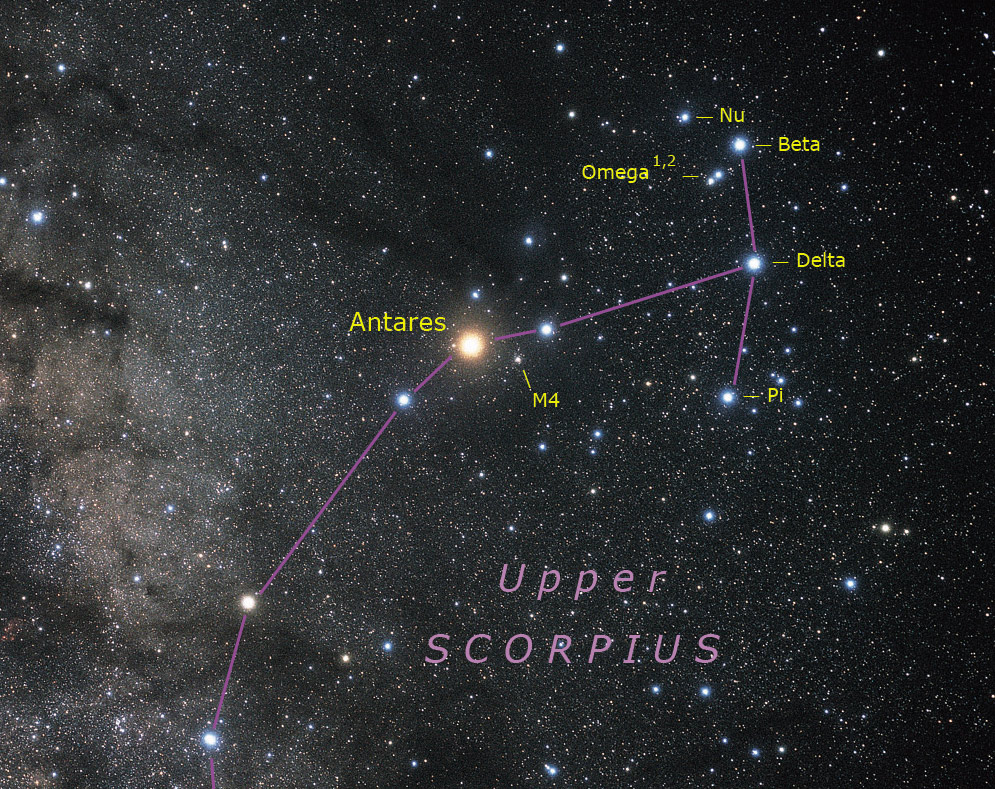
Some stars seem like perfect targets for exoplanet hunters. Barnard’s star is certainly one of them: At only six light-years from the Sun in the direction of Ophiuchus, it is the nearest single star and the second-nearest star system after Alpha Centauri. It’s so close that you can detect its movement across the sky in photographs taken just a few years apart.
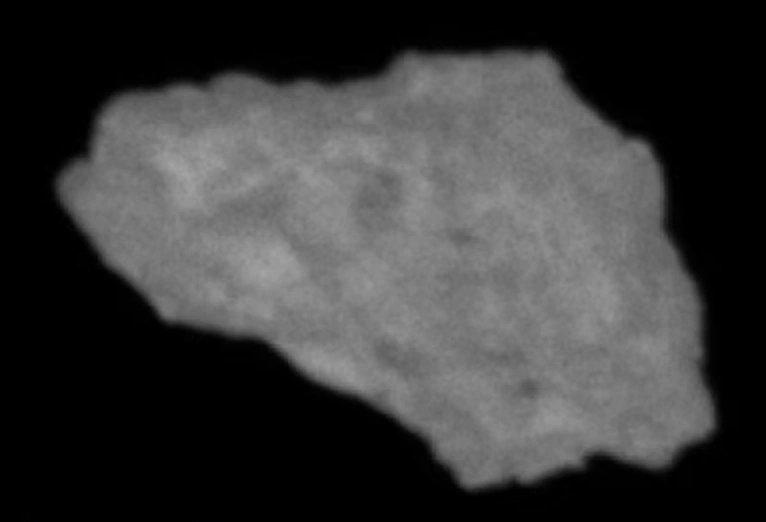
Claims of planetary companions to Barnard’s star have been made since the 1960s, but they’ve been disputed. Now, astronomers have finally found firm evidence of a planet in this system: Jonay González Hernández (Institute of Astrophysics of the Canaries, Spain) led a team that published in Astronomy & Astrophysics the discovery of a world smaller than Earth circling Barnard’s star in a little more than 3 days. It has at least half the mass of Venus, but probably less than Earth’s mass.
The planet, dubbed “Barnard b,” orbits its star at only 0.02 astronomical unit, 20 times closer than Mercury orbits the Sun. This distance puts it well inside the star’s habitable zone: With a surface temperature of an estimated 400K (260°F), there is certainly no liquid water on its surface, even though the star itself is 2,500 K cooler than our Sun.

IEEC/Science-Wave – Guillem Ramisa
González and his team also found hints of other small-sized planets with orbital periods of 2.3, 4.1 and 6.7 days; the latter world is just at the inner boundary of the habitable zone.
"We now need to continue observing this star to confirm the other candidate signals," says team member Alejandro Suárez Mascareño (also at the Institute of Astrophysics of the Canaries). "But the discovery of this planet, along with other previous discoveries such as Proxima b and d, shows that our cosmic backyard is full of low-mass planets." In recent years, members of the same team confirmed the existence of Proxima b, the first planet discovered around Proxima Centauri, the closest star to the sun. There is also some evidence for two additional planets, Proxima c and Proxima d, although some experts question their existence; they are considered “candidate planets” for now.
Imposters
It’s not the first time that astronomers have claimed to discover a planet in the Barnard star system. The first “eureka” moment dates back to 1963, well before exoplanets were a thing. Peter van de Kamp (Swarthmore College) credited the wobble of the star's position on the sky to two planets' tugs. But later work showed those wobbles were due to improper telescope adjustments, not planets. Similar claims of planets around other nearby stars, including 61 Cygni and Lalande 21185 — all eagerly picked up by the media — were also later disproven. The positional measurements simply weren't precise enough at that time to detect planets.
Then, in 2018, Ignasi Ribas (then at the Institute of Space Sciences, Spain) and his colleagues claimed to have found another planet around Barnard’s star, this time on a wide, 233-day orbit. That candidate was so far away from the star (which emits less than 1% of the solar luminosity) that it would have been a lifeless, icy world.
But in 2021 and 2022 two groups contested the find. In the first study, Jack Lubin (University of California, Irvine) and team argued that an unusually long-lived starspot, persisting over multiple rotations, had masqueraded as the planetary signal. At about 10 billion years old, Barnard’s star is twice as old as the Sun and, while it’s not as active as younger red dwarf stars, it would be expected to host long-lasting sunspots like other, older stars.
A second group, led by Étienne Artigau (Montréal University, Canada), likewise concluded that the signal found by Ribas’s team was probably a “false positive” and not from a real planet, though their study differed in detail from that of Lubin’s team.

ESO / IAU and Sky & Telescope
So what makes González and his team confident that their planet is real?
Both Ribas’s as well as González’s teams used the radial velocity method, measuring the tiny wobble of Barnard’s star caused by the gravitational tug of its planetary companion. Gonzalez’s team, though, had a much sharper tool at their disposal: the fiber-fed, high-resolution Echelle SPectrograph for Rocky Exoplanets and Stable Spectroscopic Observations (ESPRESSO) at the European Southern Observatory’s Very Large Telescope in Chile.
“With ESPRESSO, we are aiming at a [radial velocity] precision of about 10 cm/s, similar to the effect of the gravitational pull of Earth on the Sun,” explains González. Older spectrographs are much less precise, which makes it difficult for them to detect low-mass exoplanets.
Secondly, the astronomers focused their attention on orbital periods shorter than 50 days (corresponding to the outer edge of Barnard’s star’s habitable zone), avoiding the 145-day period of the star’s rotation and thus any possible contamination of starspots and the like. To solidify the claim, the team analyzed the star’s activity to exclude possible contamination on shorter timescales. They also used other spectrographs to confirm their results.
The researchers also searched for the 233-day signal that Ribas’s team found in 2018 — and found nothing, adding further evidence that this signal was indeed a false positive. Ribas acknowledges that the evidence against his candidate planet seems overwhelming: “It seems quite improbable that the planet candidate we claimed in 2018 is indeed there.”
Both Ribas and Lubin praised the work by González’s team. “This [...] is very exciting!” says Lubin. “It is a totally new planet, unrelated to any prior planet claims in the Barnard’s star system. The authors have written a really rigorous paper, and I applaud their work.”
Ribas also praises the advances in technology: “The ESPRESSO instrument is significantly superior in terms of precision to any of the spectrometers we used in our 2018 paper,” he says. “I would qualify [the proposed planet] as a solid detection.”




Comments
You must be logged in to post a comment.