 SUNSET:

Upcoming Astronomy Events
As a service to our community, Sky & Telescope lists astronomy-related events, including star parties, observatory public nights, astronomy talks, and more. Star parties offer dark skies and astronomical fellowship and often cater to families and feature special activities for kids. Public nights give the general public a chance to view the sky through large telescopes, and public talks are a great place to learn the fundamentals of the science and the craft.
You’ll also see online events offered here.
And if you’d like free copies of Sky & Telescope’s Let’s Go Stargazing flyer or door prizes for your next star party, you can fill out this form.

"Thinking Big: From Detroit Observatory to the ESO 39-Meter ELT" by Prof. Michael Meyer
March 6 @ 7:00 pm - 8:30 pm EST
Free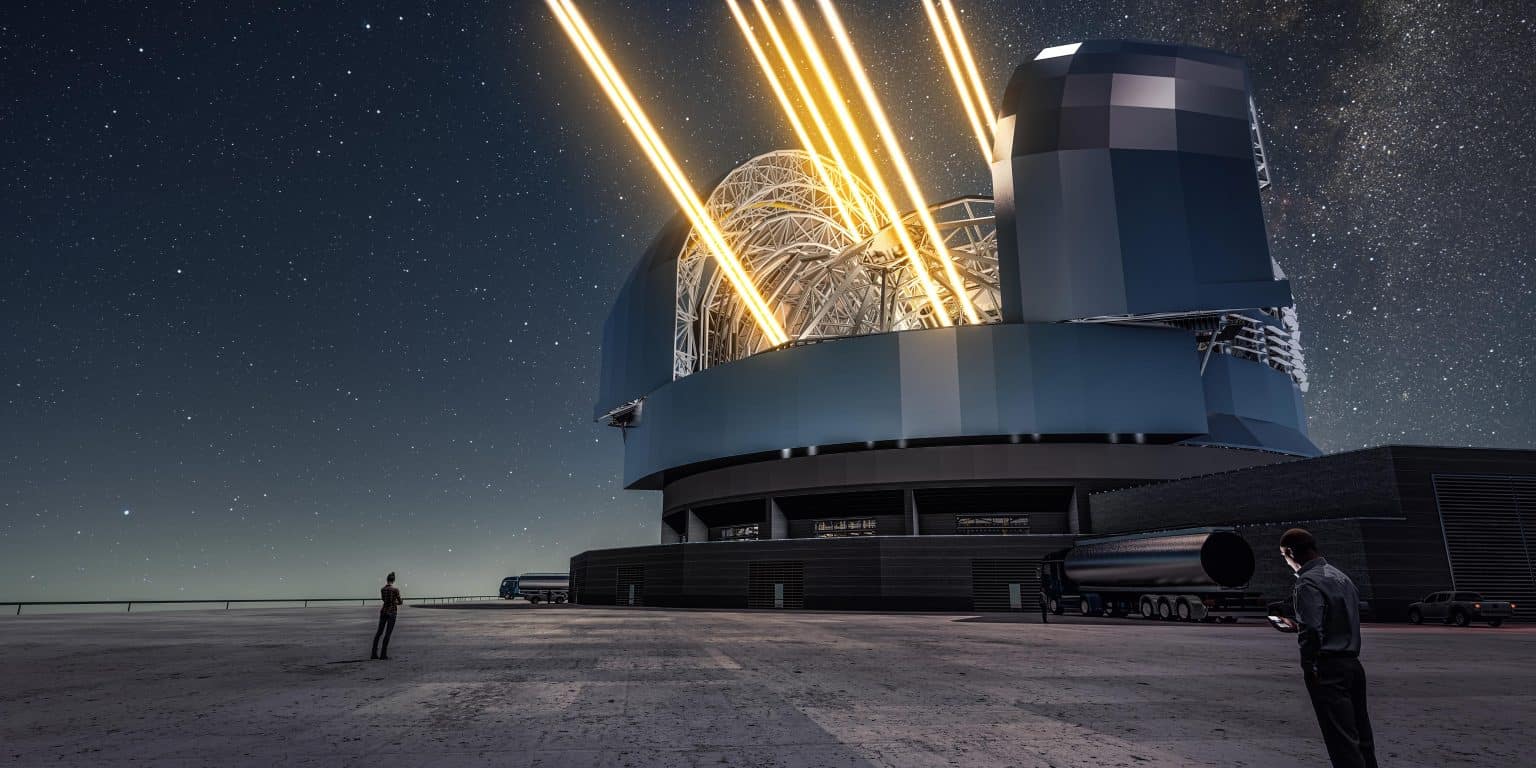
PLEASE NOTE: This program will be streamed live on Zoom as well. Visit our website for registration information.
Since the start, the University of Michigan has tried to contribute to what we know about the universe. Its first president, Henry Tappan, believed that UM could do great things, and he helped create the Detroit Observatory, with the third-largest refracting telescope in the world when it was commissioned in 1854. UM Astronomy has followed in this tradition with a series of more capable observatories, including MDM on Kitt Peak, in Arizona, and the Magellan Telescopes on Las Campanas in Chile. When it has its first light in 2029, the Extremely Large Telescope could begin to change everything we know about the universe—including how the first galaxies were created and where life on other planets may exist. And UM is the only U.S. university involved in helping develop it.
About the Speaker:
Michael R. Meyer is Professor and Chair of the Department of Astronomy at the University of Michigan. He was Chair of Star and Planet Formation at the ETH in Zürich, Switzerland (2009-2016) and was formerly a professor/astronomer at the Department of Astronomy/Steward Observatory of the University of Arizona (2000-2009). He was a Hubble Fellow at the University of Arizona (1997-2000) and did a postdoc at the Max-Planck-Institute for Astronomie (1995-1997). He has more than 30 years of international scientific research experience in the fields of galactic and infrared astronomy, as well as the formation, evolution, and characterization of planetary systems (and associated implications on the prospects for life in the universe). He has also participated in the development of ground- and space-based instrumentation, such as for the James Webb Space Telescope and the next generation of extremely large telescopes.
