 SUNSET:

 0
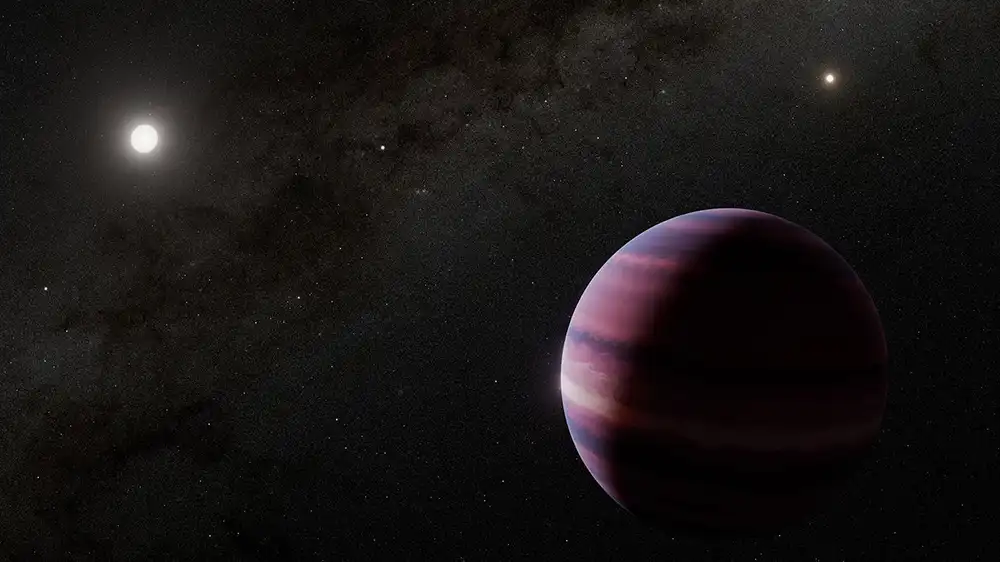
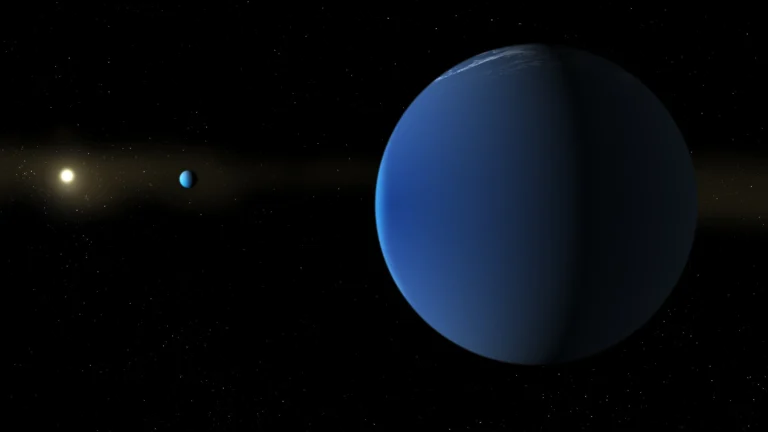
0Direct images from the James Webb Space Telescope show what could be a Saturn-mass planet around Alpha Centauri.
NASA / ESA / CSA / STScI / R. Hurt (Caltech / IPAC)
Using the James Webb Space Telescope, astronomers may have directly imaged a Saturn-mass gas giant in the habitable zone of a star in the solar system next door. While the planet itself isn’t habitable to life as we know it, moons around it could be.
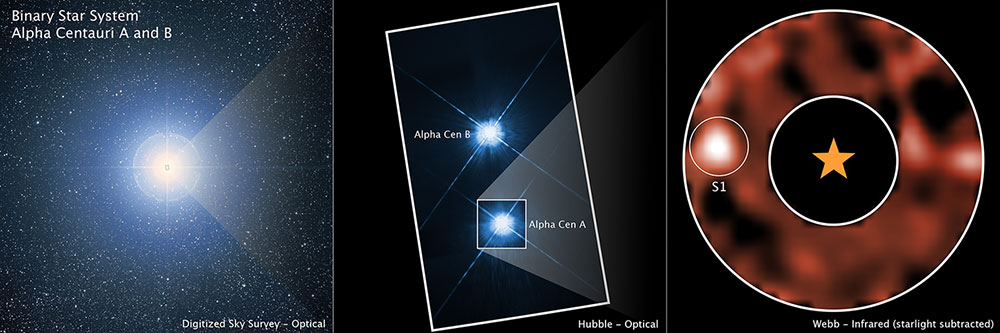
Alpha Centauri is a triple-star system, made up of a pair of close-orbiting, Sun-like stars (A and B) as well as the red dwarf Proxima Centauri, the closest star to the Sun.
Astronomers have already found three planets swirling around Proxima Centauri, but now they may have spotted one circling Alpha Centauri A as well. The results are reported in two papers that will appear in The Astrophysical Journal Letters (paper 1, paper 2).
The relative proximity of the Alpha Centauri system to Earth was both a blessing and a curse: It allowed astronomers to directly image the planet, but that turned out to be far from straightforward. “These are incredibly challenging observations to make, even with the world's most powerful space telescope,” says team co-lead Charles Beichman (NASA Exoplanet Science Institute). “These stars are so bright, close, and move across the sky quickly.”
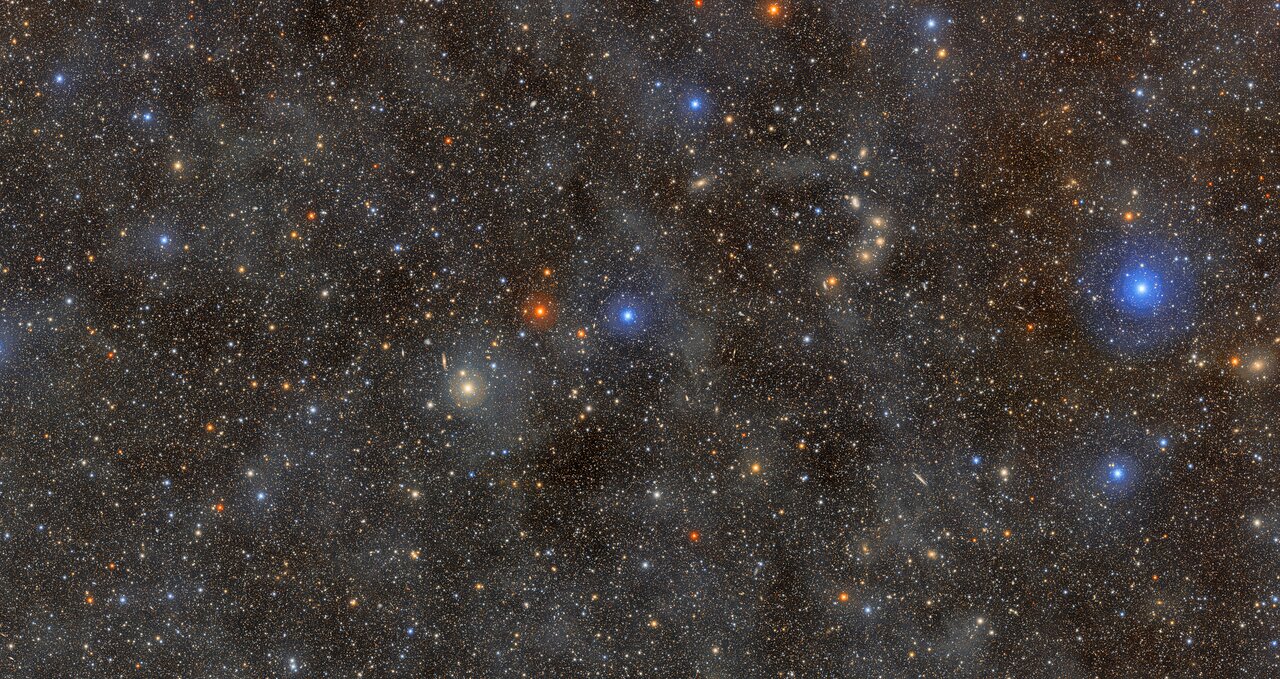
NASA / ESA / CSA / STScI / DSS / A. Sanghi (Caltech) / C. Beichman (JPL) / D. Mawet (Caltech); Image processing: J. DePasquale (STScI)
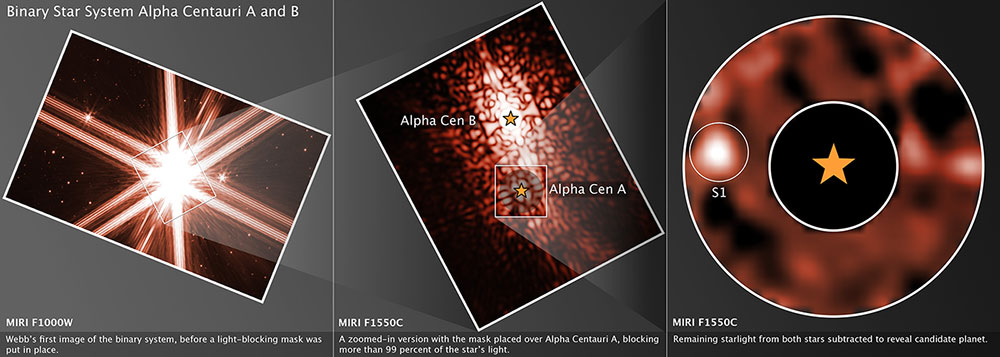
The team made the discovery using Webb’s Mid Infrared Instrument (MIRI). It has a coronographic mask that can block out the intense glare of stars to observe fainter objects like planets in the vicinity. But this is tricky in a multiple-star system, with Alpha Centauri B's light needing to be blocked too. The team used Epsilon Muscae as a reference star to help untangle the planet's meager light from that of its host.
Interestingly, the planet's position matches a tentative detection made in 2019 by the Very Large Telescope’s NEAR experiment, raising the possibility that both sightings correspond to the same object. However, the planet failed to show up in two follow-up observations with Webb, casting doubt on the discovery. There's a chance, though, that the planet had simply moved too close to the star to been seen. Its orbit may be moderately eccentric and tilted compared to the orbital plane of the Alpha Centauri, further complicating the search. The planet's disappearing act is unlikely to be due to dust obscuration, as the team placed unprecedented limits on exozodiacal light in the system.
The team is planning further follow-up observations with Webb, and hopefully also with the Nancy Grace Roman Telescope when it launches in 2027.
NASA / ESA / CSA / STScI / A. Sanghi (Caltech) / C. Beichman (JPL) / D. Mawet (Caltech); Image processing: J. DePasquale (STScI)
“In my opinion, the authors have done a really careful job of analyzing their data,” says Sarah Casewell (University of Leicester, UK), who was not involved in the research. The proximity of the planet is also a real plus. “It will give us an opportunity to start to compare the composition with the gas giants in our solar system,” she says.
If the planet is eventually confirmed, it would be a record-breaking discovery as the planet orbits just two astronomical units away from its host star — right in the habitable zone.
"Of all the directly imaged planets, this would be the closest to its star seen so far,” says co-lead Aniket Sanghi (Caltech). It would also be the first directly imaged planet around a star that's the same age and temperature as the Sun.
A confirmed discovery would also impact our theories of how planetary systems are born and grow. "Its very existence in a system of two closely separated stars would challenge our understanding of how planets form, survive, and evolve in chaotic environments,” Sanghi says.
But, for now, we'll just have to wait and see.
Editorial note (Aug. 13, 2025): The planet candidate's temperature was originally compared to Saturn's, but in fact Alpha Cen b is more than twice as warm.
About Colin Stuart
Colin Stuart (@colinstuartspace) is an astronomy author and tutor. He also runs a free online astronomy club.


Comments
You must be logged in to post a comment.