 SUNSET:

 0
0A daring mission will attempt to reach and save a key astrophysics observatory in low Earth orbit.
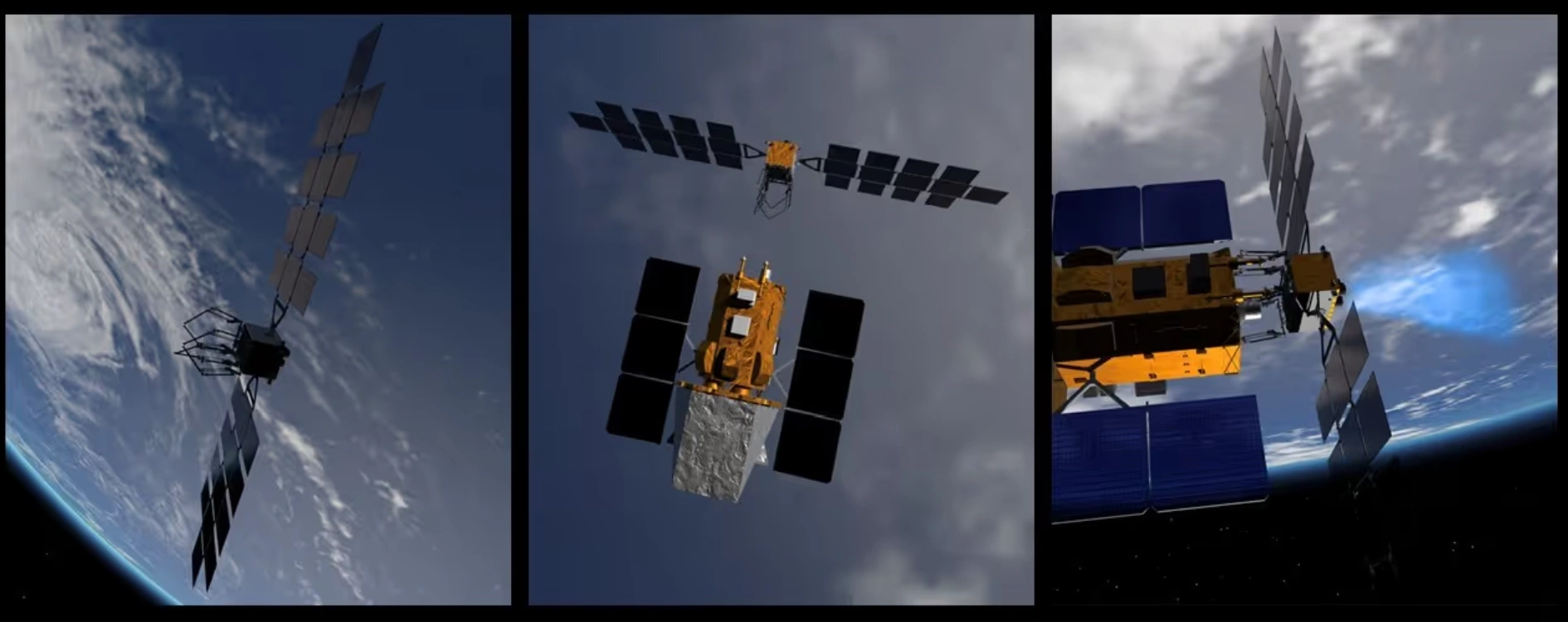
Katalyst Space Technologies
Getting a space telescope to orbit is a hard road from design to launch pad. So it only makes sense to keep to missions operational for as long as possible. Now, in a first, NASA is making a bid to keep a scientific work horse in space for another decade, with a new mission that will boost the orbit of the Neil Gehrels Swift Observatory.
Originally designed for detecting and following up on gamma-ray bursts, Swift has three telescopes in one observatory, capable of detecting gamma rays, X-rays, and ultraviolet and visible light. Since its launch, Swift has been used for fields across astronomy, studying supermassive black holes, stellar flares, neutrino sources, and, yes, the origin of gamma-ray bursts in stellar explosions. But over the two decades since its launch, its orbit decayed from its original 600-kilometer altitude (370 miles) down to just 360 km (230 mi). It's now in danger of reentering Earth's atmosphere.
To prevent that from happening, NASA launched the Link rescue spacecraft on Friday, July 3rd at 4:36 a.m. EDT / 9:36 UT. The mission was carried aloft by the Northrop Grumman L1011 Stargazer aircraft, flying out of Kwajalein Atoll in the Marshall Islands. Deployed from the airplane, a four-stage Pegasus XL rocket sent the mission into orbit. The rocket launch occurred over the Ronald Reagan Space and Missile Test Range in the Pacific Ocean.
A similar plane-rocket launch configuration has successfully deployed other space missions in the past, including the NuStar X-ray observatory, the Interstellar Boundary Explorer (IBEX), and the Ionospheric Connection Explorer (ICON). NASA selected the Kwajalein base to allow Link to reach Swift’s low orbital inclination.
A Swift Timeline to Orbit
Now, Link will approach Swift, arriving in the observatory’s vicinity by late July. The plan is for the mission to slowly approach Swift, inspecting the telescope before attempting to dock. Swift was never designed for this kind of orbital grapple, and has no built-in retrieval mechanism. Instead, the team plans to use laser Light Detection and Ranging (LIDAR) along with a trio of parallel manipulators to link up to flanges on the spacecraft bus, originally meant for ground handling.
Katalyst Technologies
Then, a several-month-long boost phase begins. Link will use three xenon-fueled Hall-effect thrusters to push Swift into a higher, longer-lasting orbit. This maneuver will be tricky, as the stacked spacecraft will need to stay balanced the entire time. In the best-case scenario, Swift might resume science operations this coming fall. This automated, rapid-response rescue mission is a first for NASA, and could provide a template for future attempts.
“If Swift were successfully boosted to an altitude greater than 550 kilometers (342 miles), the orbital lifetime (greater than 10 years) would likely no longer be the limiting factor in Swift’s scientific productivity,” says Brad Cenko (NASA-GSFC). “At some point in the future, on-board hardware failure would likely bring an end to science operations. Our best guess is that this would be greater than five years down the road, but this is very hard to predict reliably.”
One such failure that might occur is that of the gyroscopes onboard — two of four have already stopped working, and the observatory is currently operating in two-gyroscope mode thanks to a software patch.
The Rapid Development of LINK
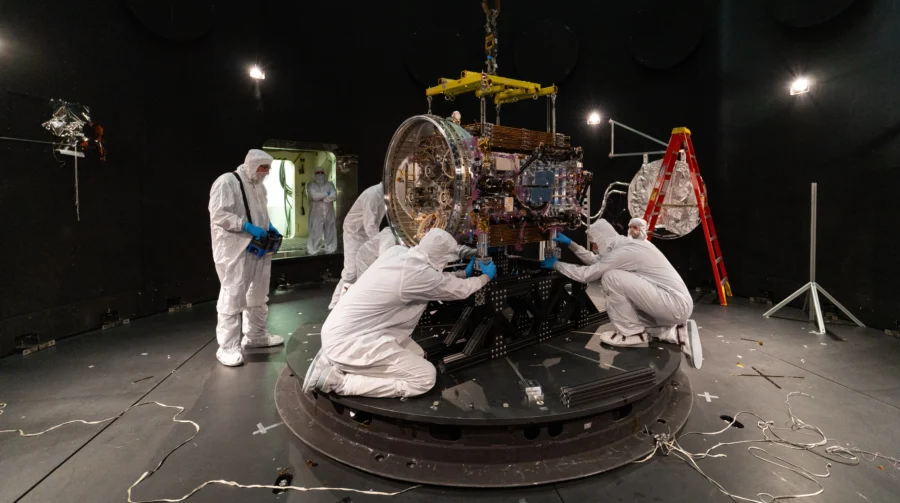
NASA / GSFC
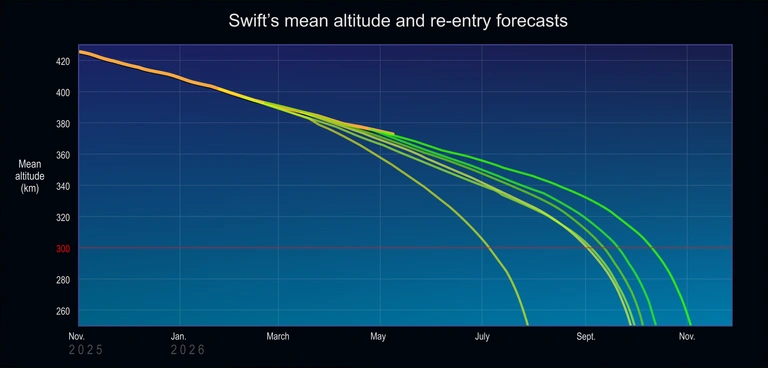
Launched in 2004, Swift was slated to stay in low-Earth orbit until the 2030s. But the powerful peak of the current solar cycle created more drag on the spacecraft than expected. In 2024, the mission's altitude lowered to just 370 kilometers; left on its own, Swift would probably reenter in late 2026.
In the fall of 2025, NASA awarded $30 million to space startup Katalyst to build a rescue mission. That’s right: The mission was readied, from design to development to launch, in less than a year. About the size of a sofa, the 400-kilogram (882-pound) Link spacecraft flew out of NASA's Wallops Flight Facility in Virginia on June 18th. It's already encapsulated on the L1011 Stargazer aircraft, headed for Kwajalein Atoll.
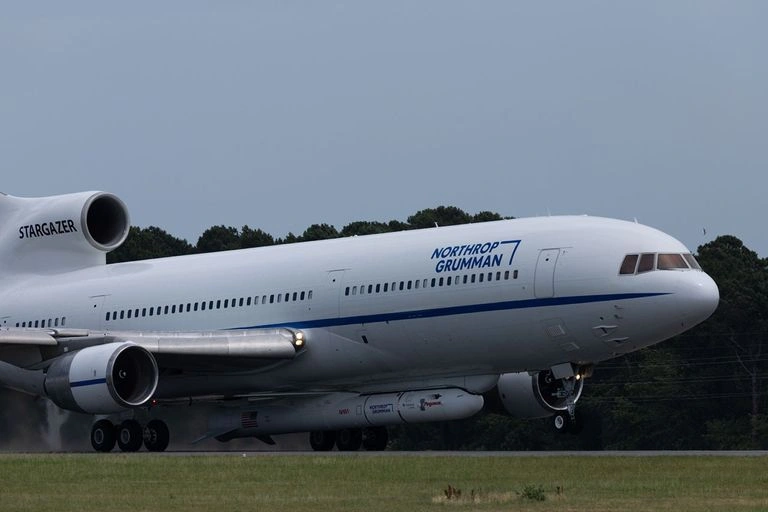
NASA Wallops / Jamie Adkins
SWIFT: A Gamma-ray Burst Mission
Swift is a three-in-one observatory, designed to detect and rapidly follow up on gamma-ray bursts. A Burst Alert Telescope (BAT) scans a wide, 70-by-100 degree field of view. The mission can slew to a suspected burst within two minutes of detection, bringing its X-ray and ultraviolet instruments to bear. Swift has detected about 100 bursts per year, as well as processing up to five requests to observe other "targets of opportunity" per day.
In over two decades of operations, Swift’s achievements are impressive, including the discovery of the most energetic GRB 221009A yet in 2022, dubbed "BOAT" for Brightest Of All Time.
“Swift plays two unique roles in the NASA’s astrophysics portfolio, particularly in the area of time-domain and multi-messenger astronomy,” says Cenko. “First, with the BAT instrument, Swift constantly monitors 1/6th of the sky at all times to look for new high-energy transients (e.g., gamma-ray bursts). By detecting these sources and providing precise localizations promptly, Swift acts as a “dispatcher” for the broader astrophysics community. Second, with its ability to rapidly repoint and sensitive X-ray and UV telescopes on-board, Swift also acts as a 'first responder,' following up alerts from other ground- and space-based facilities in just minutes.” (For comparison, the Hubble Space Telescope can take several days to respond to an observation request.)
NASA paused Swift’s operations early this year in preparation for the rescue mission. The pause also allows controllers to keep the mission in an optimal orientation to minimize further orbital decay. The mission needs to stay at a minimum altitude of 300 kilometers for orbital rendezvous.
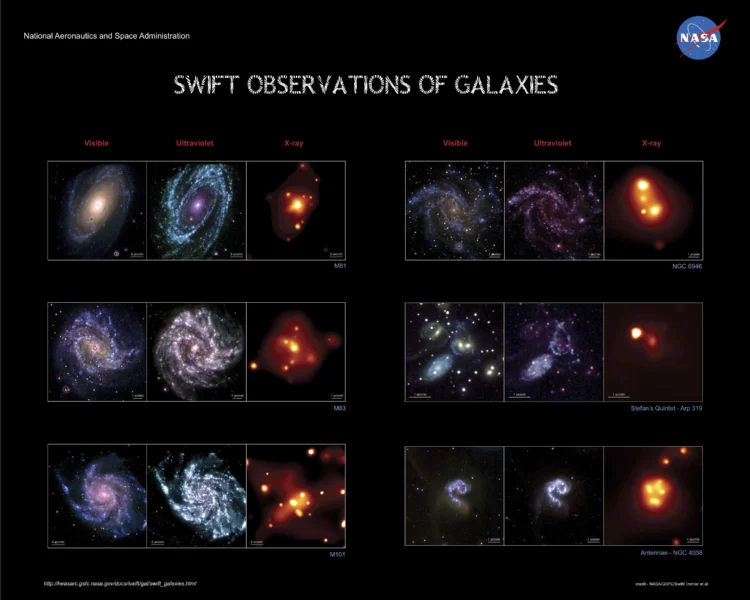
NASA / GSFC
Astronomers have come to rely on Swift and are already feeling the impact of its hiatus. Although the Fermi Gamma-ray Space Telescope still tracks the high-energy sky, Swift has an unmatched capability for fast response and afterglow tracking.
“Some of the capabilities that Swift provides in the NASA astrophysics portfolio could be at least partially replaced (in some ways superseded) by planned future NASA missions,” says Cenko. “For example, the Ultraviolet Explorer telescope, planned for launch in the 2030s, will be capable of rapid response follow-up at UV wavelengths (including spectroscopy, which is very limited for Swift). Other capabilities, like precise localization of high-energy transients, and rapid response X-ray follow-up, are not really in the NASA pipeline at the moment.”
NASA will likely broadcast the rendezvous and capture on NASA Live. Some observers might also see the rendezvous in the sky: Swift is in a 20.5-degree-inclination low-Earth orbit, so observers in Hawai’i and the southern contiguous United States might see the pair in the dawn or dusk sky. Swift’s catalog ID is 2004-047A/28485.
This high-risk, high-reward mission could set the stage for other possible future rescues. For example, NASA astronauts left a Soft Capture Mechanism bracket on the Hubble Space Telescope during the final servicing mission of the Shuttle era, STS-125. But there are no plans to service Hubble again in the near future.
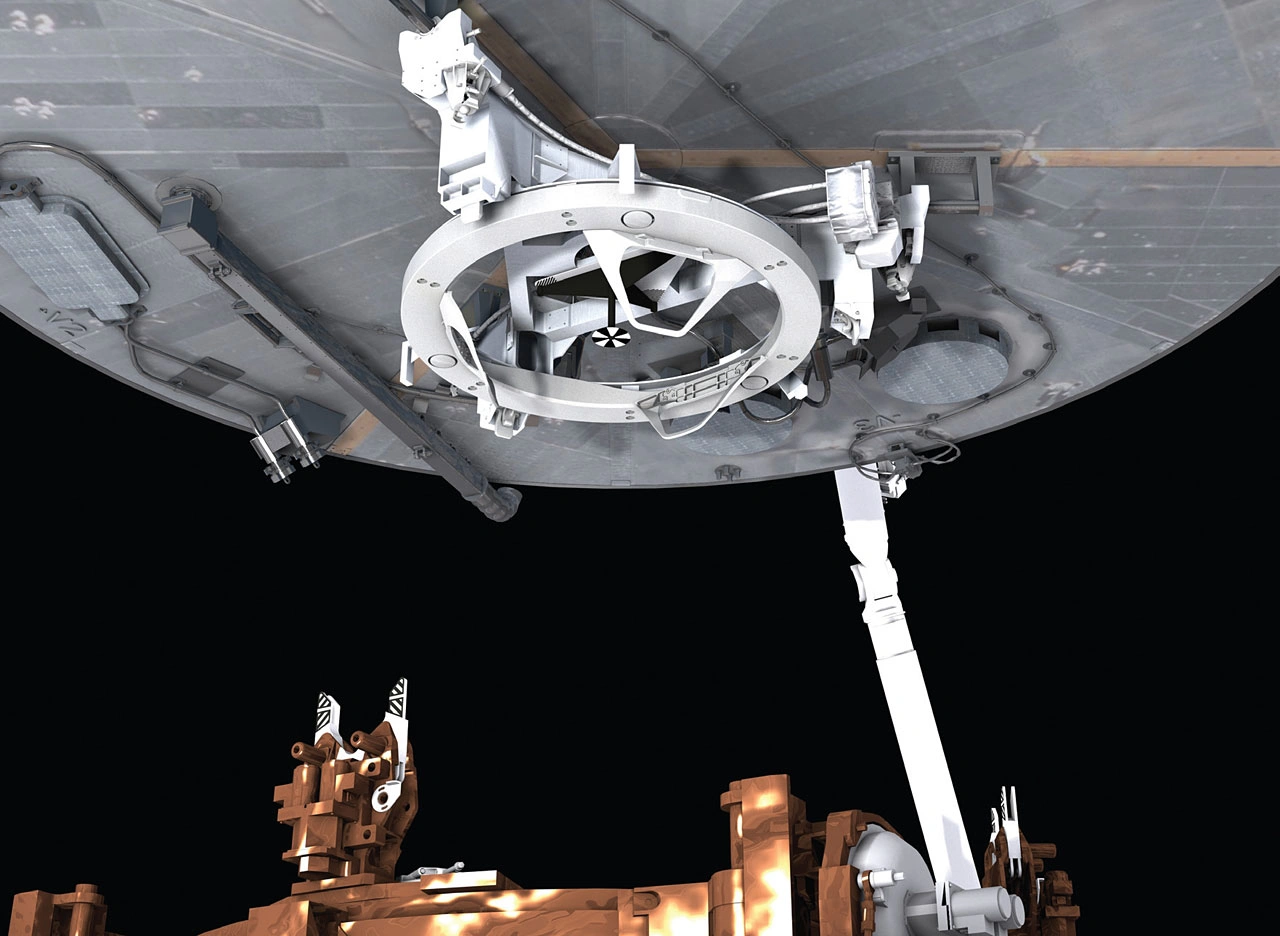
NASA / STS-125
Good luck to the team as Link heads on to a historic first — a date with destiny to rescue the Swift Observatory.
About David Dickinson
David Dickinson is a freelance science writer, high school science teacher, retired enlisted U.S. Air Force veteran and avid stargazer. He currently resides with his wife Myscha in Bristol, Tennessee. David also writes science fiction in his spare time. He posts as @AstroDave on BlueSky about space news and sky-watching worldwide.


Comments
You must be logged in to post a comment.