 SUNSET:

 0
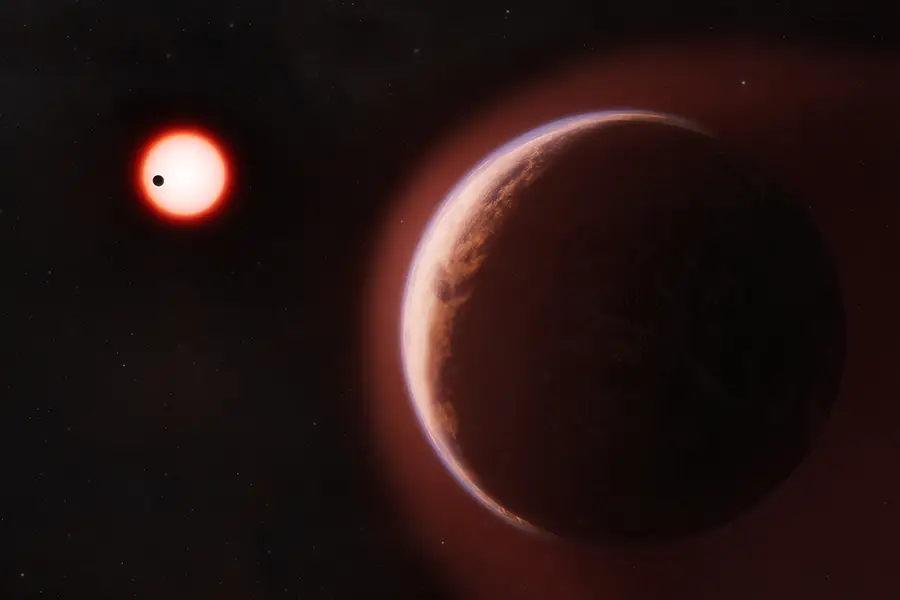
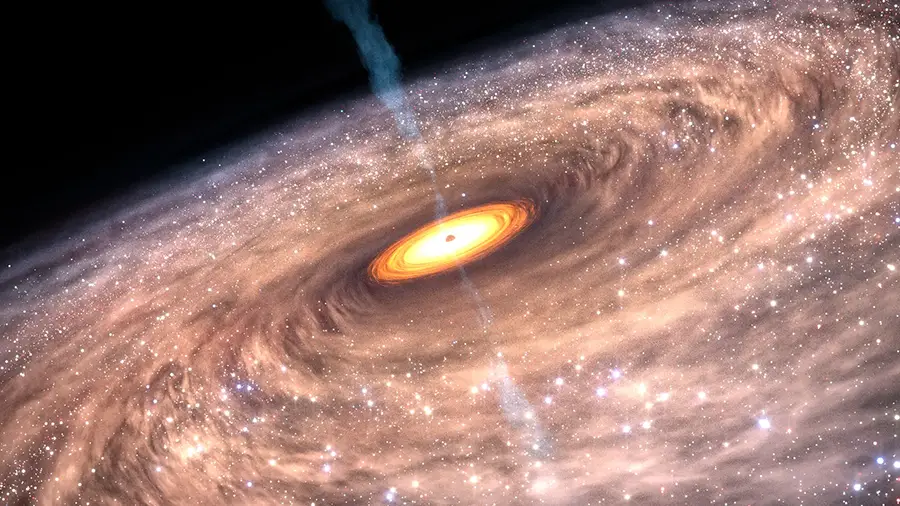
0NASA’s Transiting Exoplanet Survey Satellite has found two “super-puff” planets in the same system, each one as light as cotton candy.
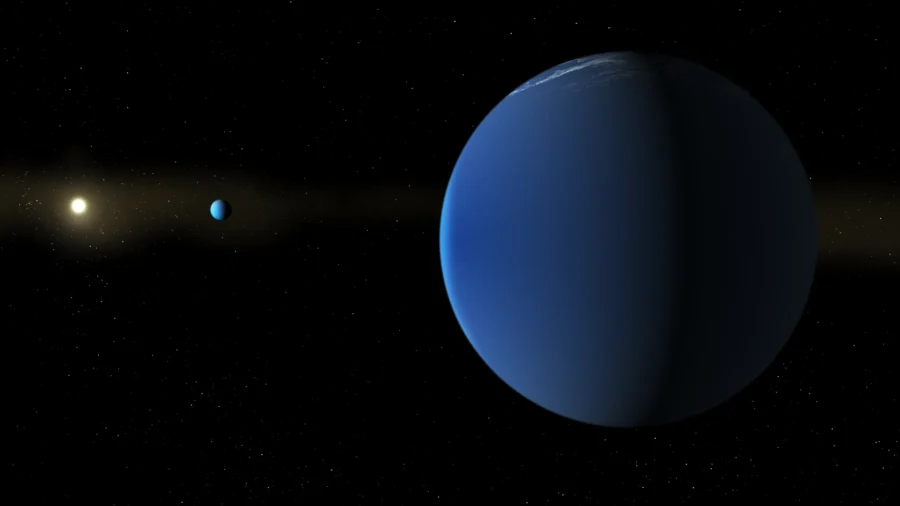
NASA / Daniel Rutter
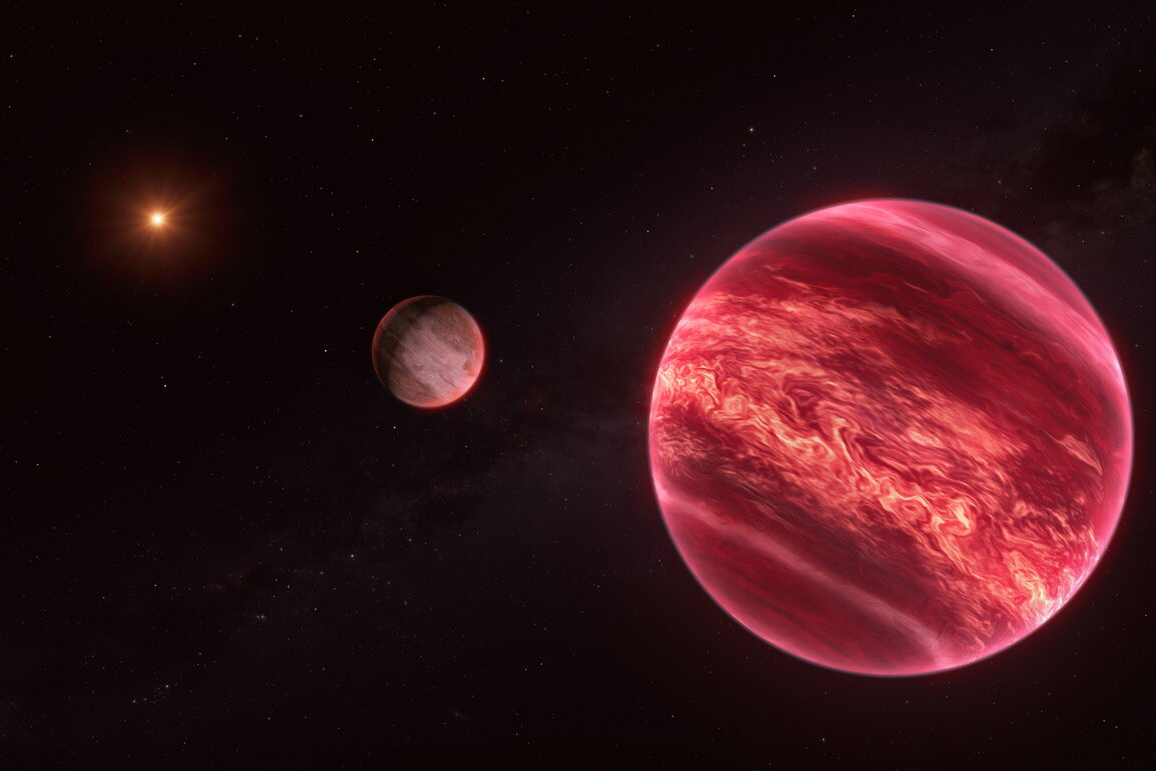
Astronomers have discovered two giant exoplanets in the same system, each one as light as cotton candy. Found using the Transiting Exoplanet Survey Satellite (TESS), these “super-puffs” provide the strongest test yet of how such strange planets form.
Sitting a little more than 1,100 light-years from Earth, these two planets — TOI-791b and TOI-791c — made their presence known when they transited in front of their shared host star.
TOI-791b is the same size as Jupiter but has only 3% of its mass. That gives the world a density of just 0.038 grams per cubic centimetre — 26 times less than the density of water. TOI-791c is larger than Jupiter and has twice the mass of TOI-791b, giving it a marginally higher density. Details of the discoveries are published in Monthly Notices of the Royal Astronomical Society.
“Only a handful of these super-puffy planets are known, and it is even rarer to find two in the same system,” says team lead George Dransfield (University of Oxford, UK). Astronomers have only ever seen one system with two such planets before. “Their extremely low densities make them fascinating targets for understanding how planetary systems form and evolve.”
Light Masses, Long Orbits
Dransfield's team was able to calculate the planets’ masses because they are in a near-perfect orbital resonance. As the planets pull on one another, the timings with which they transit their host star shift by up to 50 minutes.
However, according to Caroline Piaulet-Ghorayeb (University of Chicago), who was not involved in the research, these mass measurements aren’t easy to make. “It is really difficult to know the true planet masses, because different combinations of the masses of the two planets can cause the same signal,” she says. “A definitive answer on how puffy these planets are will likely require future follow-up.”
The other stand-out feature of these planets is their long orbits: They take 139 and 232 days to orbit their star, respectively. Fully characterizing such lengthy orbits takes a lot of observation time, with the team analyzing a total of 1,122 days’ worth of data spread over seven years.
Super-Puff Origins
The long orbits could provide a clue to the origin of super-puffs. Usually found on shorter orbits, these planets' atmospheres might be heated and puffed up due to their proximity to their host star. Yet their origin might be farther out.
“We believed that one of the easiest ways for these planets to form was far from their star,” says Piaulet-Ghorayeb. “The missing piece? Finding super-puffs closer to their supposed formation environment to test that hypothesis, which is exactly what this study did.”
Fledgling planets far from their stars have several advantages when it comes to amassing a puffy atmosphere. Colder gas has less thermal pressure, which makes it easier for a planet to collect material even when it lacks the heft of a more massive planet. Also, far from the host, the star’s own gravity is weaker, meaning it doesn’t pull against the planet’s efforts to accrete hydrogen and helium.
These two super-puffs are closer to their star than the sweet spot for these processes, however. So they could well have formed farther out before migrating inward — but by just the right amount. Any closer and the growing warmth from their star would have started to heat and then strip away their puffy atmospheres.
Follow-up observations are needed to understand the planets more fully. The team plans to target the system with the James Webb Space Telescope, hunting for carbon, nitrogen and oxygen-bearing molecules in the planets’ atmospheres. This chemistry could reveal whether they really did inherit their hydrogen-and-helium-rich envelopes from a colder birthplace.
Further transit-timing data will likely also be needed, both to narrow down the individual masses Piaulet-Ghorayeb flagged as uncertain and to track how the system’s gravitational dance evolves over time. That dance could play out over decades.
About Colin Stuart
Colin Stuart (@colinstuartspace) is an astronomy author and tutor. He also runs a free online astronomy club.



Comments
You must be logged in to post a comment.