 SUNSET:


January Podcast: A Busy Start to 2024
If you’ve resolved to do more stargazing in the New Year, then 2024 will start you off with a bang! As told in this month’s Sky Tour astronomy podcast, you can look forward to some excellent celestial events.

Getting Started with Your New Telescope
How to start successfully with a new telescope — a guide to what you need to know, how to set it up, and things you can start finding with it in tonight's sky.

Watch Jupiter's Moons in Unusual Lineups
You'll have five opportunities in the coming months to see Jupiter's moons in interesting alignments.

Vesta Sets Sail Across Orion
Look who's visiting this winter in Orion: Vesta, a bright asteroid with a dark side.

Get Ready to Greet the Geminid Meteor Shower!
The year's most spectacular meteor shower is upon us. Prepare to enjoy the Geminids under a dark, moonless sky, when you might see more than 100 meteors per hour.

December Podcast: A Tower of Brilliant Stars
This month’s Sky Tour podcast introduces you to a “tower of brilliance” in the eastern evening sky, along with tips for finding four planets and watching mid-December’s impressive Geminid meteor shower.

Watch Uranus's Moon Titania Cover a Star Monday Night
Observers across much of the U.S. and Canada have a unique opportunity Monday night, November 20–21, to see Uranus's brightest moon occult a star.

Jupiter's Great Red Spot Just Keeps Getting Smaller
Jupiter's Great Red Spot may be reaching a milestone this year by shrinking to its smallest size in recorded observational history.
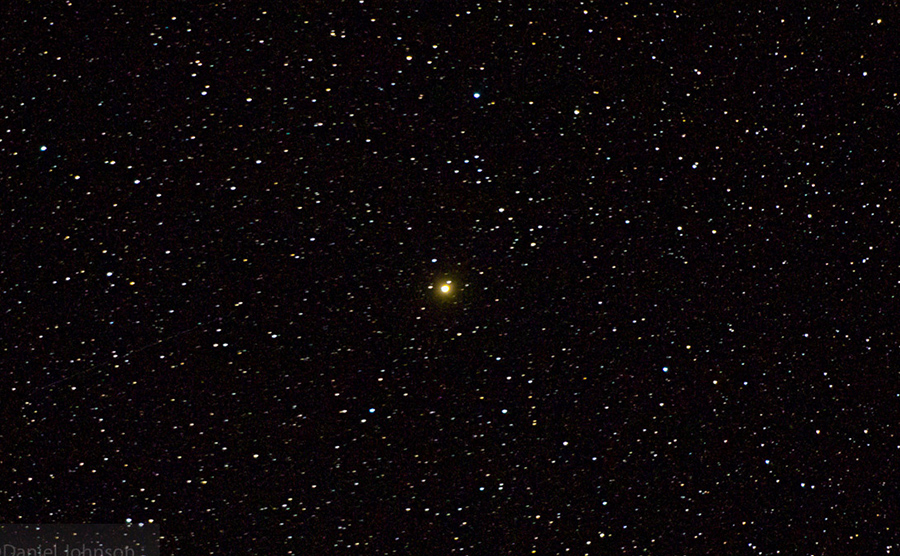
Meet Enif, the Nose of Pegasus
Enif, the nose of Pegasus, is a supergiant star and the brightest member of the constellation. Find out more about this star and its place in our skies.

How to See Freaky Starlink "Cluster Flares", Plus the Latest on Comet Lemmon
Alien invasion or flares from satellites in multiple orbits? It depends on your point of view. We also check in on Comet Lemmon, poised to possibly reach binocular-visibility.

November Podcast: Horse, Dolphin, Arrow, and Fish
With Jupiter and Saturn leading the way each evening, you can use this month’s Sky Tour podcast to track down some lesser-known constellations — and the most distant celestial object that you can see with just your eyes!

Orionid Meteors Fly; Two Moons Shadow Jupiter
Bundle up and enjoy the Orionid meteor shower under moonless skies this week. Don't miss the warm-up act, either, when two of Jupiter's moons pair up in a captivating double-shadow transit.

Comet Hartley Comes Home Again; Gegenschein-gazing
Get acquainted with Comet 103P/Hartley. It's been a dozen years since its last bright apparition. While you're at it challenge yourself to spot the elusive gegenschein.

October Podcast: Jupiter & Saturn Dance at Dusk
This month’s big celestial news might be the annular solar eclipse that will be seen in the Americas, but everyone can share the fun of casual stargazing by streaming or downloading October’s Sky Tour astronomy podcast.

Action-packed Sky: Saturn, Comet Nishimura, and More
September is Saturn's time to shine. We also check on Comet Nishimura — now at 5th magnitude and still brightening — and look forward to a dramatic asteroid occultation. Not to mention that Jupiter just took another hit.

September Podcast: Explore the Summer Triangle
Daylight hours are getting shorter in the Northern Hemisphere, which means the hours for stargazing are getting longer throughout September! So stream or download this month’s Sky Tour astronomy podcast for lots of great tips on what you can see this month in the evening sky.

How Rare Is a Solar Eclipse?
There are two solar eclipses every year — so why are they so rare?

Get Ready for a Great Perseid Meteor Shower
The Perseids are here! With no Moon to spoil the show it's time to break out the lawn chairs, sit back, and watch the comet dust fly.

August Podcast: Blue Moon and Perfect Perseids
Many skywatchers look forward to seeing the Perseid meteors every August, and this month’s Sky Tour episode why they’ll be especially good this year. You’ll also learn what's so special about the full Moon that falls on the night of August 30–31.

Time-lapse Animations Reveal a Universe in Transformation
Deep-sky objects may appear static throughout our lifetime but by carefully "blinking" archival and current images we can discern real changes in their appearance.
