 SUNSET:

 0
0I have an ongoing dispute with everybody. I say an OIII nebula filter cannot be “oh-three,” since OIII stands for doubly ionized oxygen atoms. I call it an “oh-two” filter. Who’s right?
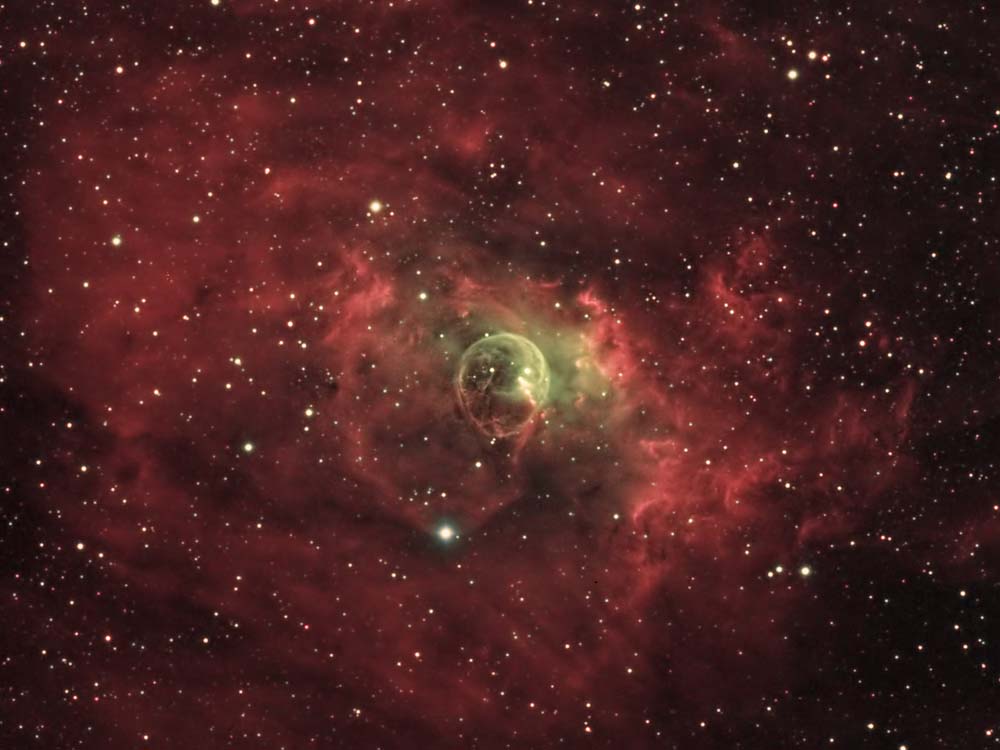
Bill Snyder / SkyandTelescope.com Photo Gallery
Sorry Philip, you lose. Not only is “oh-three” the universal usage; it makes sense.
Well, sort of. A neutral, non-ionized oxygen atom, which has lost zero electrons, is called O I (“oh-one”) because it’s in the first of many possible ionization states. An oxygen atom missing one electron is in the second state, O II, and so on. This is why bright nebulae are called H II (“H-two”) regions, even though a hydrogen atom has only one electron to lose!
— Alan M. MacRobert
About Alan MacRobert
Alan M. MacRobert became an avid Sky & Telescope subscriber in 1966 at age 14, joined the editorial staff in 1982, and is now a senior contributing editor, semi-retired. He played a role in practically every part of the magazine and the company's other products for more than a generation, both on the amateur-observing side and the science-reporting side. In 1994 a book collection of his observing how-tos and telescopic sky tours was published as Star Hopping for Backyard Astronomers. He has produced This Week's Sky at a Glance online every week since 1989.



Comments
You must be logged in to post a comment.