 SUNSET:

 0
0Here are some tips to get the most out of your galaxy images.
Adam Block
Beyond the Milky Way, there are a seemingly limitless number of galaxies that stretch to the edge of the observable universe. Except for all but the nearest dozen or so, their great distances from us make them appear maddeningly small and faint. Additionally, the combined glow of their stars results in objects that appear with low contrast, color, and detail, making galaxies a challenge to render in our images.
Most galaxies are significantly brighter in their centers compared to their outer extremes. Spiral galaxies that are undergoing a period of vigorous star formation tend to have bluish arms, with yellowish or colorless halos consisting of older stellar populations, pinkish H II regions, and reddened areas where dust attenuates starlight. Elliptical galaxies are dominated by older, red stars imparting a golden hue. This palette is fairly ubiquitous in the universe, and these simple truths shape the techniques I use to depict them in deep astrophotos. Here are some ways I approach the many different types of galaxies to produce colorful, detailed portraits that retain a pleasing appearance.
Adam Block
Squeezing the Dynamic Range
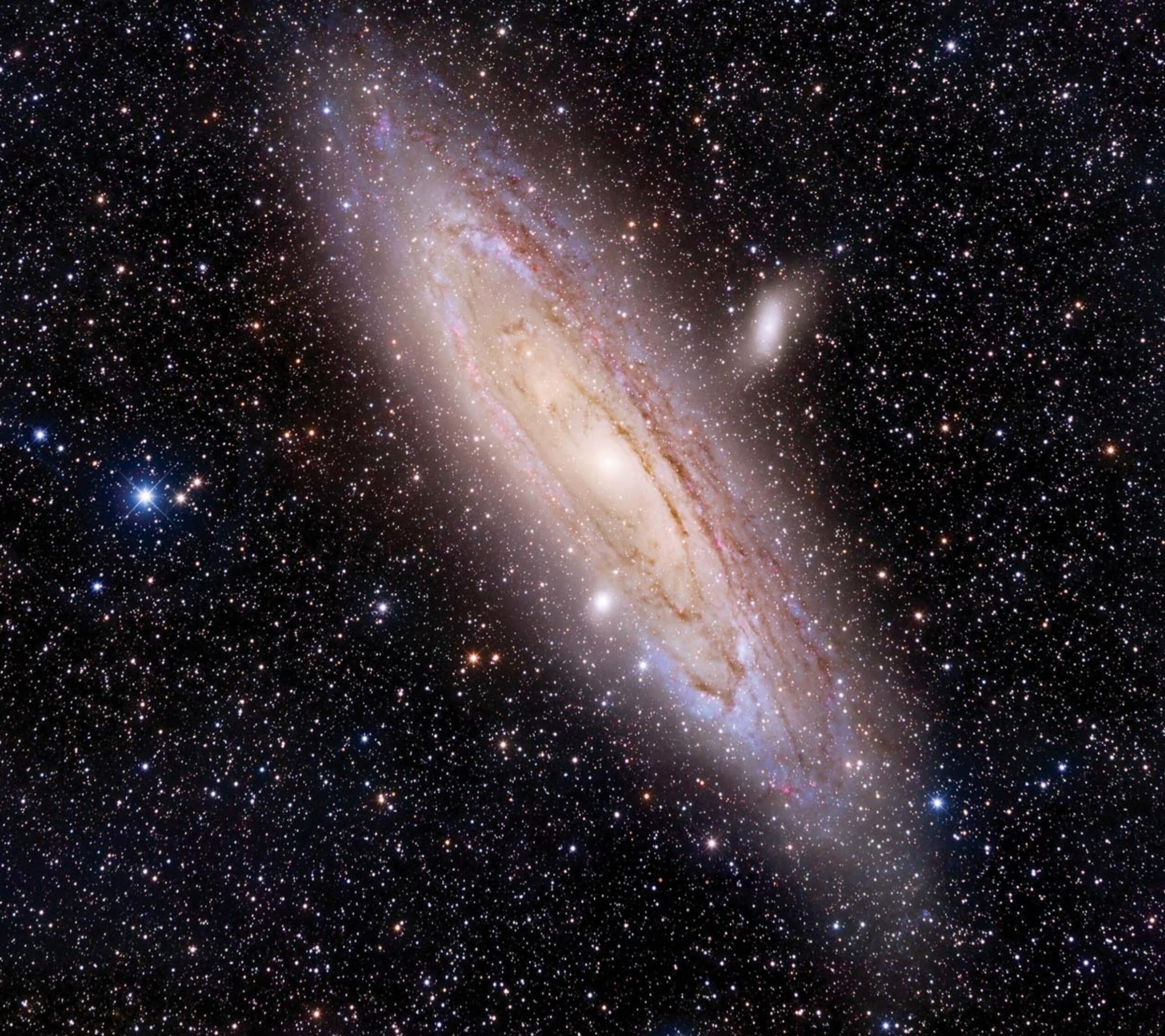
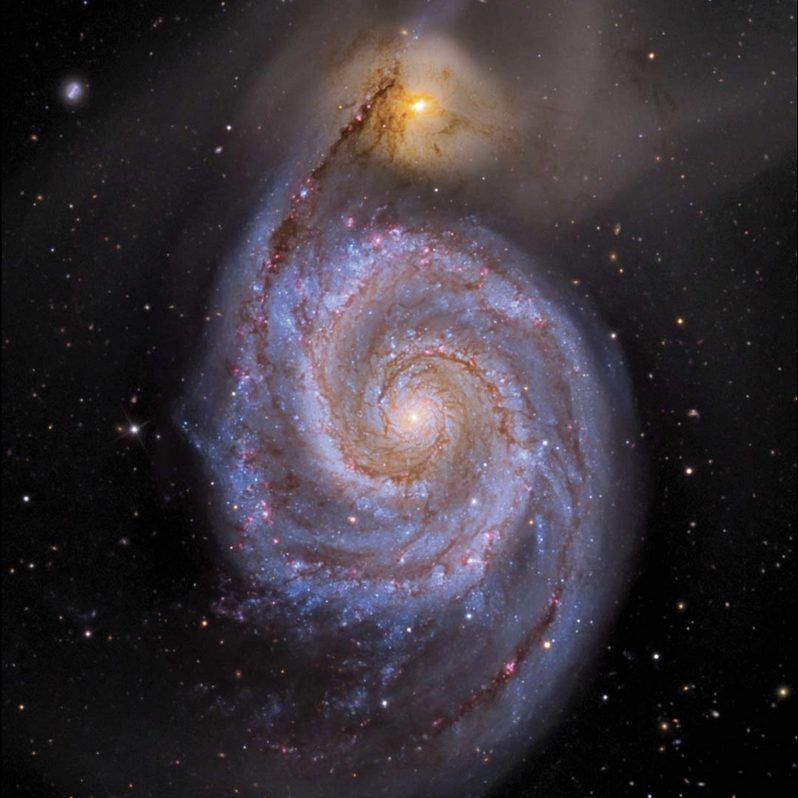
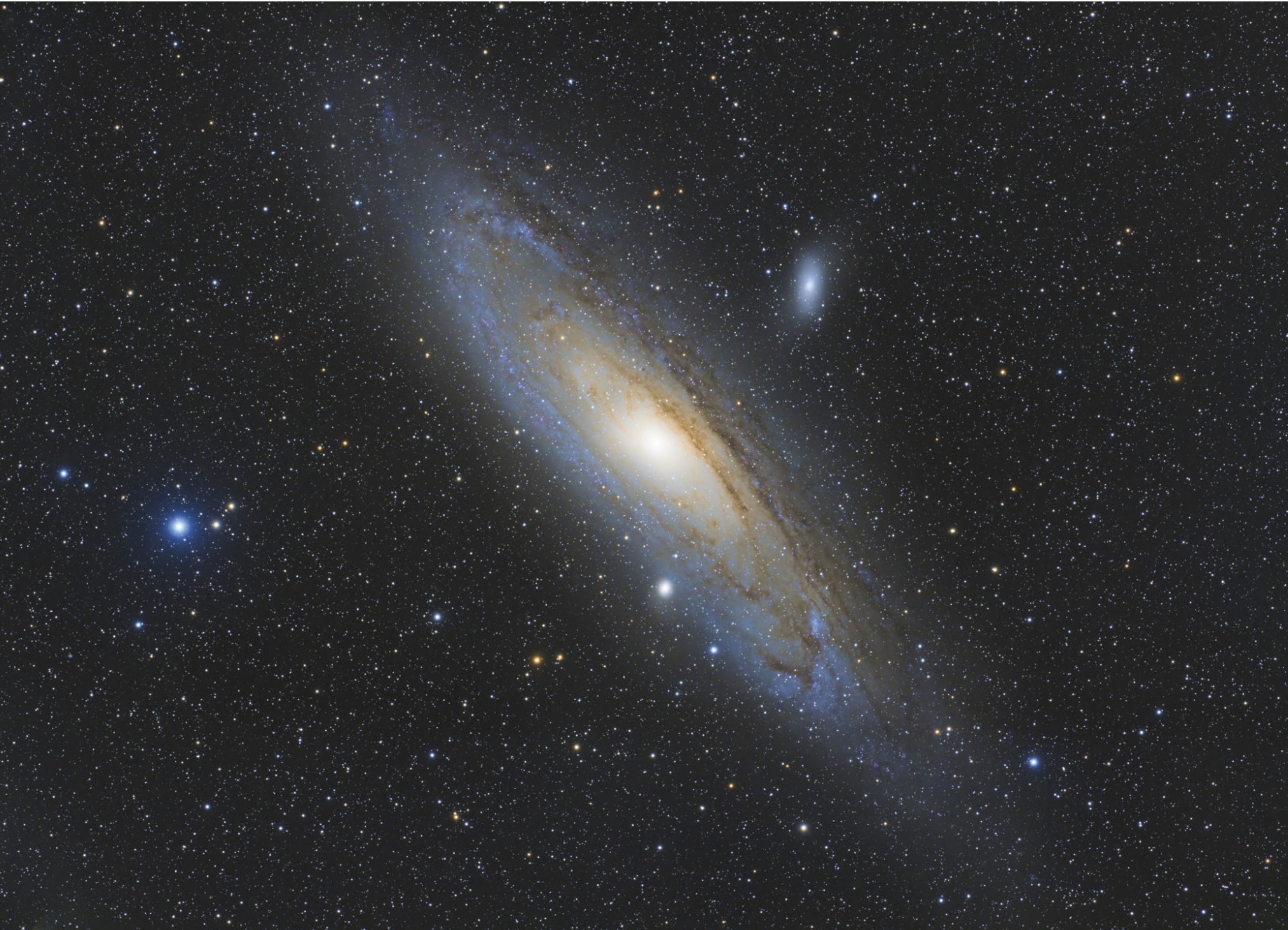
Let’s start by contrasting two relatively nearby spiral galaxies — M51, the Whirlpool Galaxy in Canes Venatici, and M31 in Andromeda. Even though M51 is more than 10 times farther than M31, as a starburst galaxy the Whirlpool presents a rich, varying color palette with a bright disk. It and its companion galaxy, NGC 5195, appear as a tapestry filled with high-contrast features, including dark dust lanes and colorful H II regions. On the other hand, M31 is a very challenging target despite its closer proximity. Its bright nucleus appears virtually featureless in raw, unprocessed images, while its outer disk lacks the bright H II regions and strong color differentiation that’s seen in M51. Nevertheless, M31 does contain subtle detail within its nucleus, and its outer disk displays muted color variations that require particular attention to tease into visibility. While applying processing techniques that modify these fundamental elements of M31, the question becomes: How far from the truth should a rendering stray to better present features of color and detail that are normally difficult to see?
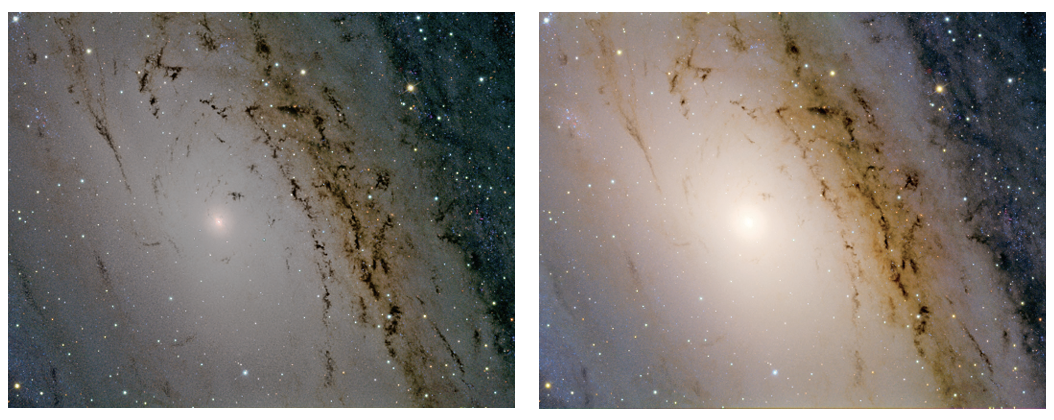
The dusty details hidden within M31’s central bulge are hard to see due to the sheer luminosity of the stars found there. Compressing this brightness range with non-linear stretching can help reveal them, but this completely removes a significant feature of M31 by making the nucleus appear to be nearly the same brightness as the galaxy’s outer disk. A galaxy processed in this way starts to take on a different identity that strays far from the subject’s actual appearance. Indeed, an audience unfamiliar with M31 might easily walk away believing this is how the galaxy normally appears. But with few exceptions, galaxies tend to have brighter nuclei than disks or outer halos. By exercising restraint when applying the process, I retain more of M31’s essence and produce what I consider a more natural appearance. Of course, it isn’t natural at all. Aesthetic astro-image processing is a blend of what is and what we want things to be, with a careful balance between the two.
In the wide-field image of M31 above, the galaxy’s outer arms are not strongly saturated in bluish light in a way they might appear with other spiral galaxies like M51. However, by increasing the contrast in the B channel of the image while operating in Lab color space in my preferred image-processing software, I can enhance the bluish star formation in the outer disk, but only to the degree that is still strongly correlated with the original data. M51’s blue disk and M31’s blue features are very different. These kinds of considerations are specific to processing galaxies based on the fundamental characteristics of these objects.
Care with Dust Lanes
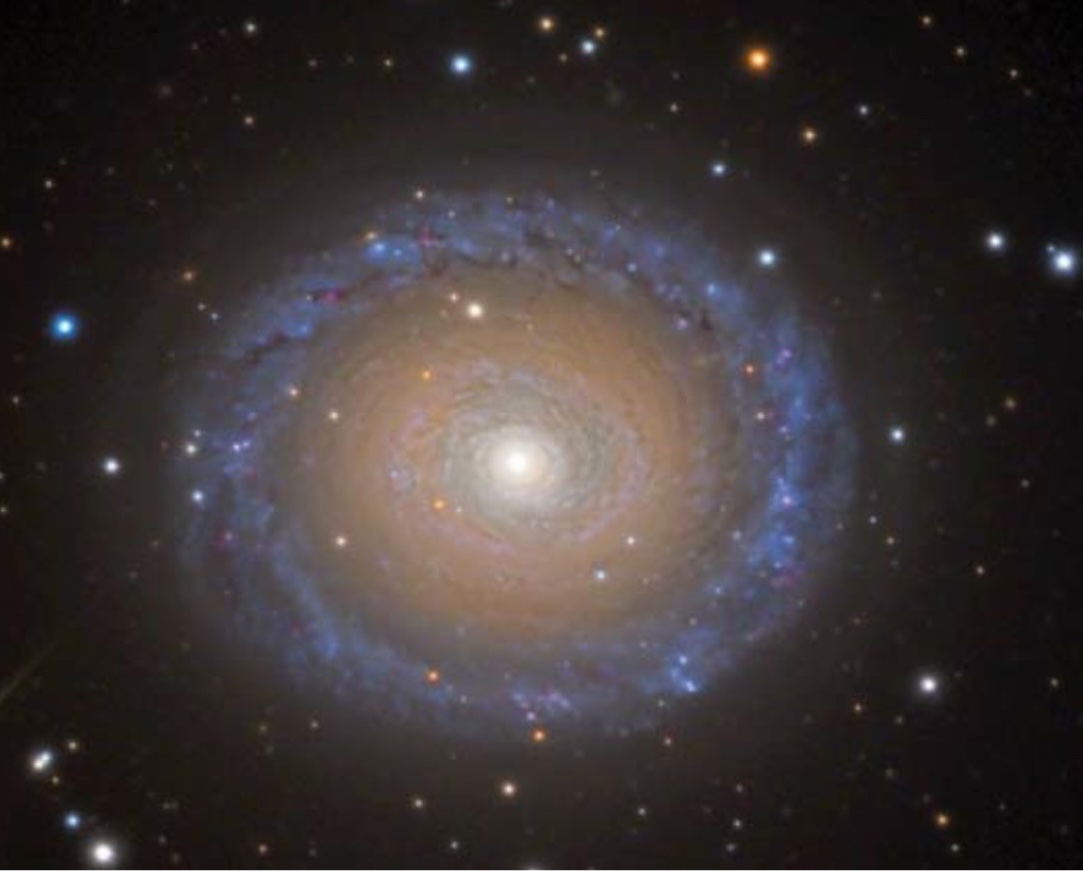
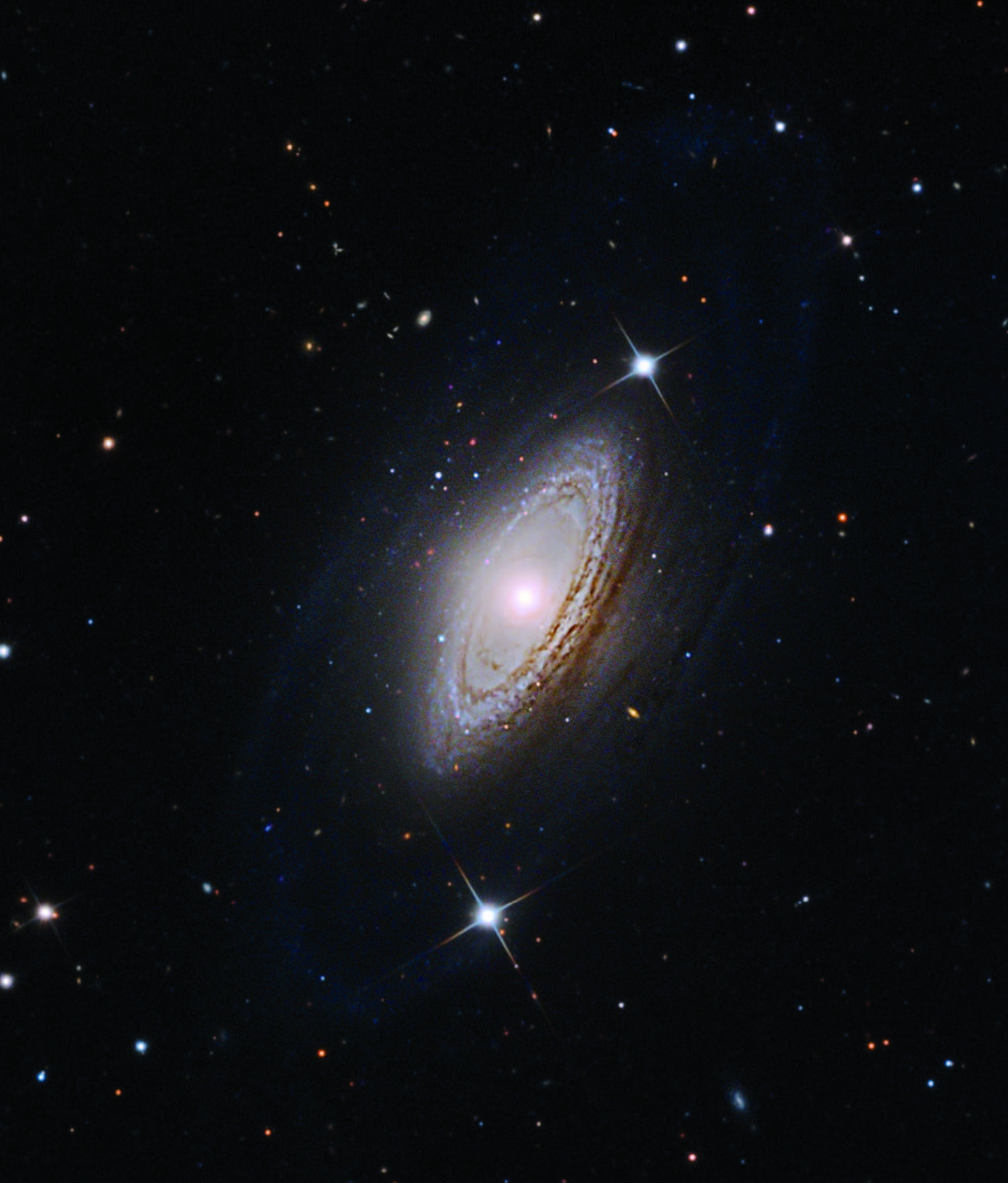
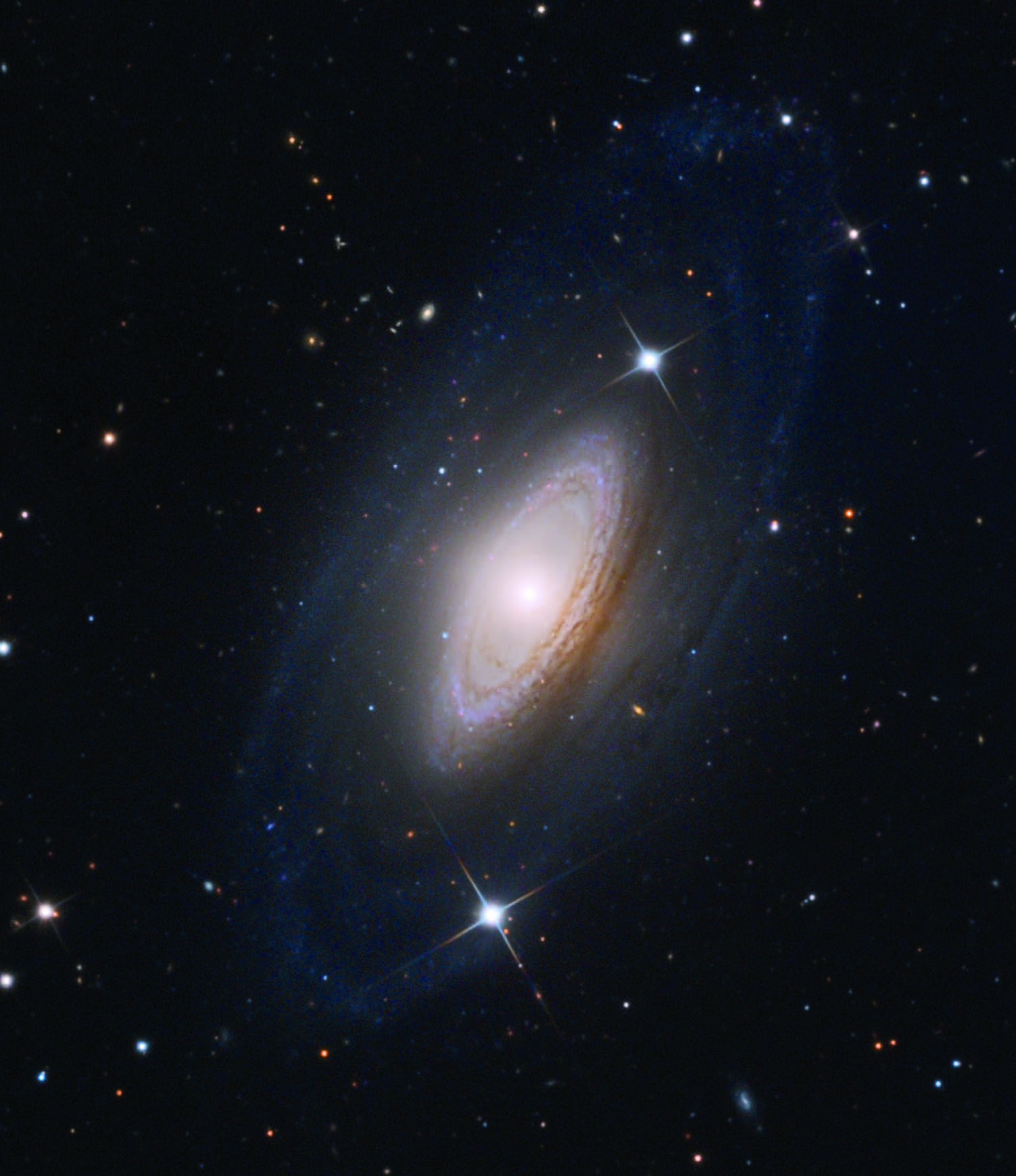
Inclined spiral galaxies such as NGC 4698 in Virgo offer a different kind of challenge. Galaxies like it require colossal processing restraint with regard to its dust lanes. Another fact about galaxies is that any intervening foreground dust both attenuates and reddens the stellar light that shines through it.
We all have an evolutionary preference for high-contrast imagery, which leads to a nearly irresistible urge to increase the contrast in our images, especially with intrinsically low-contrast objects such as spiral galaxies. But the casualties of increasing contrast are the color variations and fluctuations in brightness within their dust lanes. Common processing techniques such as raising the black level, unsharp masking, and high-pass filters all increase the contrast and detail of a galaxy’s dust lanes. But too much contrast reduces the dust lanes to an opaque, colorless, black etching across the subject. This increases the visibility of details within the dust lanes, but at the cost of the object’s natural appearance. My approach would be to again exercise extreme restraint while applying these powerful tools to retain the truths of NGC 4698’s appearance while enhancing prominent features. Galaxies don’t really have inky-black dust lanes.
Retaining Color
One of the biggest challenges when processing galaxy imagery is retaining color in the central regions. Increasing the brightness and color in a galaxy while maintaining a smooth look in the fainter regions of the field often produces a near-colorless nucleus. The key to maintaining color in the core of a galaxy is to preserve it early in the processing workflow. Color can appear diluted when the brightness of an image exceeds 80% of the maximum value. This is due to how our eyes and brain perceive brightness and color. While there often is a colorless core in many galaxies, this should generally be the size of a typical star in the image. Not long ago, the digital development process (DDP) was the go-to tool used to manage this difficult area in most galaxies. Today, there are far more facile and powerful tools, such as HDRMultiTransform in PixInsight, that compress the dynamic range in an image while allowing for small-scale enhancements in the bright regions.
Star Treatment
Without exception, galaxies appear to float behind a foreground of stars residing in our own Milky Way. Quite often, the stars are uniformly distributed across the field and play a lesser role in the final composition. The galaxy (or galaxies) is the focal point of the image, and, to the degree that processing choices affect the stars, I may permit them to be modified by the same processes, or in some cases, I may create masks to shield them from these effects, targeting the main subjects of my picture.
Sometimes it’s easy to become overly concerned with retaining star colors in the final composition, even when those decisions negatively affect the appearance of the galaxy. Examples in which this can happen include galaxies seen through prominent arms of the Milky Way, such as NGC 6946, NGC 6674, and IC 342. In such cases, it’s often a better approach to de-emphasize the stars in these fields so that the galaxy isn’t competing with them for the viewer’s attention. The exception is when a star (or group of stars) is very bright, you can use it as a balancing weight within the framed composition. This is usually done by placing your galaxy at one side of the image frame with the star (or stars) at the opposite end. Using these stars as a compositional element, it then becomes important to retain as many attractive qualities of the stars as possible.
Adam Block
Adam Block
Noise Reduction
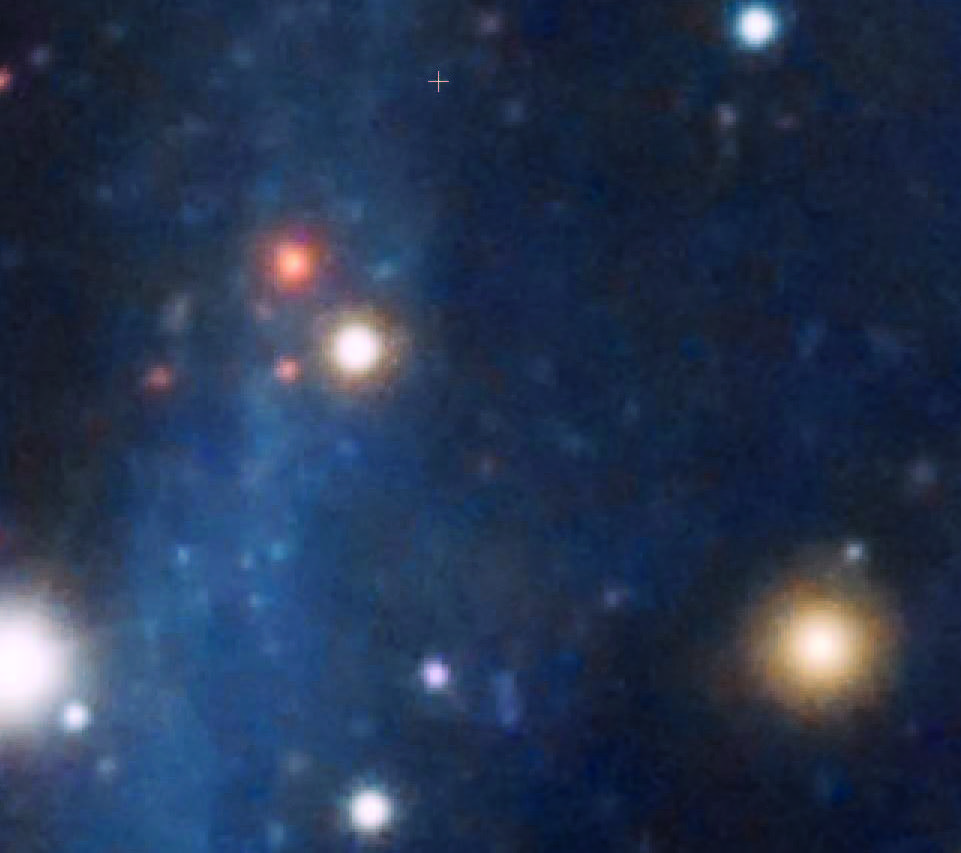
Due to their faintness, galaxies present challenges in managing the amount of noise reduction applied to an image. Many nebulae have smooth brightness and color transitions across large areas. The faintest portions of these nebulous regions may look like the background sky itself and, often in the interest of contrast, are made to appear very dark without taking away from the overall impact of the image. By comparison, all but the nearest galaxies are smooth objects with small highlights of color and detail. Even modest noise-reduction techniques can adversely impact these elements. But the faintest outer extents of galaxies are often exciting features that we would like to highlight in our images and that require significant noise reduction. Some examples include arc-like shells or stellar streams that hint at ancient acts of galactic cannibalism. The difficulty is creating the selections or masks that apply a smooth transition from the high-signal areas where little or no noise reduction is required.
Adam Block
One of the easiest and most powerful techniques I employ is to simply magnify and process images at 200% or greater while working with noise-reduction tools. At this scale, I can see if I’ve made a reasonable choice with any given process, or if I’ve gone too far. A galaxy with a silky smooth outer halo and sharp, small-scale features in the brighter portions (including H II regions and foreground stars) can make a jarring transition for the eye to follow and forces the viewer to concentrate on the imager’s processing choices, rather than the galaxy itself.
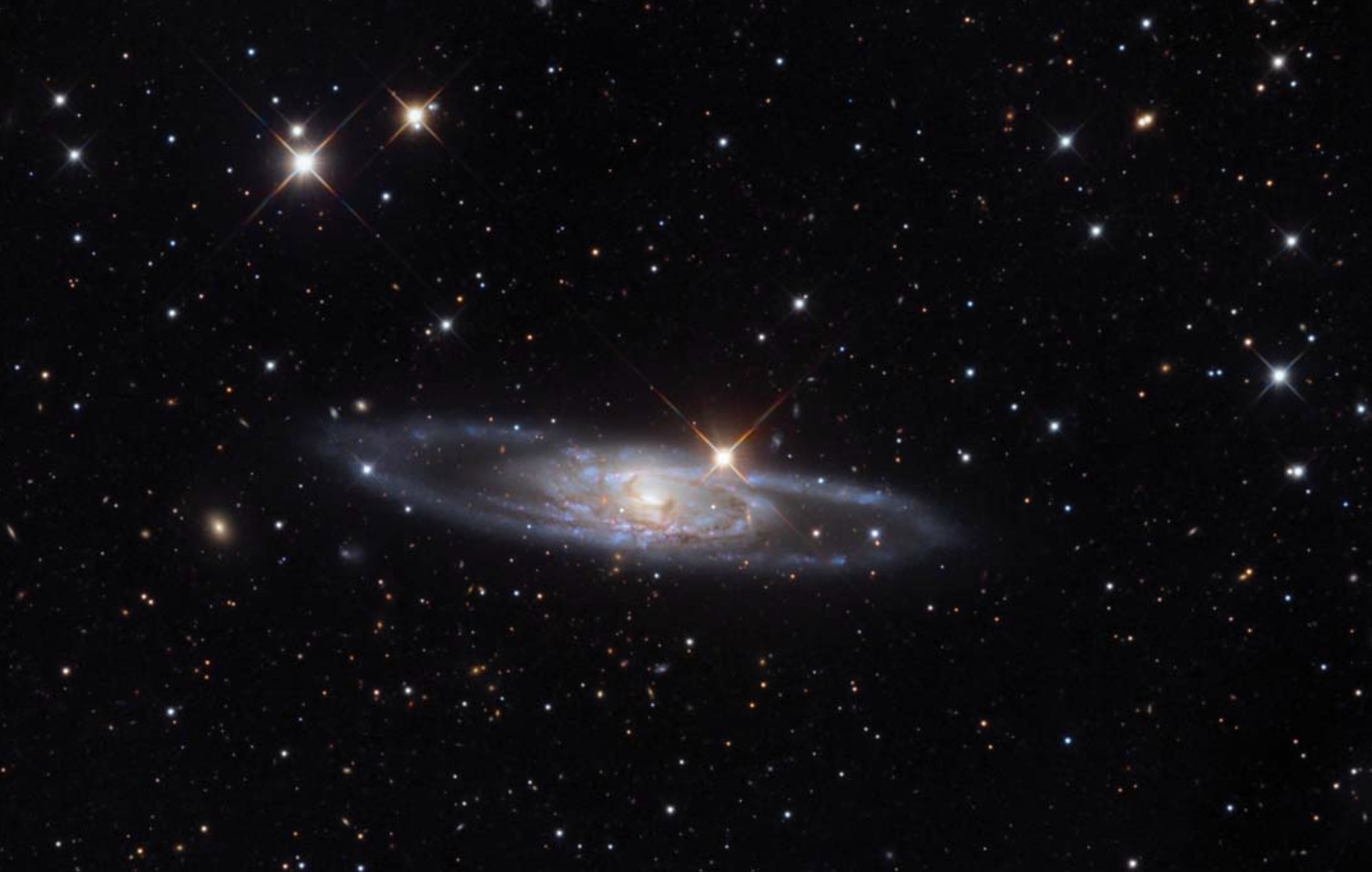
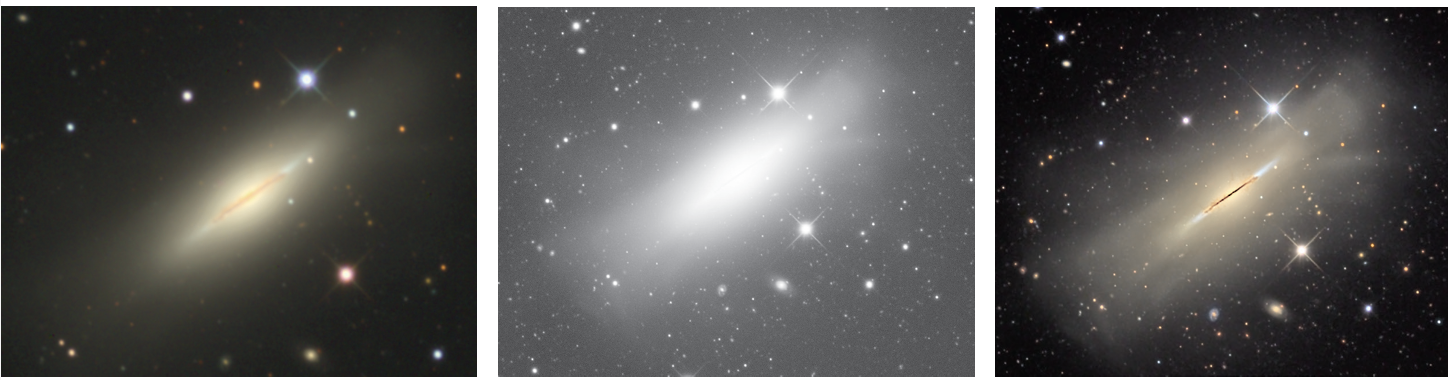
An edge-on spiral galaxy that illustrates this point well is NGC 5866 in Draco. Without applying strong non-linear compression and selective noise reduction, it would be impossible to see its narrow dust lane, yellowish core, and bluish arms simultaneously with its complex outer halo. With these considerations the otherwise featureless Spindle Galaxy is transformed into an edge-on galaxy with a visible history of galactic interaction with large tidal tails and shells.
A Good Plan
One final approach I use when processing galaxy imagery is to take inventory of all the interesting attributes and details in my subject early on. In most cases, significant details and features within a galaxy should be visible in the calibrated but unprocessed data in its linear form. If, later in processing, details and colors emerge that were not initially evident in the raw data, then there’s a good chance these details are simply artifacts introduced by the processing. Additionally, by noting real features early in your plan, you can make processing choices better suited to reaching a final result that renders all of them well.
Adam Block
Adam Block
One question I often receive when delivering an image-processing workshop after discussing image calibration is, “How do you know what to do next?” The answer is somewhat akin to Ansel Adams’s technique of previsualization. While Adams stressed the importance of imagining what he wanted the final print to reveal about a subject before entering the darkroom, I approach galaxy processing based on my initial inventory of interesting features. Each subsequent processing decision both enhances some aspect of an image’s attributes while protecting others so that they do not suffer in their appearance or visibility.
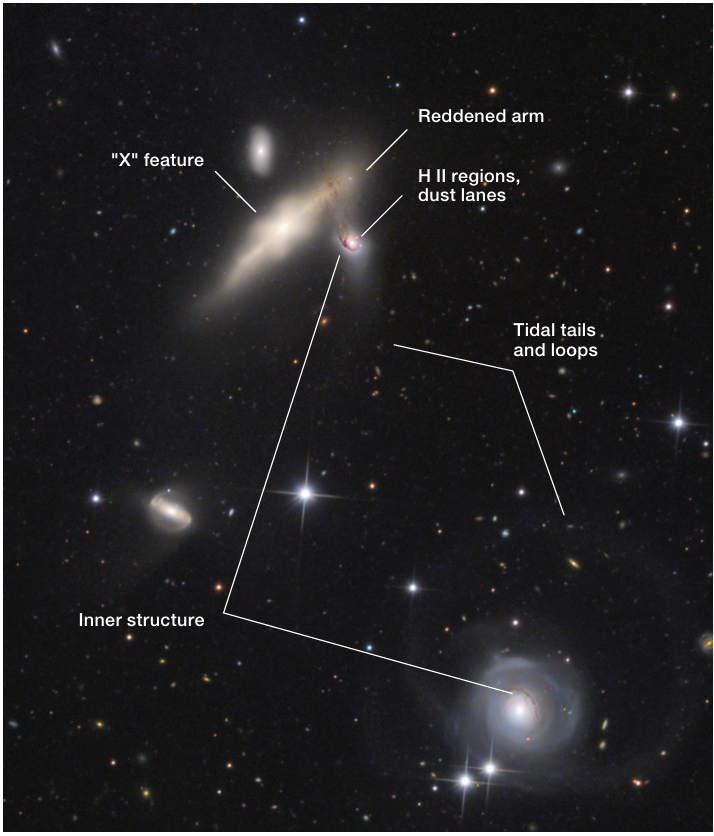
Galaxies are particularly well suited to this way of thinking. For example, I note a wealth of information while examining my unprocessed images of the lenticular galaxy NGC 128 and its neighbors in Pisces. A short list of interesting features to highlight includes:
1: Faint outer tidal tails (and stellar streams around nearby NGC 125).
2: The X-shaped nucleus of NGC 128.
3: Dust clouds extending from NGC 127 crossing in front of the northern extent of NGC 128.
4: The same dust from NGC 127 makes NGC 128 redder on this portion of the galaxy.
5: Small-scale details in both the nucleus regions of NGC 127 and NGC 125.
Carefully monitoring these details during each processing step informs the final picture. As experienced processors know, it’s all too easy to introduce artifacts along the way. In a sense, the galaxies themselves tell me what to do next.
Galaxies are by far the most numerous deep-sky objects to observe in astrophotography. Each has its own features and characteristics. Even if you don’t adopt all of the ideas presented here, the attention you give to them will certainly help raise awareness of what is in your hard-won data and bring your own imaging to a higher level.
This article originally appeared in the January 2021 issue of Sky & Telescope.
About Adam Block
ADAM BLOCK is a world-renowned astrophotographer based in Tucson, Arizona, and founder of the University of Arizona's Mount Lemmon SkyCenter.



Comments
You must be logged in to post a comment.