 SUNSET:

 0
0Upgrading to the latest cameras may require changing your imaging techniques.
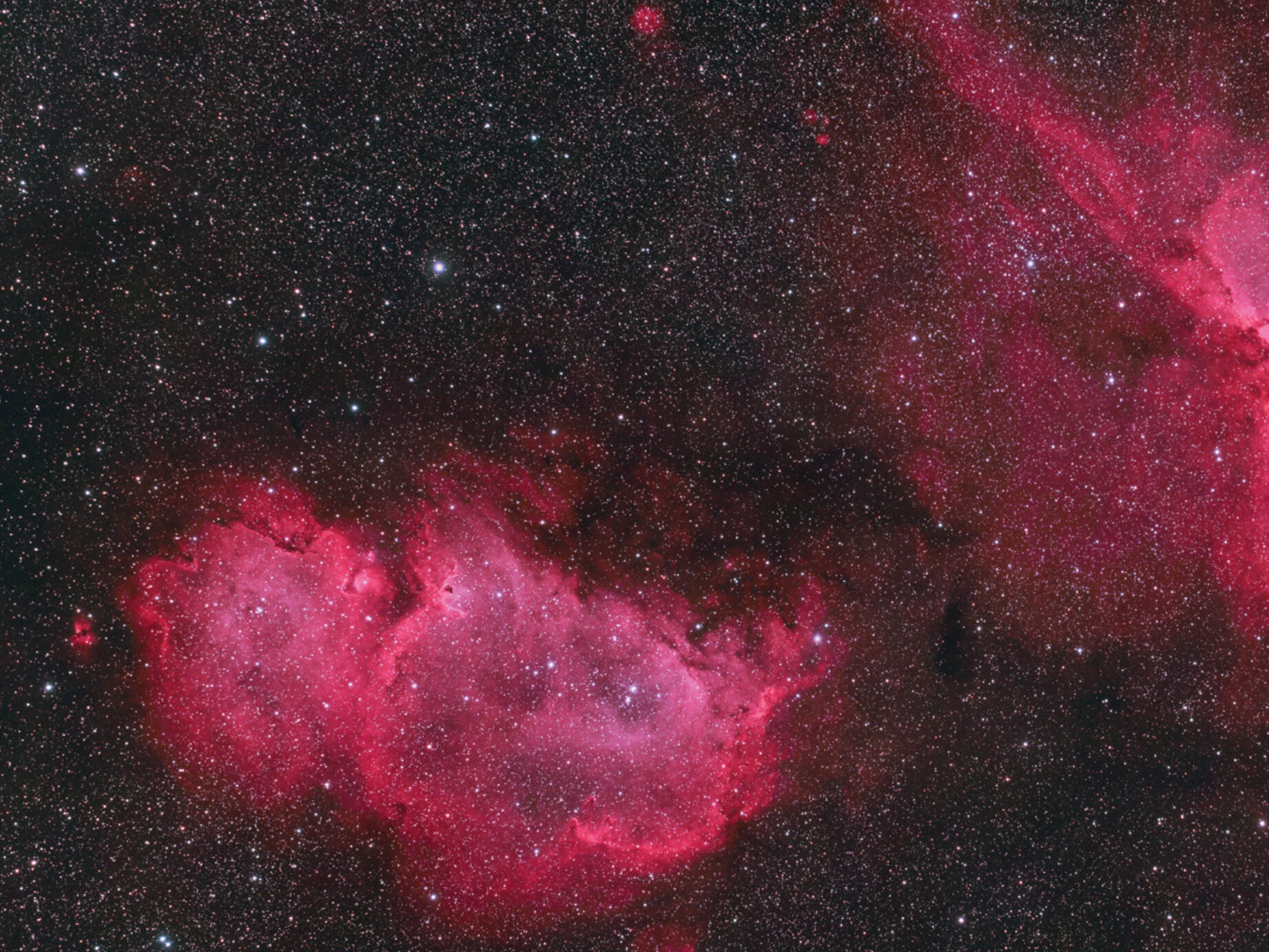
ALL IMAGES COURTESY OF AUTHOR UNLESS OTHERWISE NOTED
Over the last decade, the deep-sky astrophotography industry has undergone rapid changes. The growth in the size and sensitivity of digital detectors, dominated until recently by charge-coupled devices (CCDs), fueled the rising popularity of fast, well-corrected astrographs that take advantage of these new detectors. This in turn helped to drive the development of computerized mounts and software to enable these scopes to record deep, colorful images of the universe around us.
CCDs had a good run, but inevitably a newer detector emerged and quickly rose to prominence. Complementary metal-oxide-semiconductor (CMOS) detectors, which are less expensive and easier to manufacture, became the dominant detector in popular consumer electronics such as digital cam- eras and smartphones. The explosive growth in these markets drove trends in the much smaller astronomical community. So, it wasn’t a big surprise when at the end of the last decade, the largest manufacturers of CCD detectors announced they would cease production. At the time, CMOS performance wasn’t thought to be quite ready to match CCDs, suffering from issues with amp glow and read noise that made them less than ideal for deep-sky imaging (see the May 2020 issue). Fortunately, astronomical-camera manufacturers made tremendous strides, and just a few short years later, CMOS technology has improved dramatically.
What does that mean for deep-sky imagers contemplating switching from CCD to CMOS? Let’s have a look.
Differences Between CCD and CMOS
On the surface, there aren’t a lot of differences between CCD and CMOS technologies. Both sensors consist of an array of photosensitive sites called photosites. To create a picture, the detector records the number of photons striking each photosite, generating electrons that are then counted and read from the sensor at the end of the exposure, turning the signal into picture elements or pixels. (For simplicity, we’ll refer to photosites hereafter as pixels.) In a perfect world, the electron counts would exactly match the number of incoming photons from our targets, and our images would be clean and smooth.
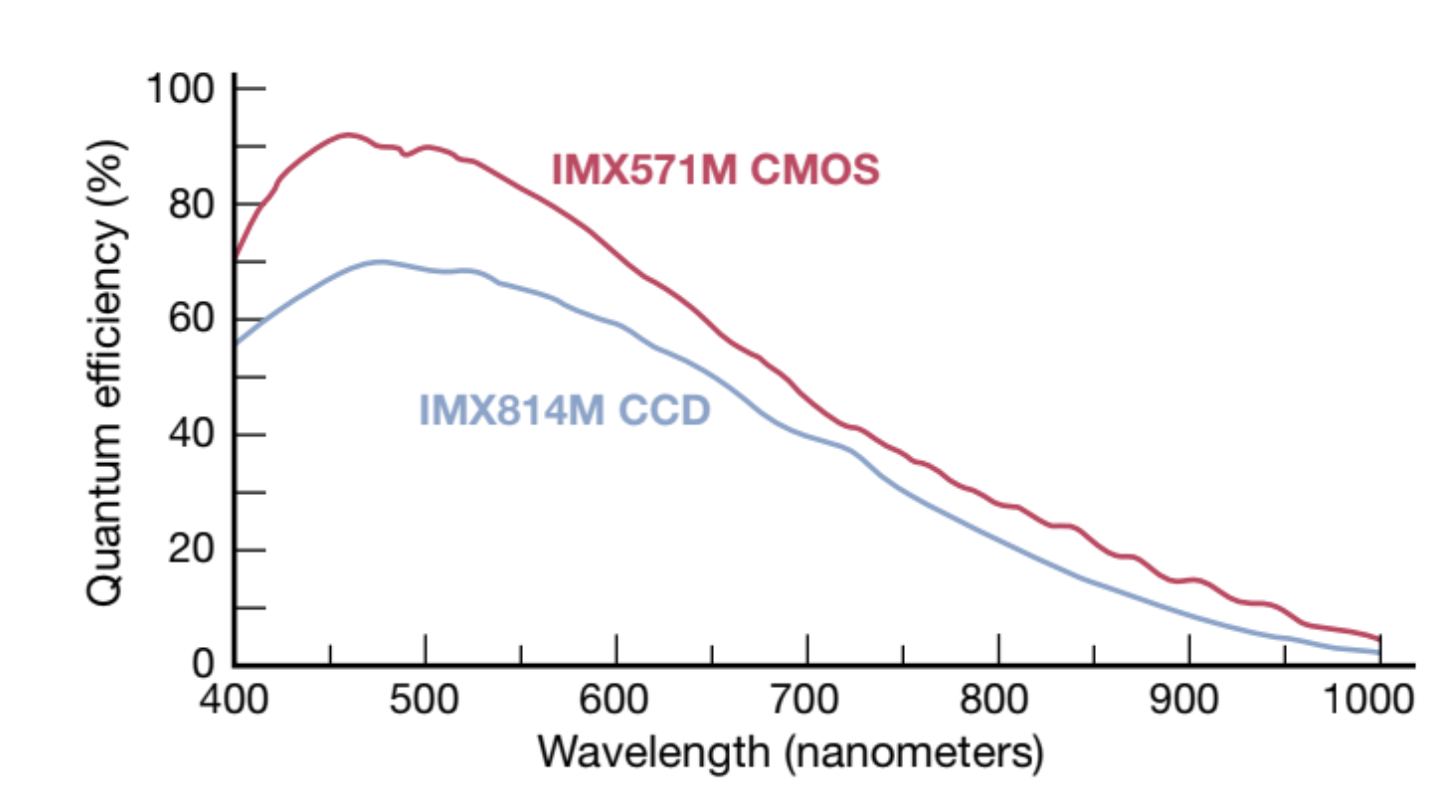
Unfortunately, all electronic sensors are imperfect. The process of reading out the image signal produces noise (called read noise). In addition, the sensitivity of a detector is never 100%, so it doesn’t turn every photon into an electron. The percentage of photons converted to electrons is known as the detector’s quantum efficiency.
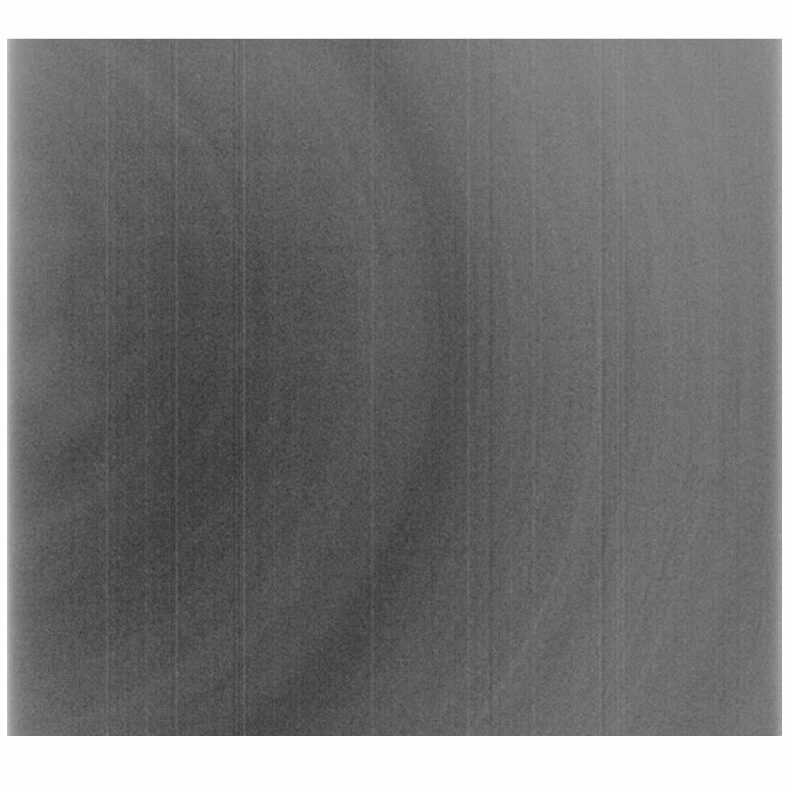
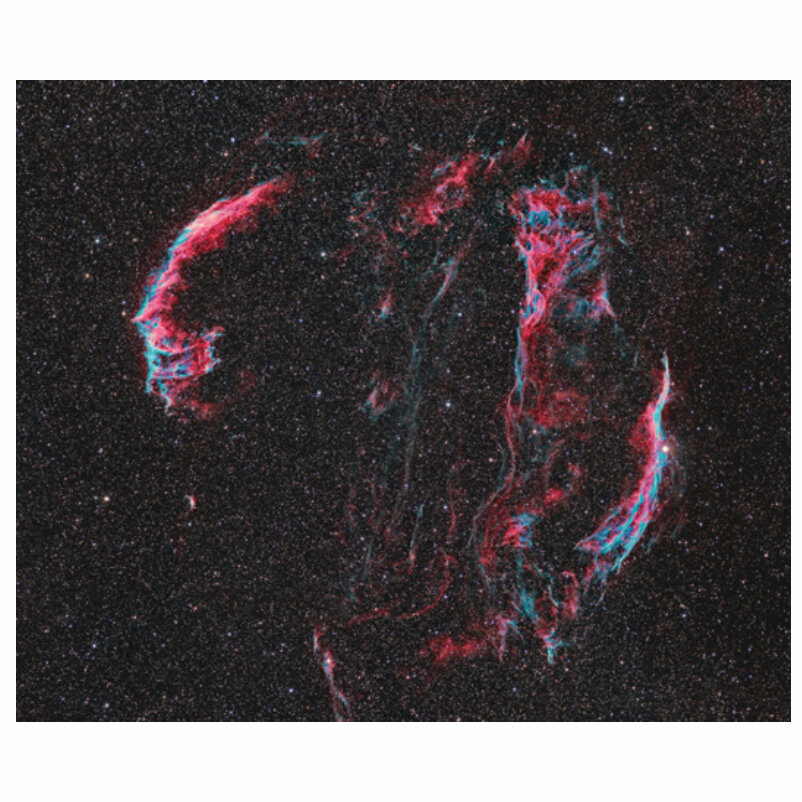
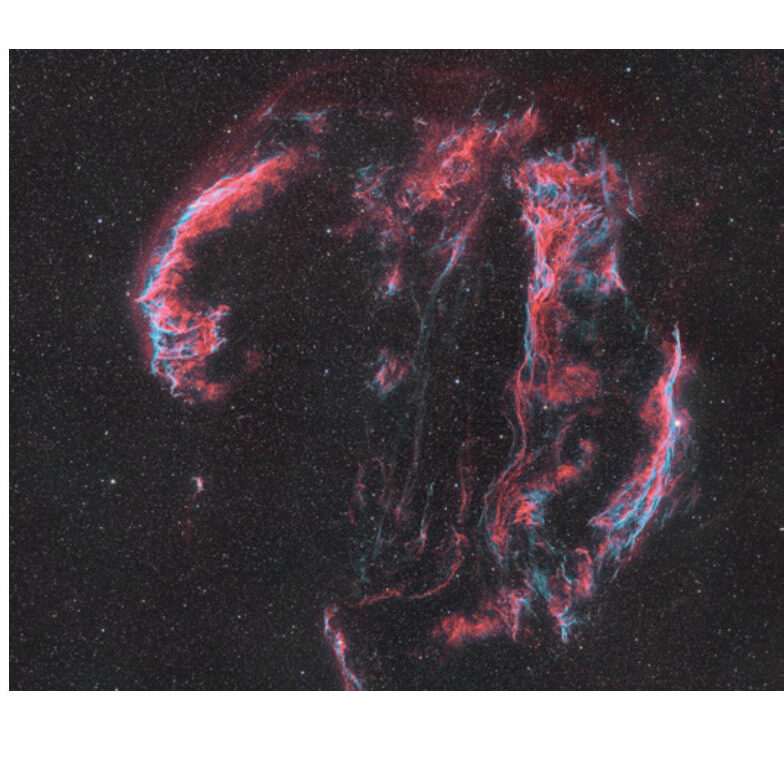
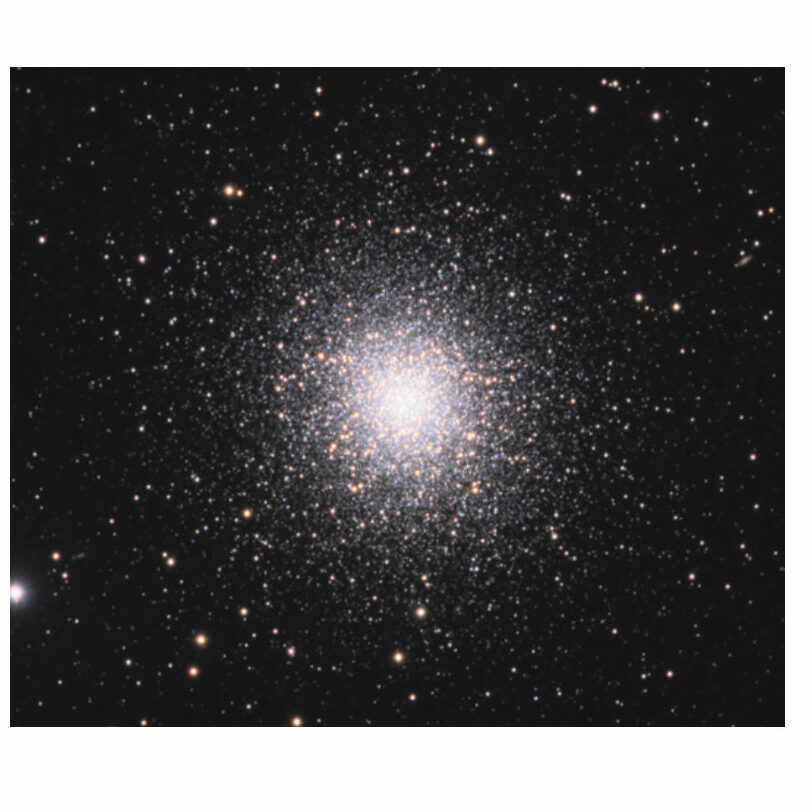
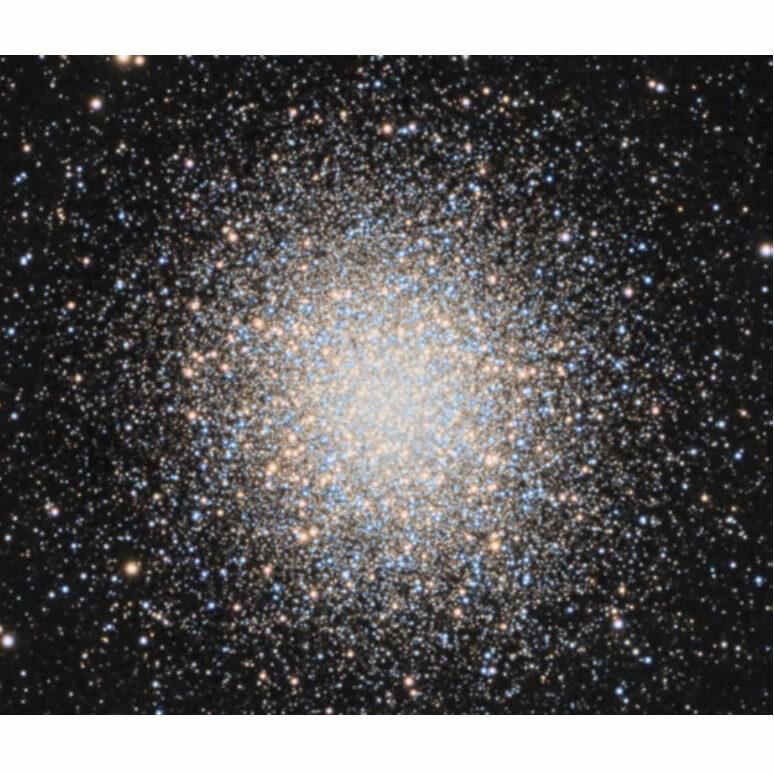
On average, CMOS sensors have reached parity with CCDs in terms of quantum efficiency, though many are both more sensitive and less costly than their CCD predecessors. But it’s in the realm of noise management where CMOS sensors — particularly the latest generation — are now taking the lead. CMOS cameras generally produce much less dark current than even the best CCDs for a given temperature. Some of the latest sensors have such negligible levels of read noise that its contribution is inconsequential in the final images produced. Additionally, the major hurdle of amp glow (a heat-generated signal from the associated circuit board that bleeds onto the detector) appears to be a thing of the past. This opens up new possibilities in deep-sky image acquisition techniques. With such low read noise, imagers Upgrading to the latest cameras may require changing your imaging techniques. now can combine many short exposures made with a CMOS camera for a combined result that’s not dominated by read noise. Deep-sky photos produced this way will be as good as, or better than, a few long exposures acquired with a CCD (or previous-generation CMOS) camera.
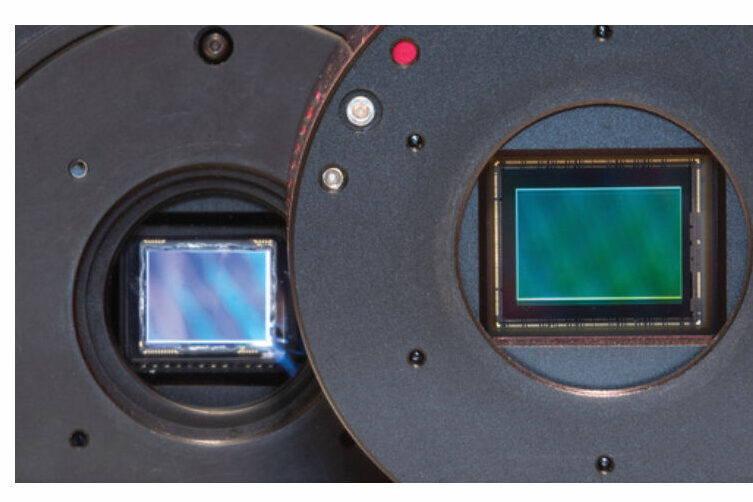
JOHNNY HORNE
Another big difference between CCD and CMOS sensors is the size of the pixels. On average, CMOS deep-sky cameras have much smaller pixels compared to those found in CCD cameras. The last, fairly large CCD detectors in deep-sky cam-
eras typically had 6-micron or larger pixels. CMOS sensors, on the other hand, often come with pixels in the range of 2 to 4 microns. Conventional wisdom states that larger pixels gather more light, just as a larger bucket would collect more rain in a downpour. But that, too, is no longer a given. The lack of appreciable read noise, combined with high quantum efficiency, and a few other tricks like microlens technology to steer light onto the photosensitive area of each pixel, mean these differences are less of a concern.
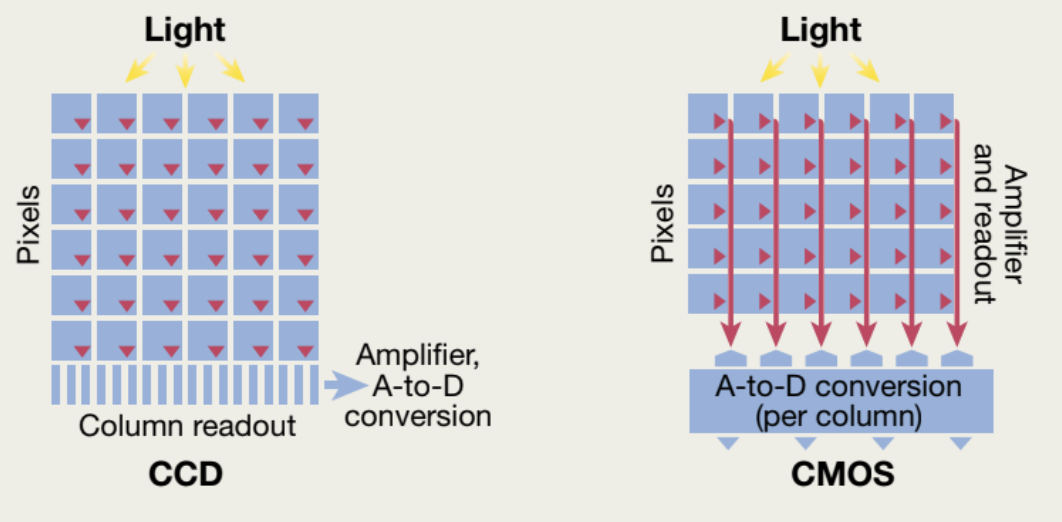
Finally, the biggest distinction between CCD and CMOS detectors is in the way the data are read after an exposure. CCDs must transfer the recorded signal off the detector in rows. The electrons are then sent off-chip to the amplifier and analog to-digital (A-to-D) converter. With few exceptions, CCD cameras were designed with a USB 2.0 computer interface, resulting in fairly slow download speeds. By contrast, CMOS detectors incorporate an amplifier behind every pixel and an A-to-D converter for each column. This, combined with a fast USB 3.0 interface, means large amounts of data download extremely fast. A good example is the QHY600M reviewed in our July 2020 issue that downloads a 60 megapixel image in under 5 seconds. On top of that, the camera includes an internal buffer where data are stored as they’re transferred, allowing the camera to begin the next exposure even before it completes transferring the previous one. These improvements can increase your imaging efficiency. Less time lost to data transfers means more time for recording photons. In my case, the difference works out to an additional 5-minute exposure per hour compared to when I used a USB 2.0 CCD camera.
LEAH TISCIONE / S&T
What This Means for You
Taken together, how does all this affect your future imaging? Let’s look at the possibilities.
If you’ve considered increasing the resolution of your imaging setup, you might accomplish this by selecting a camera with smaller pixels than the one you currently use. Pixel size affects resolution, and since most CMOS sensors have smaller pixels than those found on CCDs, stepping up to a new camera can improve your resolution and image scale, but only to a point.
For example, I image through a Sky-Watcher Esprit 150-mm refractor, which has a focal length of 1,070 millimeters (42 inches). When I pair this with my SBIG STL-11000M CCD camera, which has 9-micron pixels, it produces an image scale of 1.73 arcseconds per pixel. The same scope yields 0.72 arc seconds per pixel when combined with my QHY600M CMOS camera and its 3.76-micron pixels. This results in a modest resolution gain in my system at the cost of a new camera.
You can use the following formula to determine the arcseconds per pixel of any camera and telescope combination:
Image scale = (pixel size/focal length) × 206.265
Pixel size is measured in microns, and the focal length is measured in millimeters.
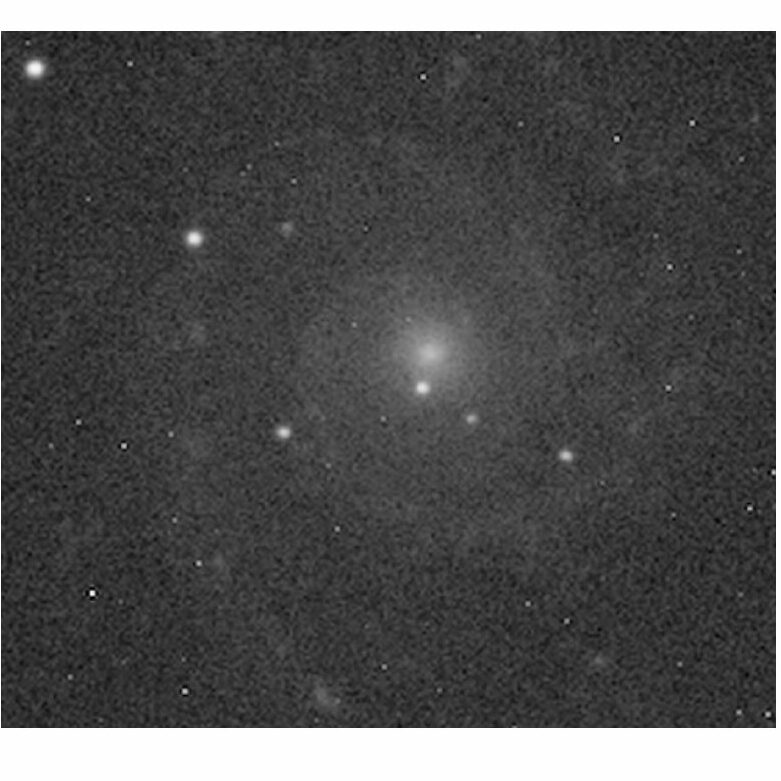
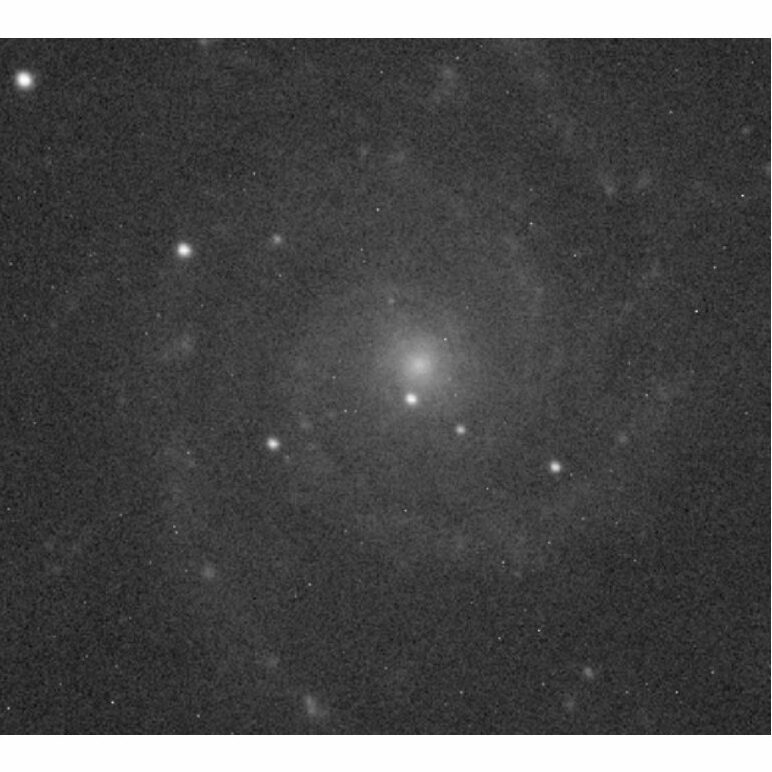
There are, of course, limits to this resolution trick. Firstly, one can potentially oversample the resolution possible with your optics and sky conditions. You don’t gain anything if your local seeing rarely permits resolution of less than 2 arcseconds per pixel. You’ll just have a bigger, blurrier image. Another problem may have to do with the spot size of your astrograph. Too small a pixel can begin to resolve optical aberrations in your system that weren’t noticeable when you shot with a detector having larger pixels. (Don’t worry, there’s nothing actually wrong with your telescope.)
LEAH TISCIONE / S&T
Goodbye to Guiding?
There are other ways a new CMOS camera can potentially simplify your imaging technique.
The lack of read noise with these detectors means exposures can be short enough that autoguiding becomes less crucial and, in some cases, may be eliminated entirely.
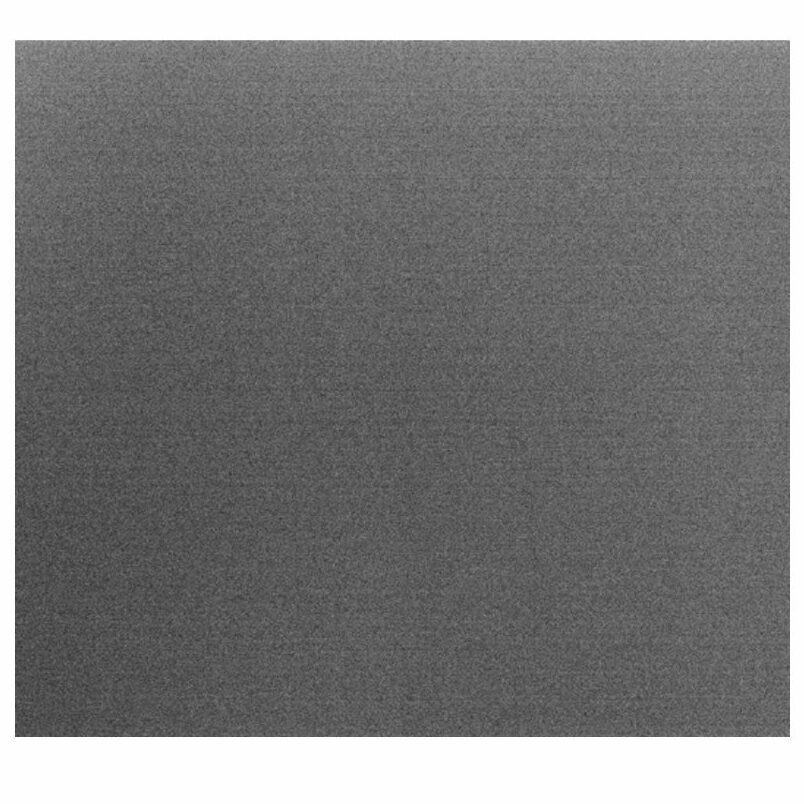
With these new cameras, you can take hundreds or even thousands of 1-minute exposures and simply stack them together to achieve an image just as deep and detailed as any produced with a CCD camera and sub-exposures of 20 minutes apiece. Most popular deep-sky image-processing software (including PixInsight and MaxIm DL) can automatically discard any trailed images. And eliminating the need for a guidescope or off-axis guider, as well as a separate autoguid-
ing camera and its cables, is particularly attractive to imagers who set up their equipment each night.
However, it’s important to understand that this new approach does come with additional costs. Recording hundreds of 16 bit, full-frame images requires a lot of storage. In addition, you’ll need a fairly robust processor and lots of RAM to reduce tens of gigabytes of data into a final image. This may mean upgrading to a new computer. As usual, there’s no free lunch.
But aside from calibrating and stacking many more images, processing CMOS camera data is practically the same as for a CCD model. One approach that may not work for some CMOS cameras is to scale short dark frames to calibrate longer exposures. This was a useful shortcut that CCD imagers employed to avoid recording lots of various-length dark exposures (see the November 2019 issue). The technique permitted accurate scaling of long dark exposures by measuring the dark current and signal captured in a zero-length, or bias, exposure in order to be used to calibrate shorter light and flat-field calibration frames. However, this approach does not work well with some CMOS cameras. If your CMOS images show amp glow or don’t calibrate well, try eliminating bias frames from your workflow. You’ll replace the bias frames with darks that exactly match your flats and lights.
Connecting the Dots
My astro-imaging friend Warren Keller often says “it’s not the plane — it’s the pilot,” meaning that a good pilot can learn to fly any aircraft. The old deep-sky camera you currently own and are able to operate with solid acquisition and processing techniques will do a fine job as long as it’s in good working order. Just look at some of the fantastic amateur and professional pictures many still produce today with older equipment.
But when the time comes to upgrade — and that day will come eventually — consider moving to one of the latest cooled CMOS cameras instead of trading up for a new scope or mount. The powerful combination of high sensitivity, low noise, and lightning-fast download speeds of a new CMOS camera may be just the thing you need to kick your imaging up to the next level.
This article originally appeared in the March 2023 issue of Sky & Telescope.
About Ron Brecher
Contributing Editor RON BRECHER often hosts PixInsight image-processing workshops. Visit his website at astrodoc.ca.



Comments
You must be logged in to post a comment.