 SUNSET:

 0
0Dedicating multiple nights to a single target can lead to surprising results.
Rolf Wahl Olsen
Rolf Wahl Olsen
Ever since digital detectors supplanted film as the dominant photographic medium, some of the most colorful and appealing images of deep-sky targets have come from talented amateurs armed with sensitive electronic cameras and high-quality telescopes.
Yet many of us with relatively modest equipment look at the pictures produced with giant telescopes at professional observatories and dream about taking pictures as good. You might think, “If only I had a bigger telescope or more sensitive camera . . . ” Well, the good news is that with a bit of patience and persistence, you can capture deep-sky photographs that rival or even exceed the depth of those recorded by the pros and reveal rarely seen features.
In early 2013 I set out to realize a long-time dream of mine: to take an exceedingly deep astrophoto incorporating more than 100 hours of exposure to reveal faint and exotic structures seldom (if ever) seenmbefore. Little did I know that this project become so rewarding that it inspired my passion to acquire incredible amounts of data of several objects over the following years, and lead to collaborations with professional astronomers and NASA. Here’s how I did it — and how you can, too.
La Silla detail: ESO
Work with What you Have
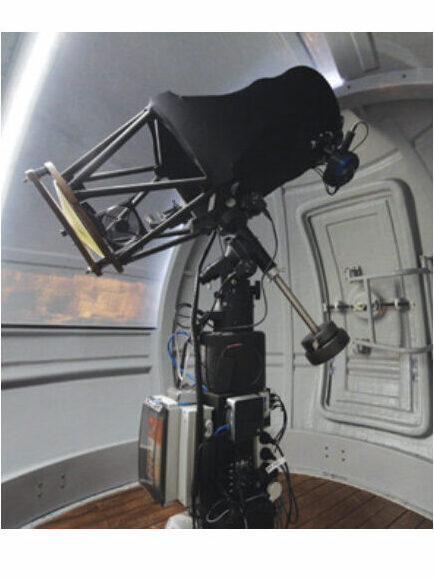
Recording ultra-deep astrophotos doesn’t require the latest, largest, or most expensive equipment, nor even the most pristine, dark skies. My observing location is on the western outskirts of Auckland, New Zealand, which has a population of 1.7 million. Although my home-built, 10-inch f/5 truss-tube Newtonian (later upgraded to a 121⁄2-inch f/4) is tailored to image deep-sky objects, it’s by no means the most capable or sophisticated instrument available within the realm of amateur astrophotography. Likewise, my QSI 683wsg camera incorporates a KAF-8300 8.3 megapixel monochrome CCD sensor that’s neither the largest nor the most sensitive model available. Along with this equipment, I used readily available Astrodon second-generation RGB filters and a 3-nanometer hydrogen-alpha (Hα) filter. Until recently, the scope resided in a commercial shed converted into a roll-off-roof observatory.
Regardless of equipment type, having a permanently ready imaging system is the single most important factor for systematically collecting large amounts of data. This let me take advantage of every clear night with minimum setup time.
Rolf Wahl Olsen
A Good Plan
An ultra-deep imaging project requires considerable planning because it’s likely to span many months. Suitable targets
include galaxies or galaxy clusters, which sometimes contain very faint tidal streams of stars left over from ancient mergers. Planetary nebulae may display extremely faint outer shells that become visible with long enough exposure times. Many well-known nebulae often reveal extended tendrils of nebulosity not visible in typical photographs. Almost any object can reveal something new in an exceedingly deep image. Still, composition and field of view are important considerations. For example, targeting the Orion Nebula (M42) with my system’s narrow field of view (42′ by 32′) is unlikely to reveal new structures because the nebula is already very bright and extends far outside my camera’s field of view.
Targets that pass high overhead are the most suitable for ultra-deep imaging. For optimal efficiency it’s best to devote nights with good seeing to taking luminance data and leave color for nights with less steady conditions. This is because the sharpness of the final image is defined by the luminance alone, and the RGB data only provide the color information.
X-ray: NASA / CXC / SAO; Optical: Rolf Olsen; Infrared: NASA / JPL-Caltech; Radio: NRAO / AUI / NSF / Univ. of Hertfordshire / M. Hardcastle
Minimizing downtime is important for long-term imaging projects, so I automated as much of the process as possible by using image-capture software that let me script an entire night of imaging. I use MaxIm DL (https://is.gd/MaxIm), though full-automation solutions like Astronomer’s Control Panel (acp.dc3.com/index2.html) or Sequence Generator Pro (https://is.gd/sgpro) make the process even more efficient by scripting and planning multiple nights as well as recording dark, flat, and bias calibration frames automatically.
Speaking of calibration images, this kind of imaging requires maintaining a library of calibration frames. Digital detectors can change over time, developing hot pixels, dead pixels, bad columns, or “stuck” pixels that sometimes come and go. That’s why a master dark frame from, say, six months ago may not correct some artifacts in newer data. Plan to update calibration frames at regular intervals. Likewise, dust slowly accumulating on any surfaces within the light path will create a mismatch between your old flat-field images and your current light exposures. By keeping organized sets of calibration frames, you can easily reprocess your pictures at any point in the future. This is especially important if your data are requested for scientific research, or you learn a new calibration or integration technique. Good data never go bad.
Proof of Concept: Centaurus A
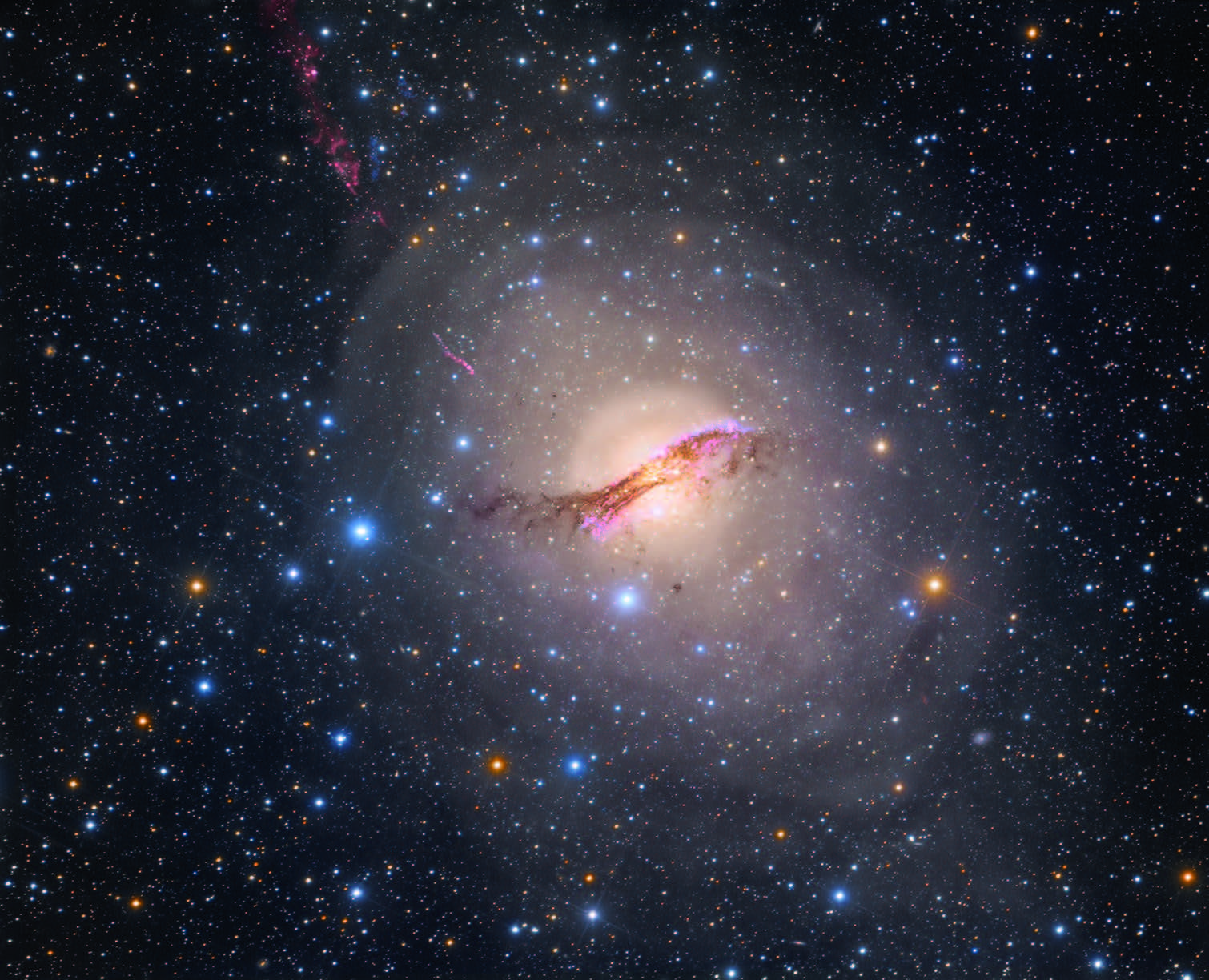
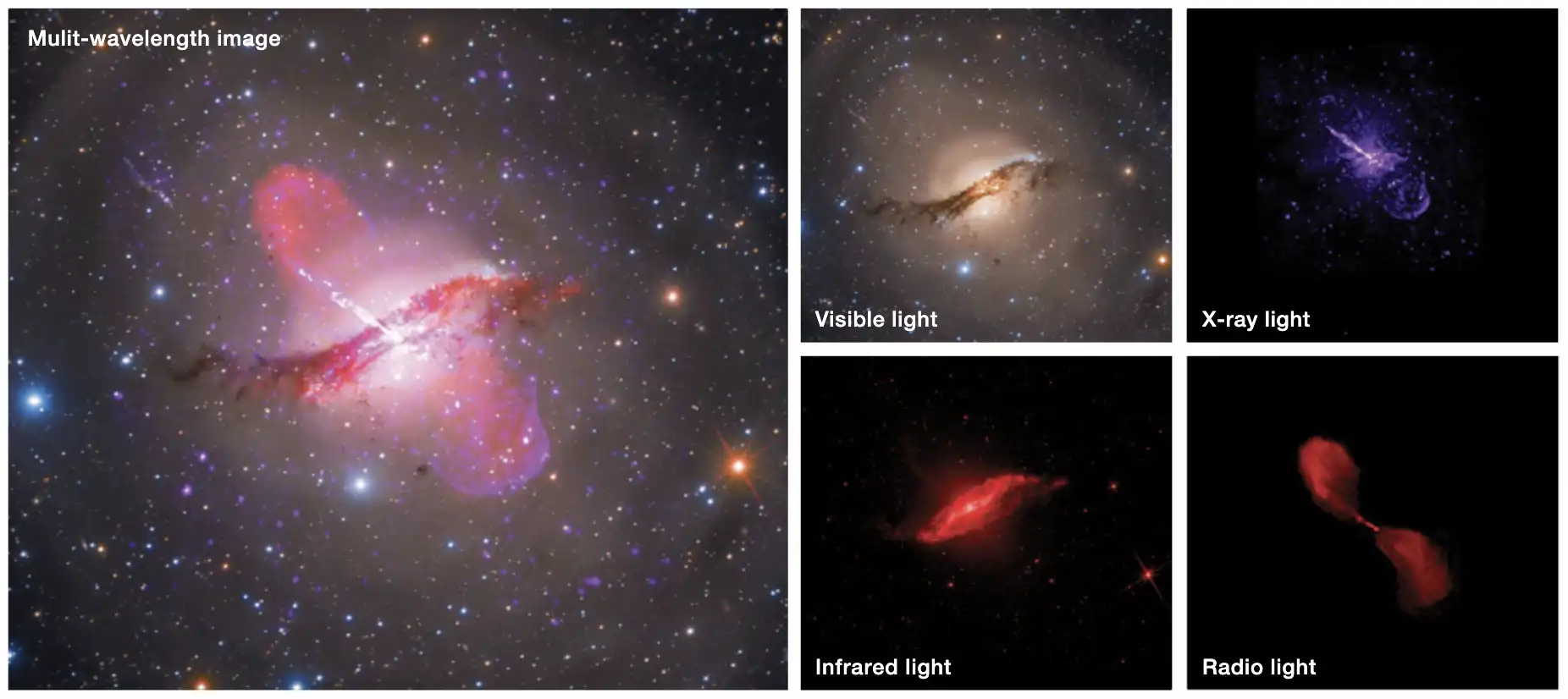
I attempted my first ultra-deep imaging project in early 2013. My target was Centaurus A, or NGC 5128, a peculiar galaxy located roughly 12 million light-years away in the southern constellation of Centaurus. It’s the closest active galaxy to Earth and one of the most studied. Throughout the first half of 2013, I recorded 120 hours of exposure on Centaurus A on 43 nights between February and May, when the target was best placed in my sky, passing nearly directly overhead. I then spent around 40 hours reducing and processing the data, with the goal of presenting this majestic galaxy as it has never been seen before, to truly grasp what this intriguing object is all about.
The result is among the deepest views of Centaurus A to date. It may also be among the deepest images recorded to date with amateur equipment, showing stars fainter than 25th magnitude.
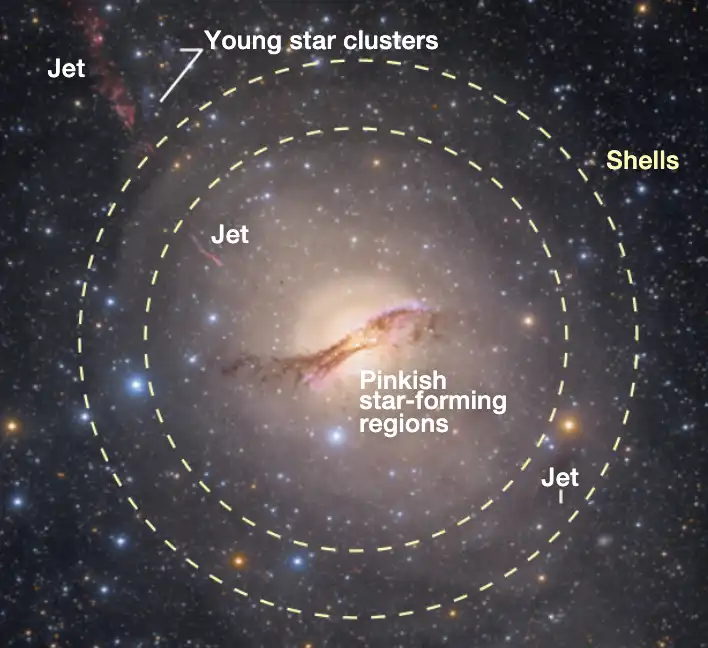
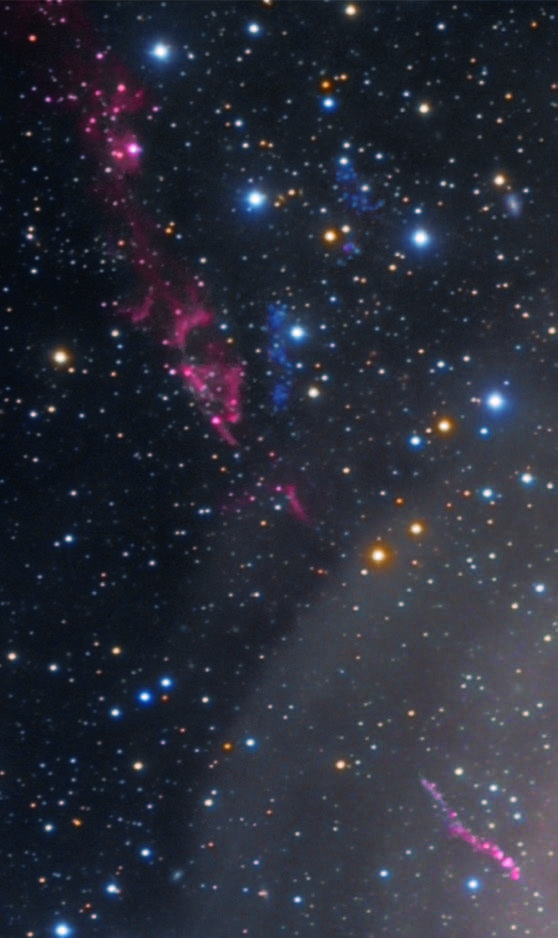
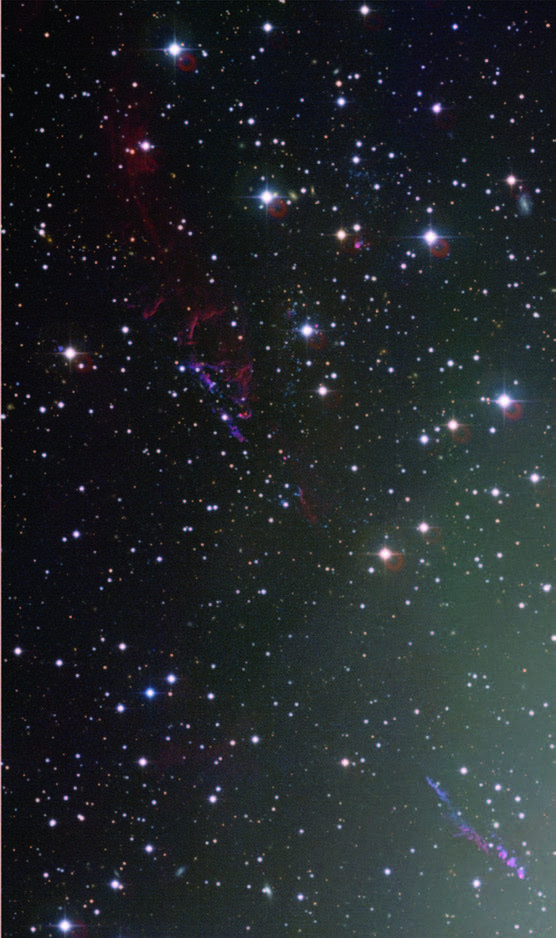
My image reveals several rarely seen features. The first and most prominent at the top left are the pair of enormous, reddish filaments associated with relativistic jets expelled from the galaxy’s central supermassive black hole. A smaller, inner filament lies about 30,000 light-years from the core, and another, larger filament is seen some 65,000 light-years out. Interestingly, possible shock fronts from the outer filament seem to have triggered a burst of star formation in the surrounding gas, visible as a sprinkling of blue star clusters to the right of the filament.
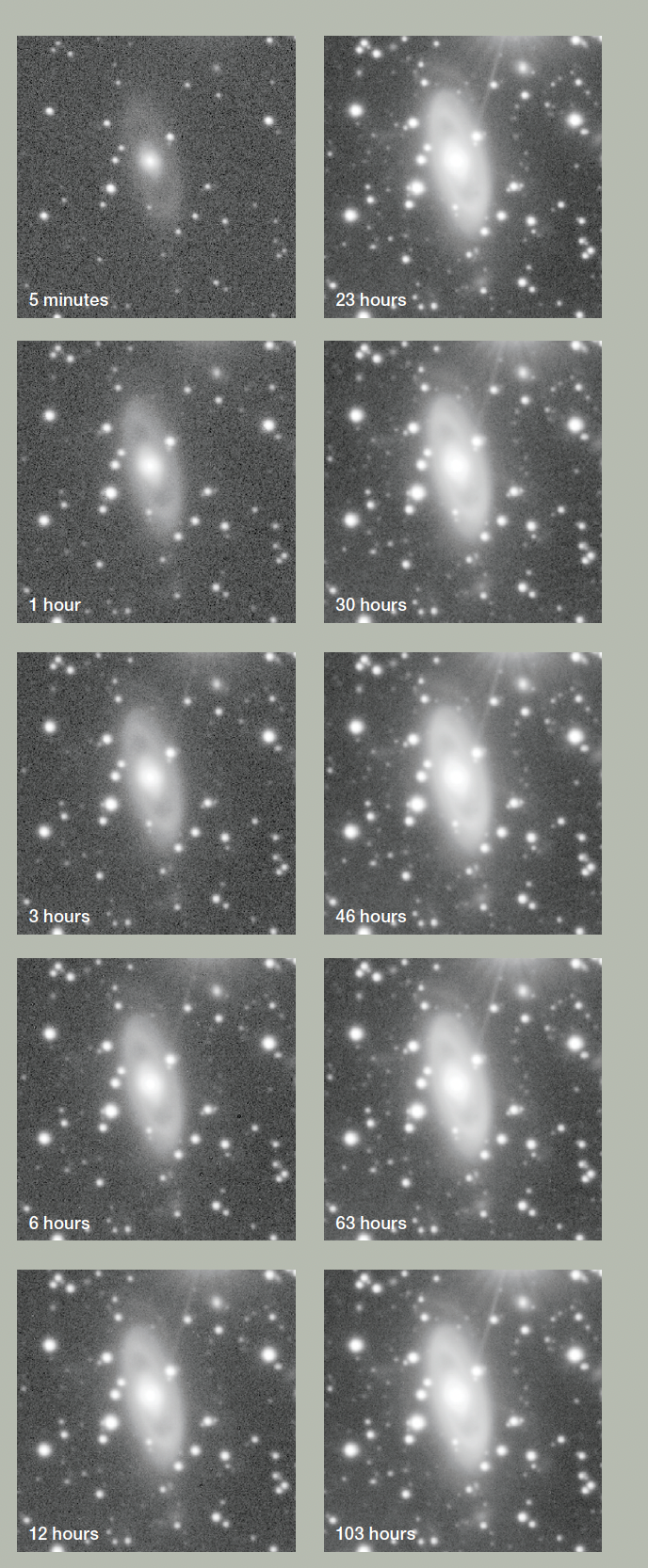
SIGNAL TO NOISE This series of luminance frames, taken from the Antlia Cluster image above, graphically displays the benefit of long integration times. Noise dominates a single 5-minute exposure (top left), but adding more time to the image lowers the noise level while increasing the signal. Note the faint outer spiral arm that becomes visible at the top of the galaxy after combining 23 hours of exposures.
Rolf Wahl Olsen
A faint trace of nebulosity related to the otherwise invisible southern jet is also noticeable as a small, red knot seen at the 4 o’clock position about halfway between the galaxy’s core and the bottom right corner of the image. This is the first visible-wavelength detection of the southern jet.
Also visible in the image are the complete inner and outer shell structures of the galaxy’s extended halo. These features are stars left over from past mergers with other galaxies. In addition, more than 700 cataloged globular clusters orbiting Centaurus A also riddle the field.
In 2019 I acquired an additional 10 hours of exposures, this time through a Hα filter. The updated image incorporates the new data to highlight the emission structures triggered by the relativistic jet from the central black hole. It also emphasizes the many pinkish star-forming regions within the dark dust lane crossing the center of the galaxy.
Besides the main subject, the image is littered with other faint, remote galaxies, some at the limit of detectability.
Deep in the Antlia Galaxy Cluster
Following the success of my Centaurus A project, I turned my attention to another fascinating subject well-placed in the night sky from my location in New Zealand.
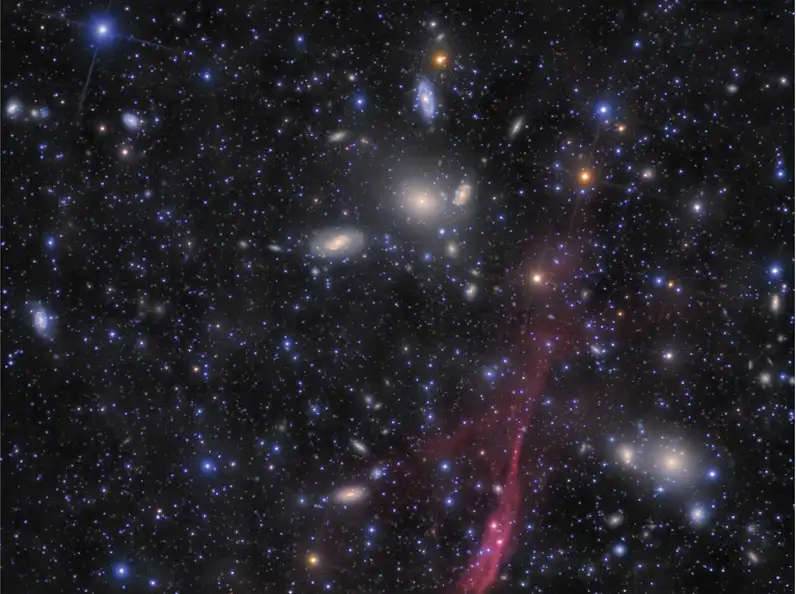
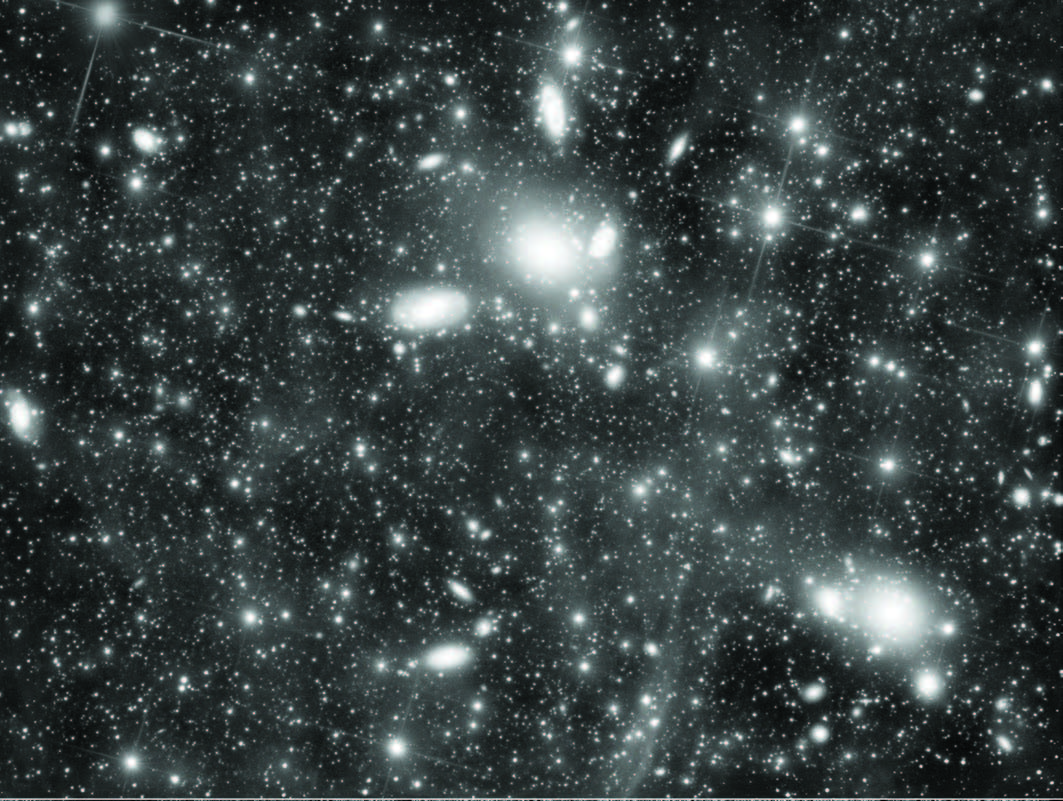
The Antlia Cluster (Abell S0636) is a galaxy group located in the constellation Antlia. It forms part of the larger Hydra-Centaurus Supercluster, some 133 million light-years distant. This makes it the third-closest galaxy cluster to our Local Group, after the Virgo and Fornax Clusters. Only a few images exist of this cluster, and those taken with professional observatories merely cover selected narrow portions of the field.
Over a span of 55 nights in 2015, I accumulated 152 hours of data on this magnificent galaxy cluster. Imaging began on January 1, 2015, when the cluster had reached an acceptable altitude in the east, and then continued every clear night through June until the cluster was too low in the west.
Rolf Wahl Olsen
The finished result displays an ultra-faint veil of gas and dust in our own galaxy not directly illuminated by stars but merely reflecting the faint combined glow of our own galaxy, often called integrated flux nebulae.
The vertical stretch of reddish nebulosity at lower right of the image is part of the recently discovered Antlia Supernova Remnant (https://is.gd/AntliaSNR). Capturing these Hα filaments was a nice surprise, as I wasn’t aware of their existence until very late in the process — the filaments are essentially invisible in the individual frames and only show up after image stacking. Bringing out the supernova remnant required an extra eight hours of Hα data, and even then I had to increase the sensitivity of the CCD detector with binning — making a group of four adjacent pixels act as a single, more sensitive pixel, though at the cost of resolution.
With a limiting magnitude surpassing 25, a vast number of smaller background galaxies are visible everywhere in the image. Some lie several billion light-years away and are visibly reddened by the relativistic redshift due to the expansion of the universe. Many of these appear grouped into distant clusters of their own, far beyond the influence of the Antlia Cluster. Additionally, the image contains many uncataloged galaxies I couldn’t identify in any of the previous studies.
Image Processing
Key to making ultra-deep images is careful stacking and processing techniques. I calibrated each of the raw subframes in PixInsight (pixinsight.com) using master darks and bias frames obtained at or near the typical operating temperature of the CCD camera (-25°C), as well as flat-field images. Because the light frames were acquired over periods of many months across changing seasons, my camera’s operating temperature ranged from -25°C down to -32°C, as low as the camera could reliably operate, which helps to minimize noise. All the light frames were calibrated using automatic dark/bias scaling to adjust for these temperature variations.
I assembled the master calibration frames from large sets of images recorded during each project in order to minimize noise levels in the final result. For each filter, I made a single master bias, dark, and flat-field image from 400 dark frames, 500 bias frames, and 300 flat-field frames.
I then used PixInsight’s Linear Fit Clipping algorithm with image weights based on noise evaluation to reject noise and other artifacts in the individual exposures, producing an exceedingly smooth stack of each set of LRGB and Hα images. Once satisfied with the results, I then combined the color, luminance, and Hα before performing any non-linear stretches to create the final result seen below.
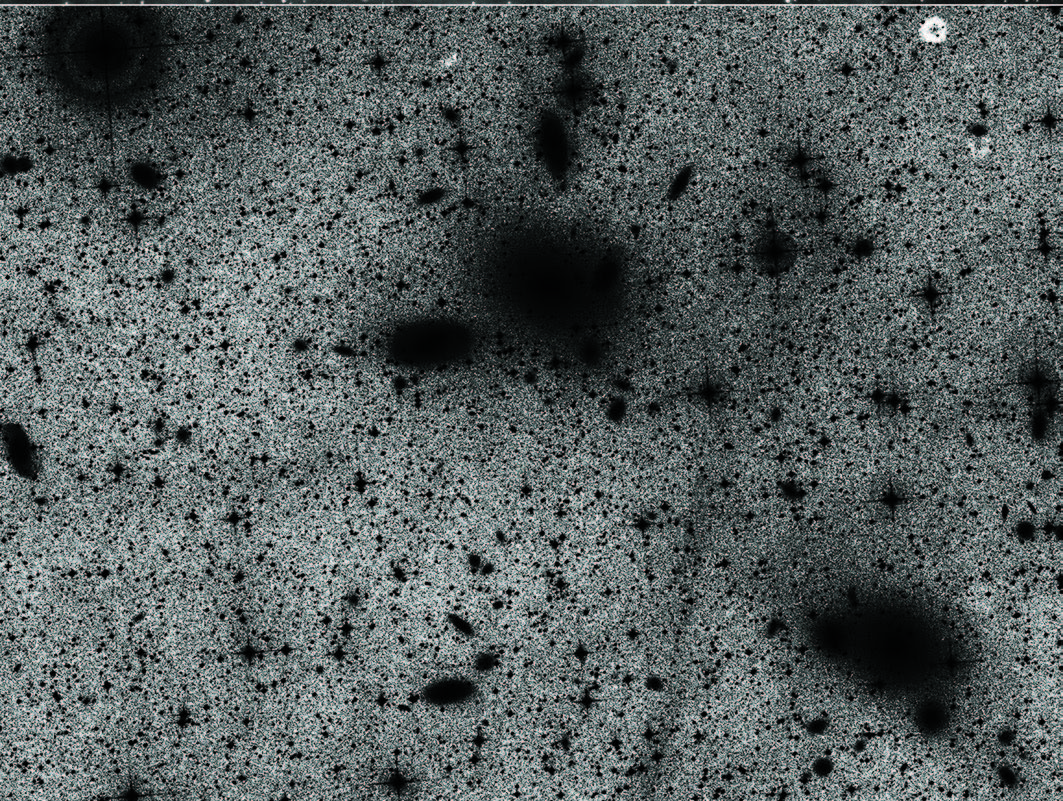
The advantage of having so much data is evident in the background noise levels. The large integration times allow for easier processing that requires little or no additional noise reduction in the final result.
Bearing Fruit
In my view, a deep-sky astrophoto can never have enough exposure. When going this deep, there often seems to be something more lurking in the background noise, waiting to be excavated and revealed.
After Steven Tingay of Curtin University saw my deep image of Centaurus A in 2017, he contacted me to discuss comparing his team’s radio images with my data. As a result, I was invited (along with fellow amateur Mike Sidonio) to co-author the publication The jet/wind outflow in Centaurus A: a local laboratory for AGN feedback (https://is.gd/CentA). I can hardly think of a higher honor for an amateur astrophotographer!
These large image datasets were both a challenge and a pleasure to create. Consider undertaking your own ultra-deep astrophotography project to see what surprises lie hidden in the background sky just waiting to be noticed.
This article originally appeared in the February 2022 issue of Sky & Telescope.
About Rolf Wahl Olsen
ROLF WAHL OLSEN photographs the night sky from his observatory in the foothills of the Waitakere Ranges west of Auckland, New Zealand.


Comments
You must be logged in to post a comment.