 SUNSET:


Astronomy in Space with David Dickinson
NASA Joins Japanese Mission to Martian Moons
NASA is developing a key instrument for a mission to the Martian moons, Phobos and Deimos.

Astronomy in Space with David Dickinson
NASA Completes Parachute Test for Mars 2020 Rover
A suborbital launch from Wallops Flight Facility tested a critical piece of landing hardware for the Mars 2020 rover.

Astronomy in Space with David Dickinson
China's Tiangong 1 Space Station to Burn Up
Early next year, an international team will track the uncontrolled atmospheric reentry of Tiangong 1, China's first prototype space station.

Astronomy in Space with David Dickinson
Curiosity Tests Workaround for Balky Drill
Engineers are looking for a way to continue using Curiosity's drill after a 10-month hiatus, but restoring the drill will probably take several more months.

Astronomy in Space with David Dickinson
How Bright is the Moon . . . Exactly?
An upcoming study will take the old calibration standard of the Moon's brightness to a new level of precision.

Astronomy in Space with David Dickinson
Asteroid 2012 TC4 To Zip Past Earth This Week
The close pass of near-Earth asteroid 2012 TC4 this week will give NASA a chance to test planetary-defense coordination.

Astronomy in Space with David Dickinson
Some Damage to Arecibo Observatory; Stormy Times Ahead
Arecibo and its team rode out the largest storm in its history, but it's unclear what the moderate damage will mean for the radio observatory's future.

Astronomy in Space with David Dickinson
Osiris-REX Images Earth During Flyby
The asteroid-bound Osiris-REX mission took time during last Friday's gravity assist maneuver to look back at its homeworld.

Astronomy in Space with David Dickinson
Osiris-REX to Fly by Earth on Friday
NASA's ambitious Osiris-REX asteroid sample return mission swings by Earth this Friday for a gravity assist en route to asteroid 101955 Bennu.

Astronomy in Space with David Dickinson
"Clockwork Rover" for Venus Exploration
Engineers have come up with an innovative "clockwork rover" concept designed to survive the hostile environment of Venus.

Astronomy in Space with David Dickinson
Amazing Views of the Solar Eclipse From Earth . . . and Space
Satellites, aircraft, and the International Space Station provided great views of yesterday's solar eclipse, near and far.

Astronomy in Space with David Dickinson
Chasing the Total Solar Eclipse From Orbit
While millions will watch the August 21 total solar eclipse from the ground, International Space Station crew will have an amazing view high from overhead.

Astronomy in Space with David Dickinson
Saturn Surprises Right Up Until Cassini's End
Saturn keeps its secrets as NASA's Cassini spacecraft heads towards its September grand finale.
Astronomy in Space with David Dickinson
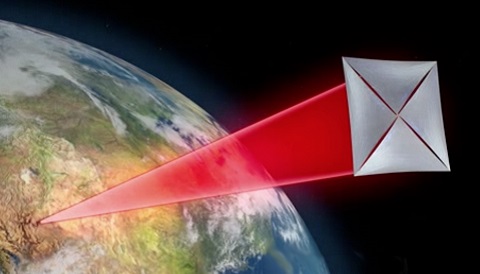
Breakthrough Starshot Takes to Space
Six Sprites, "the world's smallest spacecraft" have entered low-Earth orbit, a small milestone for Breakthrough Starshot's plan for interstellar voyage.

Astronomy in Space with David Dickinson
Source of Mars Trojans Might Be Mars Itself
A new study proposes a possible source for the mysterious Mars Trojan asteroids: the Red Planet itself.

Astronomy in Space with David Dickinson
Goodbye, LISA Pathfinder
The European Space Agency switched off its groundbreaking LISA Pathfinder mission this week.

Astronomy in Space with David Dickinson
New Satellite "Mayak" Might Light Up the Sky
Russia's first crowd-funded satellite, named Mayak (Russian for "beacon of light"), promises to be the “brightest object in the night sky next to the Moon.”
Astronomy in Space with David Dickinson
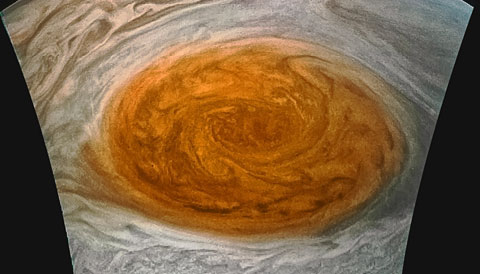
By Jove! Juno Images Jupiter's Great Red Spot
NASA's Juno Spacecraft delivers stunning closeup views of Jupiter's famous swirling Great Red Spot storm.
Astronomy in Space with David Dickinson
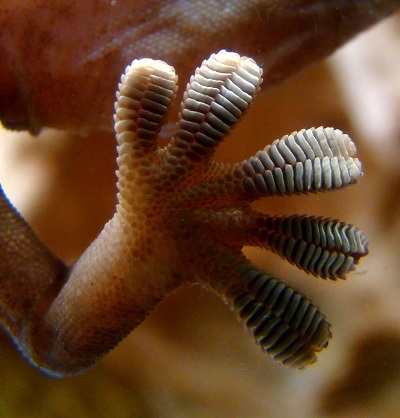
"Gecko Gripper" Tech to Clean Up Space Junk
Researchers are figuring out how to use a nature-inspired "gecko gripper" technology to solve the mounting problem of space debris.

Astronomy in Space with David Dickinson
NASA Eyes "Ice Giant" Missions in the 2030s
A recent NASA study outlines possible dedicated missions to the "ice giant" planets Uranus and Neptune that might leave Earth as early as 2030.
