 SUNSET:

 4
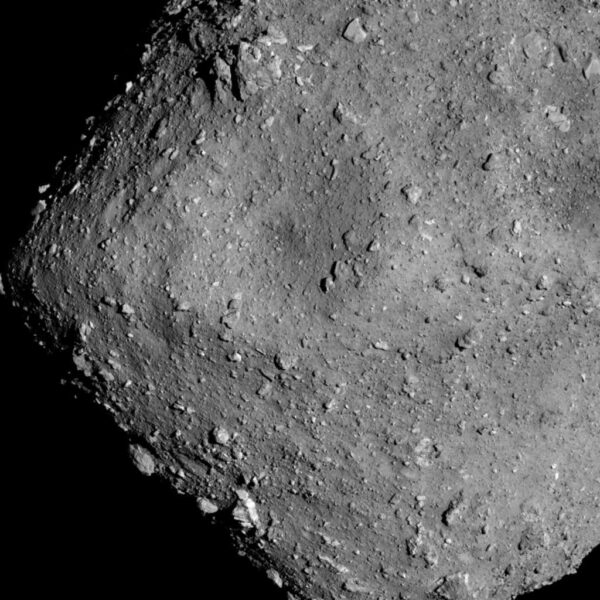
4Samples returned from Ryugu contain all five nucleobases, just like from asteroid Bennu. The find suggests life’s ingredients could have come from outside Earth.
JAXA
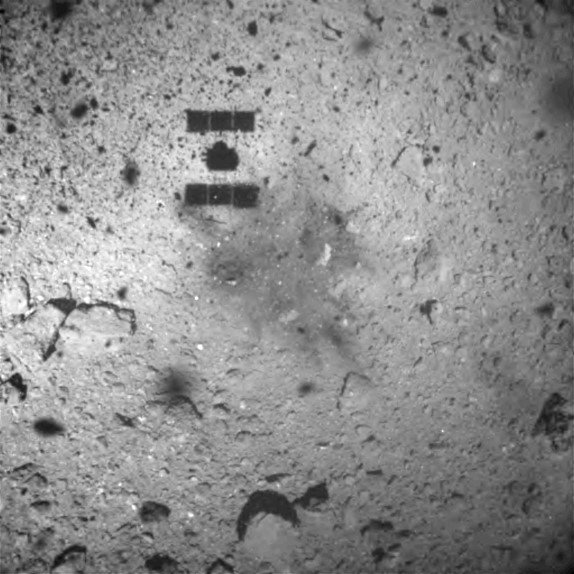
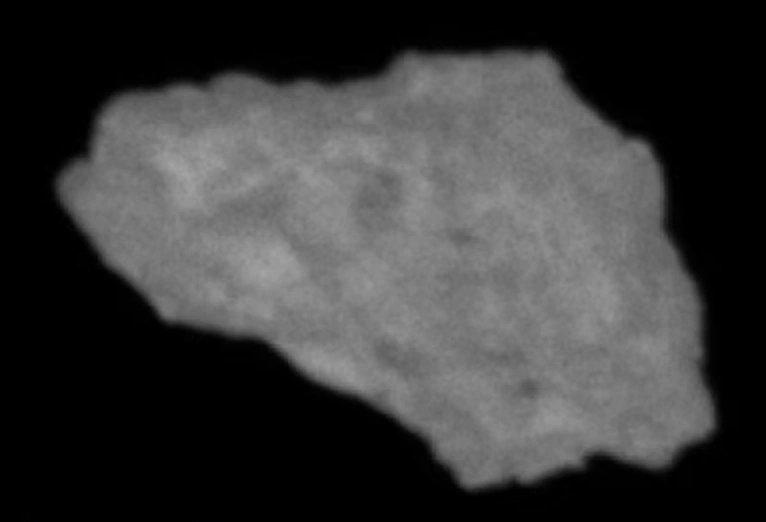
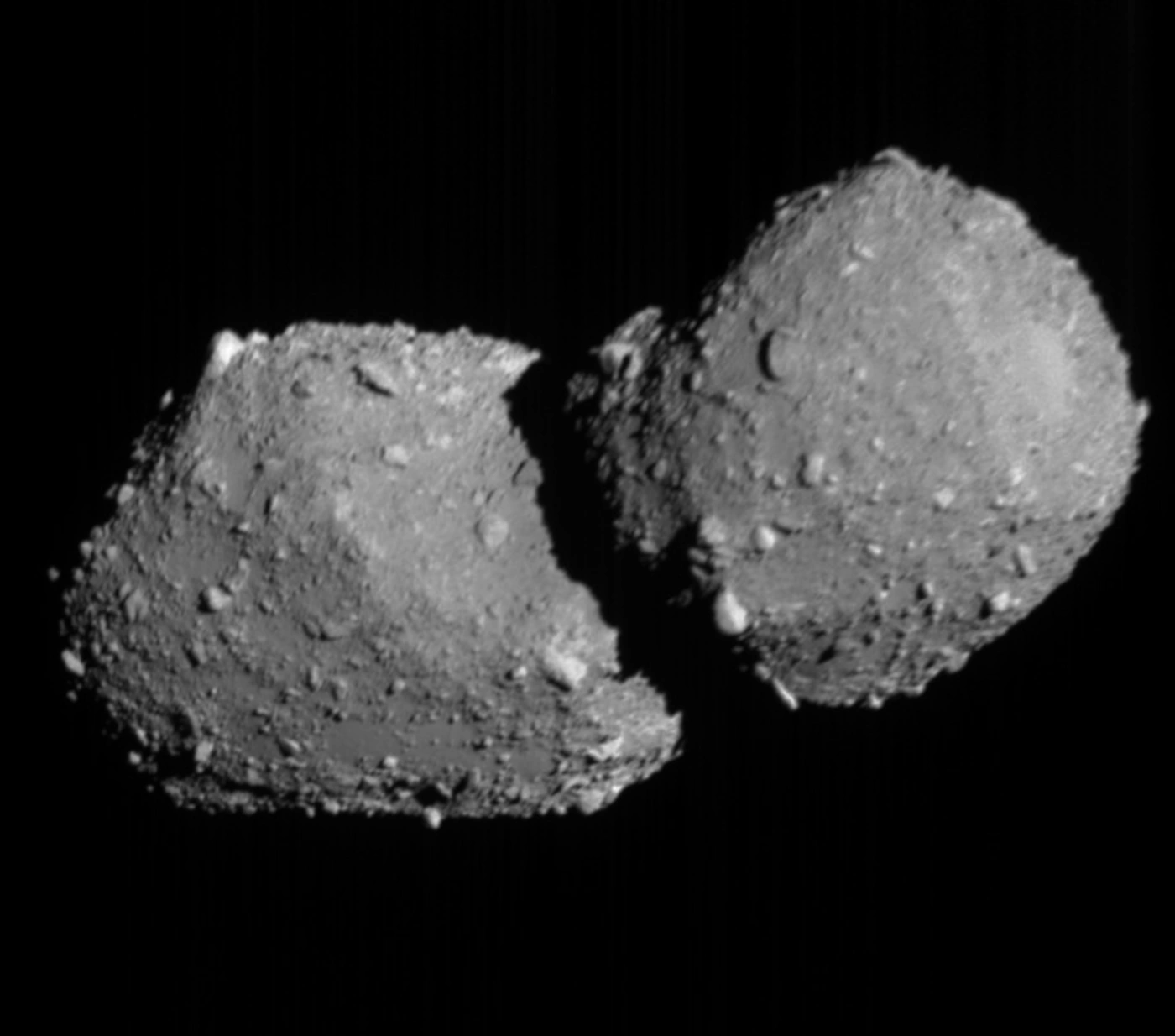
A new analysis published March 16th in Nature Astronomy shows that material retrieved from the asteroid 162173 Ryugu by the Japanese Hayabusa 2 mission contains many complex organic molecules — including all five nucleobases, which form the basis for the genetic material in all life on Earth.
These compounds have all been previously found in material returned from the asteroid 101955 Bennu and from some meteorites. The finds suggest that life’s building blocks are ubiquitous in the solar system.
It’s even possible that life’s building blocks may have been brought here by past impacts: “The detection of all five nucleobases in samples from both carbonaceous asteroids, Bennu and Ryugu, suggests that these molecules may be widespread in primitive bodies throughout the Solar System,” says study lead Toshiki Koga (Japan Agency for Marine-Earth Science and Technology). “This strengthens the idea that nucleobases could have been delivered to the early Earth by meteorites and asteroid impacts, potentially contributing to the pool of organic molecules available for the origin of life.”
JAXA / Univ. of Tokyo / Kochi Univ. / Rikkyo Univ. / Nagoya Univ. / Chiba Inst. of Technology / Meiji Univ. / Univ. of Aizu / AIST
“Where do we come from? It's an age-old question that now has a clear-cut answer,” Richard Binzel (MIT), an asteroid specialist who was not associated with this research, tells Sky & Telescope. “The new results reveal all of the basic building blocks for life are out there in space and were part of the ingredients that made Earth."
These findings are the culmination of a long quest. “This is the holy grail for asteroid-sample-return missions,” Binzel adds. “Could we find the building blocks of life in these carbon-rich asteroids? It has been a long tenuous pathway that is now solidified.”
JAXA
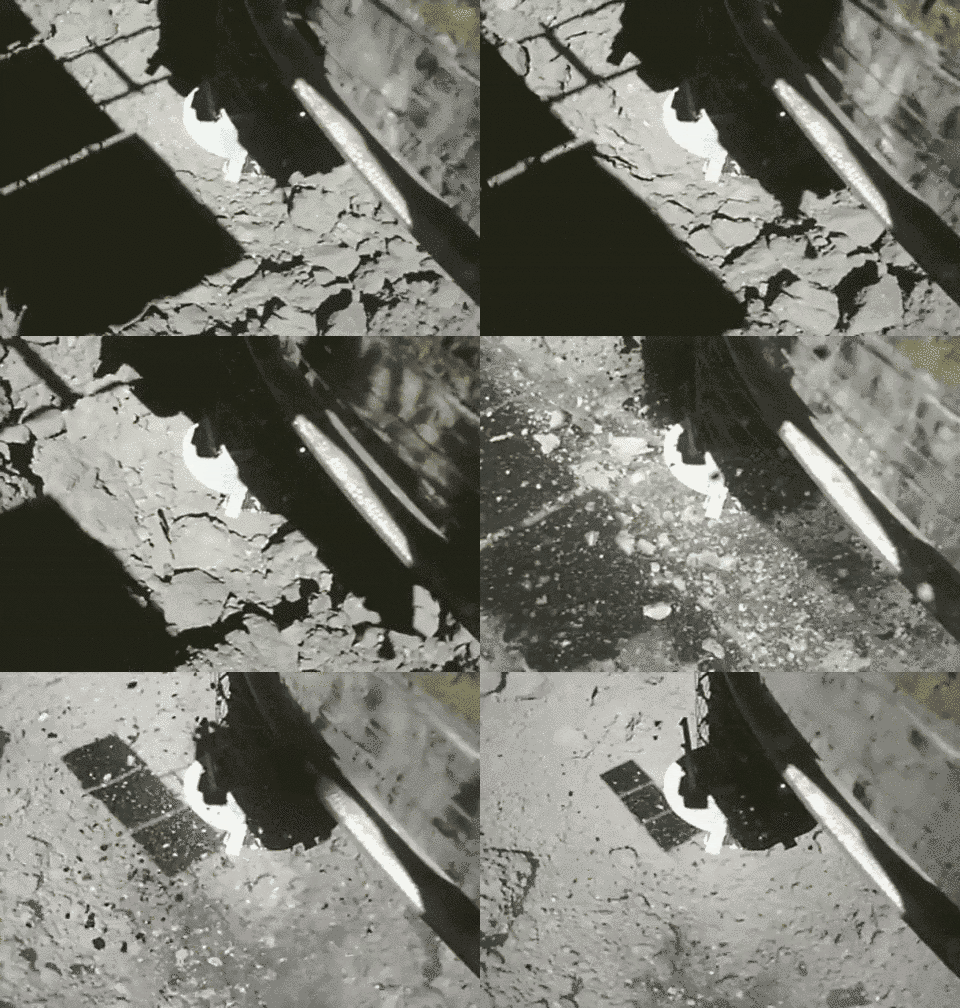
The evidence has accumulated from several pathways, including studies of several carbonaceous chondrite meteorites, including the Murchison and Orgueil samples, as well as the samples of surface material collected from the asteroids Bennu and now Ryugu. Indeed, the data collected on Earth informed the sample-return missions’s design. Spectra of near-Earth asteroids pinpointed those most likely have carbon-rich compositions,
The new analysis shows the presence of all five nucleobases in two different samples recovered from Ryugu. These five can combine to make the DNA and RNA molecules that form the blueprint of every known form of life, from the most primitive microbes and slime molds to aardvarks and astronomers.

NASA / Robert Markowitz
Nucleobases come in two classes: purines (adenine and guanine) and pyrimidines (cytosine, thymine, and uracil). While samples from Ryugu, Bennu, and meteorites all contain all five nucleobases, “one of the most surprising findings was that the relative abundances of purine and pyrimidine bases vary among extraterrestrial samples,” Koga tells Sky & Telescope. Purines dominate in the Murchison meteorite, while pyrimidines dominate in the Bennu sample and in the Orgueil meteorite. Meanwhile, in the Ryugu sample, there are roughly equal amounts of both kinds.
These differing proportions presumably arose because the parent bodies of these objects had different chemical and environmental conditions and different evolutionary histories, the researchers say.
“We found that the purine-to-pyrimidine ratio appears to be inversely correlated with the abundance of ammonia,” Koga adds. “Because no known formation mechanism predicts this relationship, it may point to a previously unrecognized pathway for nucleobase formation in early solar system materials.”
If these compounds appear to be widespread in the solar system, the implications could be profound. “While this does not mean that life necessarily exists elsewhere,” Koga says, “it suggests that some of the chemical ingredients needed for life could be common beyond Earth.”
Binzel, whose team has been characterizing asteroid types since the 1990s, adds that the findings may prompt investigations elsewhere: “It thickens the plot for some life forms to have been present in the earliest eras on Mars.”



Comments
Mark Holm
March 18, 2026 at 4:26 am
Every time organic molecules involved in the chemistry of life are found in extraterrestrial samples, the first idea that gets mentioned is that life on Earth began through extraterrestrial seeding of some sort. There is another hypothesis at least as likely. The frequent finding of simple biomolecules in extraterrestrial samples means that forming such molecules is fairly easy. The classic Miller-Urey experiments and their variations show the same thing under different conditions. If it’s easy and occurs under a variety of conditions, it could have happened here on Earth without any need for external seeding. It’s past time for this trope to get more responsible journalistic treatment.
You must be logged in to post a comment.
Monica Young
March 18, 2026 at 1:28 pm
Thanks for your thoughts on this, Mark! Note that the suggestion of organic molecule delivery via impacts came from the researchers themselves.
You must be logged in to post a comment.
MikeSakarias
March 22, 2026 at 6:15 pm
I agree with Mark. What are possible processes that could produce the "seeds of life" on space rocks? Why is that process not possible on the larger space rock of Earth?
You must be logged in to post a comment.
Bruce Frahm
March 22, 2026 at 9:37 pm
This rightful excitement over finding nucleobases supports the possibility of widespread life AS WE KNOW IT throughout the universe. It strikes me as plausible if not likely that what we would deem "life" might take vastly different forms elsewhere. Star Trek's 1967 episode "The Devil in the Dark" about silicon-based life was entertaining. Maybe it wasn't scientifically sound but I feel "we" are generally myopic as we search for and think about "life" in the universe. Notwithstanding the seeming importance of non-frozen water I've tended to scoff a bit at talk of "habitable zones".
You must be logged in to post a comment.
You must be logged in to post a comment.