 SUNSET:

 3
3An Australian astronomer has discovered a binocular nova on the first day of fall, visible to viewers in the Southern Hemisphere.
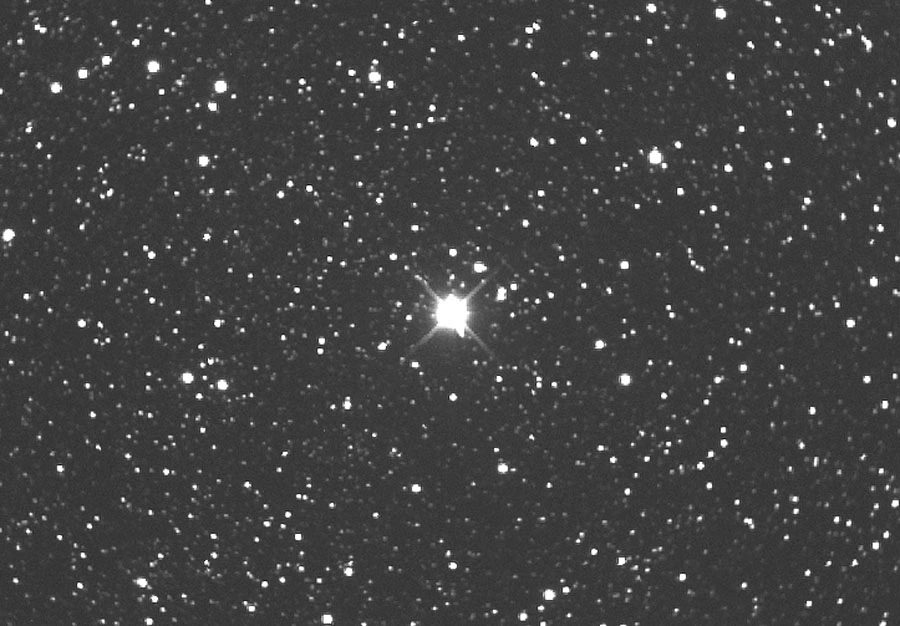
E. Guido, M. Rocchetto, L. Izzo; Spaceflux
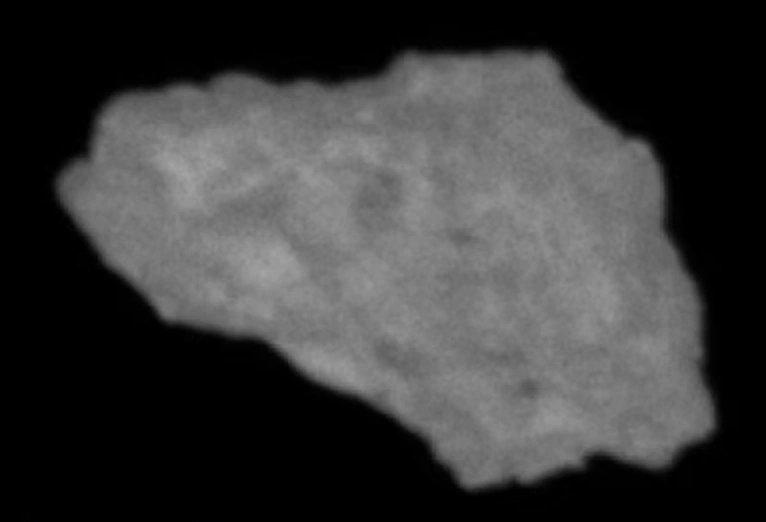
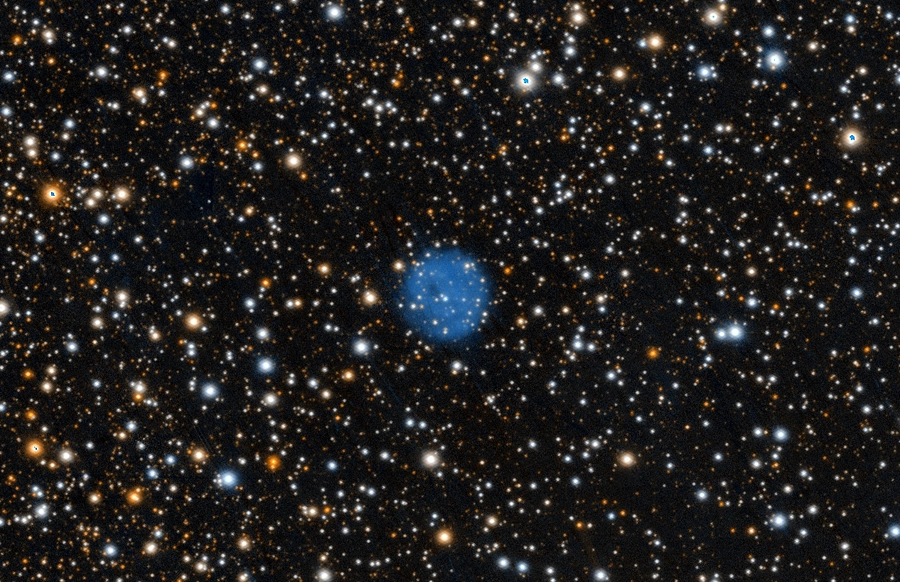
A brand-new nova just flashed into view 2° north of the bright Alpha Centauri multiple star system, in the constellation Centaurus, the Centaur. Discovered by John Seach of Grafton, Australia, he recorded the object on September 22nd on three photos made with a DSLR camera and 40mm f/1.4 lens. Bearing the temporary name of PNV J14372177-5847400 (PNV = possible nova), the new face is located at R.A. 14h 37m 22s and declination –58° 47' 40". Seach reported that nothing was visible to magnitude 11 using the same setup the prior night.
Follow-up observations were conducted by Ernesto Guido, Marco Rocchetto, and Luca Izzo using a 0.35-meter telescope in Australia operated by Spaceflux. They confirmed the new object and estimated a magnitude of 5.8. It has also received the formal designation V1935 Centauri.
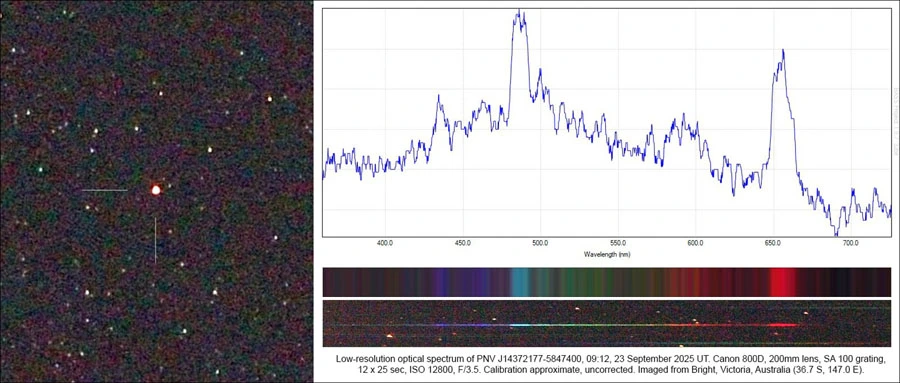
Rob Kaufman
Next, Rob Kaufman of Bright, Australia, took a low-resolution spectrum of the nova and recorded strong Balmer emission lines. These emissions are produced at specific wavelengths when the extremely high temperatures of the explosion heats hydrogen gas, kicking its electrons to higher energy levels, and then the electrons "fall" back down. Balmer lines are a classic sign of a nova eruption. They characteristically color the nova red, a color often visible to the eye when viewing the nova through a telescope or binoculars.
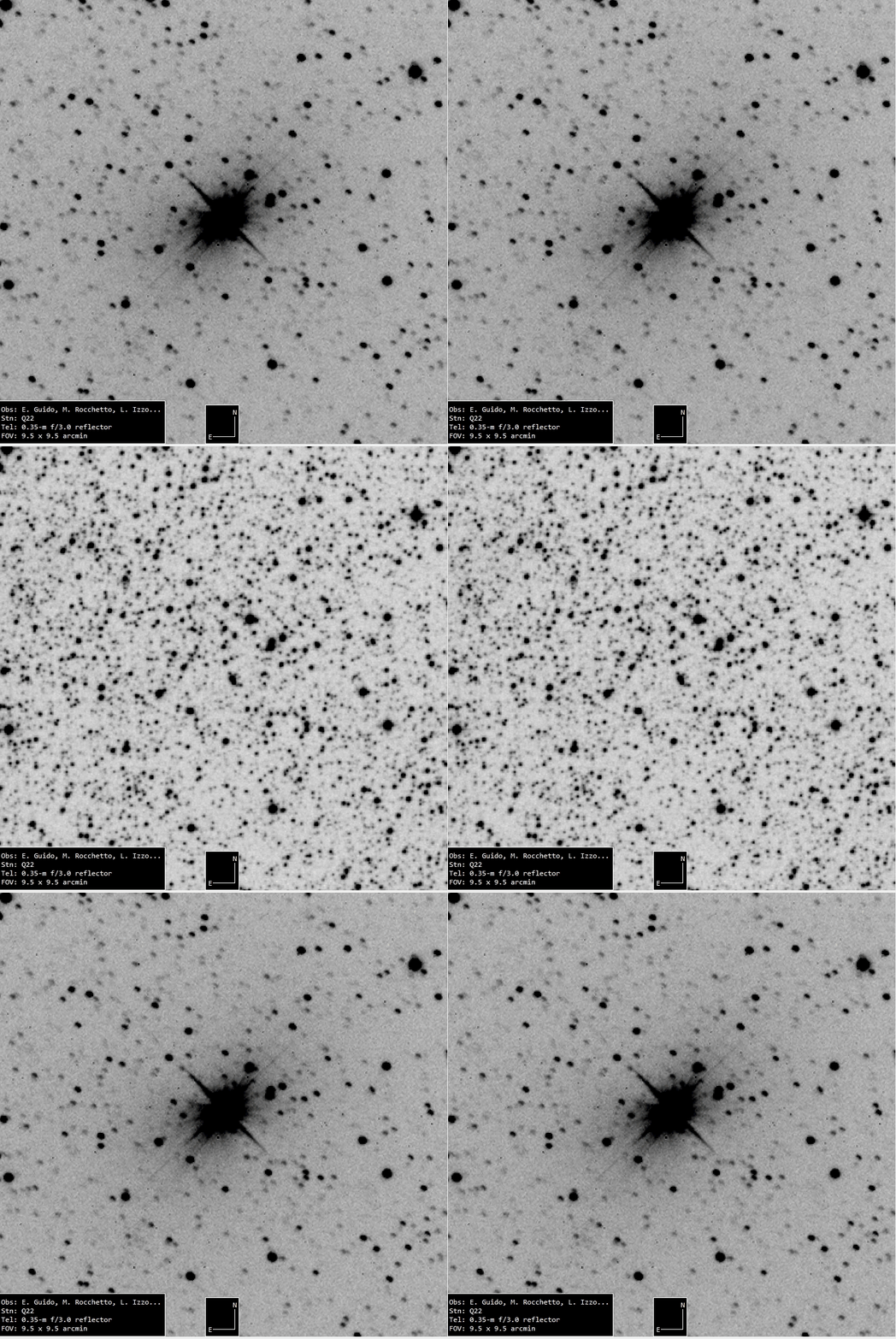
E. Guido, M. Rocchetto, L. Izzo; Spaceflux; POSS
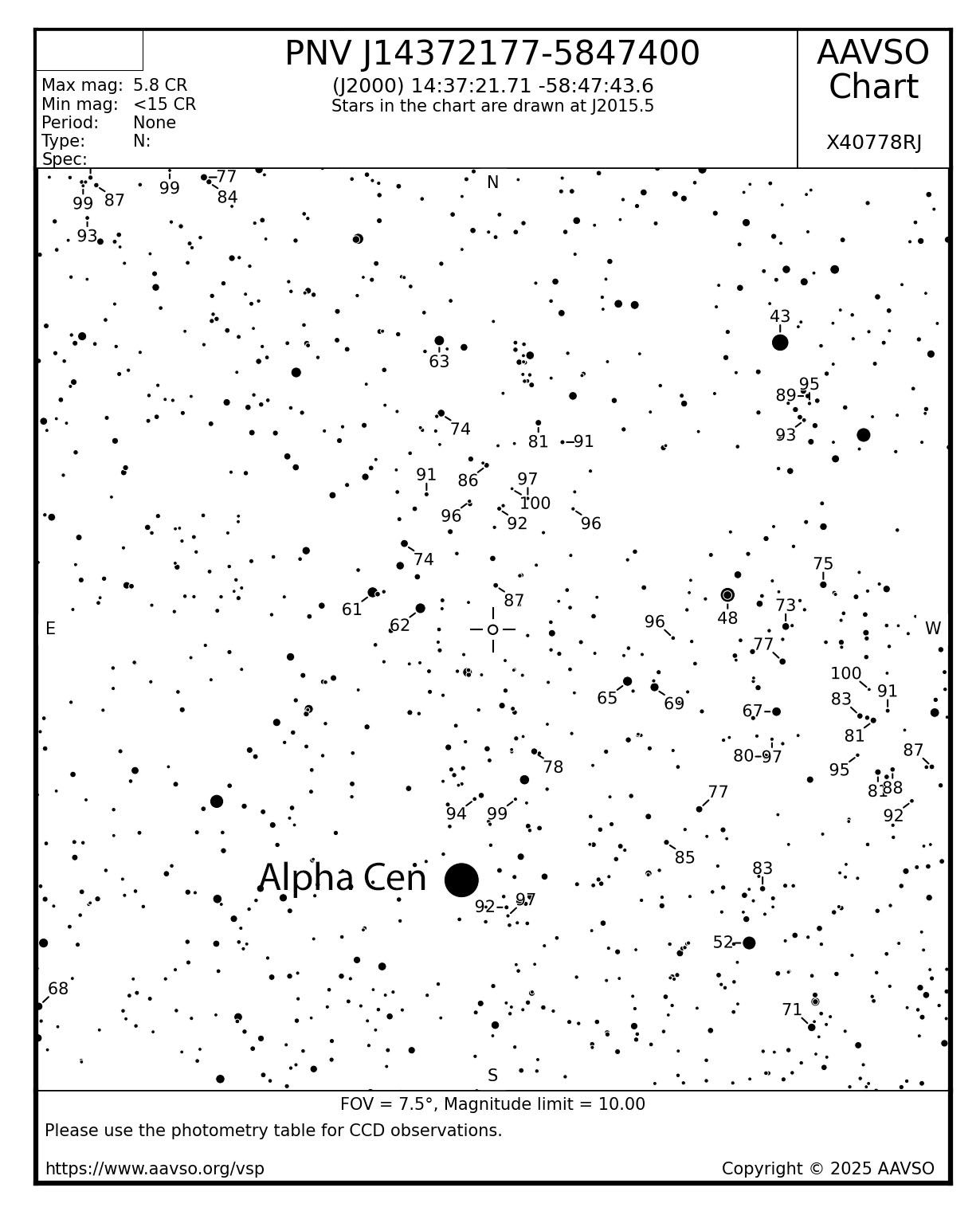
Further brightness estimates place the nova around 6th magnitude, making it an easy binocular find. How fortunate it lies so near Alpha Centauri, one of the best-known and brightest stars in the Southern Hemisphere sky. Aim your telescope or binoculars at the star, slide 2° to its north (to the right as viewed facing southwest), and the new nova will stare you in the face! This chart from the American Association of Variable Star Observers (AAVSO) will not only help you locate the object, but it also includes numerous comparison stars to estimate the nova's brightness during its bumpy road back to quiescence. (Note that magnitudes shown on the chart omit the decimal, so a star labeled "62" is magnitude 6.2.)
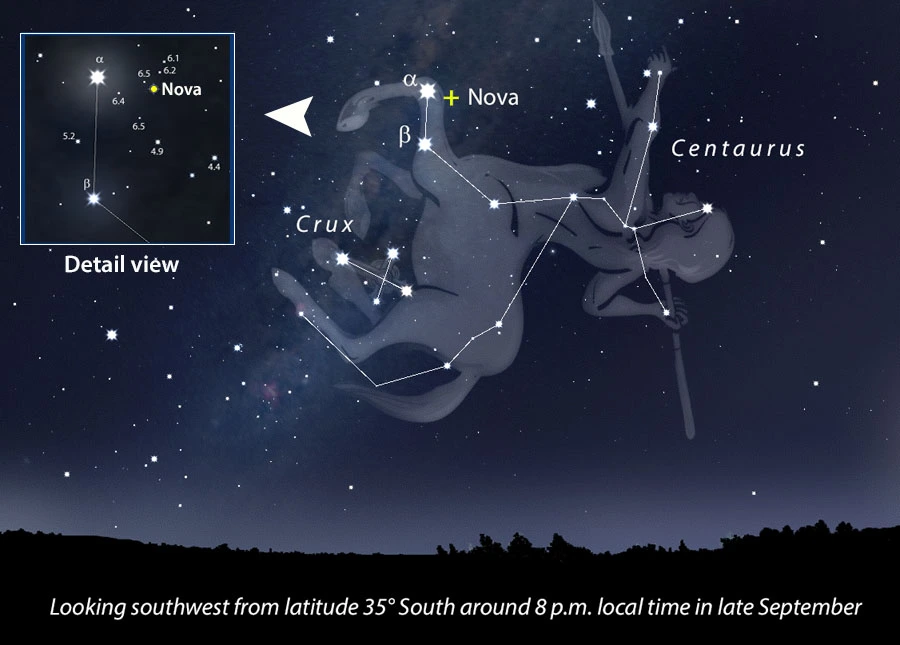
Stellarium with additions by Bob King
If it were spring or early summer, observers in the far southern U.S. such as Key West or Honolulu would have a shot at seeing the new object, but the constellation is unfortunately at or below the horizon after sunset this time of year. Skywatchers living in the equatorial regions and points southward will have no problem viewing the nova as soon as it gets dark, at the end of evening twilight.

NASA
Since the discovery is so new, we don't have a sense yet of whether V1935 Centauri (Nova Centauri) is brightening or dimming right now. But I'm sure we'll find out in a matter of hours, so stop back for updates. I'll post them as soon as they appear. Most recently, on September 24th, the nova is reported as fading, with a current around magnitude 7.5.
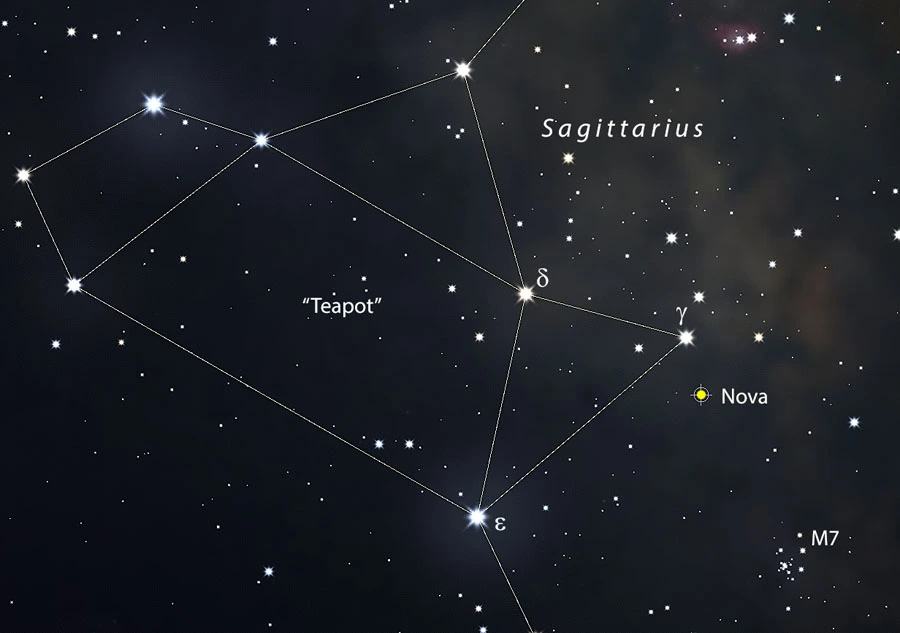
Stellarium with additions by Bob King
As if finding one nova weren't enough of an achievement, Seach captured a second fainter nova in Sagittarius on September 21st with the same camera setup. This new object, now permanently designated V7994 Sagittarii, is located at R.A. 18h 03m 53s and Dec. –31° 27′ 30″ just off the spout of the Sagittarius Teapot. Not a half-hour later, Japanese amateur Tadashi Kojima reported his independent discovery of the nova and put its magnitude at 10.5. Congratulations to both!
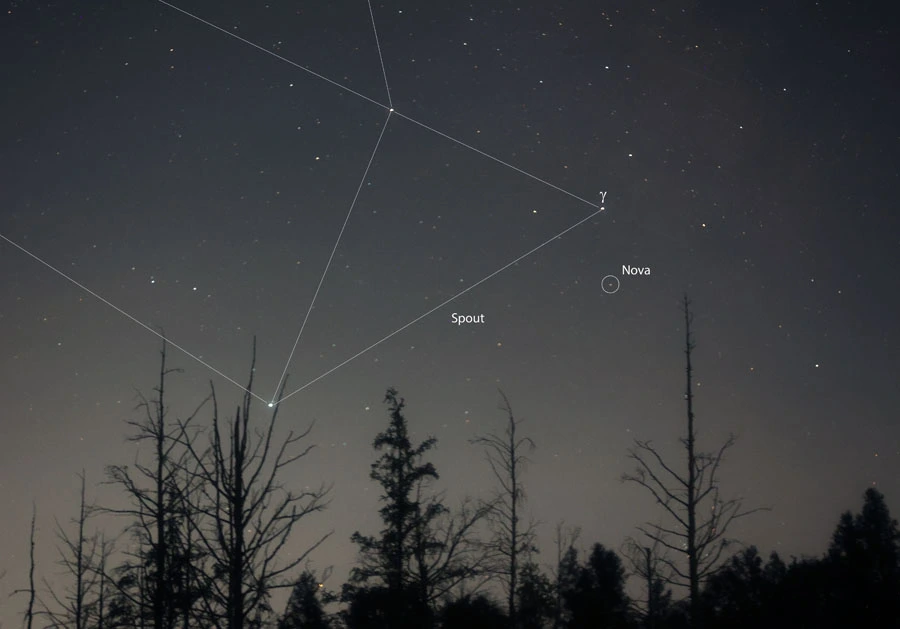
Bob King
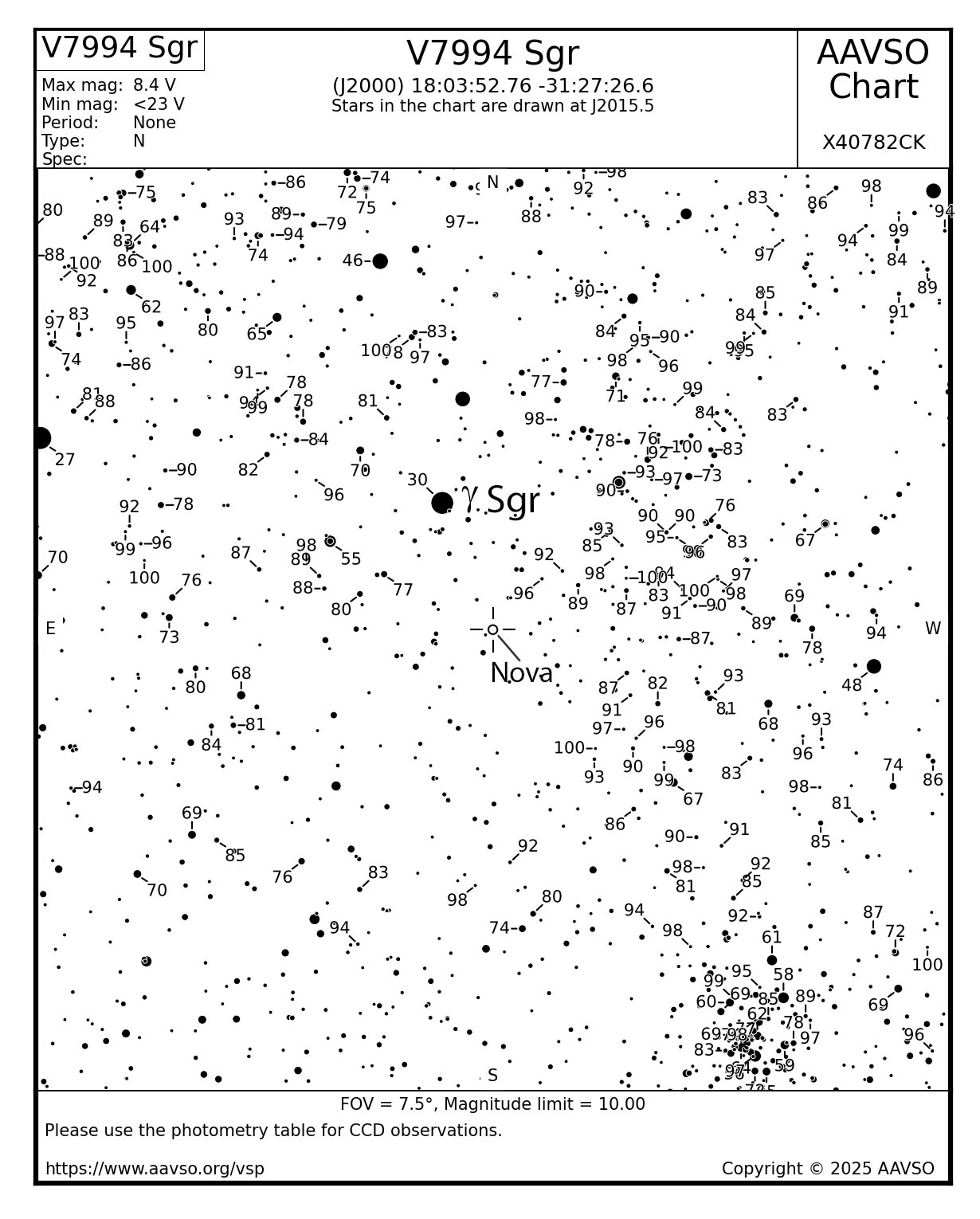
The nova has quickly brightened, reaching 8.5 on the evening of September 23rd. It's still climbing! The most recent estimates peg it at around magnitude 7. There's more good news. Although V7994 Sgr's southerly declination places it low in the southwestern sky, it's still visible in late dusk and during the early night hours from the U.S. The finder map above will direct you to the nova. Then you can use this AAVSO chart to estimate its brightness changes. I'm excited for tonight because even from northern Minnesota we'll have a shot at welcoming the newcomer.
Editorial note (October 27, 2025): While the original headline named Seach an amateur astronomer, he is in fact a professional astronomer employed as an adjunct research fellow at the University of South Queensland, Australia.
About Bob King
I love the sky (day and night) and have been a skywatcher and amateur astronomer since childhood. I'm also a long-time member of the American Association of Variable Star Observers (AAVSO) and Astronomical League. I pen the Astro Bob blog and have written four books: Night Sky with the Naked Eye (2016); Wonders of the Night Sky You Must See Before You Die (2018) and Urban Legends from Space (2019) and Magnificent Aurora, published in 2024. The universe invites us on an adventure every single night. To accept the invitation, we only need look up.



Comments
Anthony Barreiro
September 23, 2025 at 6:34 pm
September 22 was the first day of Spring in Australia. 😉
You must be logged in to post a comment.
Bob KingPost Author
September 23, 2025 at 7:48 pm
Aha! Yes, of course. Thank you for turning things upside-down, Anthony 😉
You must be logged in to post a comment.
[email protected]
September 30, 2025 at 10:48 pm
In Australia, we regard the first day of Spring as the 1st of September, not the 22nd. It is not a simple reversal of the Northern hemisphere (U.S.) dating system.
Could be it's an attempt at recognising the climate complications of a tilted Earth in a non-circular orbit. Or maybe just an artifact of long-ago political decisions...
You must be logged in to post a comment.
You must be logged in to post a comment.