 SUNSET:

 0
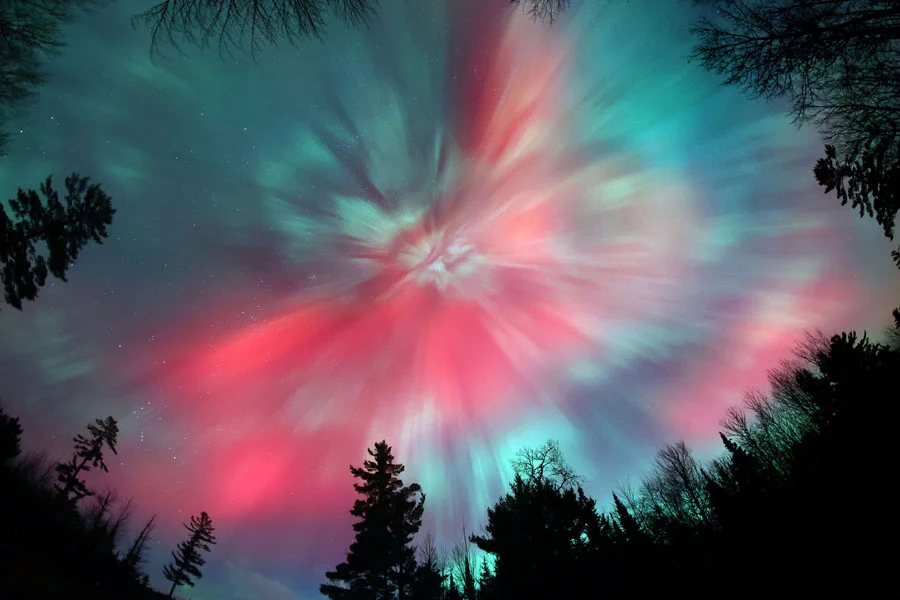
0Last night’s aurora painted the sky in reds, greens and even oranges. It’s expected to return tonight!
Bob King
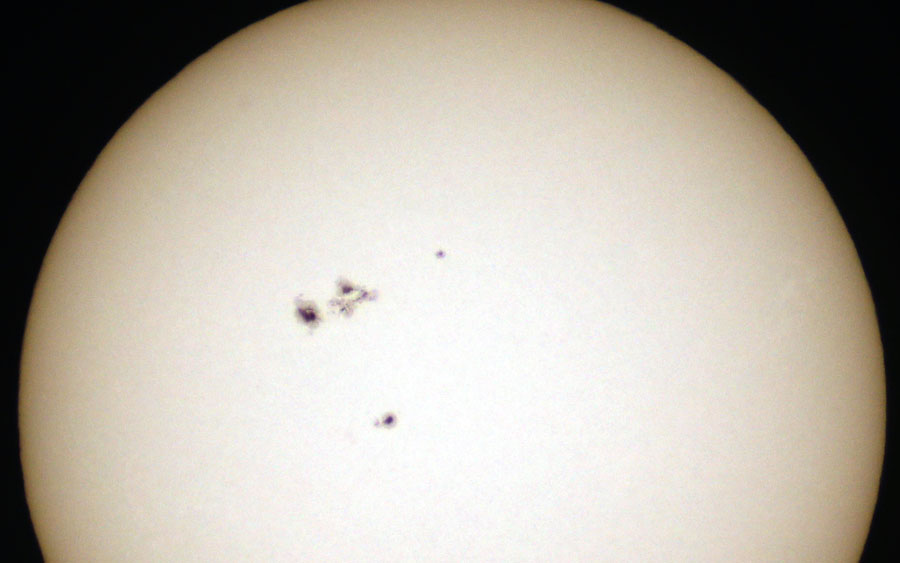
There aren't enough adjectives to describe last night's endless and profoundly riveting auroral display. And the best part was that so many people got to see it. Two powerful coronal mass ejections (CMEs) launched from the Sun in the wake of X-class flares that came from the large, busy sunspot region 4274. They arrived yesterday evening at Earth's doorstep. Skywatchers reported aurora across the entire U.S. and as far south as the tropics. It was on par with the last most significant storm of the current solar cycle, the Gannon storm that enveloped the Earth for several nights beginning May 10, 2024.
Bob King
People shared cellphone photos with me from Tennessee, Arkansas, Texas and even Mexico! Here were just a couple reactions:
"Astounding that these colors can be seen with the naked eye! It's gorgeous." — Sherry Phillips of Brimson, Minnesota.
"I finally got my wish here in Tennessee!!" — Michele Knauff Wilson of Tennessee
""It was wilder than any I’ve seen before. Incredibly beautiful." — Richie Townsend of Duluth, Minnesota
Bob King
Bob King
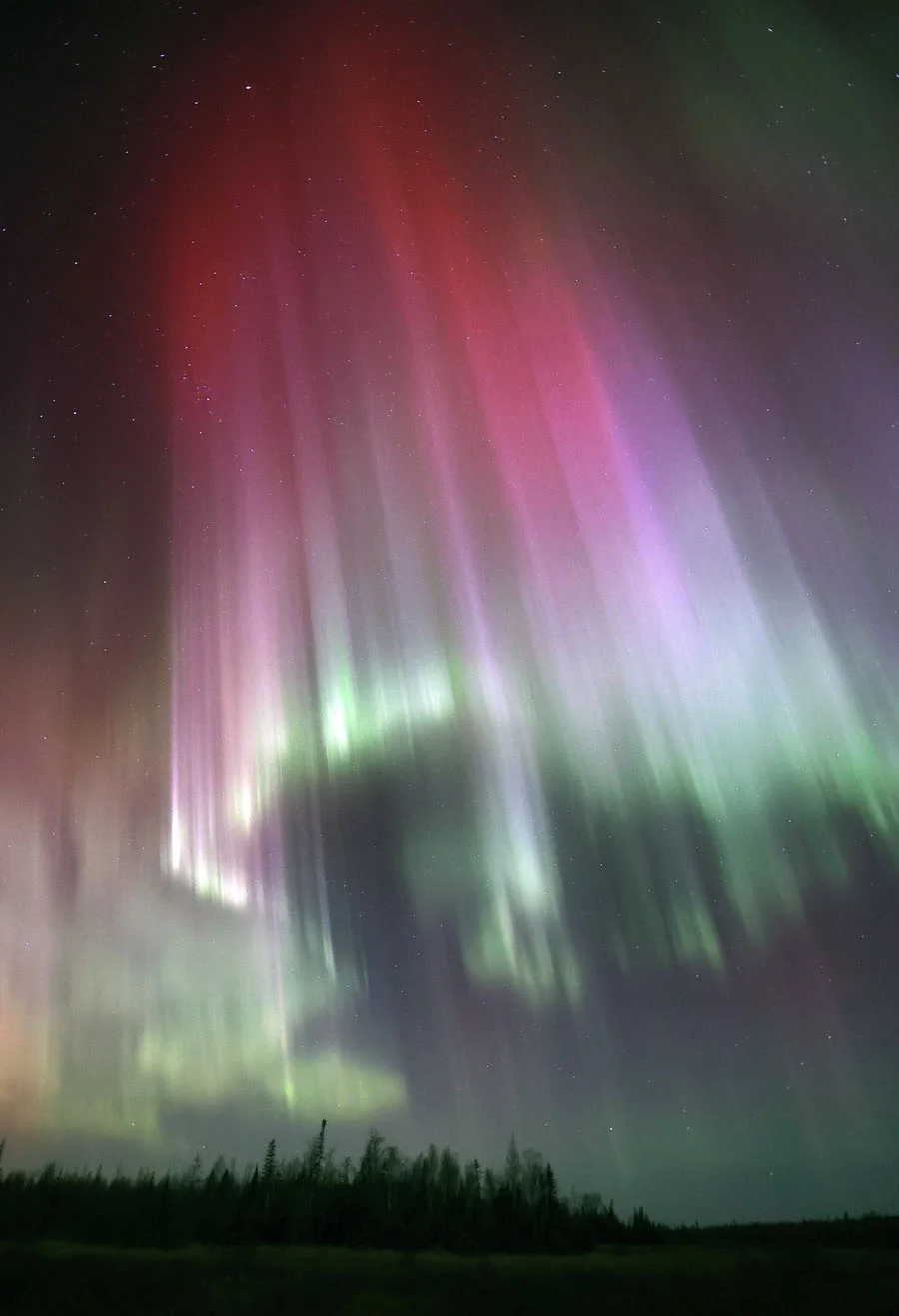
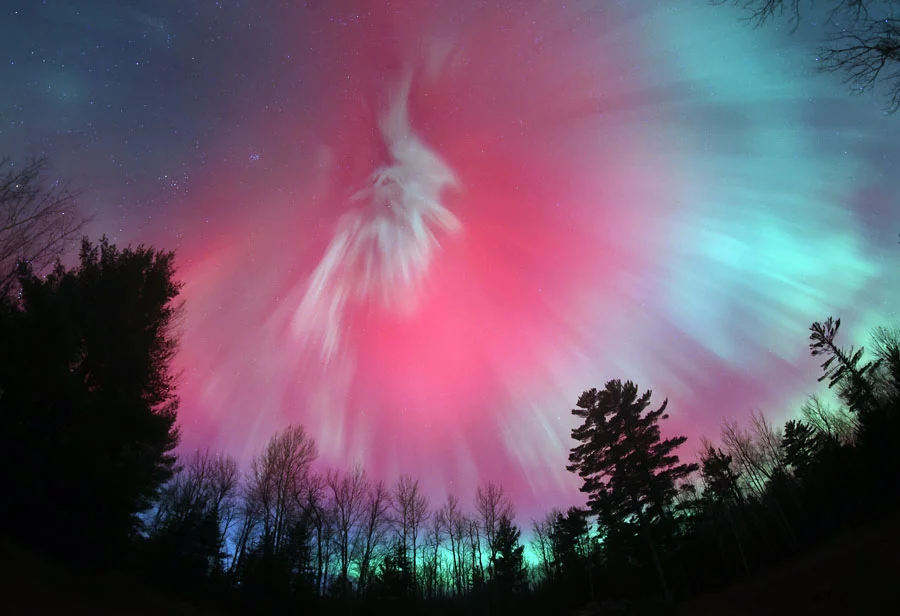
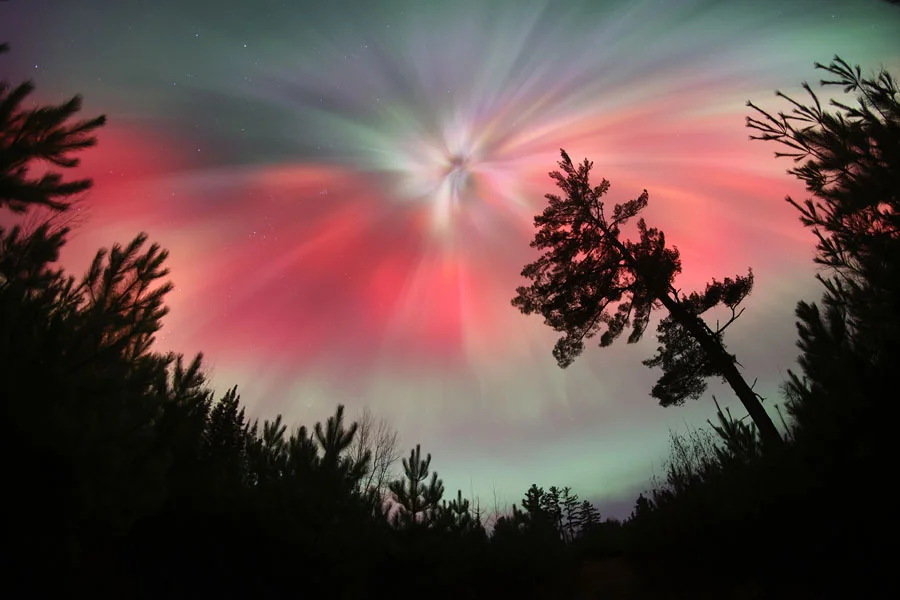
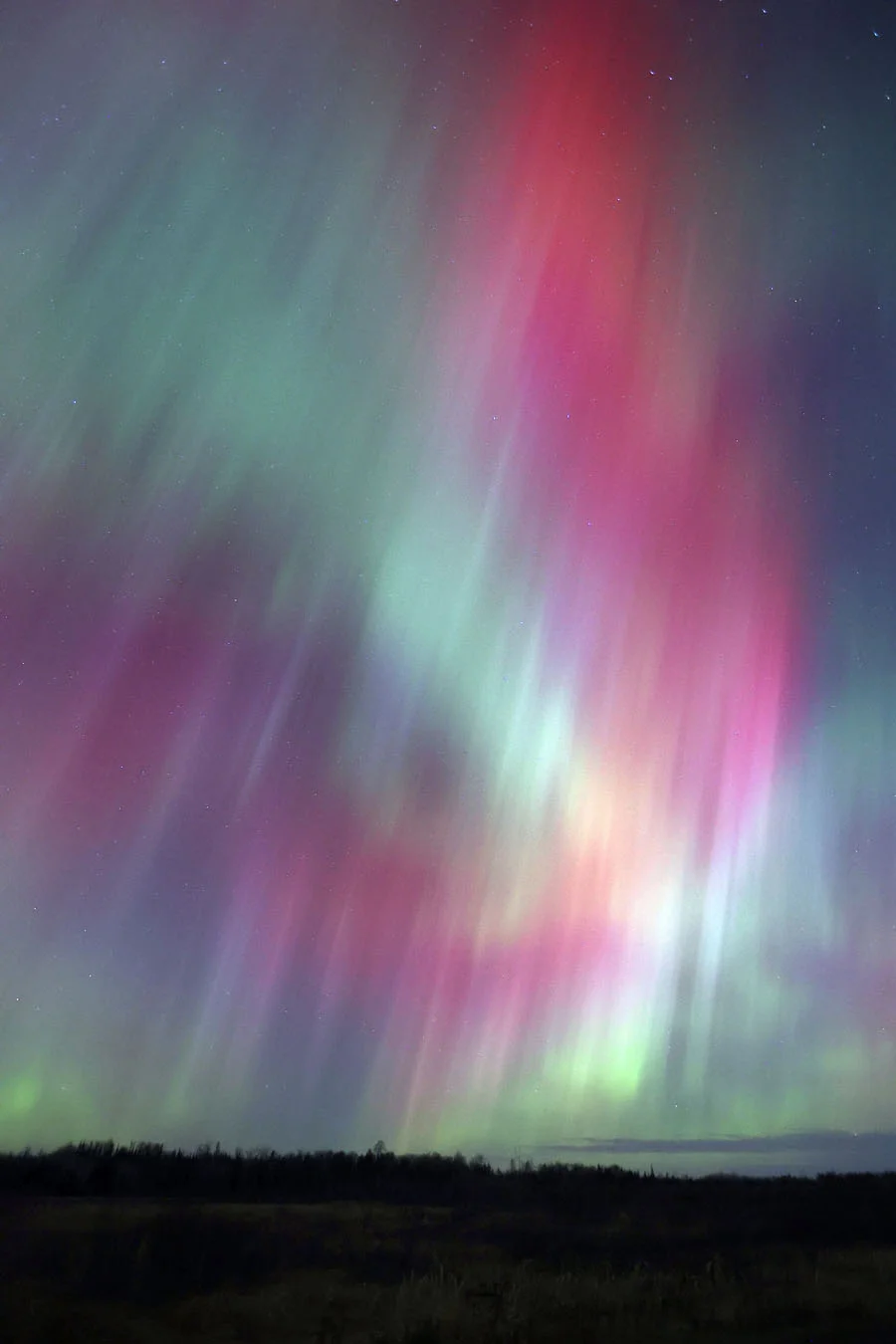
The back-to-back mass of particles administered a one-two punch to Earth's magnetic domain, our planet's magnetosphere. Observers sighted auroras as soon as late evening twilight on November 11th, and I can personally testify they raged all night. I made my last image of a towering red pillar near the last-quarter Moon just before 5 a.m. CST.
Great news for all — a third CME from the same sunspot region is expected to fire up another display nearly as fabulous tonight, November 12th. Space-weather forecasters predict a strong storm rated a G3 to punch things up as soon as 6 p.m. CST. Since the Moon rises around midnight, we'll have hours of darkness to relish the sight. The current three-day forecast calls for a more modest (G1 — minor) show on Thursday night, November 13th. A G1 storm is a northern U.S. event primarily visible in the border states. At the G3 level, aurora visibility expands south to the central U.S., and a G4 storm brings the lights well into the southern part of the country.
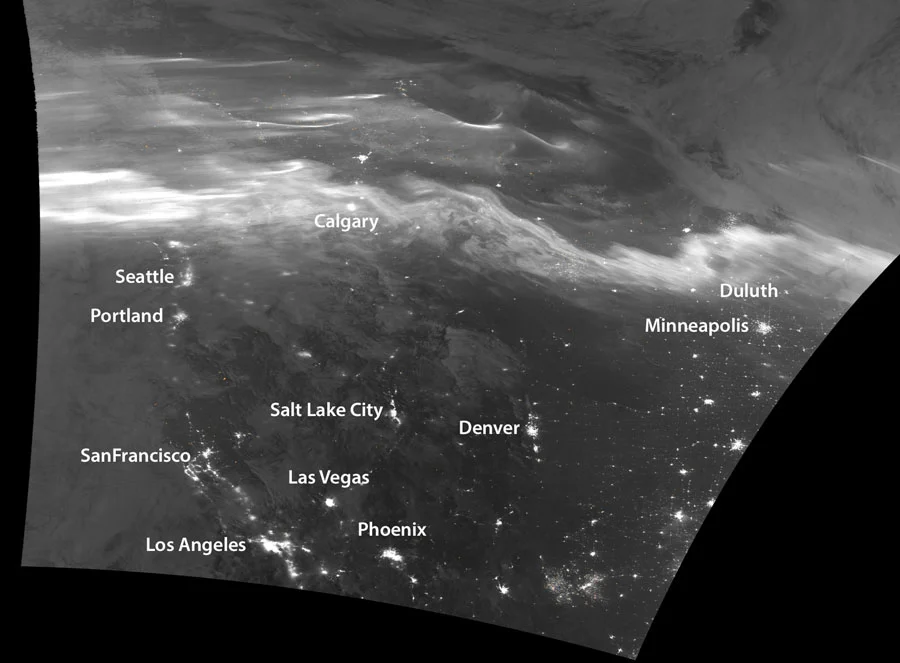
NOAA with annotations by Bob King
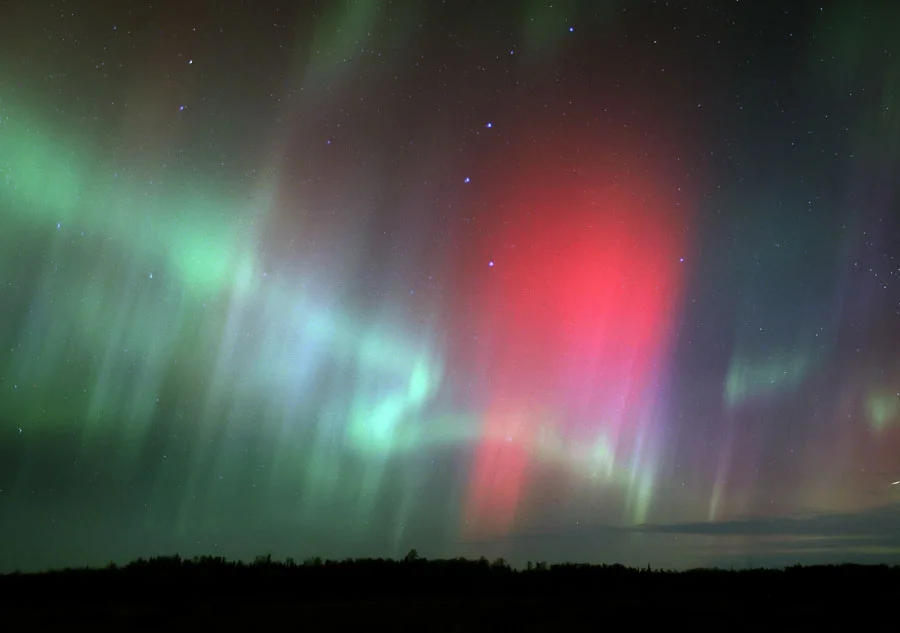
Bob King
You know you're likely to see a good show when the magnetic field that's bundled within a CME points in the southern direction — if you're tracking conditions in an aurora app, that quantity is called Bz and a portent of a good show is a large negative number. Southerly fields more easily couple to Earth's north-pointing magnetic field lines. During a typical storm, the Bz might dip to –20 or -25. Not this tempest. At one point, the Bz crashed to –60, a value I've never seen in my life, and a sign of just how profoundly bound Earth and Sun were at that time.
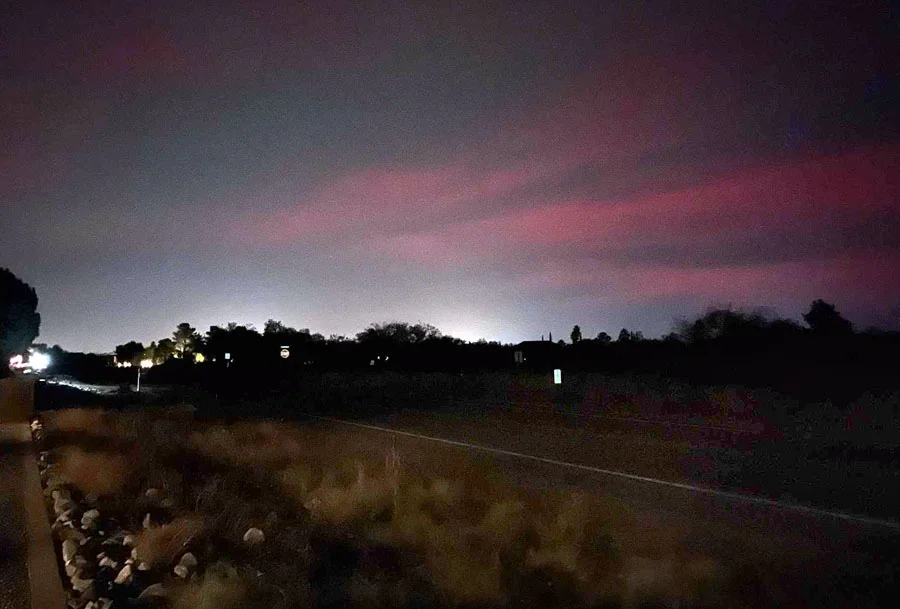
L.A. Boltryk
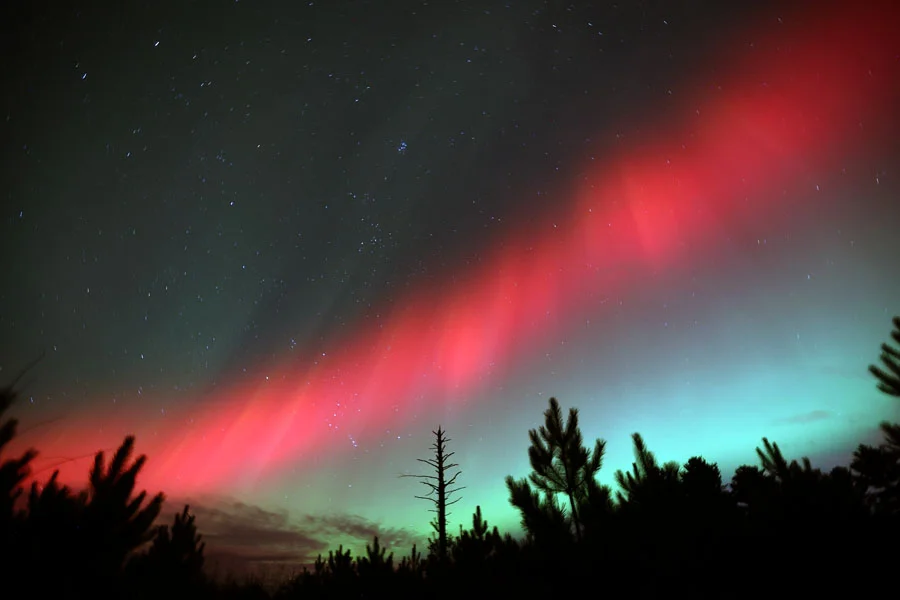
Bob King
The powerful storm wrapped around our planet's night side, and the field lines stretched to the breaking point. When they snapped like a rubber band, trillions of electrons and protons were flung toward Earth, directly into our upper atmosphere. That interaction caused the donut-like rings that encircle the geomagnetic poles, the auroral ovals, to expand equatorward in both hemispheres, bringing the aurora to millions of observers. Oxygen and nitrogen, stung by the impact of trillions of electrons (and protons), produced a riot of colors. Ordinarily, green is the most common hue visible to the eye in the aurora, but this time red was its equal. Many observers remarked, myself included, how vividly red this display was. The photos show this well.
Bob King
Bob King
I hope you saw the wild, savage display of nature last night. If not, you may have another opportunity tonight. For my part, I now have yet another reason to say I'm happy to be alive.
About Bob King
I love the sky (day and night) and have been a skywatcher and amateur astronomer since childhood. I'm also a long-time member of the American Association of Variable Star Observers (AAVSO) and Astronomical League. I pen the Astro Bob blog and have written four books: Night Sky with the Naked Eye (2016); Wonders of the Night Sky You Must See Before You Die (2018) and Urban Legends from Space (2019) and Magnificent Aurora, published in 2024. The universe invites us on an adventure every single night. To accept the invitation, we only need look up.




Comments
You must be logged in to post a comment.