 SUNSET:

 0
0Update (May 12, 2025)
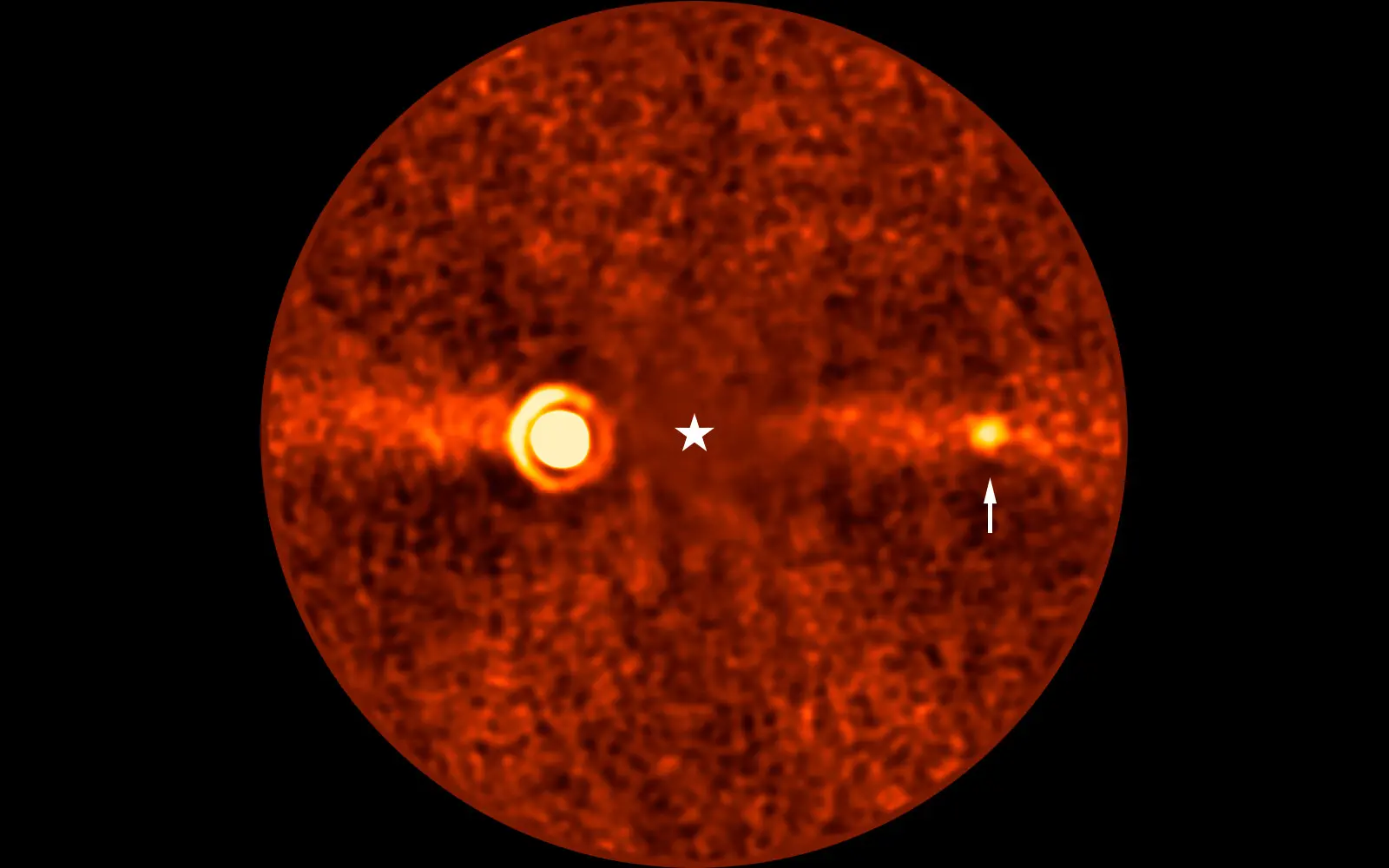
NASA has released the Europa Clipper's infrared view of Mars:
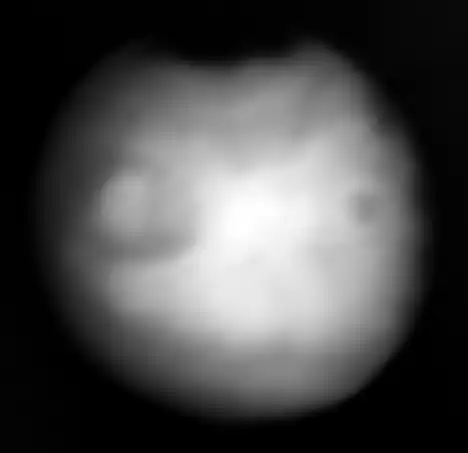
NASA / JPL-Caltech / ASU
For more details, see NASA's press release.

NASA / JPL-Caltech
NASA’s Jupiter-bound Europa Clipper flew past Mars on March 1st, using the planet’s gravity to slow its speed around the Sun. The spacecraft will travel a little beyond Mars’ orbit and then fall back toward the inner planets and reencounter Earth in December 2026. Earth’s gravity will deliver the boost it needs to meet Jupiter and enter orbit on April 11, 2030.
When Europa Clipper launched, navigators deliberately aimed a little away from Mars to avoid any possibility of a launch error turning into a Mars impact. Since then, they’ve performed three deep-space trajectory correction maneuvers to line up for the encounter. Europa Clipper whizzed by Mars at 17:57 UT, only 2 km away from the target height of 884 km. A final maneuver, planned for March 17th, will correct any residual trajectory error.
It hasn’t been long since launch, less than four months, so the engineering and instrument teams are still working through testing and checkouts. Therefore, the flyby couldn’t include very much in the way of opportunistic science. The team did plan two high-priority science activities.
Europa Clipper’s Thermal Emission Imaging System (E-THEMIS) observed Mars from afar, acquiring calibration data. Since THEMIS descends from (and improves on) the THEMIS instrument that has observed Mars from the Mars Odyssey orbiter since 2001, E-THEMIS data from Europa Clipper’s Mars flyby will anchor its measurements to a well-understood space-based data set and give the team confidence about its eventual measurements in the Jupiter system.
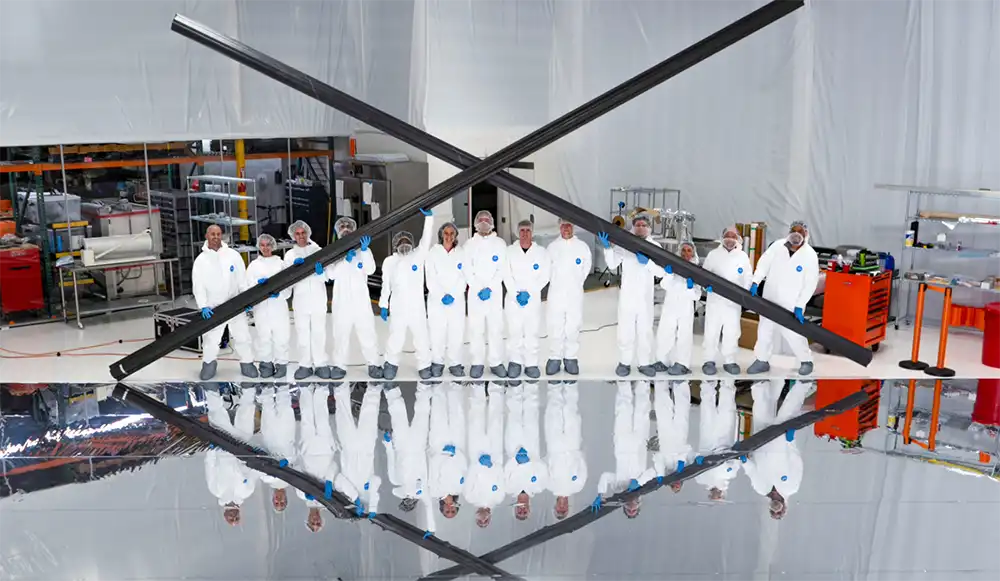
The other instrument tested during the flyby was Radar for Europa Assessment and Sounding: Ocean to Near-surface (REASON). REASON includes six radio antennas mounted to Europa Clipper’s enormous solar arrays. When the spacecraft was being assembled, the solar panels and antennae were so gangly, and its radio wavelengths so long, that it couldn’t be fully tested. The Mars encounter was the first time that all components of REASON were tested simultaneously.
Commands to both the E-THEMIS and REASON instruments were executed as planned and the instruments acquired data, but that data hasn’t yet been transmitted to Earth. “All our telemetry indicated the instruments acquired the data as planned,” says Deputy Project Manager Tim Larson, “and it is stored on board until we have the bandwidth to bring it down to Earth.”
About Emily Lakdawalla
Sky & Telescope contributing editor Emily Lakdawalla is a freelance planetary scientist, space artist, and author of The Design and Engineering of Curiosity: How the Mars Rover Performs Its Job. Find her on Bluesky at elakdawalla.bsky.social and explore her space-inspired, ultra-nerdy art and jewelry on Etsy.



Comments
You must be logged in to post a comment.