 SUNSET:

 0
0Spacecraft orbiting the Red Planet will aim a suite of instruments at Comet 3I/ATLAS to capture details about this enigmatic object.
Update (October 13, 2025): The European Space Agency's ExoMars Trace Gas Orbiter caught Comet 3I/ATLAS as it flew by Mars, capturing the color image below. The Mars Express orbiter also snapped pictures using its High Resolution Stereo Camera (HRSC), but the comet was too faint to be picked up in the camera's 0.5-second exposure time. Spectrometers onboard both spacecraft also attempted to collect data, which is still being analyzed.

ESA / TGO / CaSSIS
Read more in ESA's press release.
The third-known object to have entered our solar system from deep space, the interstellar comet 3I/ATLAS, will never come closer than 270 million kilometers to Earth. And its closest pass to the Sun, when interesting things might happen, comes at a time when it will be hidden behind the sun as seen from Earth.
But on October 3rd, Comet 3I/ATLAS will come about eight times closer than that to Mars. At 30 million km away from the Red Planet, it will come within view of more than a half-dozen cameras and spectrometers on several orbiters, potentially providing us with some of the best views we can hope for of this enigmatic object.
European and NASA Orbiters Await the Comet
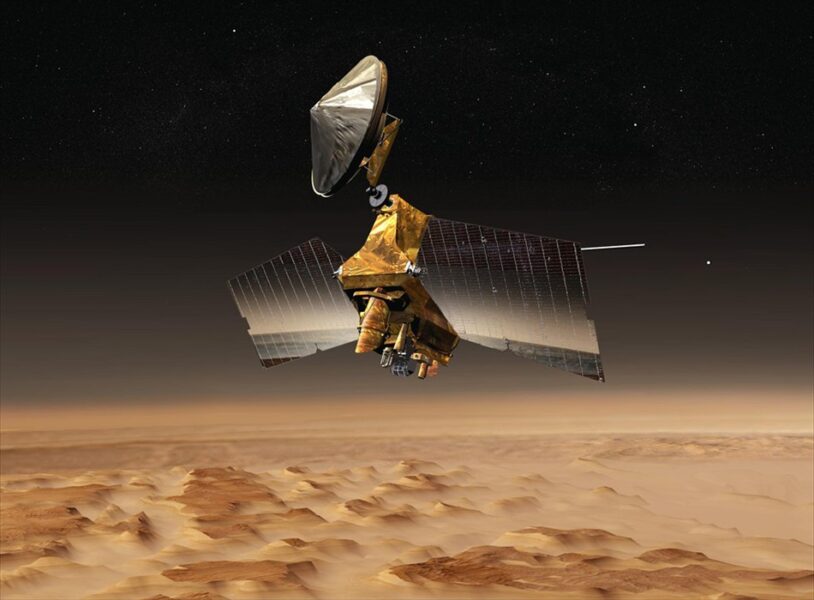
NASA / JPL-Caltech
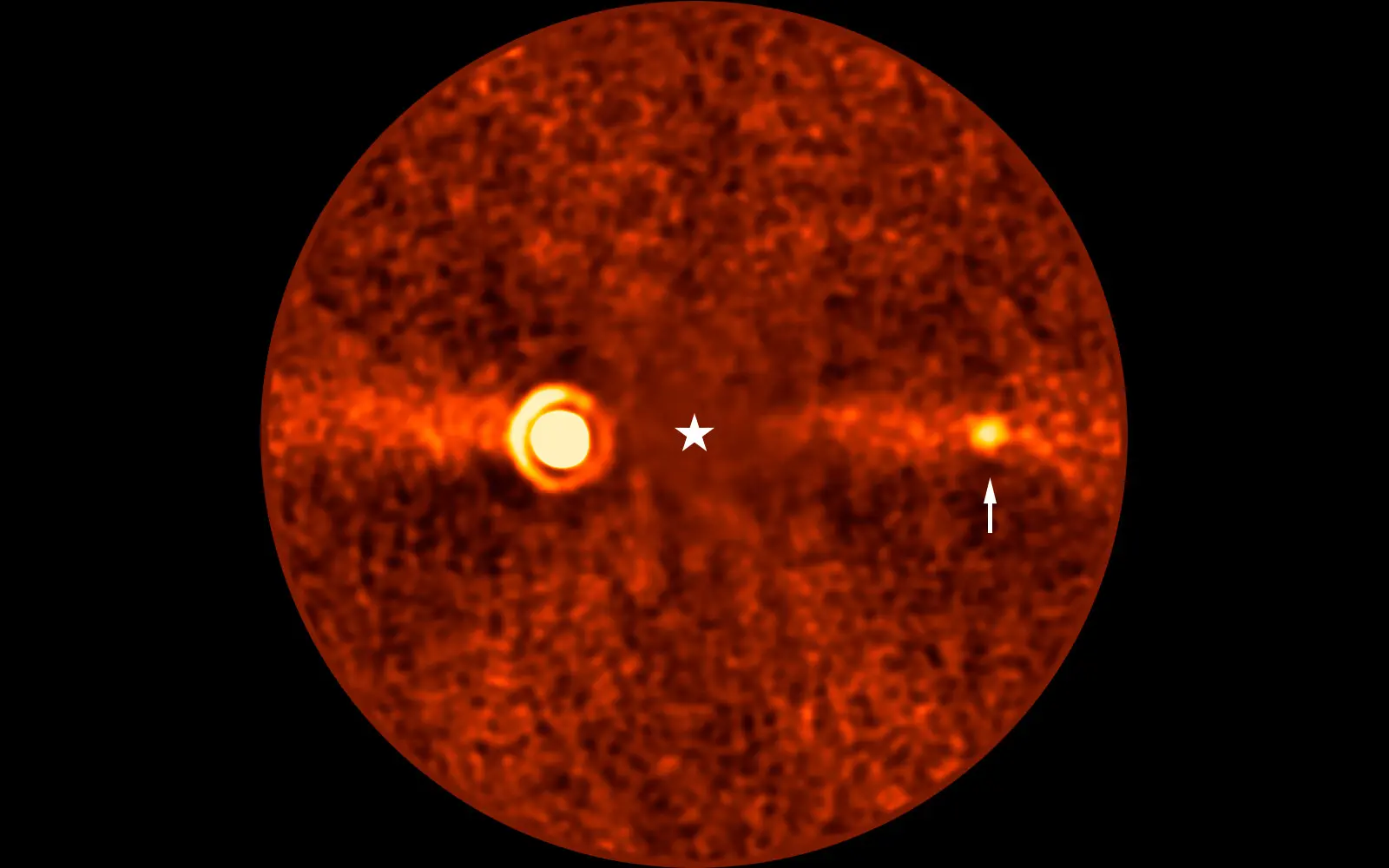
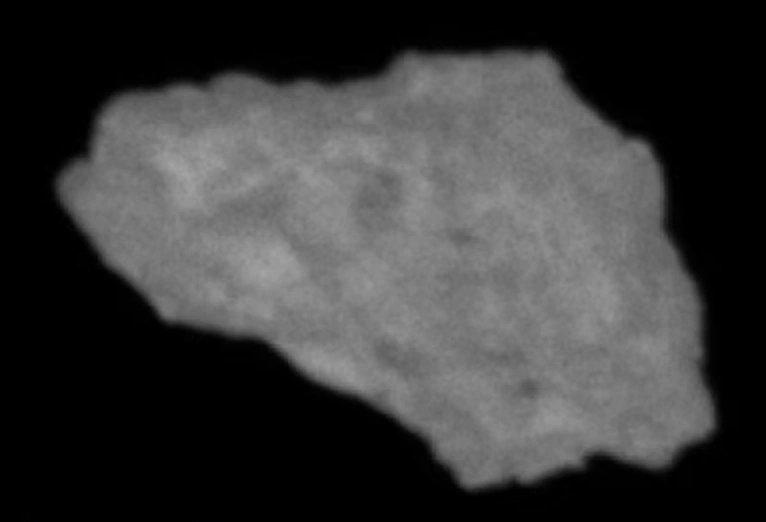
“We are going to try to get images,” confirms Colin Wilson, the European Space Agency (ESA) project scientist for both the Mars Express and ExoMars Trace Gas orbiters. Although the resolution of the two spacecraft’s cameras has no chance of resolving the nucleus, there’s hope for resolving the coma of gases and dust surrounding the central object. That coma may extend a few tens of thousand kilometers across, Wilson says, adding, “We would hope to get maybe several tens of pixels across that.”
Mars Express, Wilson says, will be using the Super Resolution Channel on its High-Resolution Stereo Camera, which is monochromatic. With ExoMars, they will be using the Color and Stereo Surface Imaging System (CASSIS) telescope, which has a 13.5-centimeter primary mirror and four CCDs with different color filters. Both spacecraft carry spectrometers that take in from near-infrared to ultraviolet light. But Wilson cautions, “We don’t know if we’ll get enough signal.”
“So, we are hoping for at least some imagery, and then if we get any spectra, that would be a bonus,” he says. “We are not promising anything other than a monochromatic image.”
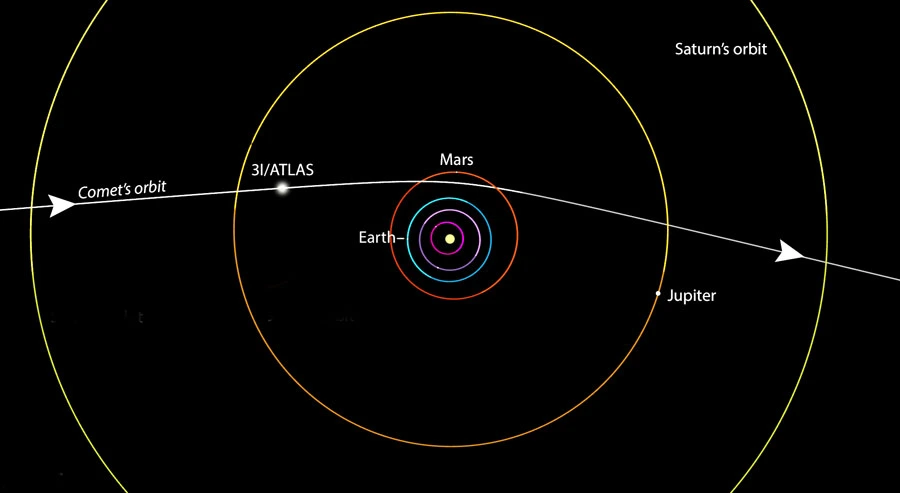
JPL HORIZONS with additions by Bob King
Meanwhile, NASA’s Mars Reconnaissance Orbiter (MRO) will also be taking images, with observations already planned and proceeding despite the U.S. federal government shutdown. The team will use MRO’s High Resolution Imaging Experiment (HIRISE) camera, which has a half-meter mirror and 14 sensors that cover from visible into near-infrared wavelengths.
The former principal investigator of the HIRISE camera, Alfred McEwen (University of Arizona), tells Sky & Telescope that his team has to plan carefully on how to take these images. The comet’s brightness isn’t exactly known; if it’s faint and they use too short of an exposure time, they won’t pick it up. But if it’s bright, they run the risk of an overexposed image. To hedge their bets, the team is planning for two different exposure times across four images.
Because of its large mirror and its proximity to the comet, Marshall Eubanks (Space Initiatives) says, “I think MRO is going to be competitive with anything we do from Earth.” Eubanks adds that the comet appears to be passing through a twisted part of the Sun’s magnetic field, which extends all the way out to the Red Planet. That field might create ripples in the comet’s tail, which MRO might detect.
Operation: Comet Takeover
Unlike the operation of Mars rovers, whose explorations are planned on a daily basis because of ever-changing surface conditions, planning for the European orbiters is normally carried out at least three months in advance. As it happens, the planning October options ocurred in July — just when 3I/ATLAS was discovered.
“There was a very rapid turnaround to ask the teams if they would be able to observe it,” Wilson says. “We had a draft plan already, and then we moved a few things around so that we could prioritize these observations.”
Most of the time, the orbiters’ instruments are facing down, toward the planet’s surface. Yet the spacecraft are versatile. “They’re used to pointing at things which are not just Mars,” Wilson adds. Typical targets include the two Martian moons, Phobos and Deimos.

NASA / ESA / CSA / M. Cordiner (NASA-GSFC) / CC BY 4.0 INT
As for NASA observations, current HIRISE principal investigator Shane Byrne (University of Arizona) tells Sky & Telescope that “it’s been a team-wide effort” to make the adjustments needed to obtain these images. Challenges arose because the HIRISE camera can’t be pointed independently; instead, the whole spacecraft has to slew to the right orientation, and at the right rate to compensate for the spacecraft’s motion around the planet.
ESA plans to release imagery by next week. NASA will not be able to release any of its data, or even comment on it, until the U.S. federal government ends the shutdown. Stay tuned — we’ll update this post with that imagery as it becomes available.
More Than Mars
The comet has continued to brighten faster than originally predicted, currently at magnitude 12. However, it’s currently out of Earth’s view, hidden in the Sun’s glare. We won’t see the comet reappear until early November
Mars orbiters are not the only spacecraft with a chance for closer views of Comet 3I/ATLAS. The Jupiter Icy Moons Explorer (JUICE), also an ESA spacecraft, will be positioned to observe the comet during its closest approach to the Sun. Perihelion occurs October 30th, and JUICE is set to begin its observations on November 2nd, continuing until November 25th — a period during which it might be at its most active, having just experienced maximum solar heating.





Comments
You must be logged in to post a comment.