 SUNSET:

 0
0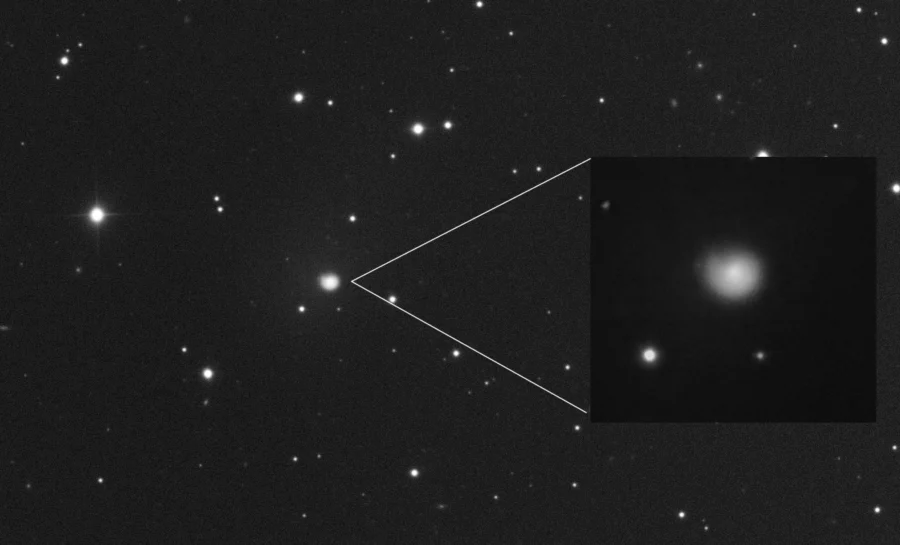
Eliot Herman
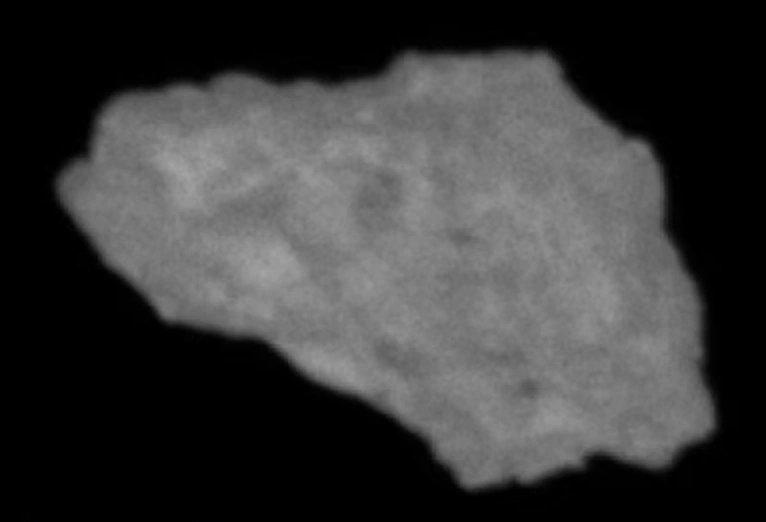
Want to see something crazy amazing? Late on February 9th, Comet 29P/Schwassmann-Wachmann underwent another of its famous cryovolcanic explosions, causing its brightness to jump magnitudes from approximately 13.5 to 11.5. In a matter of hours, the comet's visual appearance morphed from a faint, diffuse object on the edge of visibility to a tiny, dense cotton ball less than 15″ across. It's now within reach of 8- to 10-inch telescopes.
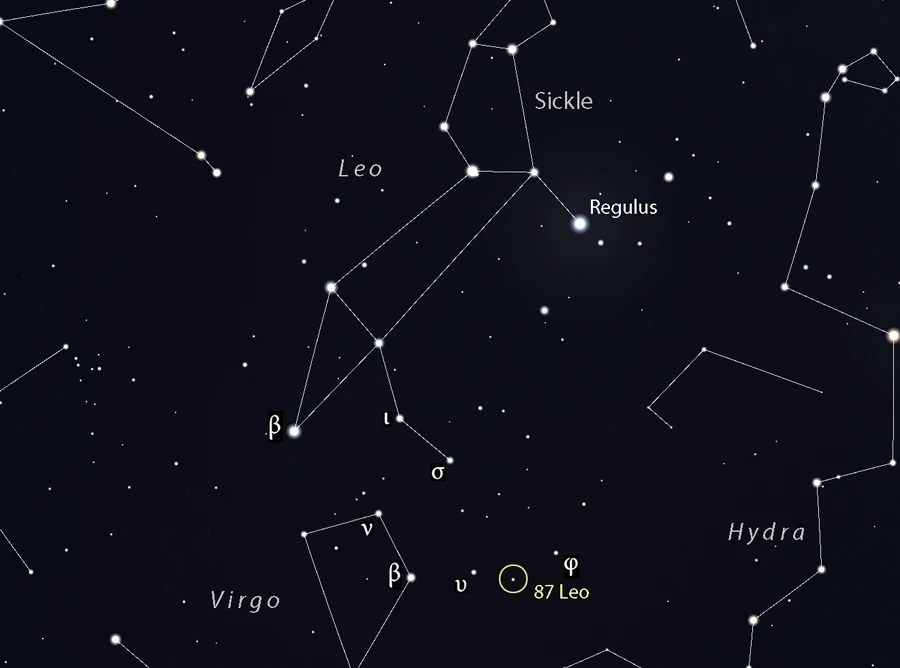
Stellarium with additions by Bob King
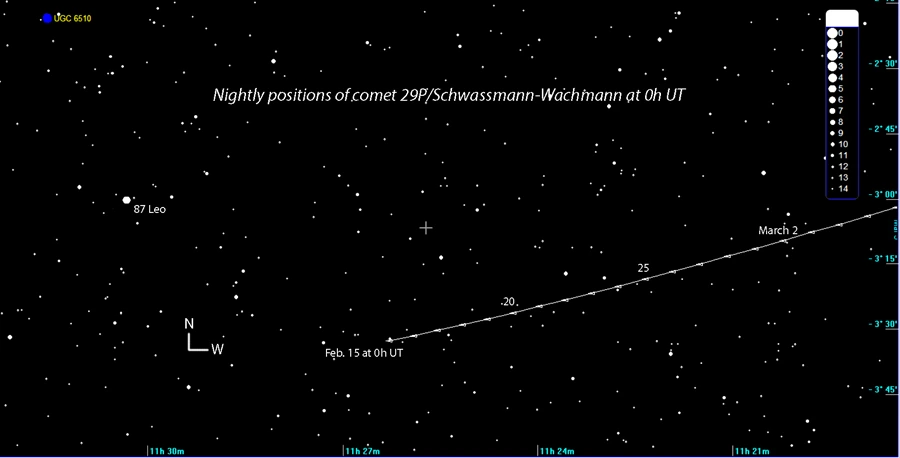
MegaStar, courtesy of Emil Bonanno
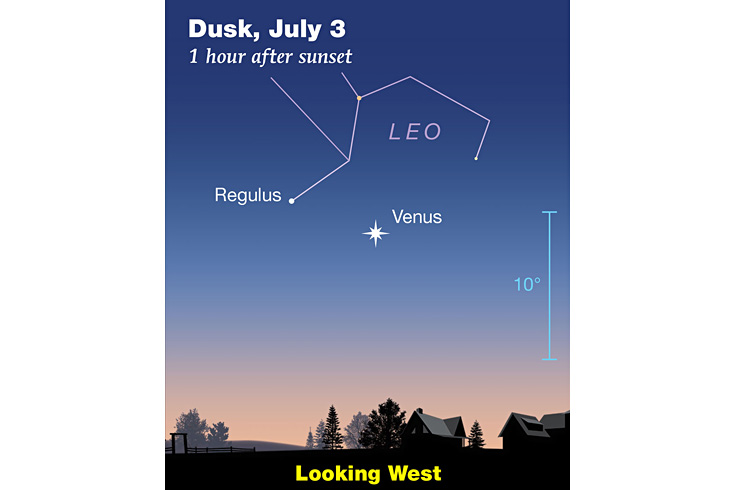
I had my first look at the changeling through a 15-inch Dob on lucky February 13th. By then the coma had expanded to about 45″ with an overall magnitude of 11.4. The comet's core looked dense and impenetrable, and I glimpsed a very faint, stellar pseudo-nucleus with averted vision and a magnification of 245×. Over the next few nights, 29P will continue to expand and slowly fade, so try to catch it at the earliest opportunity. Located in southern Leo and moving westward, it climbs to around 20° altitude by 10 to 10:30 p.m. local time.
Cometary outbursts aren't unusual. They typically occur as a comet approaches the Sun during each orbit. Increased solar heating penetrates the crust, heating and vaporizing buried volatile ices such as carbon monoxide and carbon dioxide. When sufficient pressure builds, the gases explosively break through the overlying crust and send fresh cometary material into space. Sunlight illuminates the debris, and we see a sudden change in brightness.
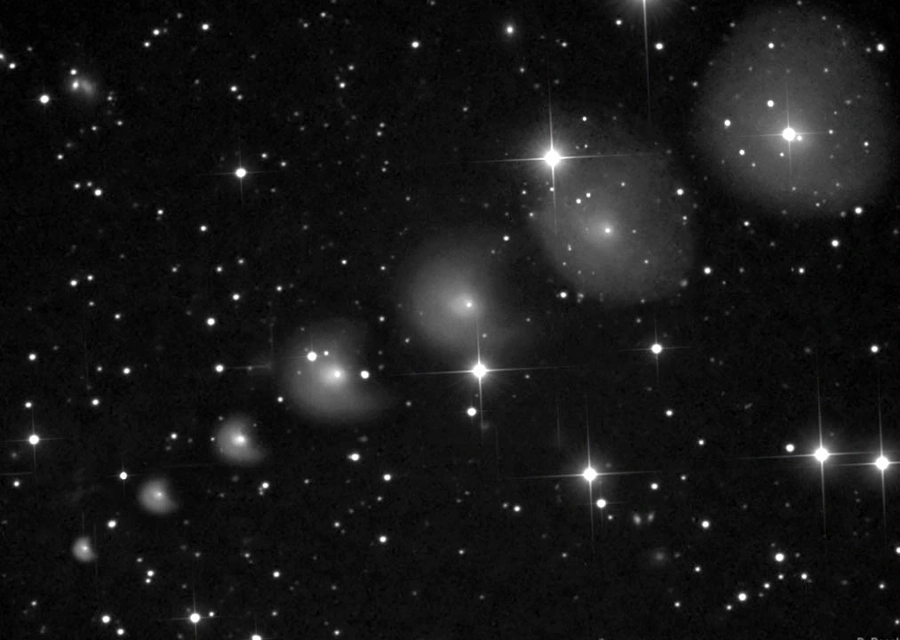
Damian Peach
Comet 29P is exceptional in that it's remote, with an average distance from the Sun of 6 astronomical units (farther out than Jupiter's orbit), yet it's in a state of continuous eruption, with dozens of outbursts every year. Many of these ruptures cause minor upticks in its light. But a major eruption like the present one can make the comet brighten by 5 magnitudes or more. These less frequent blasts occur several times a year, sometimes in rapid succession. Richard Miles, director of the Asteroids & Remote Planets section of the British Astronomical Association (BAA), encourages observers to keep watch on 29P — especially now, since additional outbursts often occur soon after a large one.
Miles has spent years studying the comet's eruptions and theorizes that liquid methane, ethane, and propane (among others), mix with dissolved carbon dioxide inside the comet to create a fizzy mix that seeks escape. He has identified as many as a half-dozen cryovolcanic sites or vents where the material explosively finds release. It appears the comet's activity correlates with its approximately 57-day rotation period. Vents open after multiple days of baking in the Sun, then re-seal during the lengthy, cold nights.
When erupting, ice and dust can blast into space up at speeds up to 0.9 kilometers per second, or 2,000 miles per hour. The process is so dynamic you'll see the comet's size and appearance change nightly. I've observed dozens of 29P/S-W's outbursts over the years. All are must-see events from the most prodigiously volcanic comet in the solar system.
About Bob King
I love the sky (day and night) and have been a skywatcher and amateur astronomer since childhood. I'm also a long-time member of the American Association of Variable Star Observers (AAVSO) and Astronomical League. I pen the Astro Bob blog and have written four books: Night Sky with the Naked Eye (2016); Wonders of the Night Sky You Must See Before You Die (2018) and Urban Legends from Space (2019) and Magnificent Aurora, published in 2024. The universe invites us on an adventure every single night. To accept the invitation, we only need look up.



Comments
You must be logged in to post a comment.