 SUNSET:

 0
0With a retiring crescent Moon in the mix, prospects for the year’s richest meteor shower are excellent.

Bob King
Drum roll, please. On the night of December 13–14, the annual Geminid meteor shower will reach a crescendo and spangle the sky with shards of the asteroid 3200 Phaethon. Weather permitting, of course! Last year, the nearly full Moon shone all night and erased much of the shower's grandeur. This time around the Moon will be a 26%-illuminated crescent rising alongside Virgo's brightest star Spica around 2:30 a.m. local time. That's close to ideal.
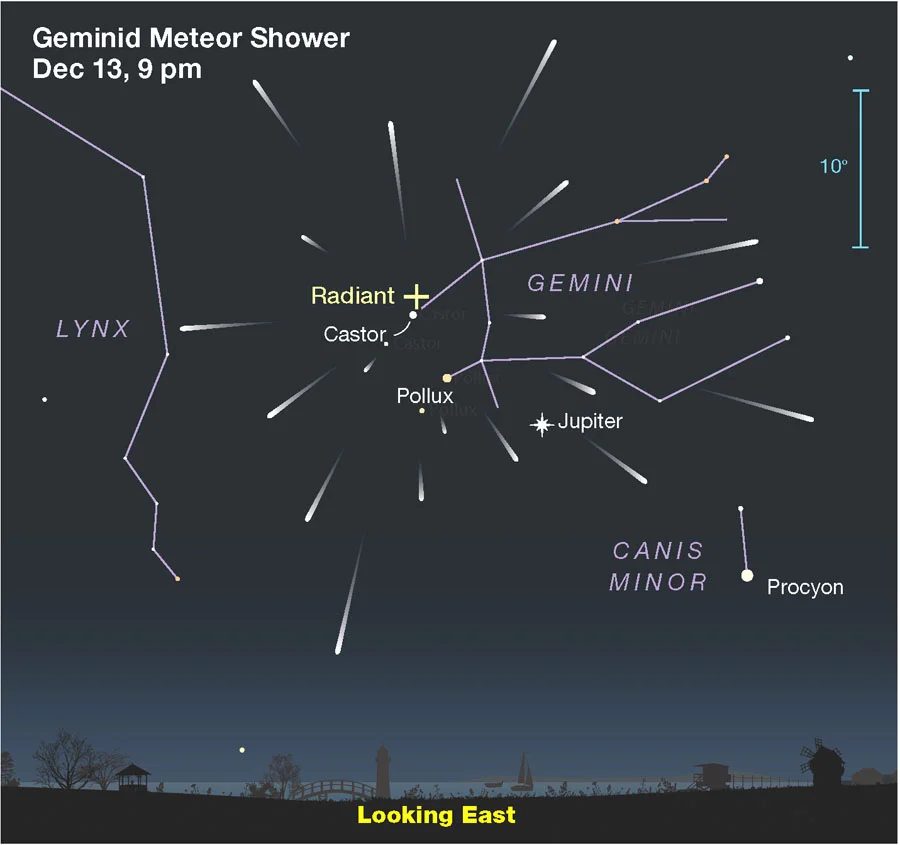
Lunar light-spill should have only a minor effect on the meteors' frequency, which is expected to reach around 150 per hour under ideal circumstances. If you still find what moonlight remains distracting, face north or west to observe the shower. Geminids will appear to stream from a single point in the sky, called the radiant, near the star Castor in Gemini, and dart in every direction so you can't go wrong.
NELIOTA Project
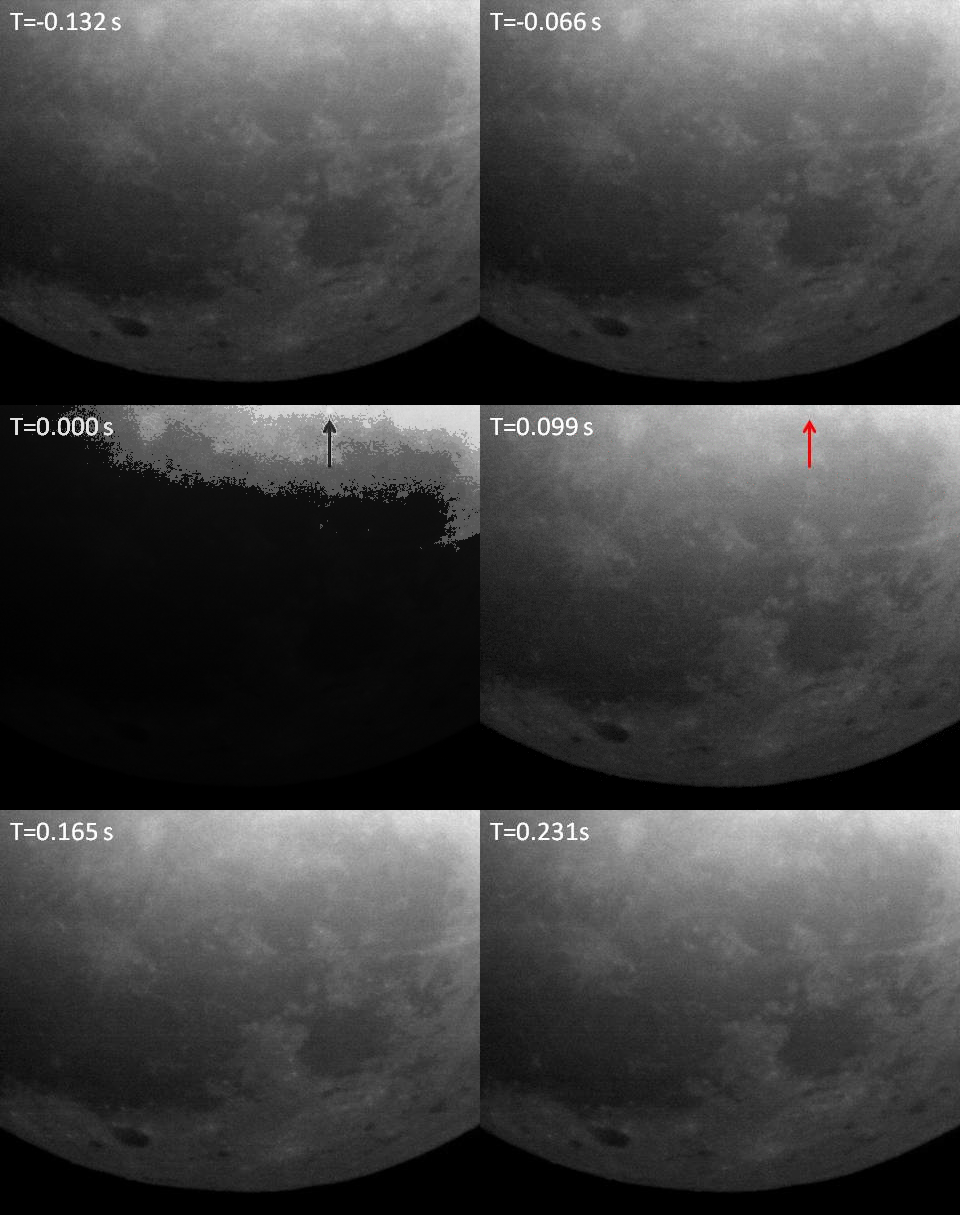
I shouldn't diss the Moon too much because a new initiative hopes to use our natural satellite as a Geminid detector. The Lunar Impact Flashes (LIF) campaign, organized through the Citizen Science Working Group of European Space Agency's planned LUMIO mission, is looking for volunteers to capture video of potential meteor impacts on the Moon's night hemisphere during the Geminid shower. As on Earth, the number of meteoroids striking our satellite rises during the shower's peak. Check the link and this instructional Zoom presentation for more information on how to participate.
Sky & Telescope diagram
Asteroid for a parent
The Geminids are not only consistent, but the shower has also gradually intensified since it was first recognized in the mid-1800s. Back then, the rates were closer to 10–20 meteors per hour. When I first came to know the stars in the early 1960s, the shower was on par with the Perseids, which it has now surpassed. As gravitational perturbations from Jupiter and the other planets gradually nudge the densest part of the stream closer to Earth, numbers should continue to rise until about the year 2200 before declining.
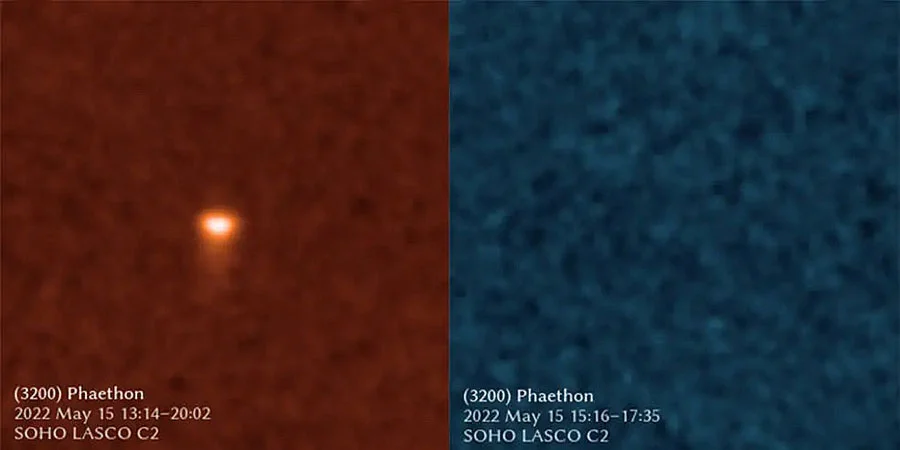
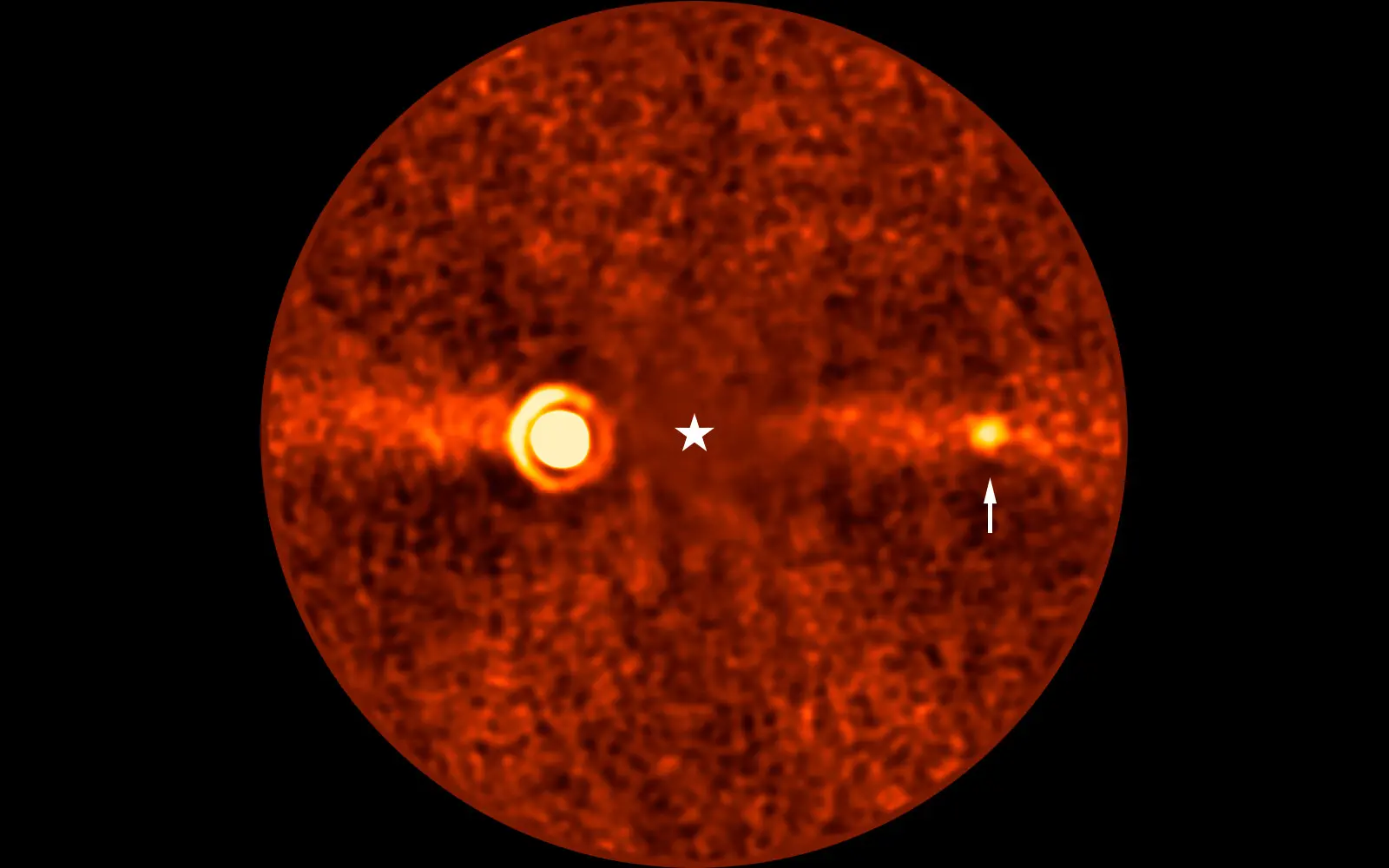
The shower originates from debris shed by asteroid 3200 Phaethon, an orbiting island 5.8 km (3.6 miles) wide that passes a mere 21 million km (13 million miles) from the Sun at perihelion. The tremendous heat bakes the asteroid's surface to around 750°C (1390°F), hot enough to vaporize sodium from the rocks and produce a tail of excited sodium gas, not dust as originally thought.
ESA / NASA/ Qicheng Zhang
So whence the Geminids? While we don't know for certain, most experts suspect a disruptive event occurred some 2,000 years ago — either an impact or material flung off the asteroid by its rapid rotation. Phaethon whips around once every 3.6 hours. And it's accelerating! Every year, its period decreases by 4 milliseconds due to thermal torque produced by intense solar heating, also known as the YORP effect.
Best time to watch
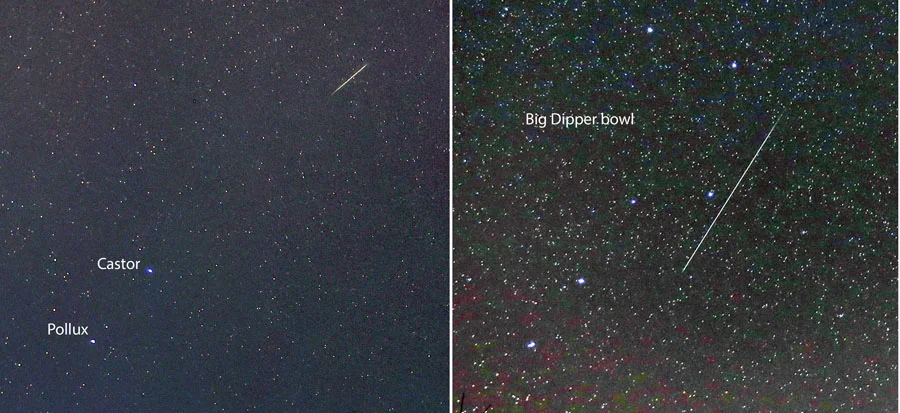
The shower's peak is forecast for 8:00 UT (3 a.m. EST) on December 14th, which makes the pre-dawn hours of the 14th ideal for seeing the highest meteor rates. That coincides nicely with when the radiant stands highest in the sky, from 1 a.m. to 3 a.m. local time. But if you're concerned about sleep, Gemini is high enough in the eastern sky to see meteors as early as 9 p.m. the evening before. This makes it much more accessible for kids and families, one of the shower's big pluses. In addition, it happens on a weekend. And because the Geminids hover near maximum for 10–12 hours, you have a degree of freedom in picking the time that works best for you.
Bob King
Like surprises?
I split my time, watching from 9–10 p.m. to get a taste. Then I set the alarm for 2 a.m. and bliss out staring skyward till I've had my fill. Some people use a hand counter to tally their meteor sightings; others count in their heads. My personal record is a meteor a minute back in 2023, under a Bortle 4 (brighter rural) sky. Geminids etch the heavens moving at 35 km per second (78,000 mph) — a little slower than the Perseids but faster than the Lyrids. They're also rich in fireballs, so you'll find yourself letting out an occasional involuntary whoop! Surprises are the best thing about watching meteor showers.
Dress warmly and relax under a big blanket on a comfy lounge chair facing the direction with the least amount of light pollution. In other words, make the best of the dark sky you have to see the maximum number of meteors possible. The main thing is to be warm and comfortable to keep the night's chill from wriggling up your spine. If possible, spend an hour with the Geminids. That'll guarantee a nice mix of bright and fainter meteors.
Twilight delight
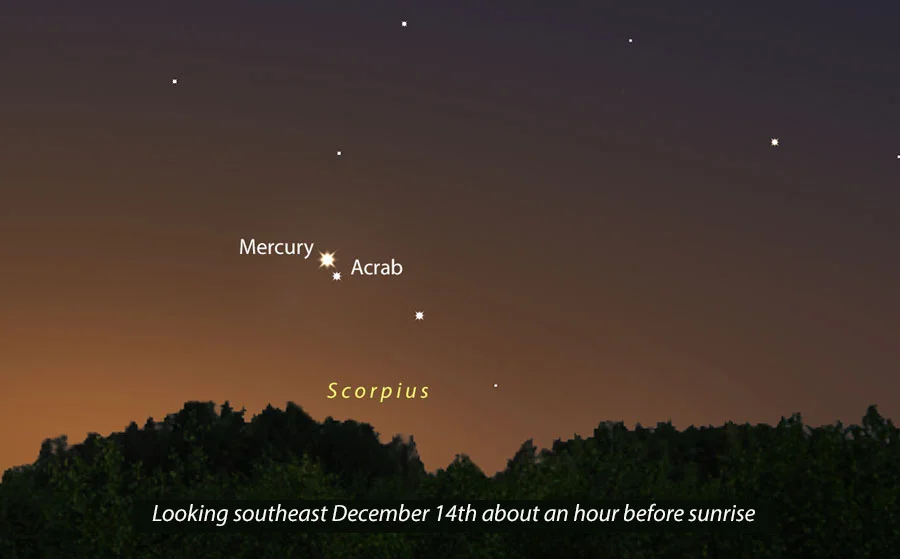
If you plan to watch the shower into dawn, don't pass up the chance to see Mercury in conjunction with Beta (β) Scorpii, a.k.a. Acrab, one of the finest, small-scope double stars. The magnitude –0.5 planet will gleam a little more than ½° north of Beta Scorpii an hour or so before sunrise — a taste of summer just as winter is getting underway!
Stellarium
About Bob King
I love the sky (day and night) and have been a skywatcher and amateur astronomer since childhood. I'm also a long-time member of the American Association of Variable Star Observers (AAVSO) and Astronomical League. I pen the Astro Bob blog and have written four books: Night Sky with the Naked Eye (2016); Wonders of the Night Sky You Must See Before You Die (2018) and Urban Legends from Space (2019) and Magnificent Aurora, published in 2024. The universe invites us on an adventure every single night. To accept the invitation, we only need look up.


Comments
You must be logged in to post a comment.