 SUNSET:

 17
17The latest smartscope astrophotography craze opens the door to some incredible opportunities for both beginners and seasoned observers.

Bob King
I've been a dedicated visual observer since I was 11 years old. I relish observing the night sky with the naked eye or through a telescope. Photons racing across millions of light-years that find a home in the biology of my eye, brain, and consciousness make me feel that I'm physically interacting with the greater cosmos. The thrill of this is difficult to describe. But I keep trying.
Alongside visual observation I've also been involved in astrophotography from the start. By age 12 I was already looking for a camera capable of doing time exposures — my first camera from Walgreen's wasn't up to the task. Since that time, photography has been an integral part of exploring the night. I enjoy including local landscapes when imaging conjunctions, naked-eye comets, aurora, eclipses, and meteor showers.

Bob King
During and since the pandemic, the members of our two regional astronomy clubs, the Arrowhead Astronomical Society and Chippewa Valley Astronomical Society, have met weekly on Zoom to share images and stories. Last year, one of the members brought up smart telescopes and the potential they could have to revolutionize amateur astronomy. It seemed everyone was buying one and posting amazing images on social-media sites. A smart telescope has a built-in camera that stacks successive short exposures of a selected target until it builds up a detailed image. The user operates it with a smartphone and photos are stored in the phone's photo library. No knowledge of the sky is required, and a beginner can be off and running in minutes.

Bob King
My first reaction was mild despair. It seemed that more and more newcomers to the hobby were skipping the get-to-know-the-sky part in favor of flashy images taken with automated telescopes. At the same moment I realized this knee-jerk reaction was short-sighted. Proliferating light pollution along with the inherent challenges novices face finding astronomical objects have made visual astronomy increasingly difficult in recent years. Automated, budget-astrophotography offers yet another path to the stars, and the more choices there are, the more likely an individual will find something that fits.

Bob King
Plus, let's be honest, most of us are buried in our phones. An astronomical activity that includes the device is likely to garner more interest than more traditional methods. Smart telescopes make surprisingly clear and deep images for their small apertures, and with the right software anyone can capture and display professional-looking photographs for personal enjoyment or sharing on social media. To see what all the excitement was about I dropped $499 on a Seestar S50 last winter. I also justified the expense as a quick and easy way to record my favorite transient phenomena such as supernovae and comets.

Bob King
After some initial focusing and pointing issues I've had lots of great runs this spring and early summer photographing transients and, just for fun, a sprinkling of galaxies, nebulae, and star clusters. "Blown away" exactly describes how I felt watching the photos coalesce on my smartphone screen in near-real time. It took me back to my old darkroom days of watching an image magically appear on a blank sheet of photo paper. In no time at all galaxies grow arms, comets shoot out tails, and faint nebulae reveal delicate hints of color. The experience is both magical and seductive.

Bob King
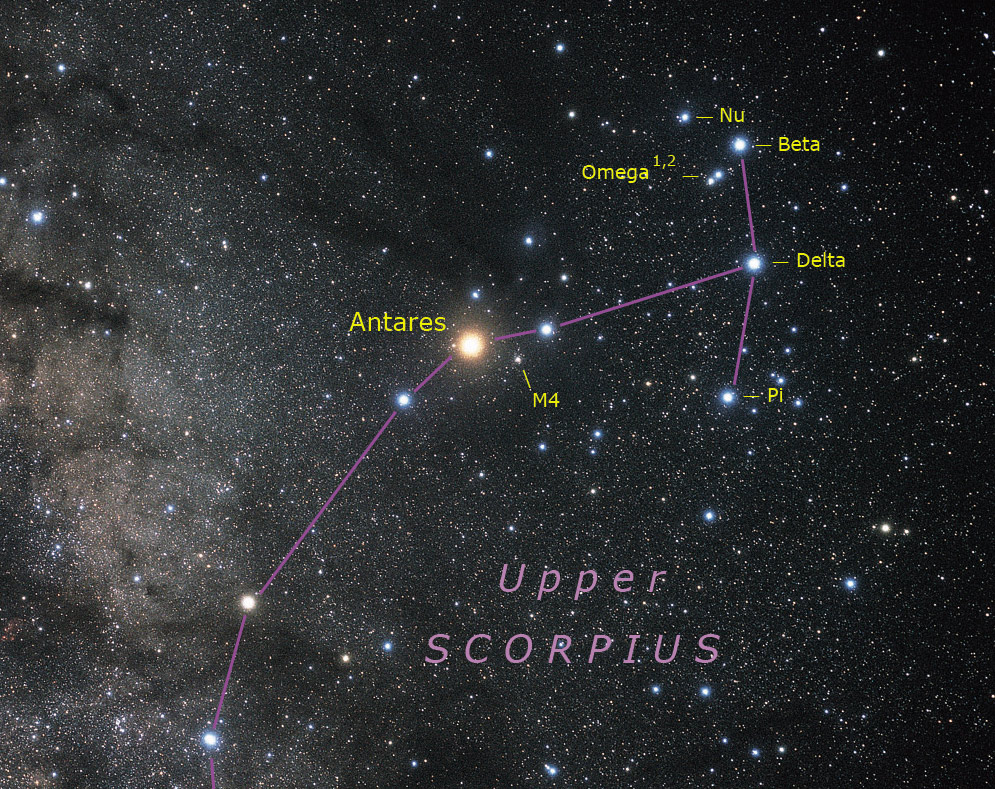
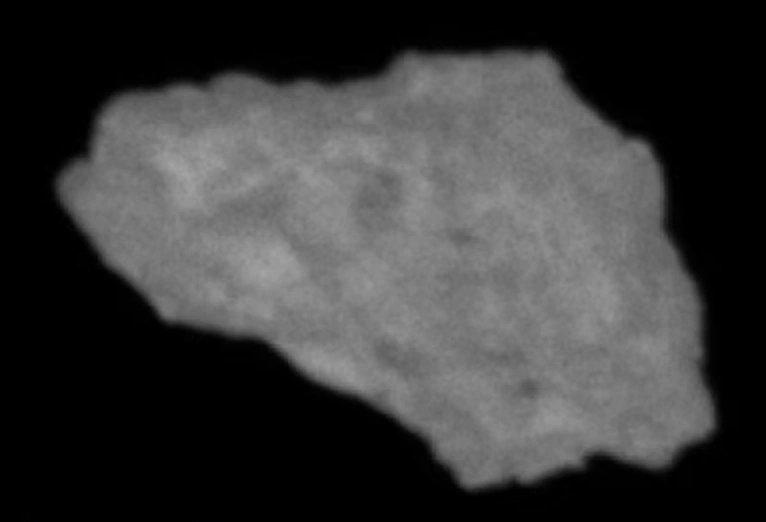
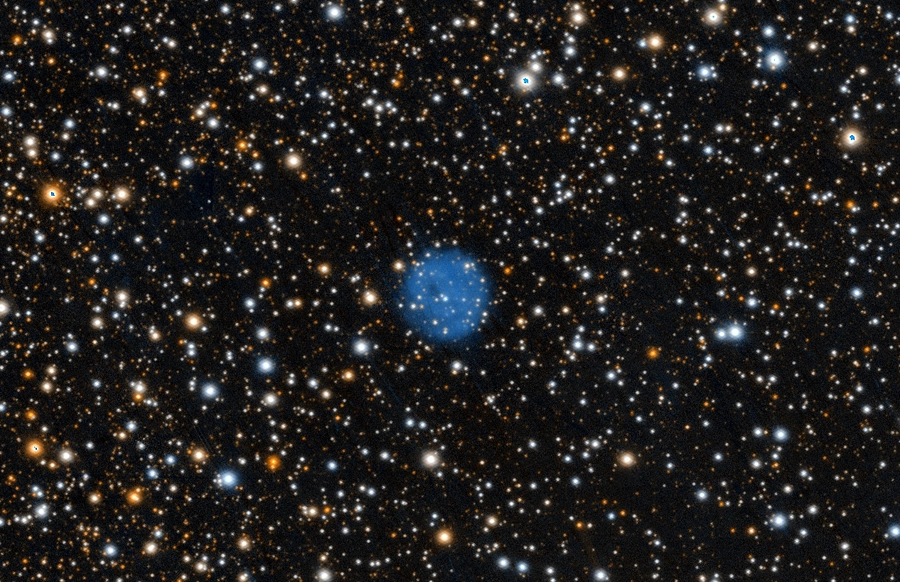
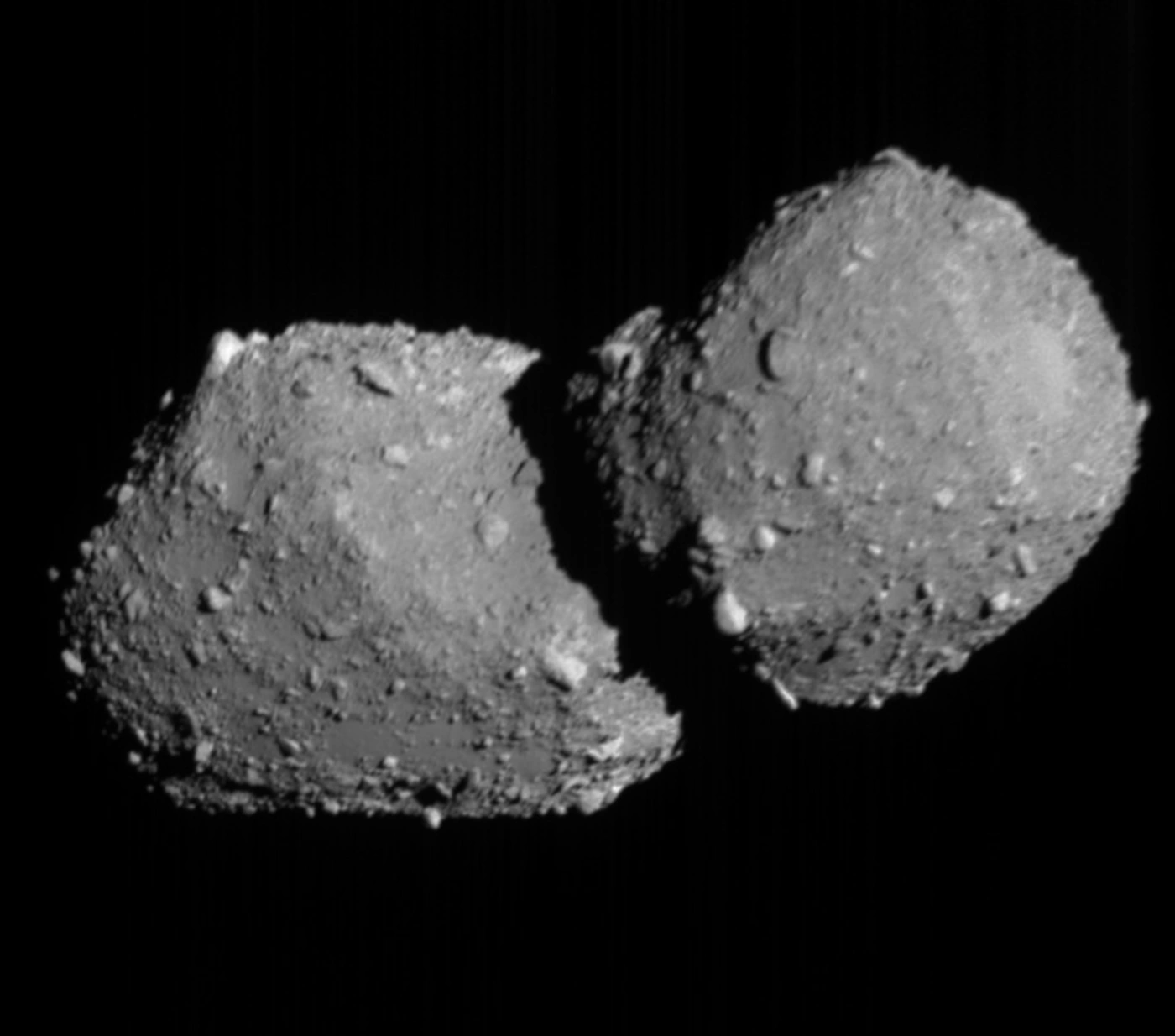
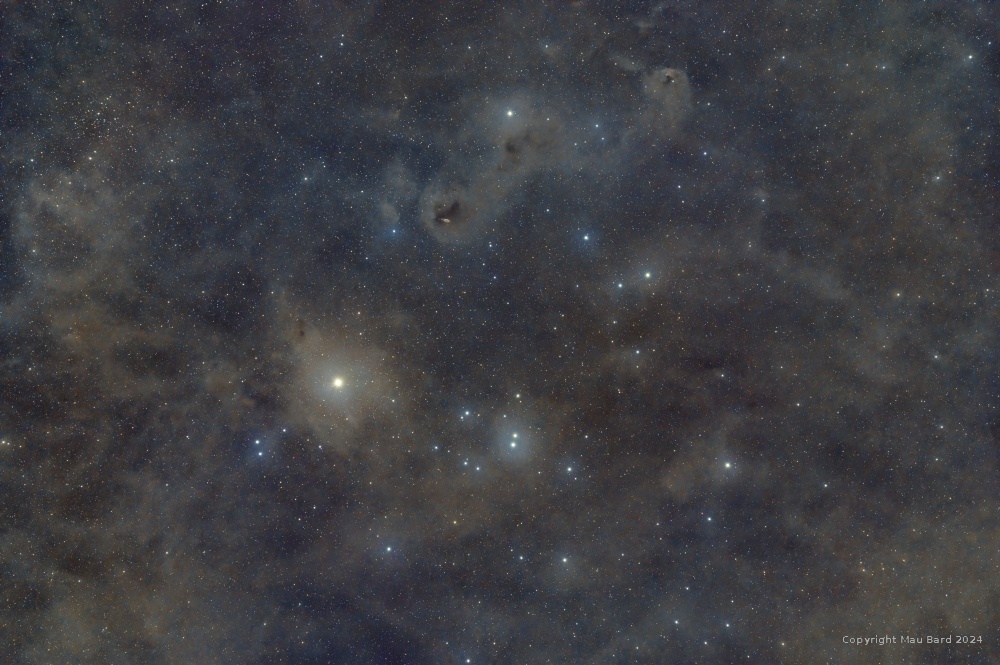
While this particular smartscope camera lacks the resolution of a dedicated astro-imaging rig the results are detailed and impressive. Users can let the images stack for hours if needed. The unit even has a built-in dew heater for humid nights and nebular filter for enhancing emission nebulae. As soon as your exposure is finished the images upload to your phone. Later, I move them to my main computer to tweak in Photoshop, then use Visual Paradigm's free online image enhancer to remove graininess and noise. The end results are what you see here. Other users prefer more robust astrophotography software such as Siril (free) or PixInsight.
Smartscopes are hot and getting hotter. Beside the ZWO Seestar, companies such as Unistellar, Vaonis, Celestron, and DwarfLab sell a variety of models at different price levels. Presently, only Unistellar offers a direct pipeline for citizen scientists to share imagery and data with professional astronomers. Smart telescopes are well-suited for work in "exoplanet transits, asteroid occultations, and near-Earth object modeling," says Matthew Ryno, 39, vice president and acting president of the Milwaukee Astronomical Society. The club has two eVscopes that see constant use by members of all ages including some as young as 14.

Glenn Sarlitto
"They (scopes) connect you directly to researchers to contribute science from your backyard," said Ryno. Unistellar partners with the SETI Institute to get the word out on what to target. Users upload their data to Unistellar's servers, which is tapped by SETI Institute scientists. Club members have participated "in more than 350 science missions," said Ryno, and have seen their names and data published in multiple papers.
"I post their light curves on the observatory wall," said Ryno.
With all the Seestars out there, fueled by a lively Facebook group, it would be great if ZWO were to step up and provide its army of users a similar citizen science option. Easy astrophotography paired with a dedicated data conduit would motivate many to make a scientific contribution.
I'm optimistic that novices whose first brush with astronomy is a smart telescope will find a path to cosmic discovery and enjoyment like others have in more traditional ways. Likewise, long-time observers who have never considered trying their hand at astrophotography or contributing to a scientific paper now have a wide-open door.
About Bob King
I love the sky (day and night) and have been a skywatcher and amateur astronomer since childhood. I'm also a long-time member of the American Association of Variable Star Observers (AAVSO) and Astronomical League. I pen the Astro Bob blog and have written four books: Night Sky with the Naked Eye (2016); Wonders of the Night Sky You Must See Before You Die (2018) and Urban Legends from Space (2019) and Magnificent Aurora, published in 2024. The universe invites us on an adventure every single night. To accept the invitation, we only need look up.



Comments
Ernie Ostuno
July 17, 2024 at 1:30 pm
My one big remaining goal for observational astronomy is to get to the Southern Hemisphere and see all the fainter objects I have not observed south of 40 degrees South celestial latitude. A smart scope that would visually label all the NGC/IC objects in the Magellanic Clouds would allow this to be done much more efficiently than my usual strategy of star hopping and referring to photographic charts. Does such a telescope exist at an "astronomy B&B" down under, I wonder?
You must be logged in to post a comment.
Bob KingPost Author
July 17, 2024 at 2:56 pm
Ernie,
While I don't know if such a scope exists but I see that Unistellar is working on its Envision binoculars that provide contextual information in the field of view. That might be something to consider.
You must be logged in to post a comment.
Anthony Barreiro
July 20, 2024 at 7:36 pm
I looked at Unistellar's publicity about their Envision binoculars. I would want to field test a pair before contributing $700 to get a pair (eventually) through Unistellar's kickstarter campaign, or spending $1200 retail when the binoculars are in production.
My biggest reservation is that these are 10x50 binos with a fairly modest 6 degree field of view weighing 1.2 kg (2 lb 10 oz) and they don't have image stabilization. That's a lot of weight to hold steady! (By comparison, Celestron's 10x50 porro prism UpClose binoculars weigh 765 g.) The image in the Envision binoculars will be jumping around so much that you're not going to be able to see anything steadily or read all the cool info. In an implicit admission that these are not usable handheld binoculars, Unistellar is offering an optional monopod and an optional tripod adapter with these binoculars. Caveat emptor.
Image stabilization would add significantly to both the weight and the cost of the Envision binoculars, but I think it would help to realize the potential of projecting digital information onto one eyepiece of a pair of binoculars.
You must be logged in to post a comment.
Bob KingPost Author
July 21, 2024 at 10:12 am
Good information, Anthony. Weight is an important factor to consider when contemplating a binocular purchase. I think Unistellar is smart in offering a support system. (I'd opt for the more convenient monopod). But while image stabilization would be the best solution it would make the price of these already pricey binoculars so high few observers could afford them.
You must be logged in to post a comment.
Ludovicus
July 20, 2024 at 5:35 pm
I think these new kits are interesting, but I think in many ways, taking away from the hobby - so Bob, I am a bit less maybe... tolerant than you are (certainly less impressed in some ways).
When I was at the Winnipeg RASC Center, it was amazing how many people could not even align their Goto mounts without confirming first what stars they had out! One poor fellow asked whether (it was SATURN of all things!) that "star" was a good one to align to. I almost played a joke on him, but I am not that cruel, as it would have taken the poor fellow likely 1+h more to get things figured out, and guess who'd be helping? So joke on me, too... 🙂
I think that these super-automated systems steal valuable skills away from the masses, who had to start by LEARNING where things are. Now, you power up and the unit does it for you! How many times have you seen a delivery driver in a new development get lost because Google Maps or Alexa has not been updated?! Well, same goes for these things in a way. People want the picture, and not the work into getting it.
As you have done staring at 11, I have been doing visual since the age of 8. So now, for over 51 years! Gray hairs to prove it. But I got to learn by retrofitting kit that was built like a truck and had to do-it-yourself, as you probably recall, the early days before internet, and the wealth of choices we have today!
I think that there is a middle ground somewhere, but I am still trying to find that myself, when dealing with our newer members at outreaches. I find I have to bite my lip a bit when smiling and asking: "how are you making out? Is there anything I can help you with?".
But if used more responsibly in the hands of a more advanced or expert user, such as yourself, then these tools CAN be superbly added to the toolkit. I think that just being out and experiencing the night sky is essential to put into perspective our place in the universe, and how precious and wonderous our home is.
CS and good observing to you! As always, great articles!
Darren H
Edmonton AB
You must be logged in to post a comment.
Bob KingPost Author
July 21, 2024 at 10:21 am
Hi Darren,
Thank you for your thoughtful reply. Figuring this is the way astronomy may be headed in a future of increasing light pollution I felt it was time to dip a toe in the water. I just hope that folks using these scopes, even with little knowledge of the night sky, find their way towards an appreciation of it. The citizen science aspect is also no small matter. I liked what you wrote about being out and just experiencing the night sky. That will always be my favorite reason for going out at night.
You must be logged in to post a comment.
Jim Case
July 17, 2024 at 7:57 pm
The magic of astrophotography includes being able to capture, record and share what is difficult and in many cases impossible to see through typical visual setups. It has pulled me back into the hobby I have just dabbled in, off and on, since seeing my first aurora over Lake Erie one lucky summer night as a teenager over 50 years ago. The emerging ease of these new devices will no doubt bring many more into the hobby and enhance the experience of many who have been ardent visual observers.
You must be logged in to post a comment.
Bob KingPost Author
July 19, 2024 at 1:53 am
Hi Jim,
Thanks for your comment. Indeed — the door swings both ways.
Bob
You must be logged in to post a comment.
forthprgrmr
July 18, 2024 at 4:03 pm
Your first paragraph reminds me of telling observers at my sidewalk astronomy outings about how the photons would be cruising through space for thousands or millions of years only to be stopped by hitting my eye.
Then I realized that, to the photon, they had just left their star an instant before. Relativity fun.
You must be logged in to post a comment.
Bob KingPost Author
July 19, 2024 at 1:55 am
Forthprgrmr,
Yes, how true! Ah. to be everywhere at once — the life of a photon 🙂
Bob
You must be logged in to post a comment.
Anthony Barreiro
July 20, 2024 at 7:52 pm
I've looked through EVscopes and at SeeStar images at my astronomy club's star parties. I don't have anything against these devices, indeed the technology is quite impressive, but I prefer to look at the sky rather than at a screen. Whether you're interested in the science of astronomy or not, I dream of living in a world where each of us has a personal connection with the sky, both practically and spiritually. The Sun rises in the east (farther south in winter and farther north in summer for those of us on Earth's northern hemisphere), is highest due south at (true, local) noon, and sets in the west. Et cetera ad infinitum. You don't need electronics or even optics to develop this knowledge, but you do need to spend time outdoors looking at the sky, noticing and thinking about patterns, and learning from people who know more than you do.
You must be logged in to post a comment.
Bob KingPost Author
July 21, 2024 at 10:23 am
Anthony,
Hear, hear!
You must be logged in to post a comment.
Ludovicus
July 26, 2024 at 5:05 pm
You won't get ANY arguments from me Anthony! 🙂
Well said - unless we learn the "5Ws" first, I don't think the photo makes as much of an impact.
Imagine shooting with a standard SLR even a newer DSLR) a shot of a rock. Without the context, it might look cool still, but there's no story or scene surrounding it to put the object into its proper context - it becomes just a "thing"; I think that is the huge disconnection there.
CS to everyone, whether using nature's or a new camera!
DH
You must be logged in to post a comment.
LarryKTM
July 20, 2024 at 9:57 pm
“presently” means “in the near future”.
“currently” means “now”.
I believe the author is intending the second meaning and has used the first.
BTW, I love your reporting on comet observations.
You must be logged in to post a comment.
Anthony Barreiro
July 20, 2024 at 10:42 pm
Merriam-Webster defines "presently" --
adverb
1 a archaic : at once
b : without undue delay : before long
2 : at the present time : now
and includes a usage note:
Both senses 1b and 2 are flourishing in current English, but many commentators have objected to sense 2. Since this sense has been in continuous use since the 15th century, it is not clear why it is objectionable. Perhaps a note in the Oxford English Dictionary (1909) that the sense has been obsolete since the 17th century in literary English is to blame, but the note goes on to observe that the sense is in regular use in most English dialects. The last citation in that dictionary is from a 1901 Leeds newspaper, written in Standard English. Sense 2 is most common in contexts relating to business and politics.
"the fastest-rising welfare cost is Medicaid, presently paid by the states and cities" — William Safire
You must be logged in to post a comment.
Bob KingPost Author
July 21, 2024 at 10:30 am
Hi Larry,
Thank you! Glad you enjoy the comet material. If I had to pick a favorite class of celestial objects for observation, comets would be it. I looked up "presently" and it appears to have several definitions (as Anthony points out) including "now" or "after a short time." But thank you for your comment. Precise language is always my goal, and I occasionally reach it.
You must be logged in to post a comment.
karlp295
December 10, 2024 at 6:07 am
Like the author says, I also think that it is a shame if someone uses a smart telescope and skips the learning that is part of the joy of astronomy. Yes, it provides an entry into the hobby to more people but it makes me a little sad at how technology is doing too much for us.
I have gone through the steep learning curve that is involved with getting to grips with deep sky astrophotography and am still learning. It takes commitment and a deep desire to master your craft. I am interested in the joys of visual astronomy to up to a point.
When I started with my basic telescope, a Celestron 130slt, I expected to point at the sky and see details of beautiful galaxies everywhere. The reality is not often explained. However, as I have found out it is possible to see galaxies in a telescope and this is how:
https://astroimagery.com/equipment/telescopes/best-telescope-for-viewing-galaxies/
You must be logged in to post a comment.
You must be logged in to post a comment.