 SUNSET:

 5
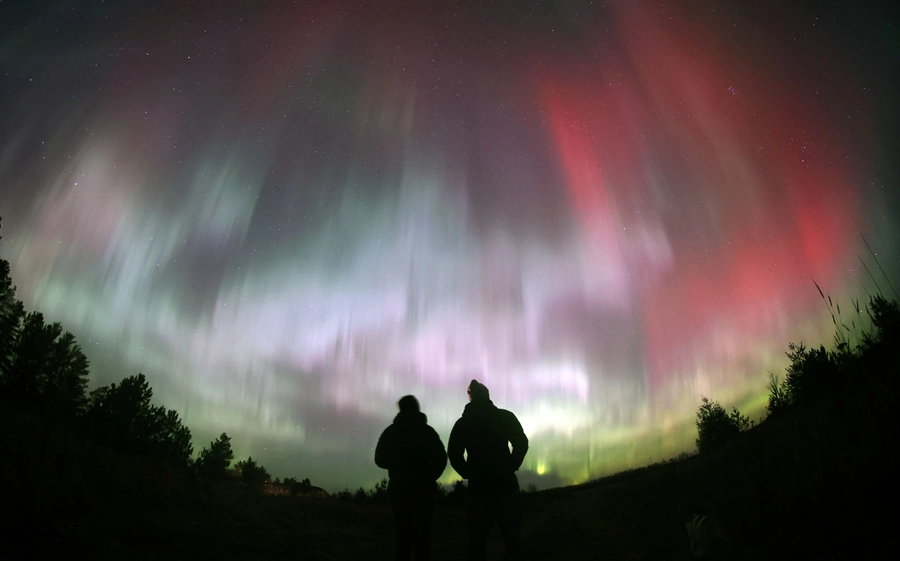
5We all might aspire to such a captivating image, but there’s a real learning curve to astrophotography
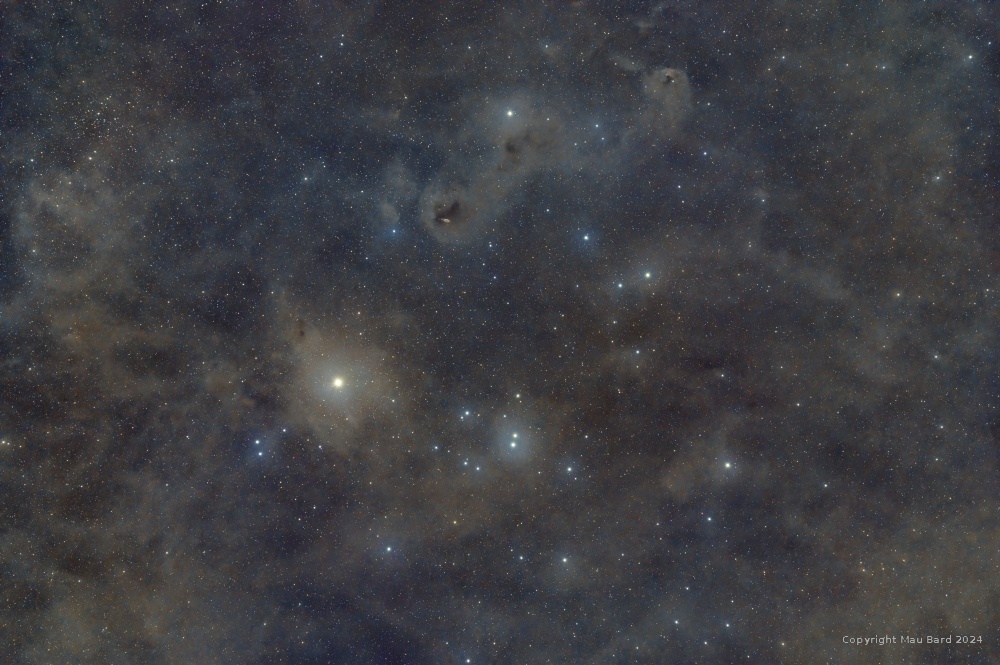
Mau Bard / S&T Online Photo Gallery
In May 2023, I bought my first smart telescope: the modest but mighty Dwarf 2. I hoped it would help me find deep-sky objects that are more elusive in my Bortle 7 backyard conditions. And it didn’t disappoint! I didn’t mean to get hooked on electronically assisted astronomy, but mere weeks later, Supernova 2023ixf flared to life in the Pinwheel Galaxy, and I found myself spending hours building images of M101, frame by frame.
However, my post-processing skills were non-existent. I’d never done real astrophotography before — unless you count pointing my phone at the sky — and I wasn’t already skilled with photo editing software. My results were predictably less than optimal. That didn’t stop me from sharing my images of M101 with my friends and family, with SN 2023ixf circled in red.
With the supernova, my aim was merely detection and identification. I wasn’t trying to bring out the colors and finer details of a dark nebula, for instance. But seeing images from other amateurs made me curious about what I might be able to produce with my own equipment and software tools, especially after I upgraded to the Dwarf 3. I don’t have a semi-pro rig like many of the dedicated hobbyists on Cloudy Nights, but I thought I might achieve something decent, if basic.
Fast forward to today: I’ve been using a camera-based smart telescope for a little over three years — and I’m still terrible at astrophotography.
Maybe “terrible” is unfair. My images are often recognizable as featuring my intended target — but they’re overexposed or weirdly pixelated, or everything is green. There’s a learning curve to capturing the night sky, along with much trial and error. I’ve lost count of the number of times I spent hours imaging a dim nebula only to realize I was using the wrong filter. These days, the greater hurdle is post-processing — something I’ve not yet gotten a handle on, and I’m beginning to wonder if this art will be forever beyond me.
I’ve never taken a photography course or digital art class. In years past, I’ve tried self-paced programs and books for beginners, but I got frustrated and gave up. Even for basic photo editing, all those software filters and tools remain mysteries to me. Because I never grasped the theory and mechanics underlying luminosity masks and tonal curves, for example, I can’t apply photo editing tools effectively or intuitively.
When I follow step-by-step guides, my results don’t come close to the polished images of galaxies and planetary nebulae in beginner online forums, including those from people using my same equipment under similar Bortle conditions. I’ve seen stunning images of the Trifid Nebula (M20), the Dumbbell Nebula (M27), and the Triangulum Galaxy (M33), and glorious wide-angle shots of the Milky Way. My efforts don’t compare.
Despite the Dwarf’s built-in processing and my installation of specialized software and macros, my captures of M51 or the Orion Nebula are not going to win any awards. My images probably won’t contribute much to science, either.
The truth is, I am not an artist and don’t possess that discernment. I might notice that something doesn’t look right in an image, but I don’t know how to fix it. I don’t have a feel for the artistic nuance involved, and imposter syndrome is creeping in.
But in the middle of my cyclical astrophotography angst and frustration, I’ve learned to pause and ask myself what I am trying to achieve. I bought my little smart scope not to astonish my friends or print massive posters of space art, but to make stargazing a little easier on myself. I’d wanted to see more, and to see deeper, into the sky above. So I have, and I continue to do so.
I also remind myself that it’s okay to be bad at something — even really bad at it. That means there’s room for learning and growth, if I want to keep pursuing these digital skills. And if I don’t want to? That’s okay, too.
With enough time and patience, maybe there will be marked improvement in my post-processing efforts. I keep trying because I want to learn. Maybe I’ll need routine reminders that I’m not trying to sell calendars or win a contest. Instead, I can embrace the engrossing delight of going down new rabbit holes in an established hobby. My little smart scope still feels like a technological miracle as I sit in my suburban home and marvel at the deep-sky images resolving on my tablet screen.
But in all honesty? I’d still really love to capture even a small segment of Rho Ophiuchi and process it into something breathtaking.


Comments
Oyvind
July 11, 2026 at 6:02 am
Great article!
I love the honesty of it.
So many of us try to achieve great astrophotography without getting there, be it because of overwhelming complexity of postprocessing or getting different equipment to work together, the cost of equipment or availability of dark skies, or a combo of it all. Good point, then, to pause and ask ourselves why we’re doing it. Let’s enjoy what we do capture, recognising the intended target, and enjoy the learning and small steps of improvement we do!
And there are so many niches and different types of objects, so we can find what fits our own interest, equipment and skies.
You must be logged in to post a comment.
Jen Willis
July 13, 2026 at 5:10 pm
Thanks, Oyvind! It is easy to get overwhelmed, but you're right that there are so many areas of exploration and discovery. Astronomy is truly a "hobby" to last a lifetime.
You must be logged in to post a comment.
AB
July 11, 2026 at 11:33 pm
All the techy imaging stuff can be frustrating, especially when so much of what we see is "enhanced" and AI'd and not realistically depicted anyway. We can get fed up trying to make something like it and lose our enjoyment of just observing the sky.
But you might like to check out Kristine Rose's milky-way-photography lessons. I've listened to an online talk by her but not taken the course.
https://www.kristinerosephotography.com/learn
You must be logged in to post a comment.
Jen Willis
July 13, 2026 at 5:11 pm
I'll have a look. Thanks for the rec, AB!
You must be logged in to post a comment.
[email protected]
July 24, 2026 at 5:42 pm
I had not seen this short article. Thanks, great them and a great point. I decided that I was not going to spend hours and hours imaging a single thing, the spend more hours and hours on that single image in processing and post processing. Thus, I went for 20-30 minutes captures, sometimes up to 45' (depending on object, telescope size and camera- this trio also a learning curve), and not use complex, multi features that you can do with great processing software. So, after I capture with live stacking (sharpcap), then it takes 5-10' to do my postprocessing using only a very low price (no monthly payment) adobe elements and finalize it with the photography (image) processing that comes with the MS productivity software. My images are not contest winners, but they come out great for the effort and time that I spend on each image. I setup three telescopes when the night is clear (one 127 mm, one 80-110 mm range and one small one such as a 50mm or 60 mm diameters). I can in this way make more than 12 captures per night of various DSOs and discard what did not work well, then try again the following night. Overall, has made my efforts and hobby worth doing!!
You must be logged in to post a comment.
You must be logged in to post a comment.