 SUNSET:

 1
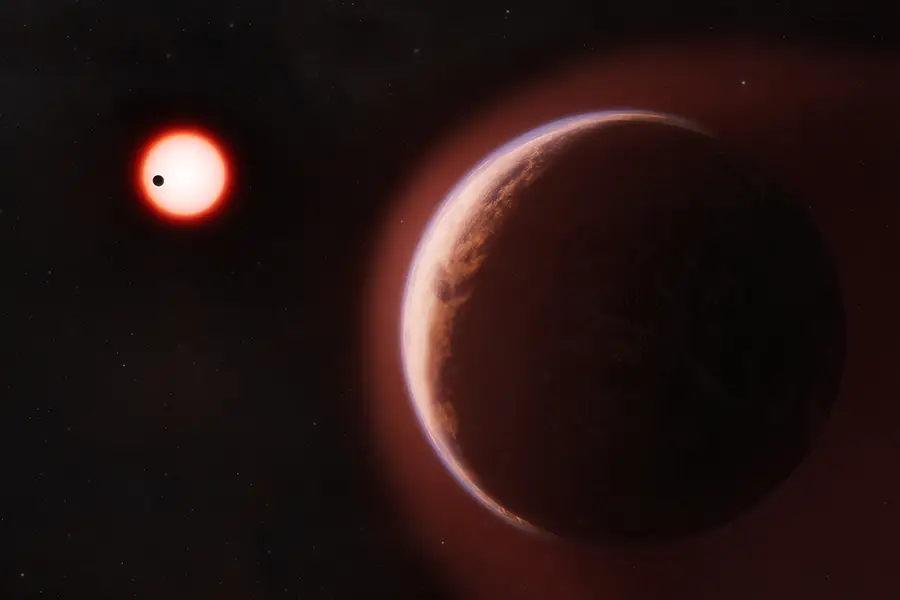
1New research opens the possibility that the first stars weren’t the behemoths we expected them to be.
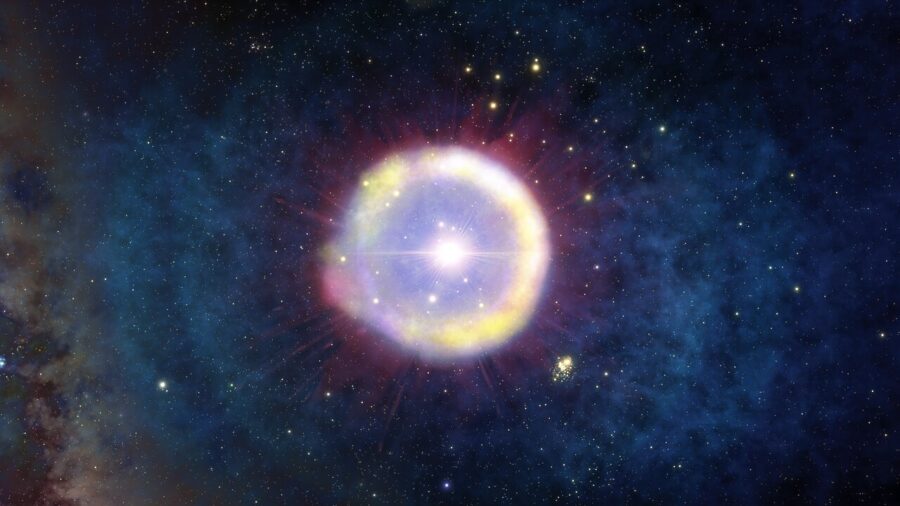
NOIRLab / NSF / AURA / J. da Silva / Spaceengine
Chaotic turbulence in primordial clouds of gas may have prevented the formation of extremely massive stars, according to new simulations by Taiwanese astronomers.
The early universe consisted primarily of hydrogen and helium, which, in contrast to heavier elements, don’t radiate much. The gas clouds that would be the birthplaces of stars therefore had trouble cooling down enough for stars to form — the pull of gravity had to fight high gas pressure. That’s why most astronomers believe that the universe’s very first stars must have been real behemoths, hundreds of times as massive as the Sun.
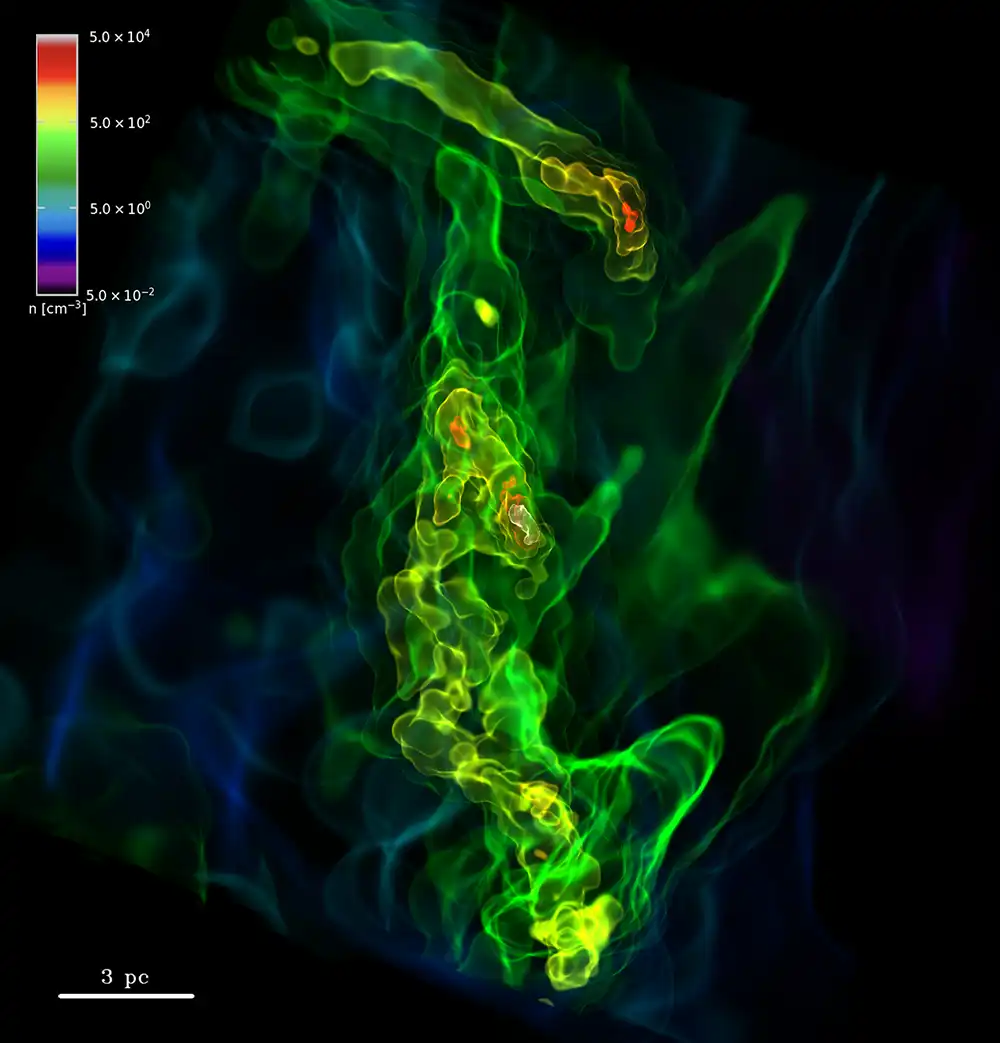
But according to Ke-Jung Chen (Academia Sinica Institute of Astronomy and Astrophysics, Taiwan) and his colleagues, that simple picture is incomplete. Their detailed computer simulations reveal that those collapsing clouds experienced supersonic turbulence — with most gas moving around at five times the speed of sound. The shock waves that resulted broke up larger clouds into smaller fragments and even helped gravity to overcome gas pressure.
ASIAA / Meng-Yuan Ho & Pei-Cheng Tung
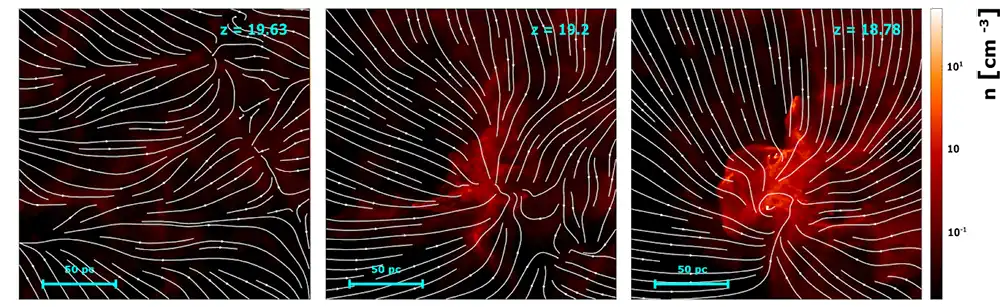
To come to this conclusion, the team adapted IllustrisTNG, a supercomputer simulation of our cosmos. The researchers focused on a single mass concentration in the early universe — a so-called dark matter mini-halo of some 10 million solar masses. By using a technique called particle splitting, they were ultimately able to follow particles of just 0.2 solar masses (tiny compared to the original simulation, which has particles of 84,000 solar masses). The zoomed-in simulation revealed that infalling gas becomes highly turbulent at scales of hundreds of light-years, resulting in multiple dense clumps that spawn stars as puny as eight solar masses.
“Our results indicate that supersonic turbulence may be common in primordial halos and can play a crucial role in cloud-scale fragmentation, providing [a way] to form less massive first stars,” the authors write in the July 30th Astrophysical Journal Letters.
ASIAA / Meng-Yuan Ho & Pei-Cheng Tung
Cosmologist Rien van de Weygaert (University of Groningen, The Netherlands) is impressed by the new work. “The challenge with cosmology simulations is always that you want to see fine detail, but you also need to deal with processes on the scale of millions of light-years,” he says. “Here, the team has achieved both a high resolution and a large dynamic range.”
However, van de Weygaert also warns that no single computer simulation can be perfect. “For instance, Chen and his colleagues don’t incorporate radiation processes — something you really can’t ignore on these scales,” he says.
Over the past years, there have been other indications that extremely massive stars must have been relatively rare in the early universe. Stars between 80 and 260 solar masses are expected to end their brief lives in so-called pair-instability supernovae, which should leave tell-tale traces in the composition of subsequent generations of stars. However, these chemical fingerprints turn out to be less abundant than expected. These new computer simulations may explain why.
About Govert Schilling
Sky & Telescope Contributing Editor Govert Schilling lives in The Netherlands but loves to explore his home planet. In May 2022, Harvard University Press published The Elephant in the Universe: Our Hundred-Year Search for Dark Matter. His latest book is Target Earth - Meteorites, Asteroids, Comets, and Other Cosmic Intruders That Threaten Our Planet.




Comments
Andrew James
August 11, 2025 at 5:28 pm
Population III stars is what they are popularly called.
You must be logged in to post a comment.
You must be logged in to post a comment.