 SUNSET:

 1
1How can you make a star or deep-sky object, such as galaxies or nebulae, look brighter?
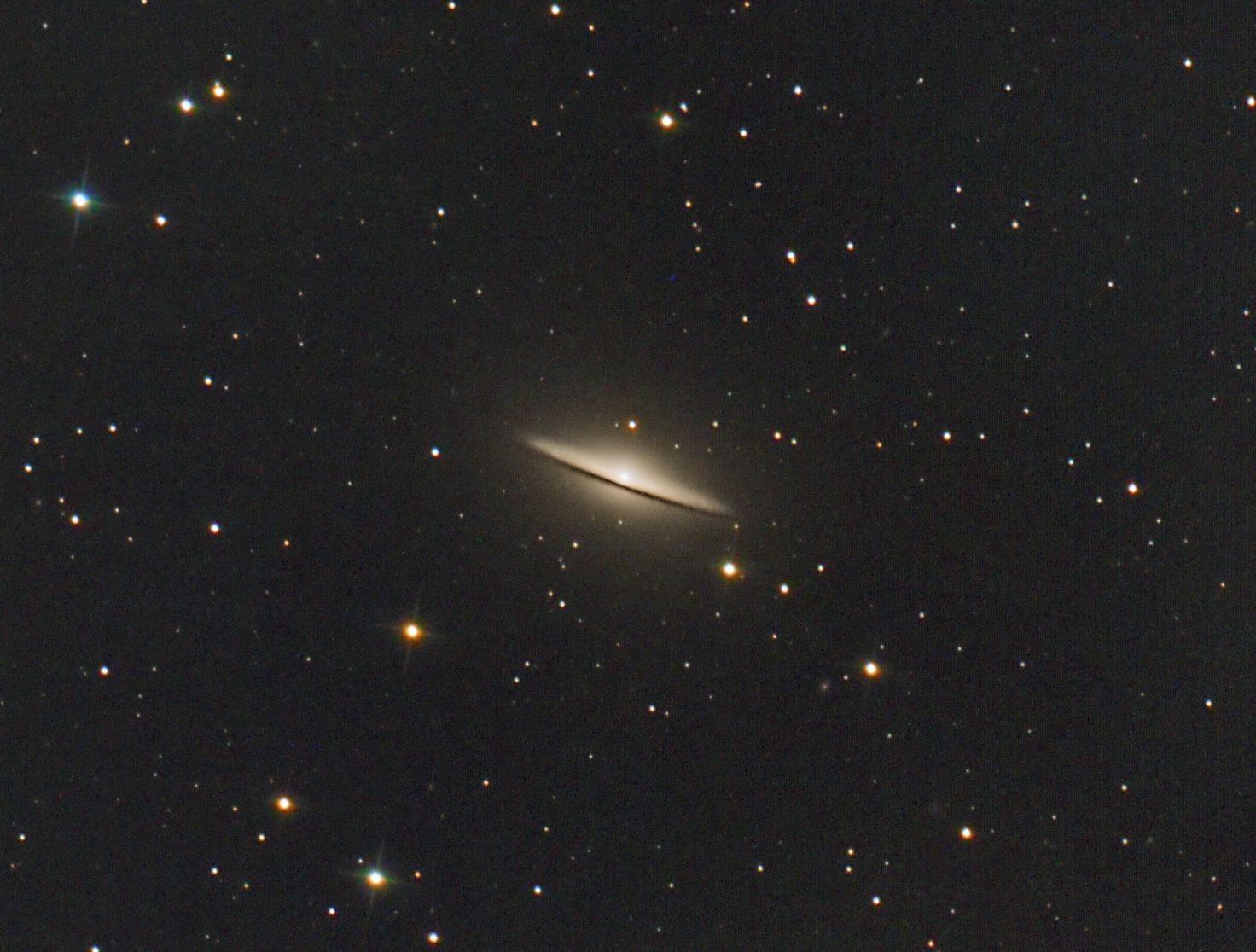
The total brightness of a star or other object is determined by the telescope’s aperture, also called light grasp. The focal ratio (also called f/number, that is, the focal length divided by the aperture) has nothing to do with it.
The f/number does affect a telescope’s magnification (with a given eyepiece), and the magnification determines the surface brightness of the view: the amount of light per square arcminute as presented to your eye. But that’s different. In fact, no telescope can ever increase surface brightness beyond your naked-eye view.
Confused? Here’s how it works. A telescope can’t funnel more light into your eye unless it also magnifies the view — that’s the way optics function. You collect more light and you see the object bigger. But with the light spread out in a magnified view, the surface brightness is diluted back down to what it was before magnification, or even less. If surface brightness was all you cared about, you’d skip the telescope!
If two telescopes have the same aperture and magnification but different f/numbers, their views will be essentially identical.
— Alan MacRobert
About Alan MacRobert
Alan M. MacRobert became an avid Sky & Telescope subscriber in 1966 at age 14, joined the editorial staff in 1982, and is now a senior contributing editor, semi-retired. He played a role in practically every part of the magazine and the company's other products for more than a generation, both on the amateur-observing side and the science-reporting side. In 1994 a book collection of his observing how-tos and telescopic sky tours was published as Star Hopping for Backyard Astronomers. He has produced This Week's Sky at a Glance online every week since 1989.



Comments
Andy-de la Plaza
August 2, 2018 at 10:05 pm
Quote: "If two telescopes have the same aperture and magnification but different f/numbers, their views will be essentially identical."
True, because the exit pupil which is Diameter/Magnification, is the same for both telescopes regardless of the f-ratio. In both telescopes the object will appear with the same brightness.
You must be logged in to post a comment.
You must be logged in to post a comment.