 SUNSET:

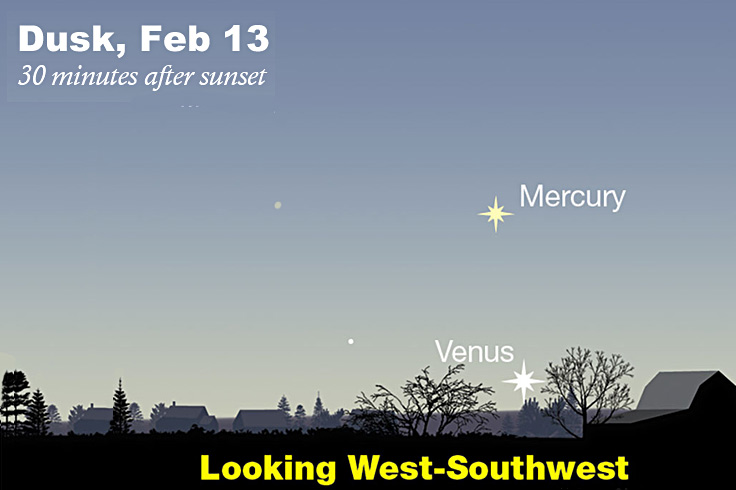
This Week's Sky at a Glance, February 13 – 22
Three planets await you in the western twilight, though low Venus is a toughie. The crescent Moon passes them and, for the lucky, occults Mercury. Dog and Hare accompany Orion. And can you find Kemble's Cascade?
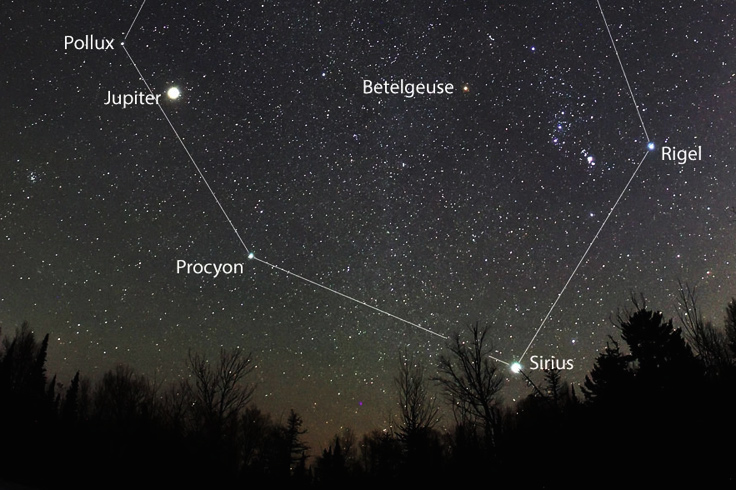
This Week's Sky at a Glance, February 6 – 15
The Winter Hexagon encompasses the brightest winter stars. Near Orion, the Big Dog prances and the Hare crouches. And the moonless dark this week opens telescopic deep-sky depths.
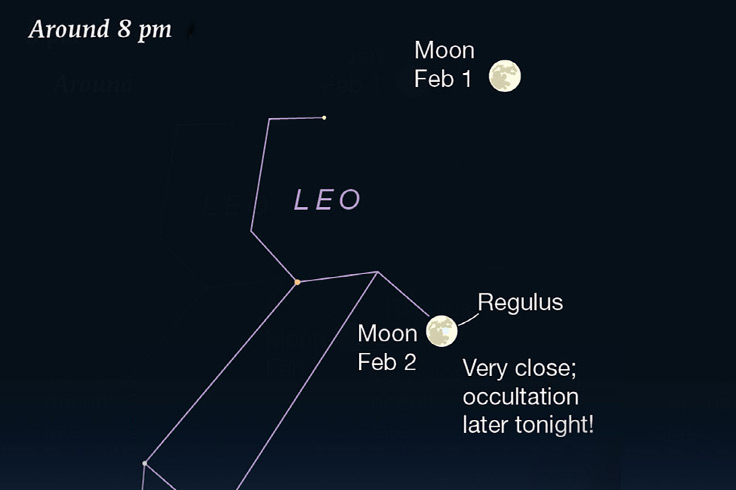
This Week's Sky at a Glance, January 30 – February 8
The dazzling Moon occults Regulus Monday night while Regulus is busy announcing February. Betelgeuse turns the Winter Hexagon into the Heavenly G.
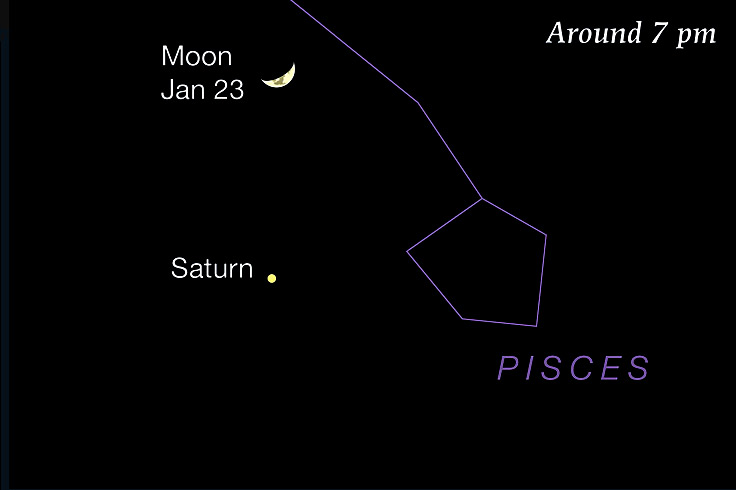
This Week's Sky at a Glance, January 23 - February 1
The waxing Moon marches east across the evening sky. It says hello to binary Gamma Arietis on Saturday, then occults some of the Pleiades for Europe on Tuesday. But it's past them by nightfall in North America.
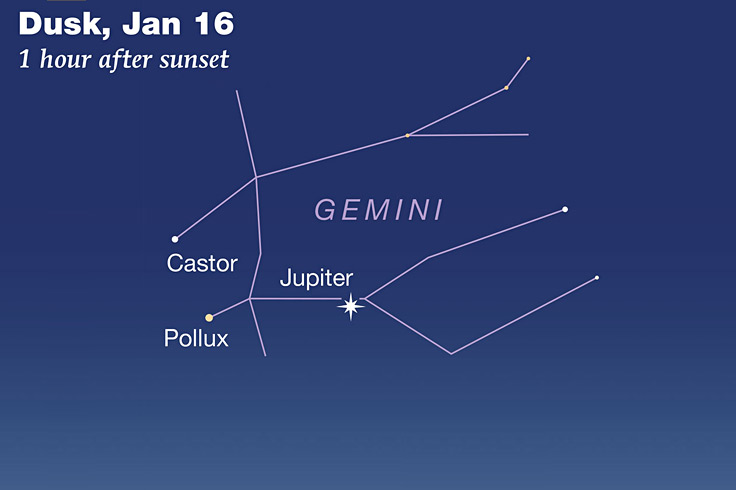
This Week's Sky at a Glance, January 16 – 25
This winter the biggest planet is the brightest. The brightest star pins the Winter Triangle. And did you know Capella and Rigel march in step?
This Week's Sky at a Glance, January 9 – 18
Jupiter is at opposition. Evenings are moonless, and the winter Milky Way arches high over the world. Betelgeuse stands over Sirius.
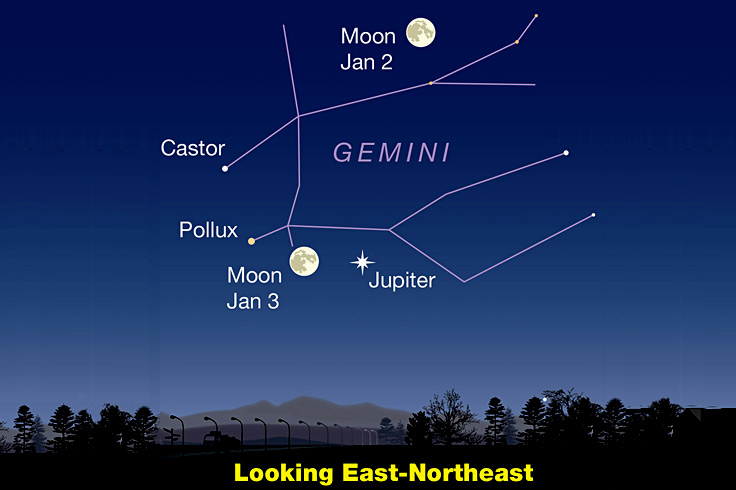
This Week's Sky at a Glance, January 2 – 11
The bright Moon shines over Jupiter, Pollux and Castor on Friday evening the 2nd, then groups right up among them on Saturday the 3rd.
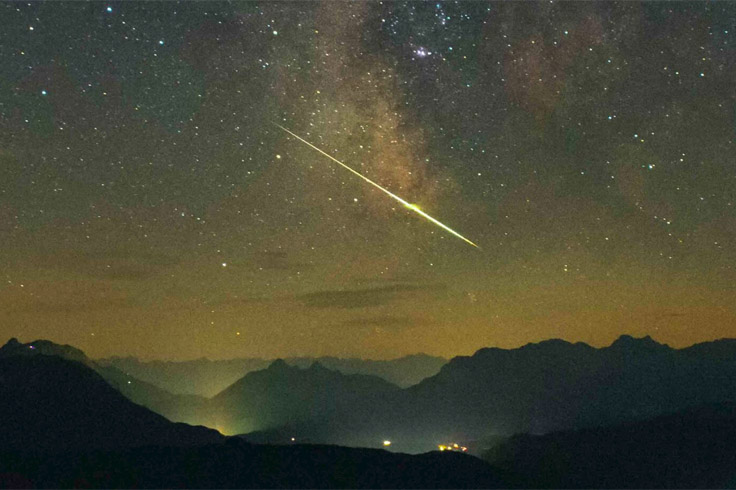
The Best Meteor Showers in 2026
The Quadrantids and Eta Aquariids will have Moon trouble in 2026, but the beloved Perseids and Geminids should be glorious.
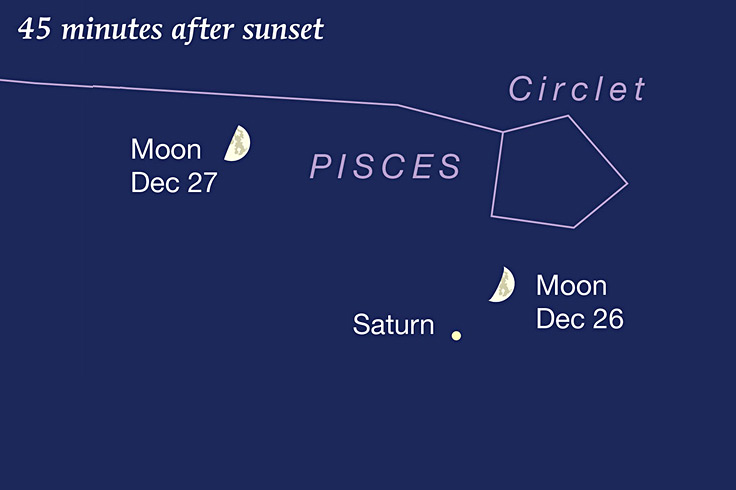
This Week's Sky at a Glance, December 26 – January 4
Jupiter nears opposition. The waxing Moon pairs with Saturn, then guides the way to the fine telescopic double star Gamma Arietis. Later it passes the Pleiades.
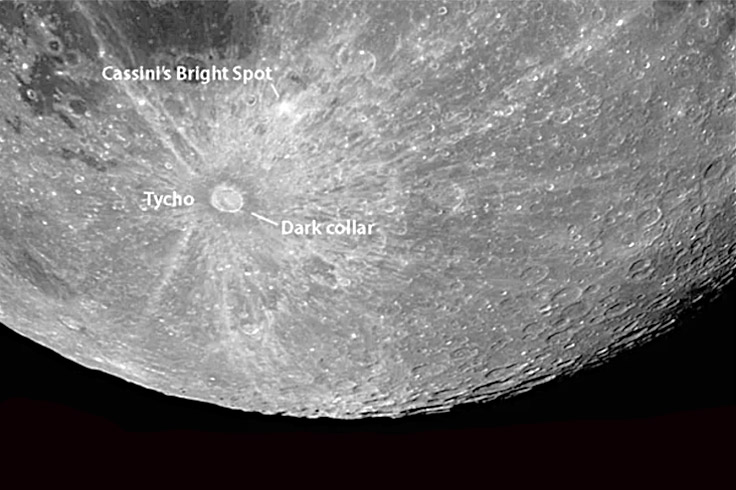
How To Start with Your New Telescope
How to start sky exploring with that new telescope. How to set it up right, other key things to know -- and great cosmic immensities to start finding tonight.
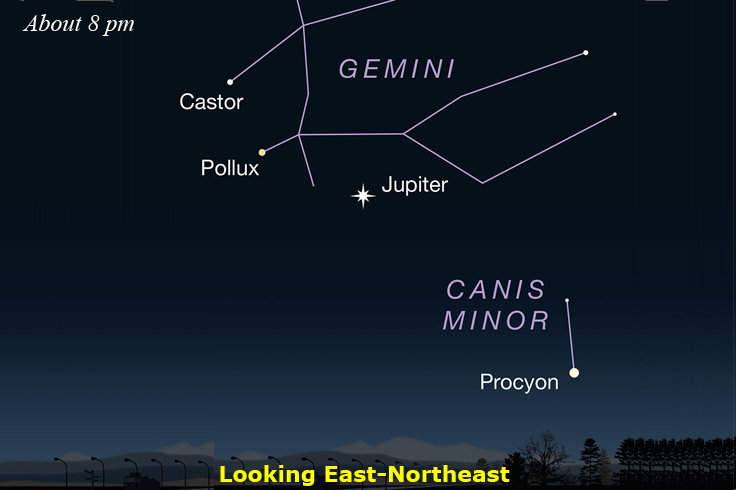
This Week's Sky at a Glance, December 19 – 28
We greet the winter solstice. Jupiter nears opposition. Will the two Dog Stars balance for you? And meet the House in the Hyades.
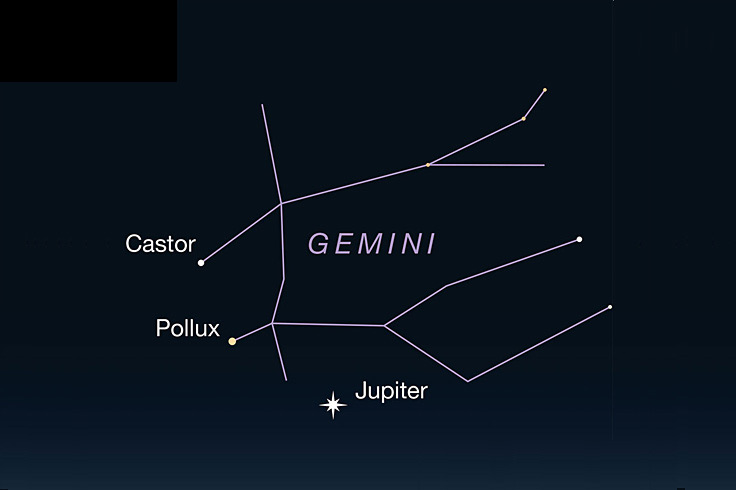
This Week's Sky at a Glance, December 12 – 21
Big Jupiter now rises in the east-southeast less than an hour after dark. It's high in sharp telescopic viewing by about 10 p.m.
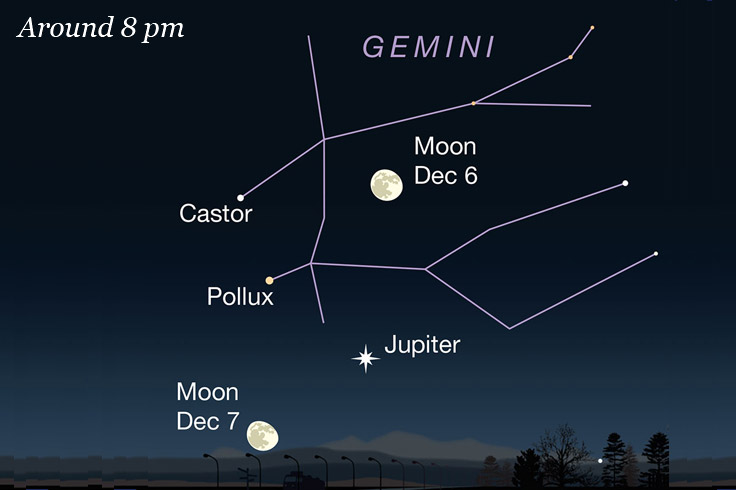
This Week's Sky at a Glance, December 5 – 14
The Moon, waning away from full, groups up with Jupiter, Castor and Pollux on two nights. Later in the week the Geminid meteor shower comes into full bloom.
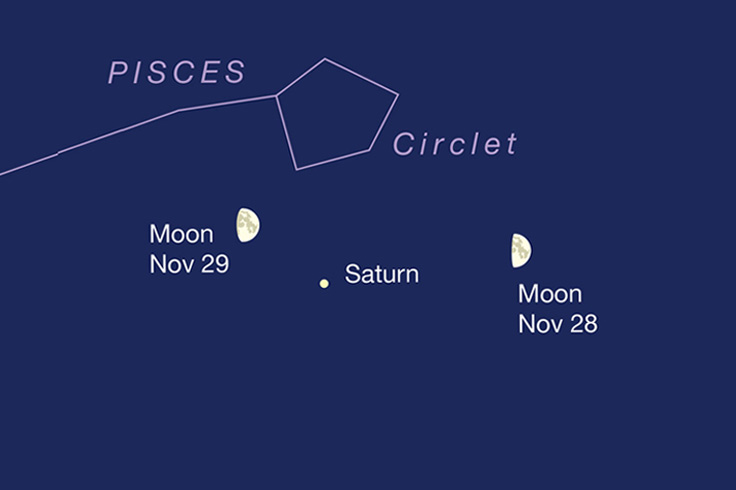
This Week's Sky at a Glance, November 28 – December 7
Saturn remains super-thin-ringed high after dark. The interstellar comet, 11th magnitude, is now nice and high in the dark before dawn. Don't wait; moonlight approaches.

This Week's Sky at a Glance, November 21 – 30
Saturn's rings are now the closest to edge on that they'll get. The famous interstellar comet has become higher and easier for amateur telescopes before dawn.
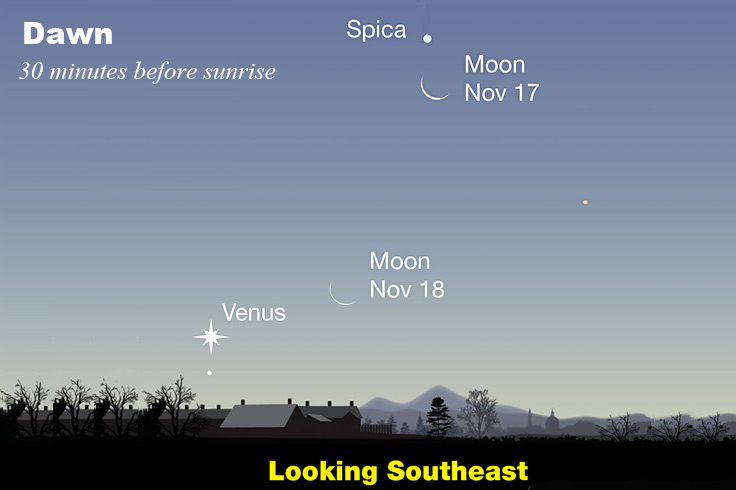
This Week's Sky at a Glance, November 14 – 23
Saturn's rings are turning as edge-on as we will see them for another 15 years. The planet awaits your scope high in the evening sky. Low in the dawn, the thin Moon approaches Venus.
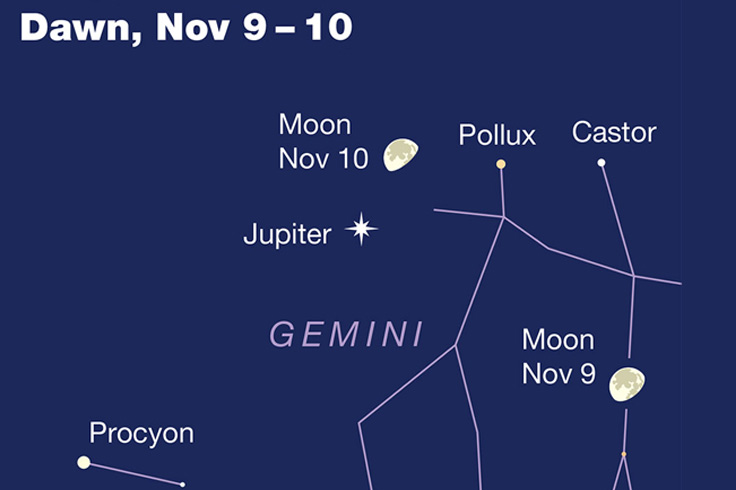
This Week's Sky at a Glance, November 7 – 16
The interstellar comet: Can you see it in your scope? Maybe you can, starting late this week as Comet 3I/ATLAS emerges from behind the Sun. If you have a large amateur telescope with which you can detect an 11th- or 12th-magnitude faint fuzzy rather low in the east just before…
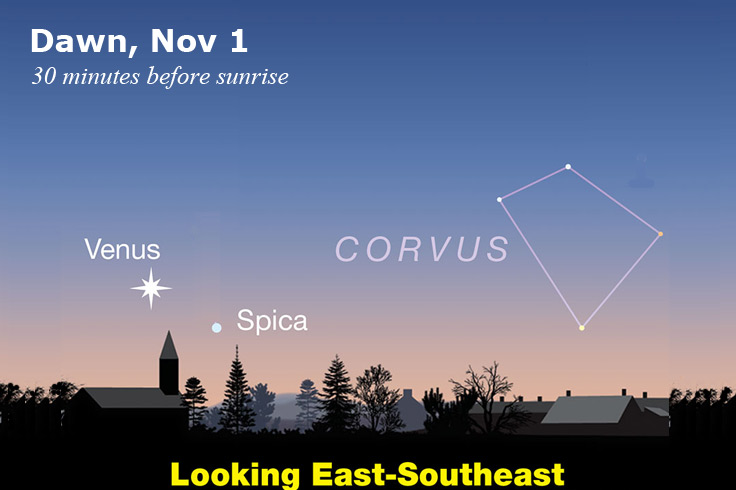
This Week's Sky at a Glance, October 30 –November 9
Saturn is in excellent view all evening. In a telescope its rings look like a thin needle piercing the big yellow globe. Soon the rings will turn exactly edge-on.
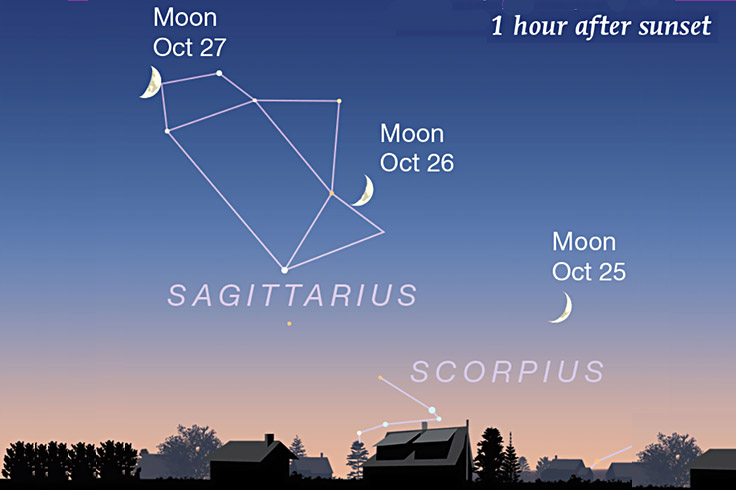
This Week's Sky at a Glance, October 24 –November 2
The crescent Moon returns and waxes to first quarter. Two binocular comets are on the way out. And Arcturus is once again the Ghost of Summer Suns.
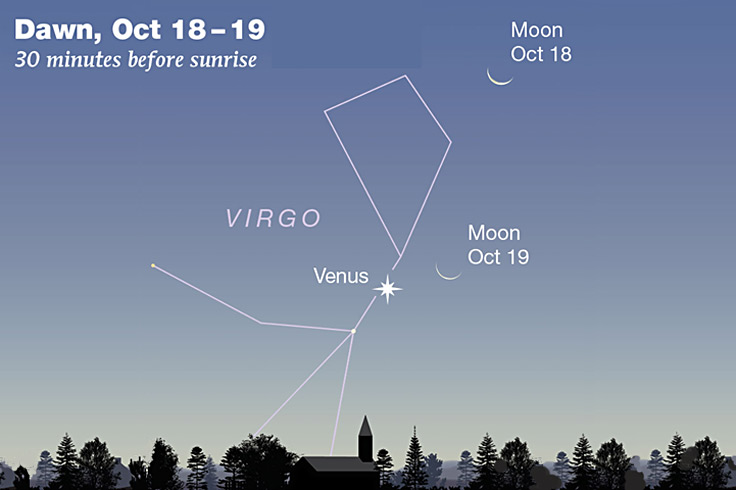
This Week's Sky at a Glance, October 17 – 26
After checking out the two binocular comets right after dark this week, catch a double shadow transit on Jupiter and the late-night Orionid meteors.
