 SUNSET:

Is seeing the northern lights on your bucket list? Learn about this ephemeral connection between the Sun and Earth, find out how these dazzling light shows get their colors, and — most importantly — discover how you can see (and photograph!) the aurorae for yourself.
Is seeing the northern lights on your bucket list? Learn about this ephemeral connection between the Sun and Earth, find out how these dazzling light shows get their colors, and — most importantly — discover how you can see (and photograph!) the aurorae for yourself.
Now Available – Magnificent Aurora: Your Complete Guide to Nature's Greatest Light Show
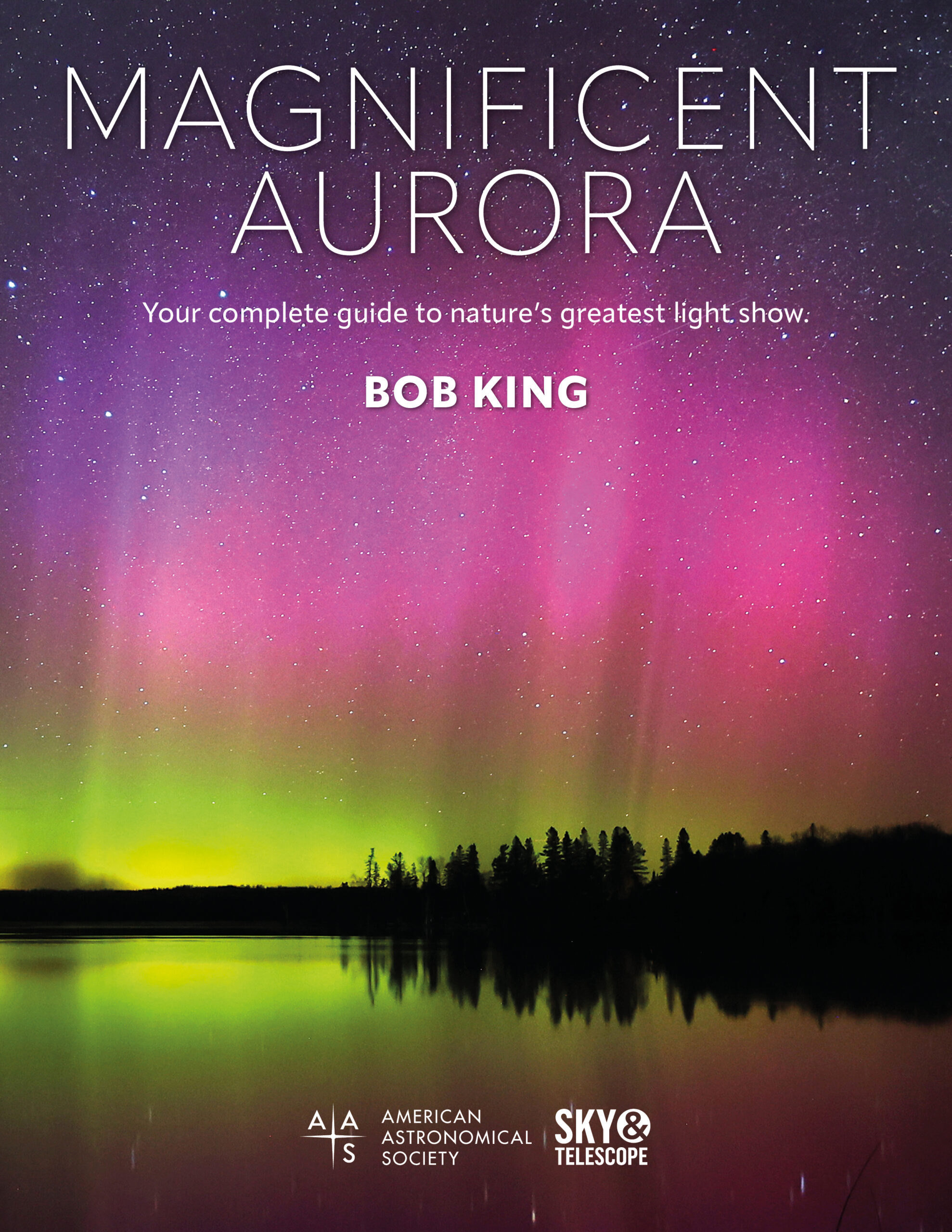
Have you ever wondered what causes the aurora? Or what’s behind its ghostly forms, movements and colors? This guide covers the gamut, from myth to our modern understanding of the phenomenon, in a friendly, non-technical way accessible to neophytes and science-curious readers alike. Published by Sky & Telescope/American Astronomical Society.
Aurora Forecast
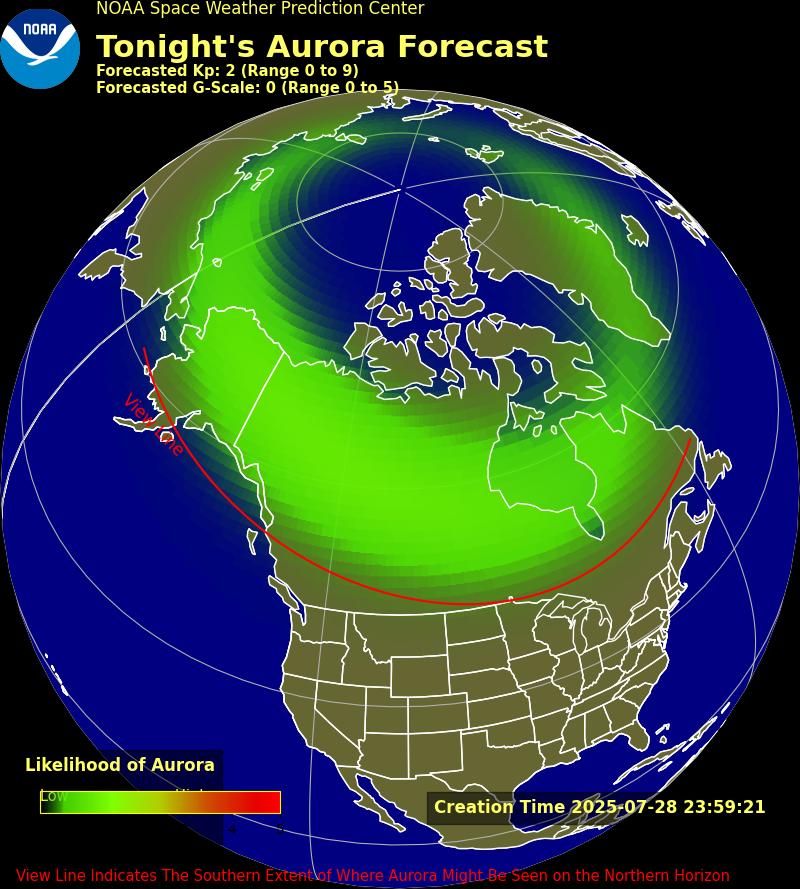
See more forecasts at NOAA or learn more about predicting auroras.
Aurora Q&A
by Bob King
What causes the aurora?
In a nutshell, the magnetic field that comes along for a ride in the blast of particles released from the Sun in a coronal mass ejection couples with Earth's magnetic field. This connection creates a conduit that funnels those particles — electrons and protons — at high speed into the atmosphere over the planet's polar regions. This creates the colors seen in the northern lights, or aurora. Learn more in the video above.
When should I look?
Check the latest predictions at the Space Weather Prediction Center's Aurora Dashboard.
Where should I go to see it?
If forecasts show that aurora are imminent, then the best place to view the northern lights is the most obvious one — as far as possible from city lights. If you can, drive north from your city to a location with the least amount of light pollution.
Use the interactive map at lightpollutionmap.info to explore your region for potential sites. Color-coding shows where light overkill is worst — lilac, red and yellow — and where it's suitably dark — green, blue and gray. Use your mouse (or fingers) to zoom in and out of the map and change your location. If possible, scout out your chosen spot during the daytime so you're comfortable there at night. Importantly, make sure you have an open view of the northern sky (or southern sky in the Southern Hemisphere). Fields, lake shores, and hilltops are ideal.
If, on the other hand, you are planning travel destinations around places where aurora might be visible, then your best bet will be areas that typically lie underneath the auroral oval. In the Northern Hemisphere, those places include northern Canada, Iceland, Greenland, and the Scandinavian countries.
What equipment do I need?
None! Your eyes will take it all in, especially as they become increasingly dark-adapted with time spent outdoors.
However, you might appreciate some helpful items, including a chair so you can sit and rest your legs if you're out a long time. A beverage and snack will be very welcome as the clock ticks toward midnight. Warm clothing is essential because you'll be standing or sitting still, frozen in awe, much of the time.
Will it look like the colorful photos I see in books and online?
Generally, no. Most auroras appear pale green or white with hints of pink. Our eyes see in real time, while a camera accumulates light during a time-exposure, revealing the aurora's subtle colors more vividly.
However, during powerful storms, you'll see brief bouts of intense color in the sky — purples, reds, pinks, and greens. Colors are caused by particles from the Sun spiraling down Earth's magnetic field lines and striking atoms and molecules of oxygen and nitrogen in the atmosphere. Temporarily energized by the collisions, the atoms release tiny bursts of light when they settle back to their rest states.
How can I photograph the aurora?
You can use your smartphone. Hold it up to the sky, and the phone will set itself to night mode, allowing handheld exposures of 3 seconds — long enough to easily capture a moderate- to bright aurora. Hold the phone to the sky, tap the shutter release button, and keep the two crosses that appear on your screen aligned.
If you have a DSLR or mirrorless camera, attach it to a tripod and focus on a bright star using the camera's live view feature. A wide-angle lens is best, from 15 to 35mm. Open the lens to its lowest f-stop (f/2 or 2.8 is best if you have it) to let in the maximum amount of light. Expose at ISO 1600 or 3200 for 5-20 seconds. Check the replay to see if you're on target. If not, adjust the exposure or ISO accordingly.
How do I find out where the sky is clear if it's cloudy at my house?
Check the GOES satellite images at GOES East or GOES West (for skywatchers in the far western U.S.). Click on your location on the map for an enlarged view. To see clouds at night, click on the Choose bar and select Channel 7, the third option down.
You can also go to Windy.com and click the Satellite heading for an excellent cloud map. Or just download the Windy app.
What's a good aurora alert app?
SpaceweatherLive, MyAuroraForecast, and Windy.com are all available for iOS and Android.
Learn More
- Chance of Aurora Extends to Friday Night, June 5th
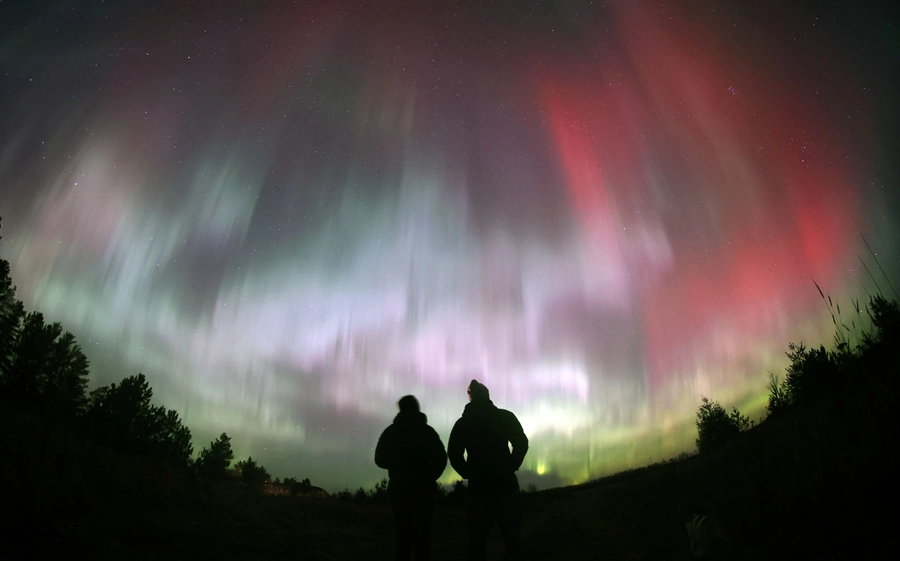 A geomagnetic storm expected June 4th arrived late. But there's still at chance of seeing auroras Friday night, June 5th.
 - Double Solar Eruptions Spark Widespread Aurora
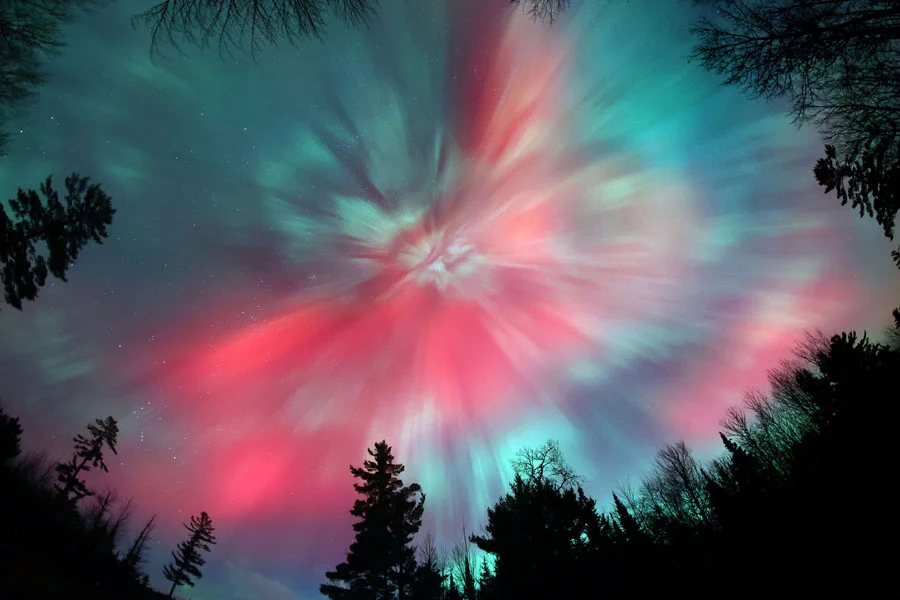 Last night's aurora painted the sky in reds, greens and even oranges. It's expected to return tonight!
 - Major Flare Could Spark Severe Geomagnetic Storm Sunday Night, June 1st
 Tips for viewing tonight's hoped-for aurora whether your skies are clear or smoky.
 - North to the Aurora!
 If the aurora won't come to you, go to it. The story of my quest to see the polar lights.
 - Severe Geomagnetic Storm Triggers Widespread Aurora October 10-11
 The aurora may be visible across much of the U.S. tonight in the wake of dual solar blasts.
See more >>
Tours
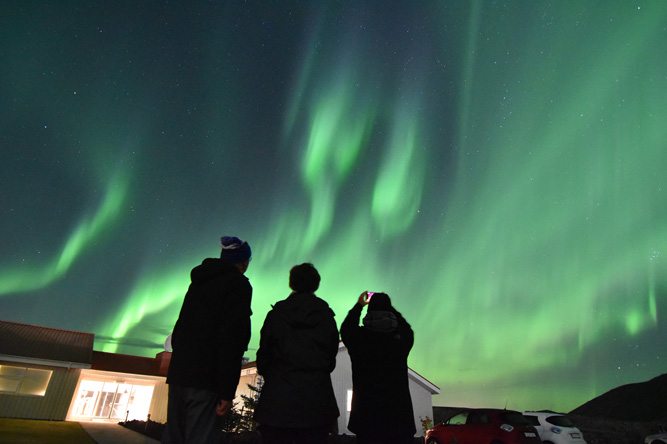
Iceland Aurora Adventure, September 2025
★★ NEW TOUR — SURE TO SELL OUT! ★★Join our popular one-week tour of Iceland! You’ll explore this amazing island’s unique culture and geology during the day. Then, each night we’ll seek out the breathtaking aurora borealis. (We’ve seen auroras on all 10 of our previous expeditions!) Extend your stay with an optional one-day tour of the magnificent, glacier-capped Snæfellsnes peninsula. Learn more here.
