 SUNSET:


Watch International Space Station Flybys All Night Long
The annual International Space Station marathon viewing season begins later this week, when skywatchers in the Northern Hemisphere can watch up to five successive ISS passes in one night.

Meet Spica, the Ear of Grain
Meet Spica, the "ear of grain" in the constellation Virgo. This bright star is actually part of a binary orbiting so closely, they tug each other out of spherical shapes and whirl around each other every four days.

Hunting Bright Variable Stars in M5 and M13
Globular clusters are packed with variable stars, some of which are easy to see and follow in amateur telescopes. We explore M5 and M13, two of the season's finest.

Double-Star Date with a Dragon
For your enjoyment, a diverse selection of double stars in Draco for small and medium telescopes.
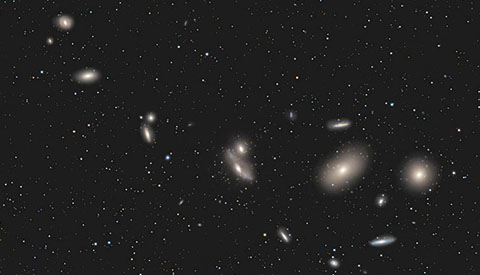
Yanking Markarian's Chain
Markarian's Chain, a remarkable arc of bright galaxies, is your ticket to the Virgo Cluster. Hop aboard!

Twinkle, Twinkle Quasi-Star — 12 Quasars for Spring Evenings
Quasars are among the brightest and most distant objects in the universe. Many are visible in amateur scopes if you know just where to look. We'll help you track them down.

Pop in on Pallas and Iris Tonight
Break out your binoculars or telescope the next clear night for a peek at the bright asteroids Pallas and Iris, both at opposition this spring.
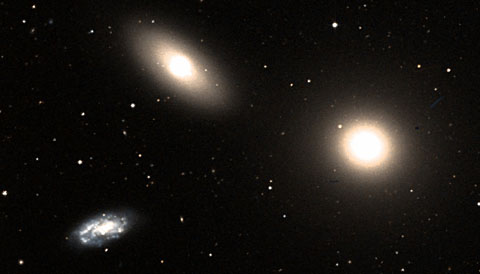
It's Spring! Time to Visit the Bright Galaxies of Leo I
Springtime is galaxy time. Only 30 million light years away, the Leo I Group and nearby Leo Triplet entice the eye with an assortment of bright spiral and elliptical galaxies. Welcome to spring! The new season begins (or began depending on when you read this) at 5:58 p.m. EDT on…

Deep-sky Hunting in Cancer, the Crab
As winter melts into spring, we sample both familiar and overlooked deep-sky treasures in the "empty space" between Gemini and Leo, home of the Crab.

How to See Sirius in the Daytime
Spotting Sirius in broad daylight may be easier than you think! Here's how to do it.

Deep-Sky Observing Without Equipment, Part II — The Winter Sky
Really want to see what your eyes can do? Leave the telescope at home and join me for a naked-eye tour of the late winter sky.

Will Sirius Disappear on February 18th?
On Monday night, February 18th, observers in the western U.S. and Mexico may see the occultation of a lifetime when a tiny asteroid momentarily blots out the night sky's brightest star.

Comet Iwamoto Ascends and Brightens
Comet Iwamoto is visible as a binocular target from a dark sky. Follow it this week as it passes from Virgo into Leo.

Meet Vega, the Jewel of the Lyre
Meet Vega, the fifth-brightest star in the night sky and the most brilliant star in the constellation Lyra. Vega is in the prime of its life on the main sequence, but it's notable for its speedy spin and infrared-radiating debris disk.

Happy Nights with the Hyades: Double Stars and Galaxies Await
The Hyades open cluster may stand in the shadow of its neighbor the Pleiades, but there's a wide variety of wonders here from naked-eye double stars to challenging galaxies. Let's pay a visit.
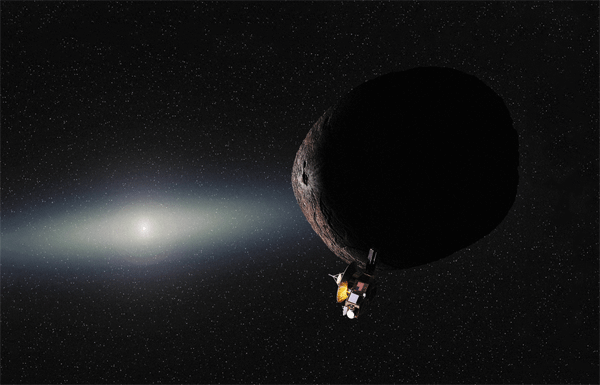
How to “See” Interstellar Space Probes
So far, humans have sent five probes into space that are or will go far beyond the solar system: the Pioneers, the Voyagers, and New Horizons. As an exercise in fun, here's how you can find those probes' locations on the sky.

Comets to Catch in 2019
We peek ahead to see what comets await in 2019. Bright ones will be sparse, but several nice objects, including Comet Iwamoto (C/2018 Y1) and Comet Africano (C/2018 W2), will keep things lively.

Solar and Lunar Eclipses in 2019
There'll be something for everybody in 2019, with total, annular, and partial solar eclipses — and total and partial lunar eclipses to look forward to.

Venus Occults a Star and Mercury Joins Jupiter on the Winter Solstice
Bring in winter with a bang with a beautiful, close conjunction and a rare planet-star occultation.
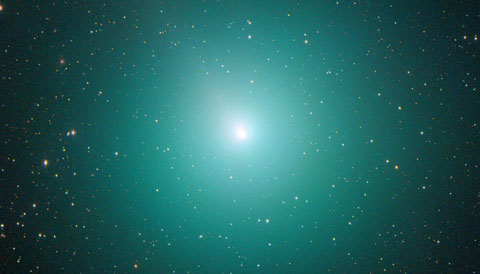
Chasing Comet 46P/Wirtanen as the Moon Looms
Learn how chase away the Moon to keep Comet 46P/Wirtanen in a dark sky. Here's an update on the comet's progress and what to look for in the coming nights.
