 SUNSET:


Advanced Meteor Observing
Meteor studies have relied heavily on amateur observers for more than a century. They still do. Here are some tips and suggestions on how to plan a meteor watch.

The Lunar 100
As the moon wanes in the gibbous phase in the nights to come, see if you can find and observe some of 100 of Charles Wood's classic lunar hit list, including craters, basins, mountains, rilles, and domes.

About Meteors
Meteors, meteoroids, meteorites, and fireballs — keep all these look-alike terms straight.

Where Does the Phrase "Once in a Blue Moon" Come From?
We'll see a "blue Moon" next Friday, but what does that mean? From the Middle Ages to the game of Trivial Pursuit, a folklorist explores the origin of the phrase.
The Top 12 Naked-Eye Variable Stars
Lurking in the seemingly changeless constellations are a few inconstant stars that pulse and eclipse. Here are a dozen variables that are easy to observe.

Occultation Web Resources
Occultations of stars and planets by the Moon and asteroids are exciting to watch, and amateur occultation timings can have real scientific value. But first you need to know what occultations will be happening in your area.

Digging Deep in M33
The Triangulum Galaxy shows more detail through backyard telescopes than any other galaxies except the Magellanic Clouds and our own home, the Milky Way. But M33's treasures don't just jump out and grab your eye. To see them, you need dark skies, patience . . . and this guide from the December 2004 issue of Sky & Telescope.
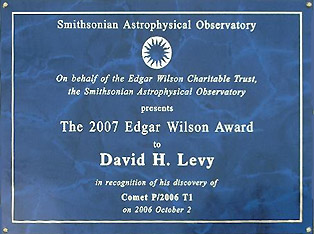
The Edgar Wilson Award
Thanks to a generous bequest, each year amateur astronomers earn a beautiful plaque and a cash prize for discovering one or more comets.

Epsilon Aurigae's Eclipse Begins
Robin Leadbeater of Wigton, UK, has reported the first sign of the long-awaited eclipse of Epsilon Aurigae, one of the most remarkable eclipsing variable stars in the sky.
Beta Lyrae
Beta Lyrae, an eclipsing binary, is one of the brightest and easiest-to-find variable stars in the sky.
Space-Station Frenzy
For a few days each May, you might see the International Space whenever it passes overhead throughout the night.
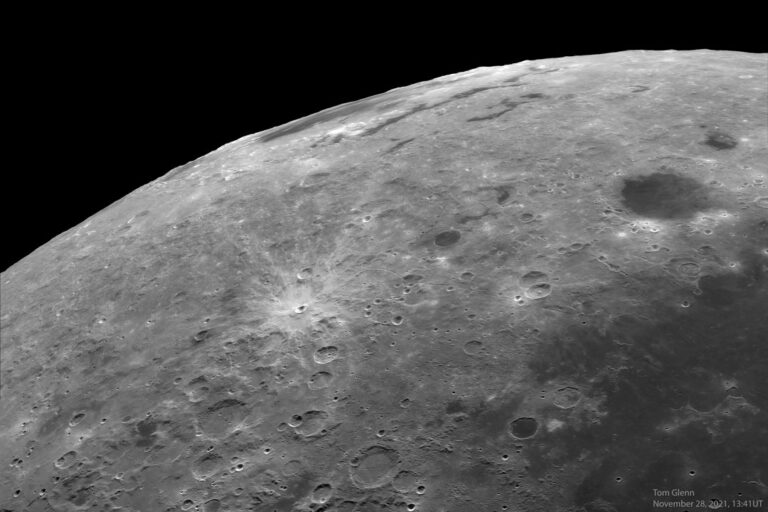
Glimpse the Moon's Far Side
You can see 9% more Moon than just what's on the near side — thanks to lunar libration.
Mercury, Messenger, and Observers
As the first images are released from Messenger's flyby of the innermost planet, previous ground-based observations are proving to be surprisingly accurate.
Catching the Messenger of the Gods
Mercury is a rewarding challenge for planetary astrophotographers, as this amazing image by Massachusetts amateur John Boudreau demonstrates.

Chi Cygni's Record-Breaking Maximum
The red, Mira-type variable star Chi Cygni has had a very unusual maximum. It's one of the brightest such variables to begin with (typically peaking at about magnitude 5.2), but in late July and early August 2006, it peaked at about magnitude 3.8.

How to Catch an Iridium Flare
These communications satellites can briefly outshine Venus as they spray the ground with reflected sunlight.
Chi Cygni: A Wide-Ranging Variable
This red long-period variable is sometimes visible to the unaided eye — and sometimes invisible even in a 4-inch telescope.

111 Deep Sky Wonders for Light-Polluted Skies
Bright skies aren't empty skies. See for yourself how many treasures lie hidden in the glow of a city sky.

How to Safely See a Partial Solar Eclipse
Looking at the Sun is harmful to your eyes at any time, partial solar eclipse or no. Fortunately, there are many easy ways to watch the show safely.

Observing Galaxies: Spiral, Elliptical, and Irregular
Trained eyes and clear, dark skies can open up a new dimension in deep-sky observing.
