 SUNSET:

 1
1S&T Associate Editor Sean Walker and Contributing Editor Stephen James O’Meara accompanied nine adventurers on a stargazing safari for an immersive experience in the African bush in Botswana.
This summer I had the privilege of accompanying a group of adventurous souls on a Sky & Telescope tour to the southern end of Africa and the wildlife preserves of Botswana. This landlocked nation is one of the most sparsely populated countries in the world. Its geography is dominated by the Kalahari Desert (covering some 70% of the country), with the expansive Okavango grasslands and river delta in the northwest.
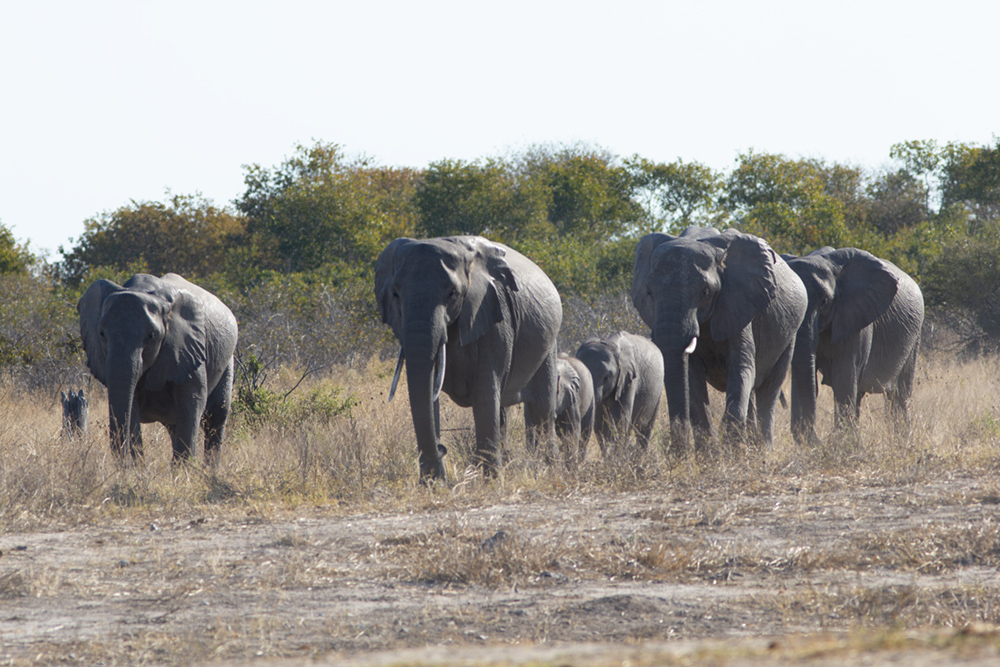
The country is home to a rich variety of wildlife, including lions, leopards, zebras, wildebeests, hippopotamuses, giraffes, and the largest population of elephants in the world. Together, the combined wonders makes for an enticing destination for wildlife enthusiasts and skywatchers alike.
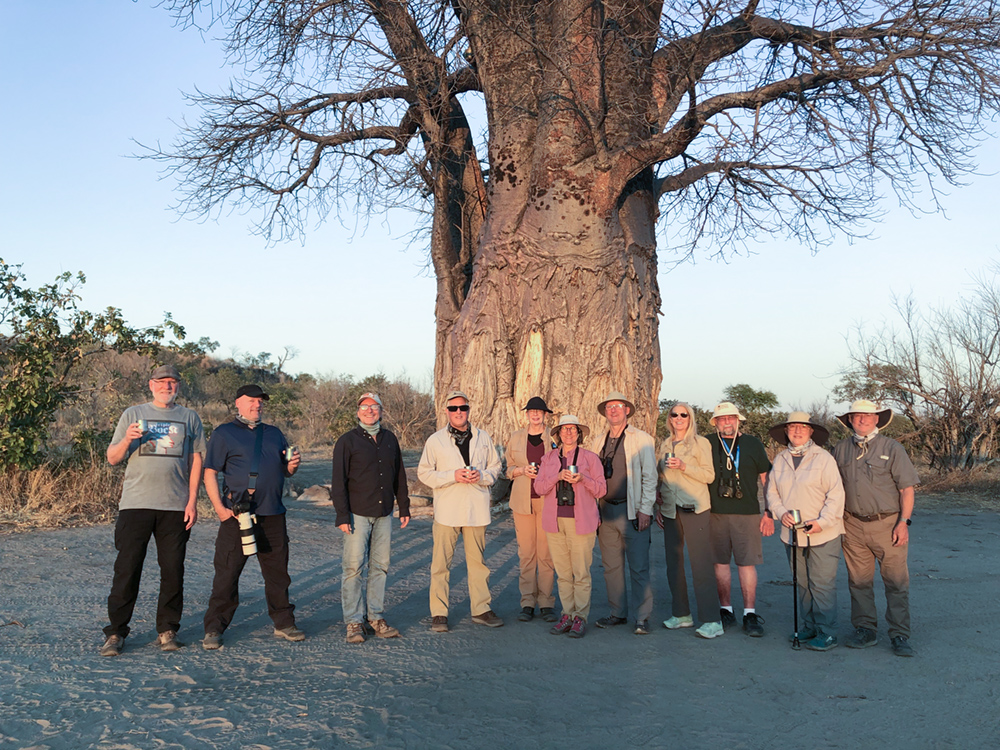
Sky & Telescope / Stephen James O’Meara
On the flight from London to Johannesburg, I awoke early in the morning and looked out the window to see the old Moon just a few days from new, with its thin crescent facing toward the right instead of the left — a sure sign I had crossed the equator. After two more flights, our group arrived at our first base of operations in the late afternoon: Nxai Pan Lodge, located in Botswana’s Nxai Pan National Park.
Here we spent a brief period of orientation and getting acquainted while I re-connected with our tour leader, Stephen James O’Meara, whom I’ve met a few times over the years. The lodge surrounds a waterhole where elephants, kudu, impala, and wildebeests come at all hours of the day and night for a clean drink. We often saw a dozen elephants wading in its waters. We unpacked in our “tents” then boarded two Toyota Range Rovers customized for sightseeing in the park. A late dinner followed.
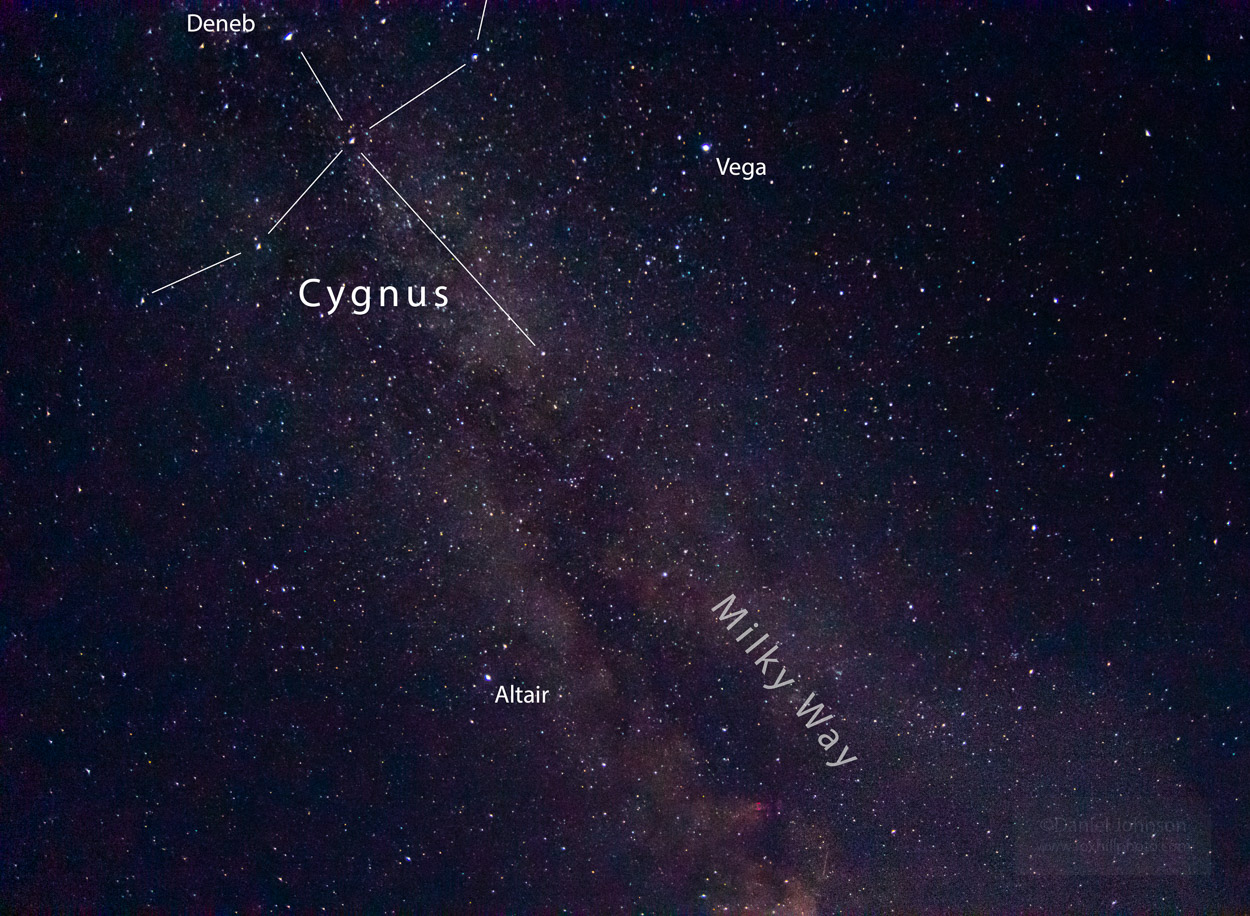
As our guests were dining, Steve and I set up our telescopes and cameras. After dinner, he showed us several showpiece objects through the 8-inch Dobsonian he brought, which served as our primary observing instrument. This was my first time being in the Southern Hemisphere in two years, and it took a little while to adjust to the radically different celestial perspective. Last time I was here, it took me a full 10 minutes to recognize Cygnus standing straight up from the horizon — an unnatural angle for this Yankee observer.
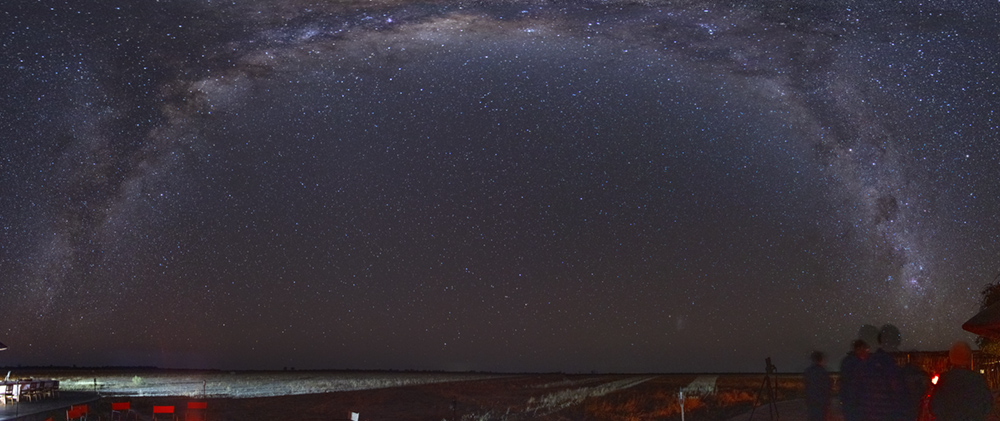
Sky & Telescope / Sean Walker
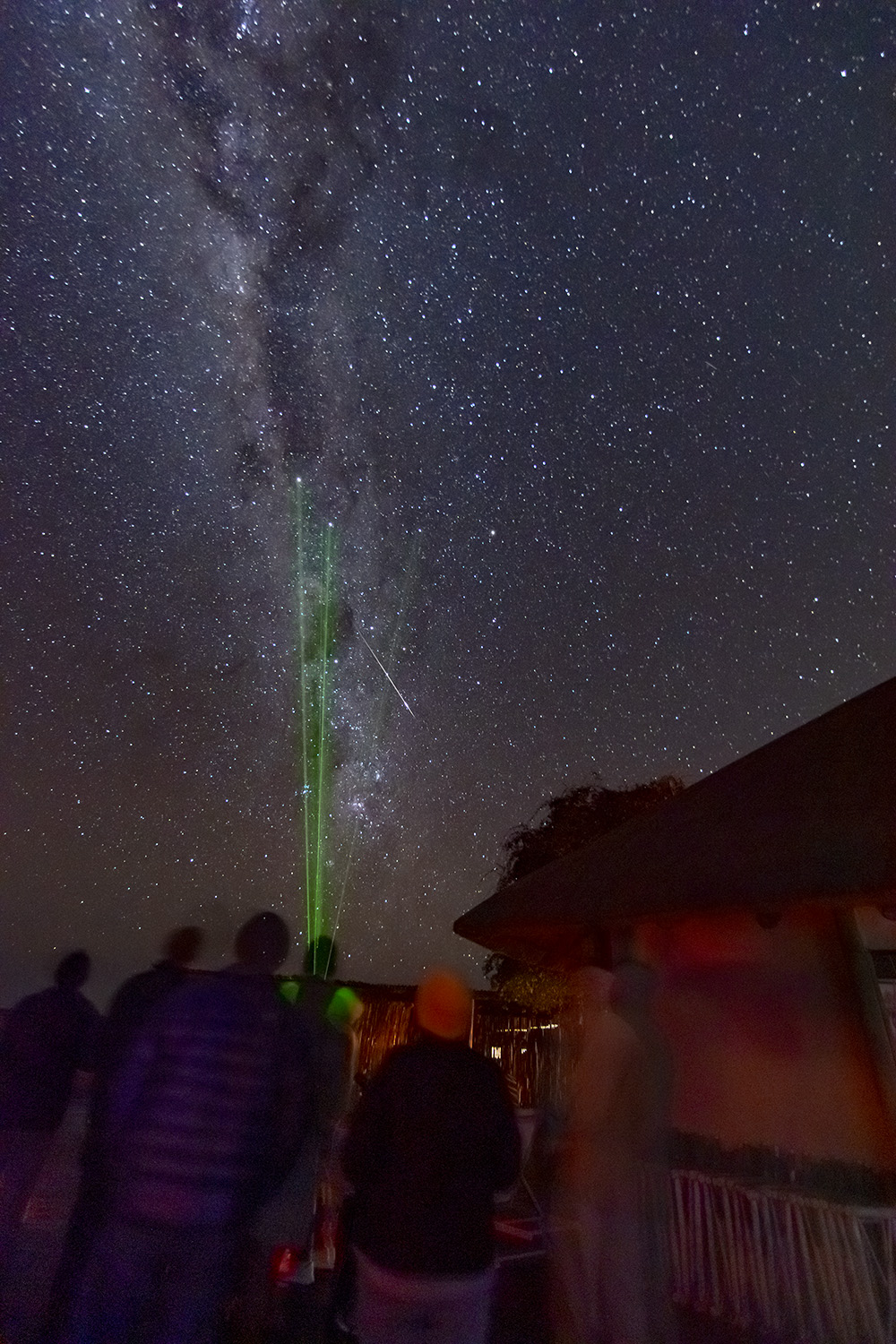
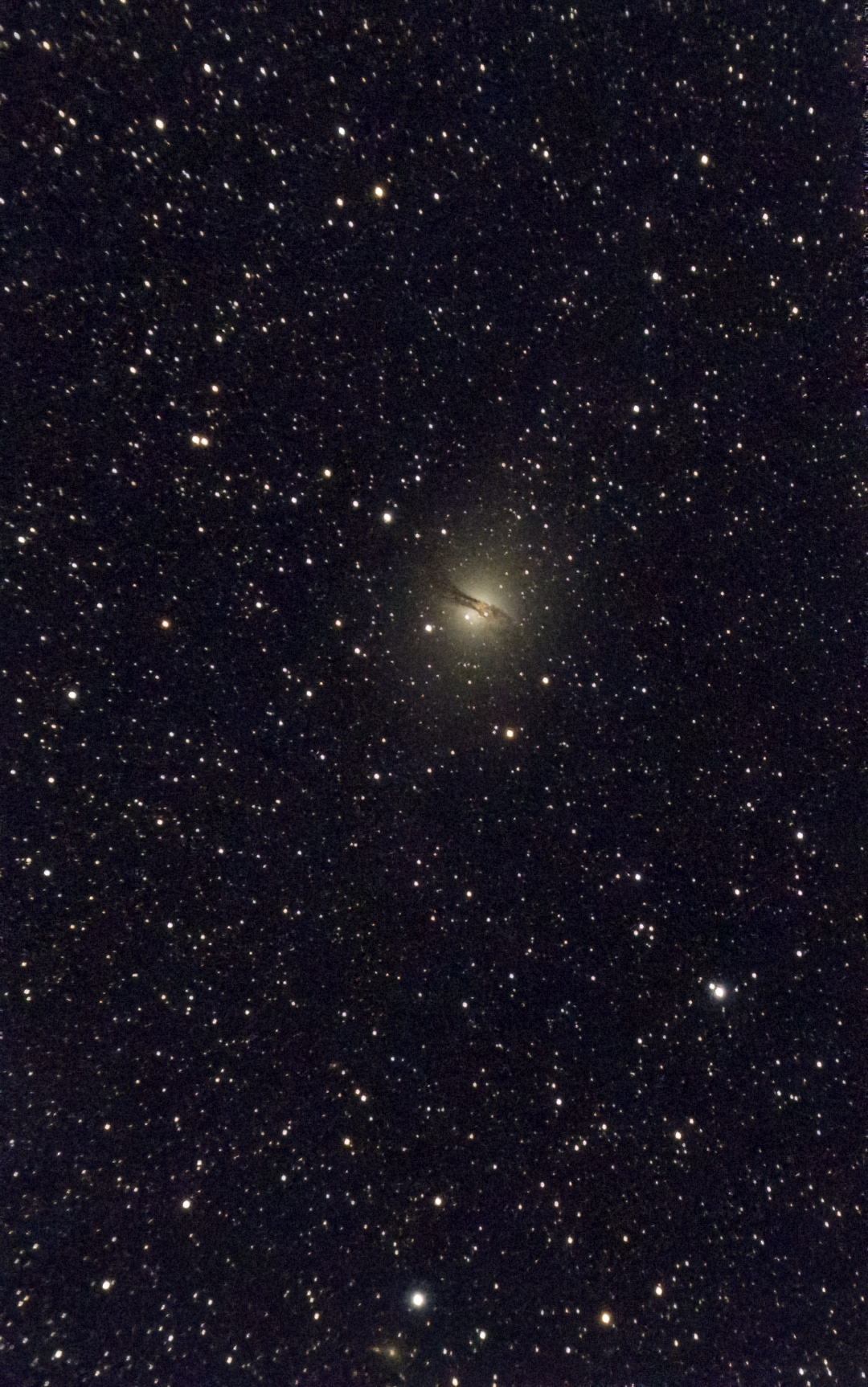
When the sky darkened, the center of the Milky Way appeared directly overhead. The familiar (to me) northern extent lay to the east, while unfamiliar constellations led down to the west — Lupus, Centaurus, Crux, and Carina sinking into the horizon. Seeing Eta Carinae, 47 Tucanae, and Centaurus A through the scope (as our hosts kept watch for predators) was an experience I won’t soon forget! We were briefly visited by a jackal lurking along the perimeter of the deck. One rule at each of the reserves we visited was that guests must not leave their tent at night without a guide. The many fresh leopard prints found outside the perimeter that morning meant this was no casual formality.
The next morning began very early because by that hour, the big-cat predators have finished their hunts and fed their cubs, offering a good opportunity to see these nocturnal killers at rest. Our guides went out at dawn in order to track several lion prides and leopards.
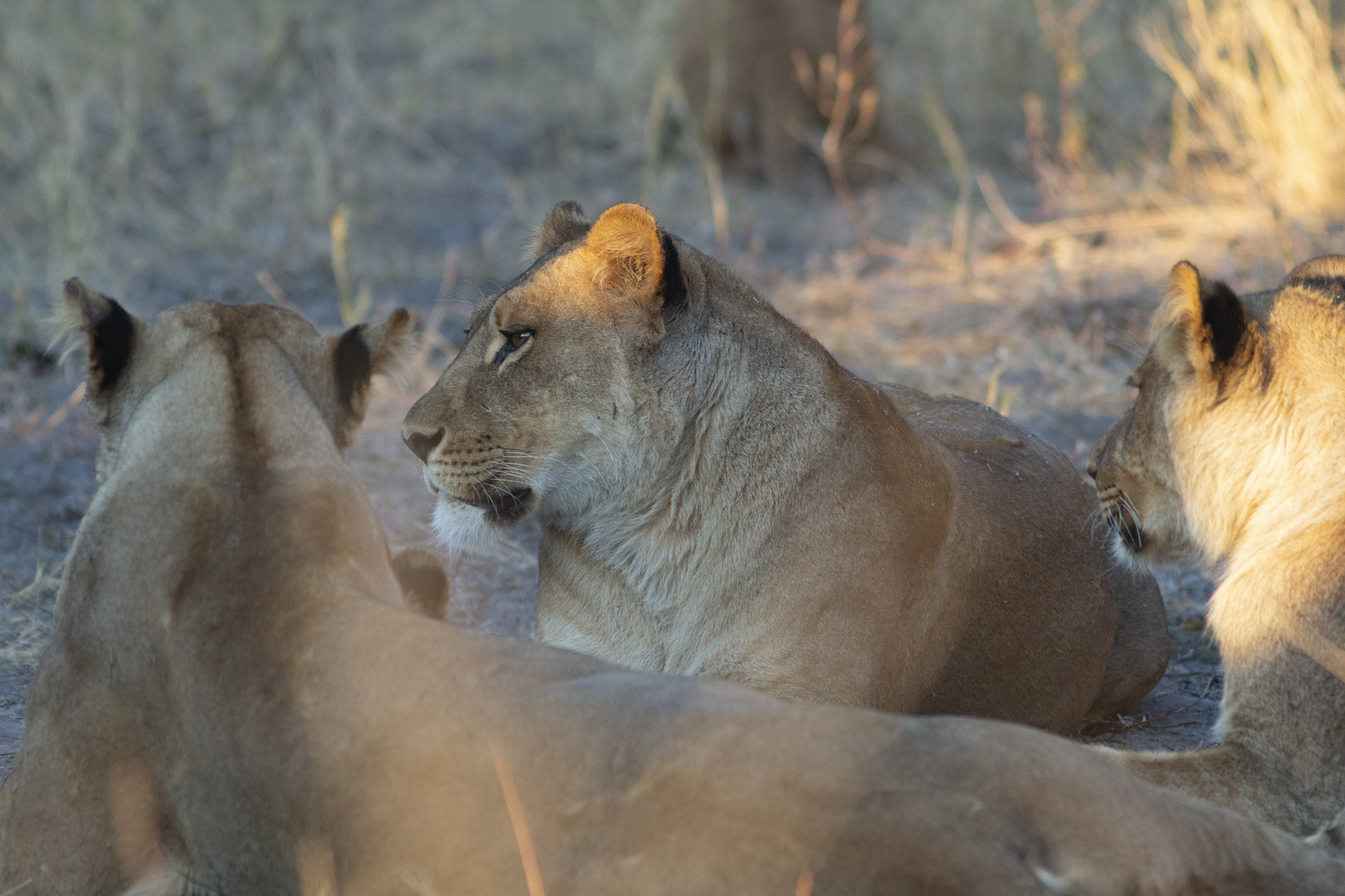
Sky & Telescope / Sean Walker
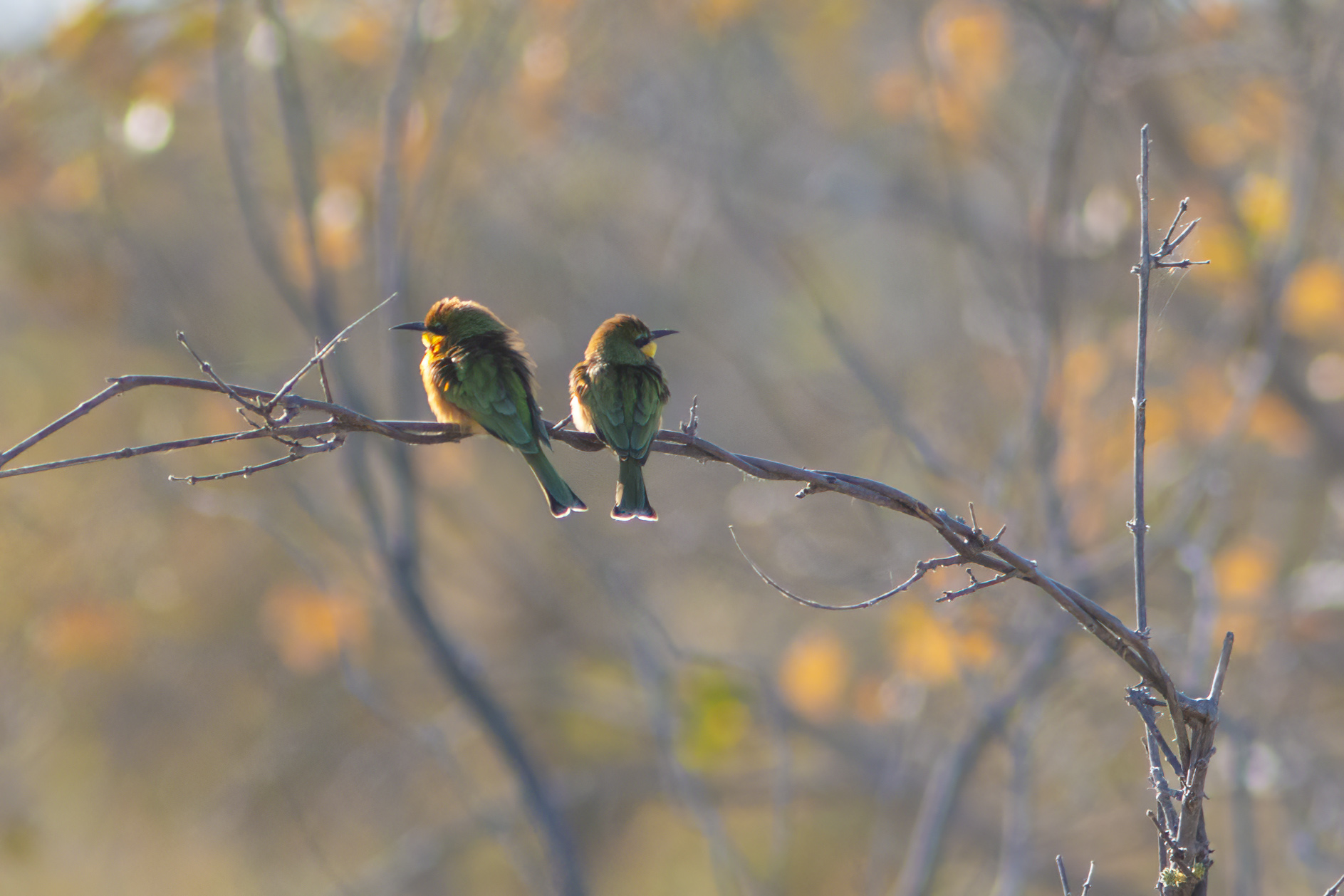
Our first daytime safari excursion was absolutely amazing. We encountered herds of springbok, elephants, kudu, zebras, and giraffes up close, not to mention hundreds of various species of bird native to the area, big and small. And we saw a lot of them. Hardly a few minutes would pass between sightings. Often we drove right up to a herd, and I do mean right up to it — we were no farther than a dozen feet from the animals, and the animals for the most part were unfazed.
Sky & Telescope / Sean Walker
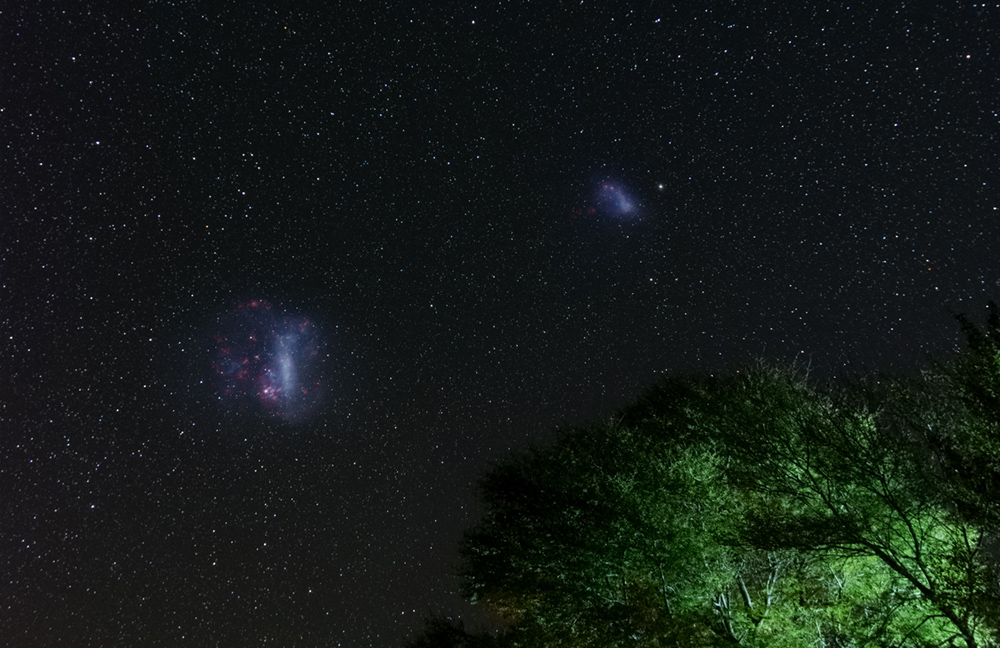
Nxai Pan was the location on our tour where we had a good view of both Large and Small Magellanic Clouds, galactic neighbors of our own Milky Way. These dwarf galaxies are best seen before dawn at this time of year. Every cabin had a deck facing south, so our guests could step out and have a look before dawn . . . provided they took a moment to first scan the area with a flashlight for the glowing eyes of lurking fauna.
On the second morning, I made a point to get up at about 3:00 a.m. to see the Clouds, as they were highest in the predawn sky. I spent the next 3 hours photographing them over the waterhole as the elephants moved about, savoring the view through my 10×60 binoculars for as long as I could while being mindful of every noise in the dark. It was hard to pull my gaze from the Tarantula Nebula in the LMC, but I managed to also note the growing tower of light in the east — the zodiacal light, a shimmer of sunlight reflecting off dust grains orbiting the Sun between the planets. Venus was well up, and both Jupiter and the crescent Moon (its dark landscape illuminated by earthshine) also made an appearance toward the horizon.
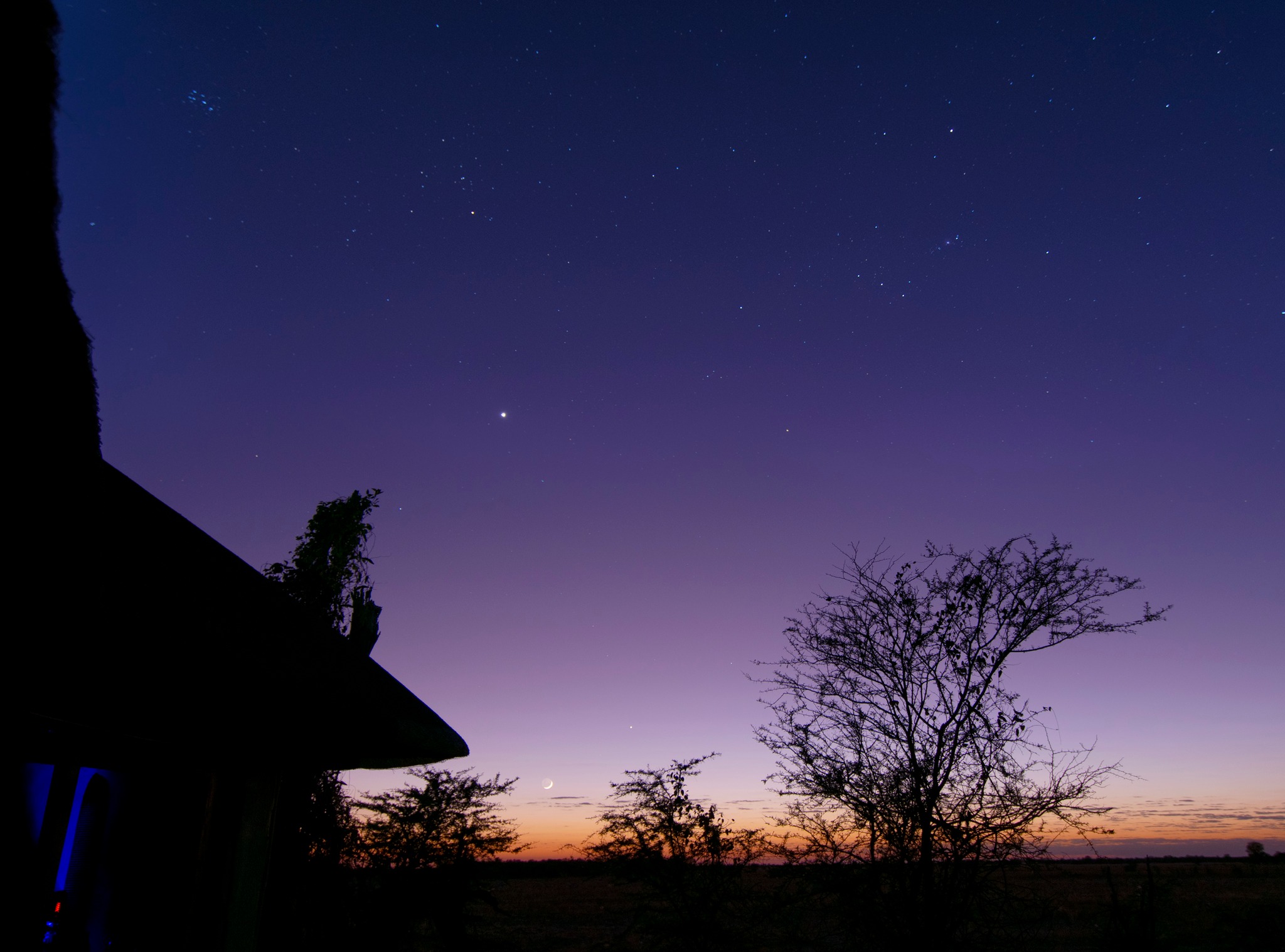
Sky & Telescope / Sean Walker
On the third day, we departed Nxai Pan via a pair of light aircraft for our next destination, the Savute Safari Lodge at the west end of Botswana’s beautiful Chobe National Park. The flight lasted about a half hour, and those of us with window seats played a spirited game of “spot the herds” from the air.
This location featured encounters with baboons, lion prides, antelope, wildebeests, and Cape buffalo. Savute has a manmade waterhole that attracts large herds of elephants, impala, and kudus. It was fascinating watching the dynamics of the herd as we ate lunch and dinner: Some older animals were clearly teaching the young how to behave. On the last evening, we were visited by a large porcupine while we dined after dark.
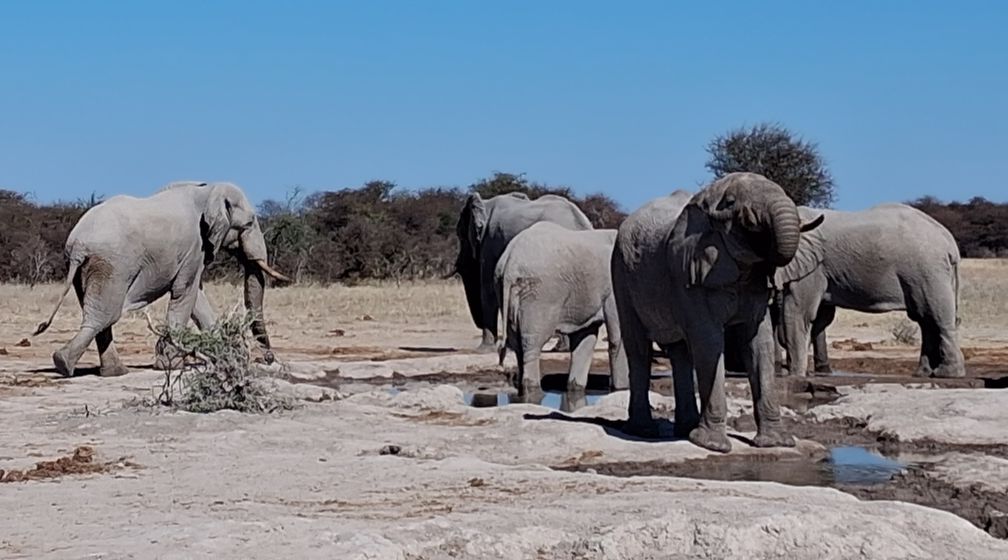
Sky & Telescope / Sean Walker
Our morning and afternoon safari excursions had stops for coffee and snacks in the morning and cocktails in the bush in the evening, when we enjoyed the sunset surrounded by elephants, giraffes, zebras, and impala while hoping for a glimpse of the elusive green flash as the Sun sank below the horizon. Although we never saw the flash, the sunsets were still amazingly colorful, punctuated occasionally by the silhouettes of giraffes among the trees.
On the second evening at Savute, Steve and I spotted the 21-hour-old crescent Moon just above the trees in the northwest and followed it until it was lost in the trees across from our deck. Each night, Steve showed us objects in the southern skies (and some in the north) in the 8-inch Newtonian, while I showed some guests how to photograph the Milky Way with their cell phones, with varying amount of success.
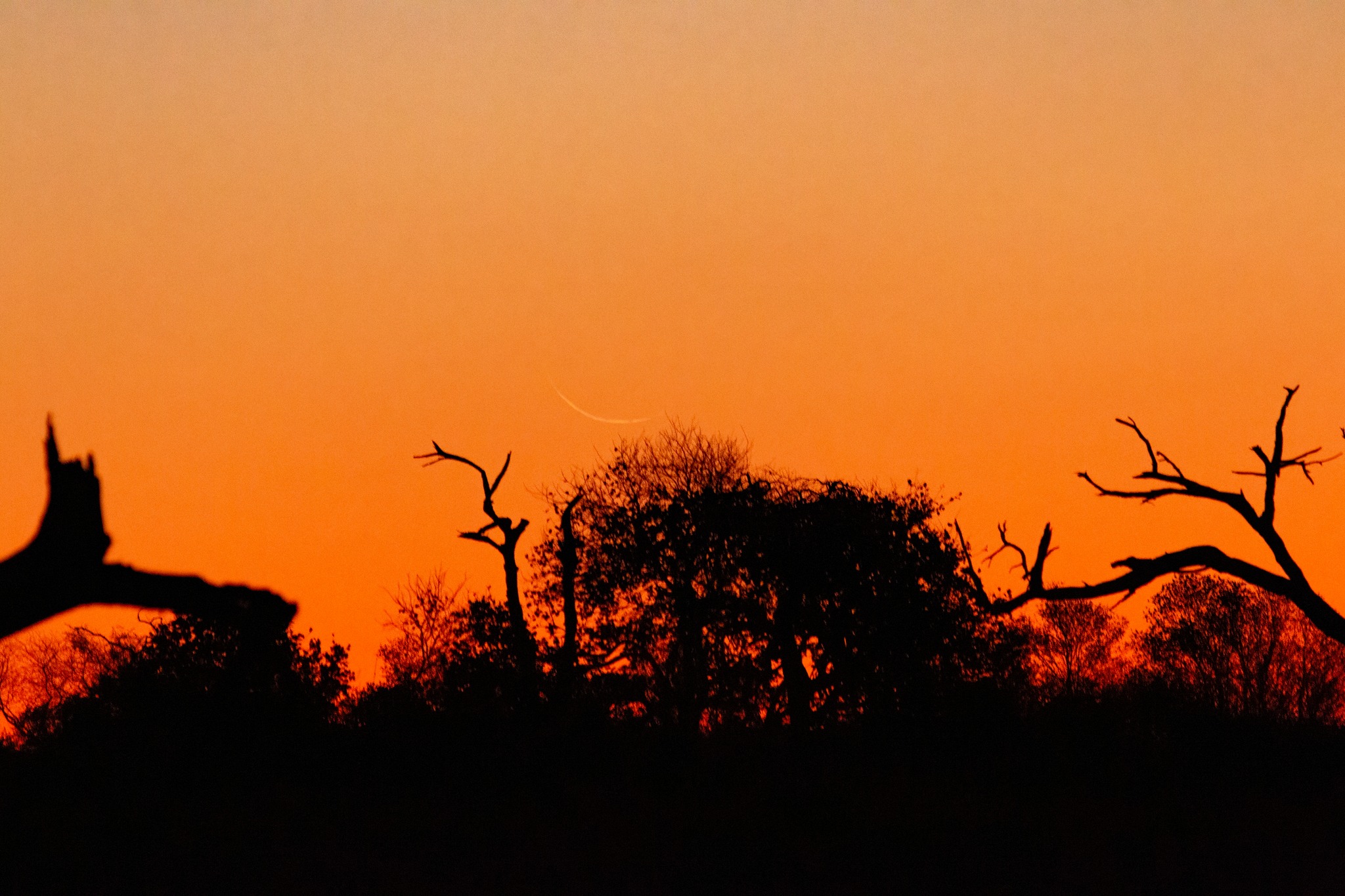
Sky & Telescope / Sean Walker
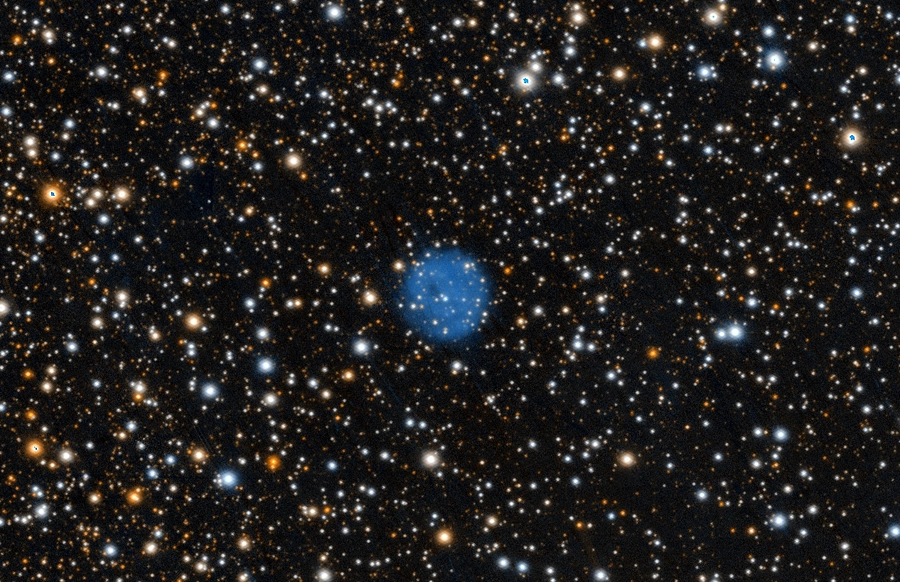
I also brought along a ZWO Seestar S30 and used it to image most of the targets Steve showed us, in order to provide our guests with a photo album of objects they all saw through the 8-inch. The short exposures I captured were remarkably similar to the views through the eyepiece, with the exception of the color that the Seestar captures but our eyes don’t see.
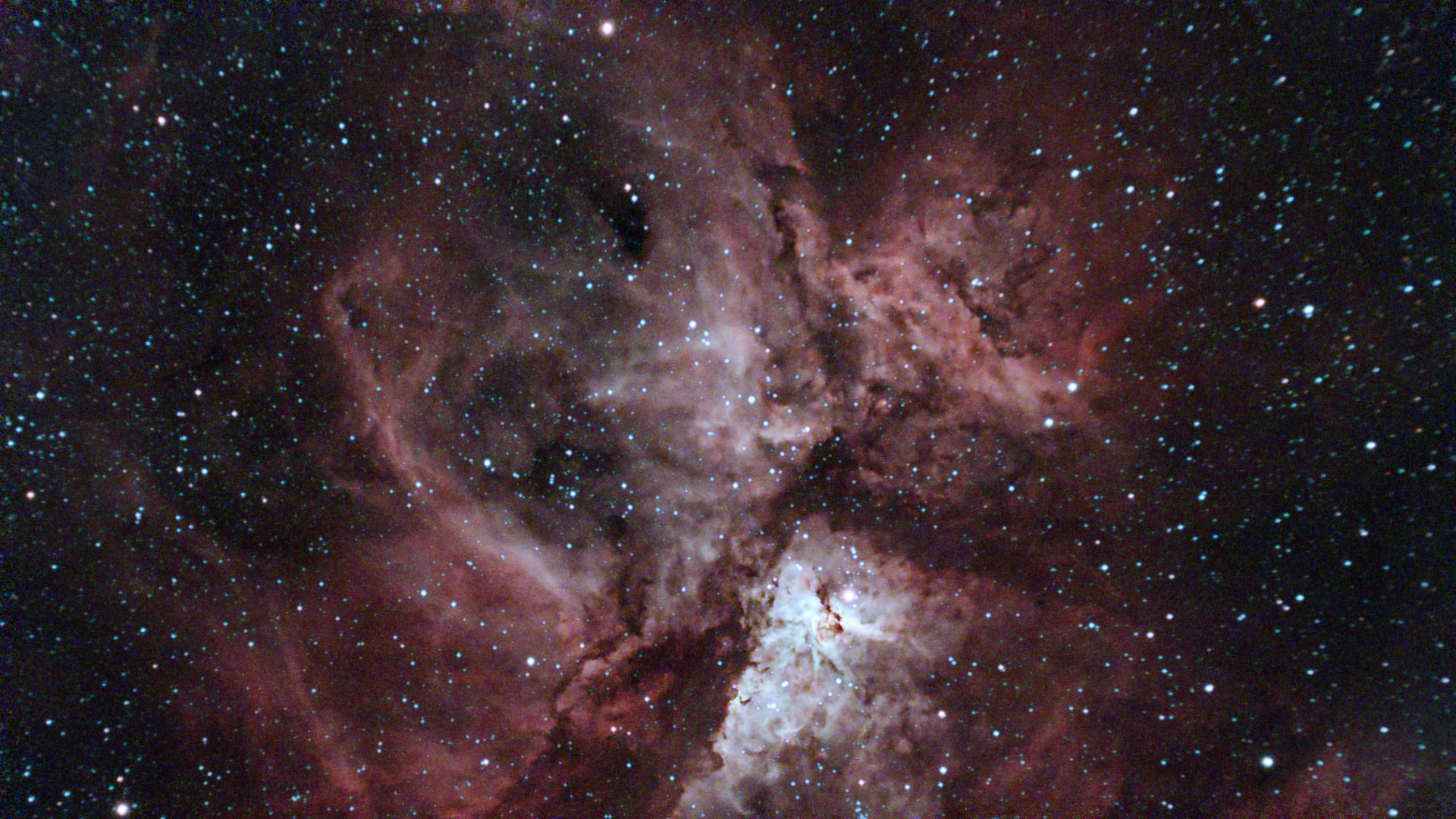
Sky & Telescope / Sean Walker
Evening meals were particularly interesting at Savute. The staff at the lodge are locals who are proud of their heritage, and several shared a bit of their history as well as several ceremonial songs with our group before the start of the evening meal.
On the seventh day, those who opted for a final excursion were treated to the only encounter with a leopard in full view, which had taken an unlucky impala before dawn. By 10 a.m., we were headed to the airstrip to fly to Kasane Airport, from whence some of us departed while the rest of the group continued on for two days in Zimbabwe. There they visited Victoria Falls, the largest waterfall in the world, before saying their final goodbyes and beginning the long journey home again, with memories of our immersive safari forever etched in our minds.
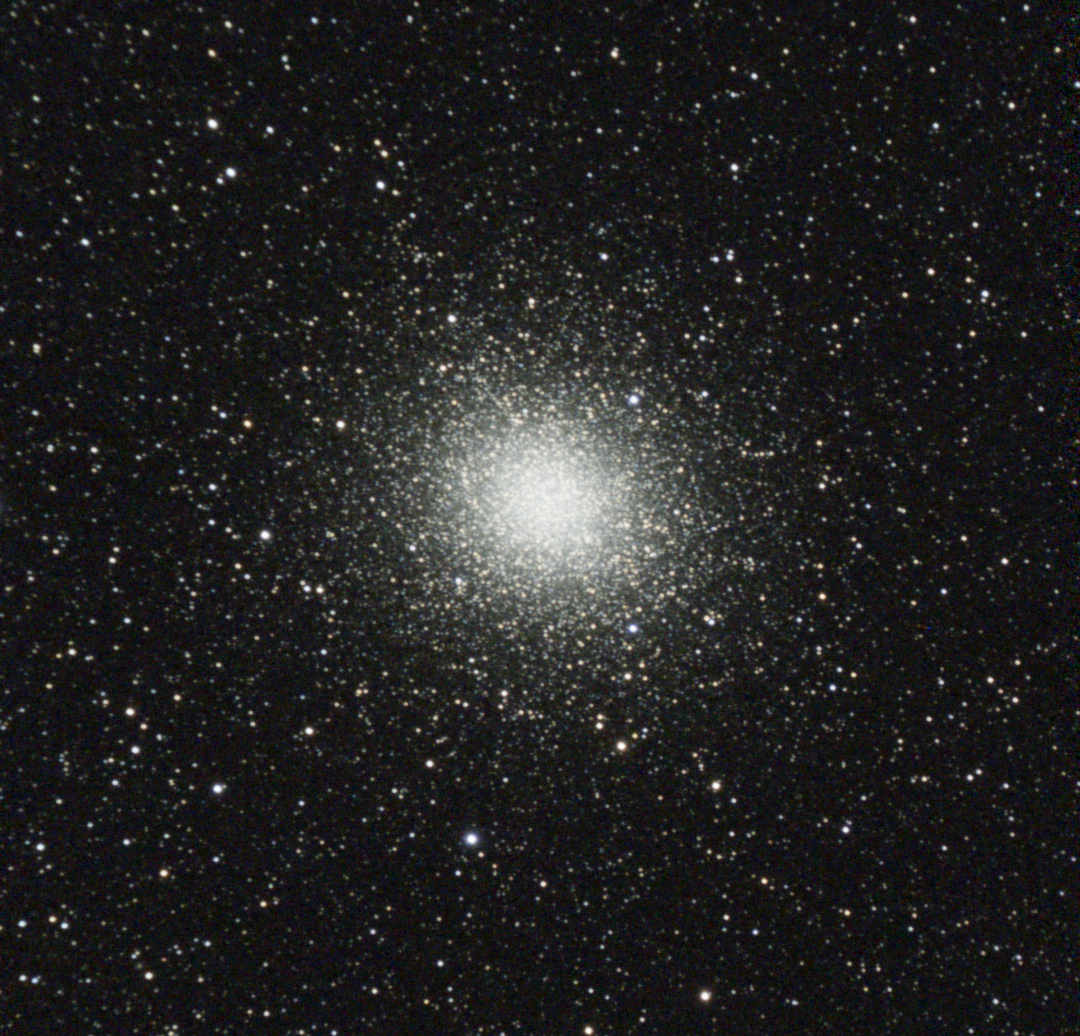
Sky & Telescope / Sean Walker
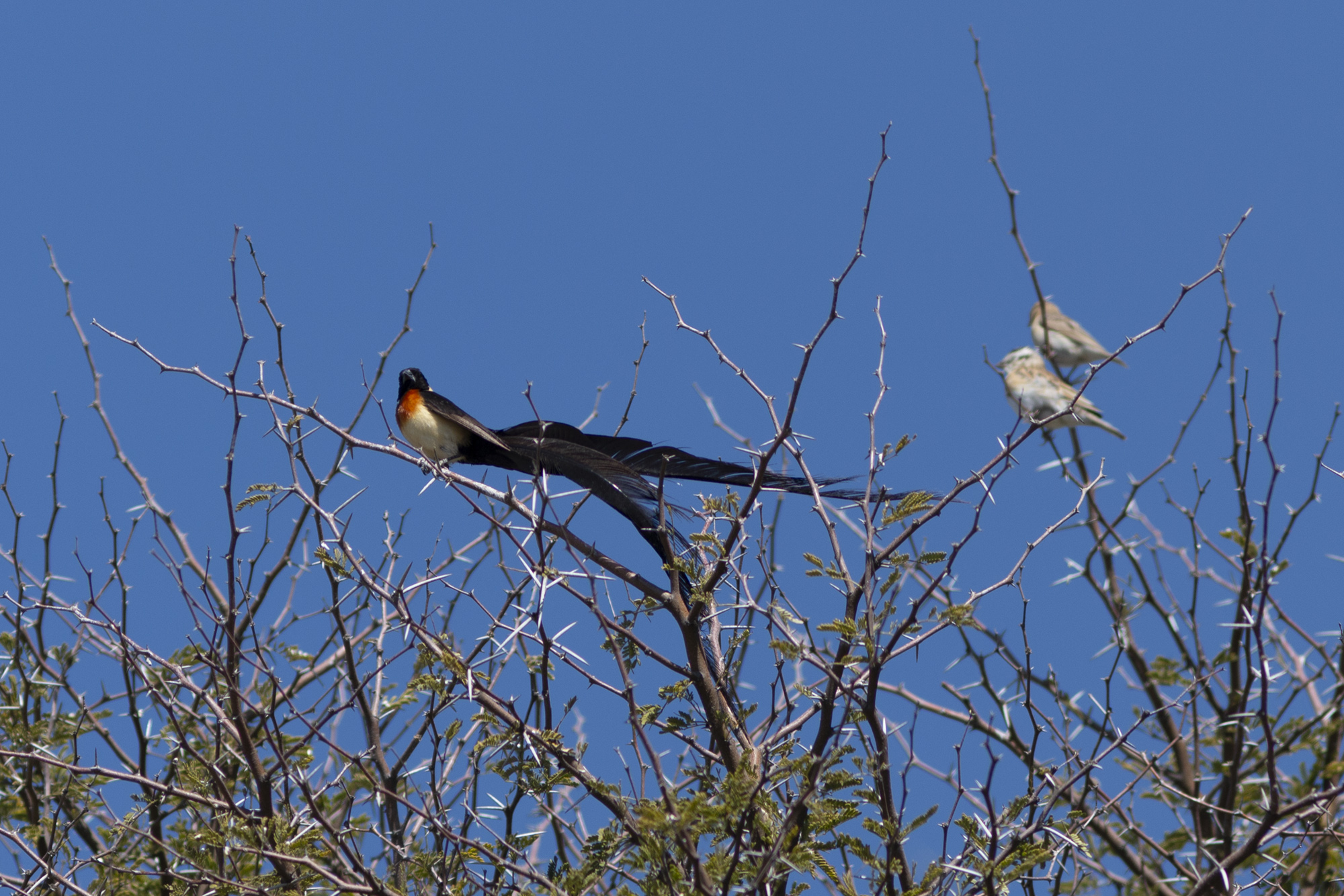
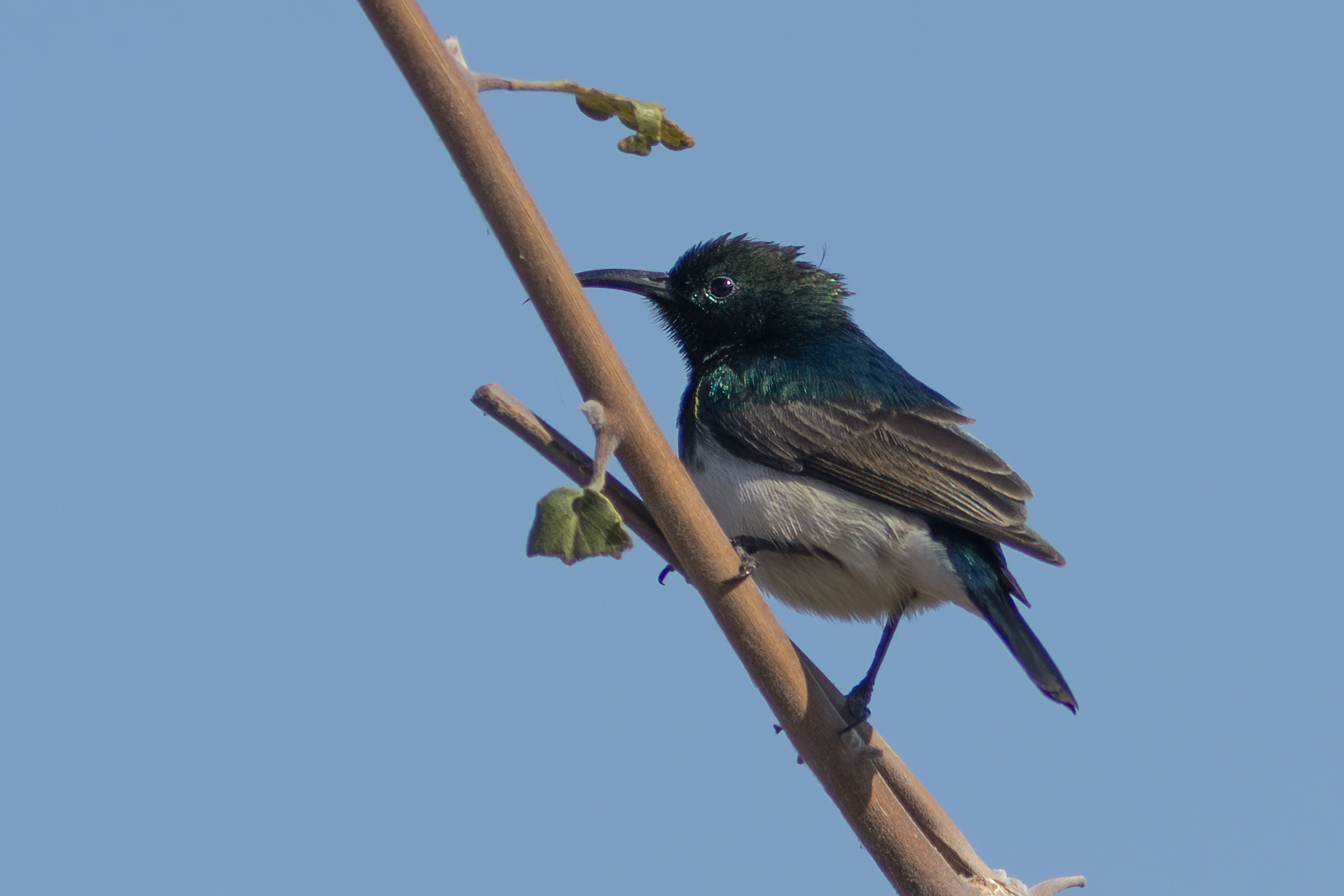
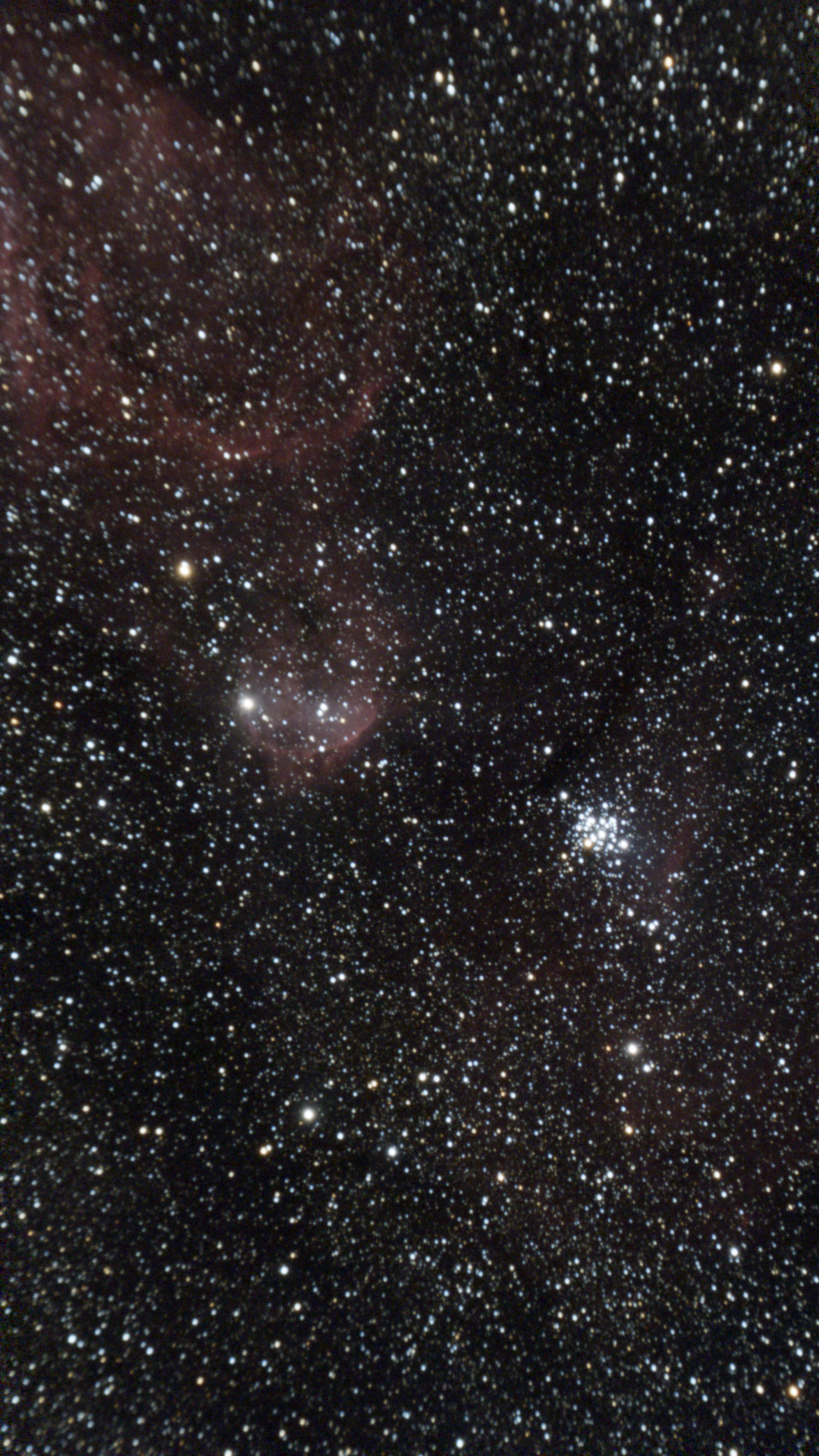
Below are a few more of my photos from this amazing trip.
About Sean Walker
S&T Senior Editor Sean Walker joined the staff of Sky Publishing in 2000 and specializes in astrophotography, solar system observing, and astronomy gear.



Comments
Revv
August 16, 2025 at 5:08 am
Beautiful! I wish we had such dark skies in our cities as well.
You must be logged in to post a comment.
You must be logged in to post a comment.