 SUNSET:

 8
8The Artemis 2 crew set records and provided amazing views — with more to come — as they journeyed around the Moon.
NASA
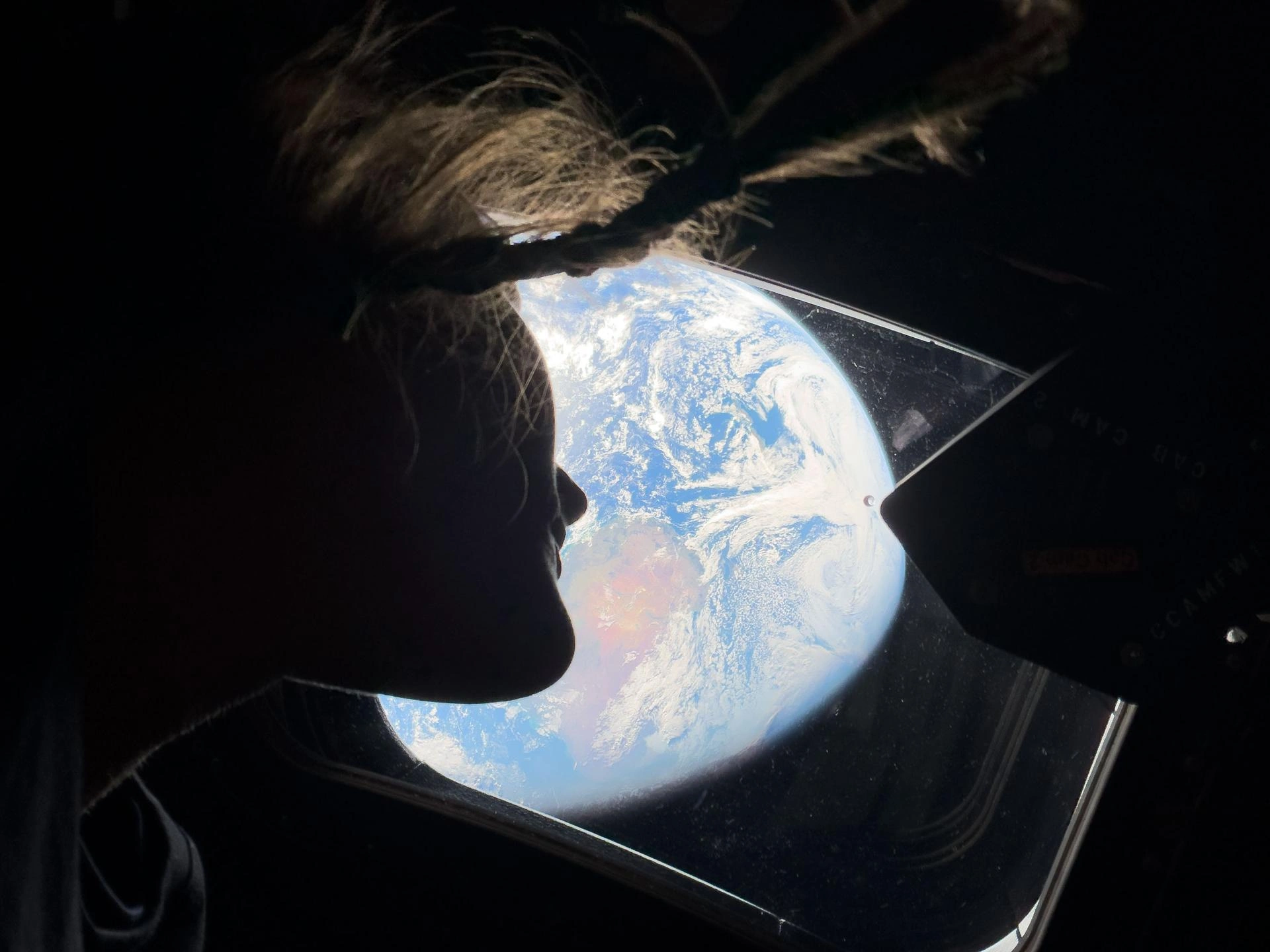
It’s been a while since humans have witnessed in person the celestial scenes from deep space. NASA astronauts Reid Wiseman, Victor Glover, Christina Koch and Canadian Space Agency astronaut Jeremy Hansen have given us some awesome views from their enviable vantage point over the past week, as part of the Artemis 2 mission to the Moon aboard the Orion module, named Integrity by her crew.
First Days
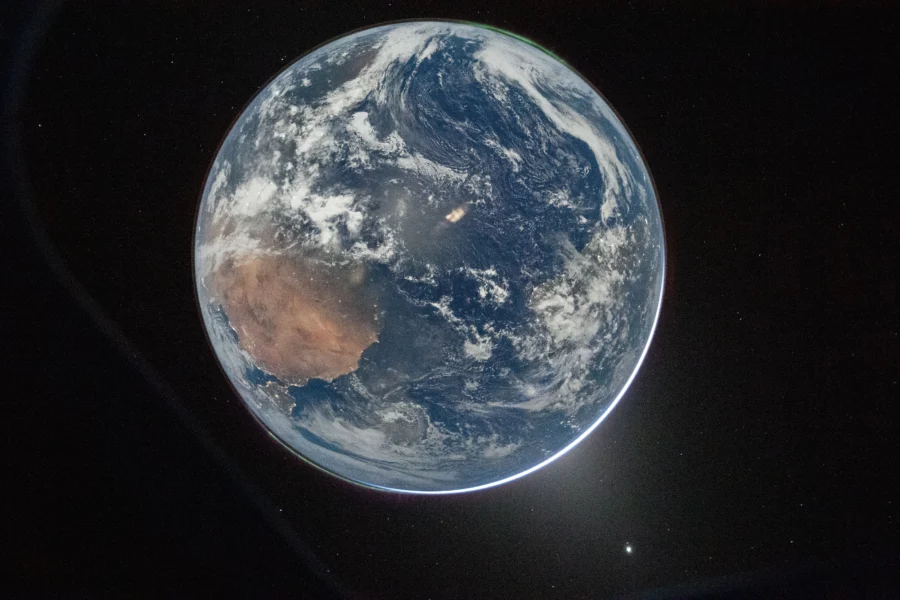
Launched on April 1st, the mission features the first crewed flight of the Space Launch System (SLS) and NASA’s Orion crew capsule. The crew spent the first days in Earth orbit, putting the spacecraft through its paces and performing several approach tests using the Interim Cryogenic Propulsion Stage (ICPS) as a target.
Catching sight of the Artemis 2 mission in orbit was tough for ground-based observers, but not impossible. Filipp Romanov managed to spot the mission using remote telescopes based in Australia.
NASA / Reid Wiseman
Artemis 2: On Approach to the Moon
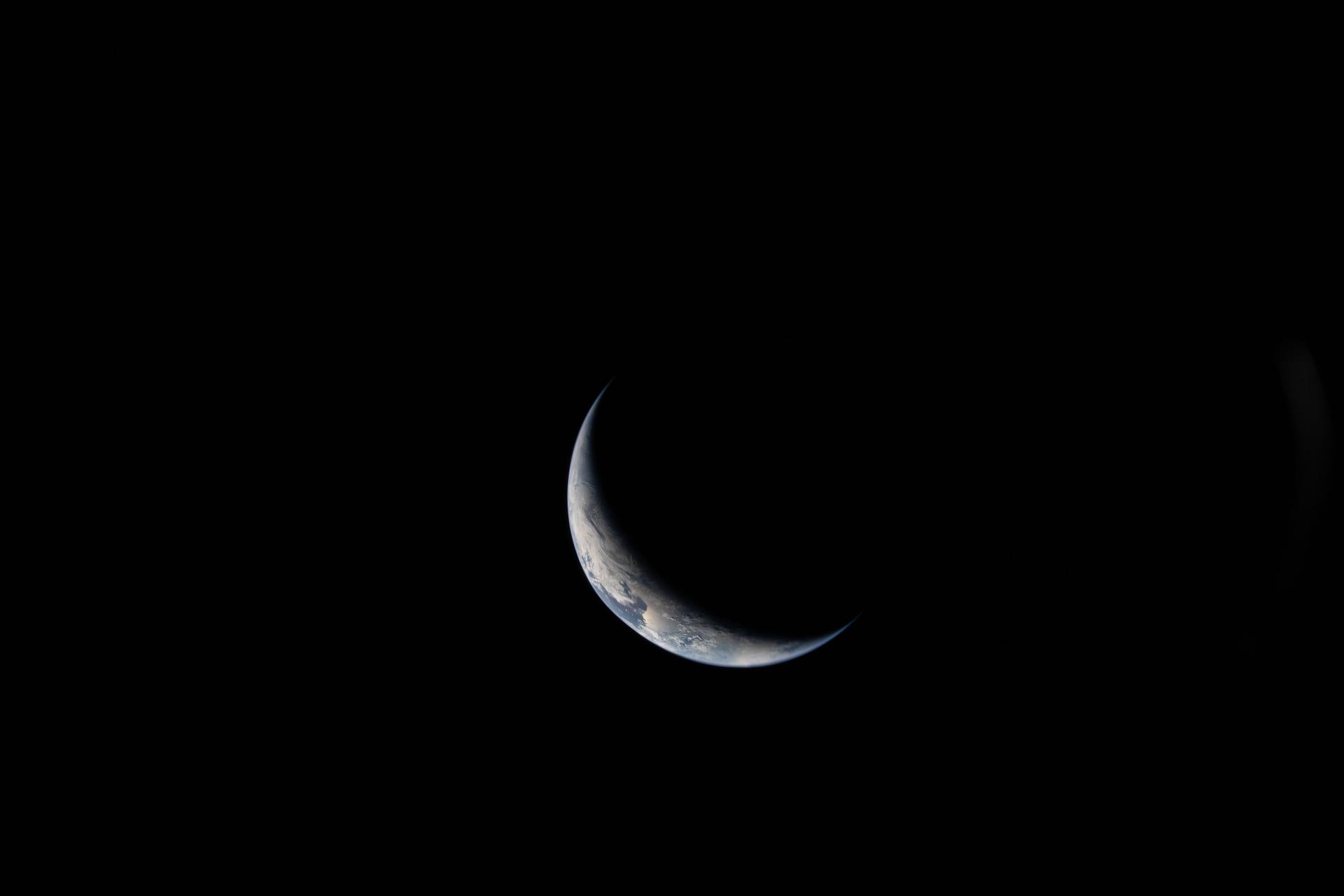
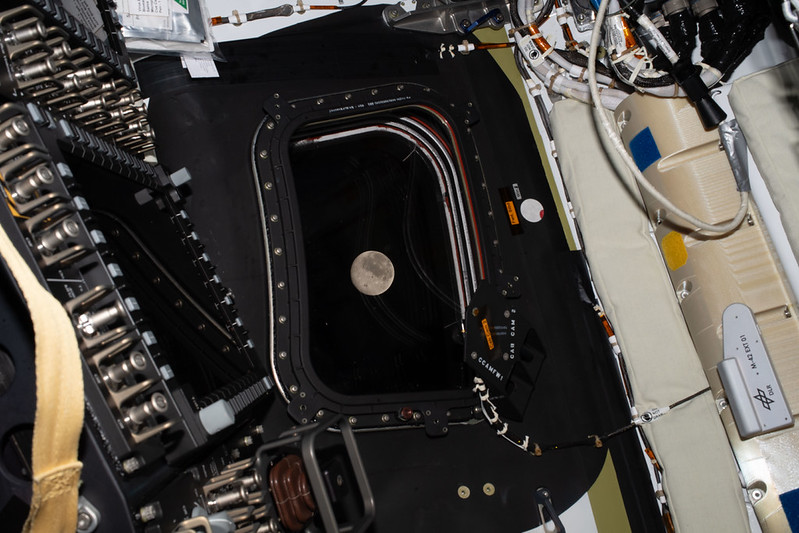
Then, it was off to the Moon. The mission performed a perigee raising maneuver and translunar injection burn on the mission's Day 2, sending the spacecraft on a trajectory that would take it past the Moon on a free-return trajectory reminiscent of the Apollo 13 rescue maneuver. As they were on their way outbound, the crew snapped an iconic image of a crescent Earth:
NASA
NASA
Artemis 2's Lunar Flyby
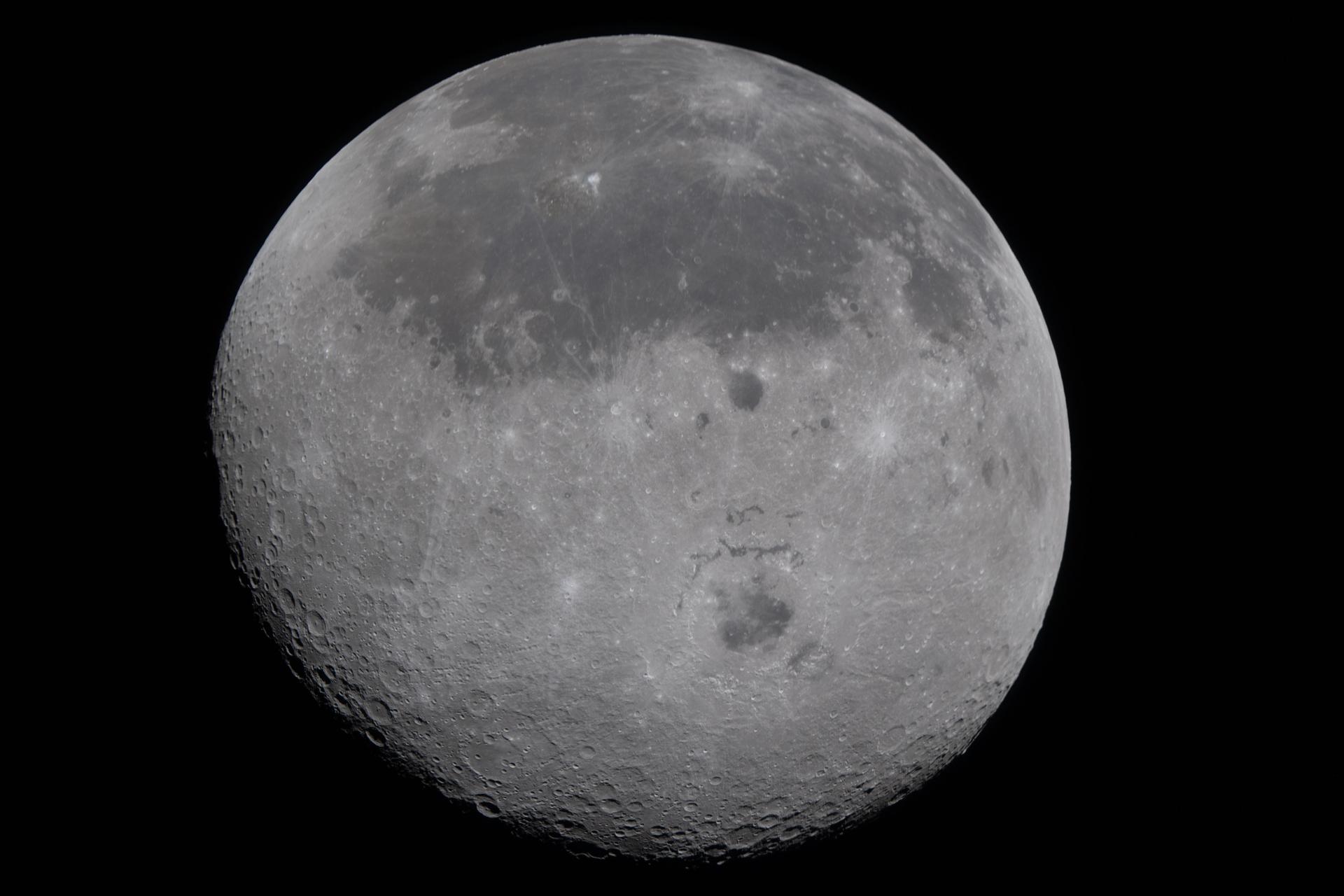
Finally, on Day 6 of the mission, the crew began their seven-hours-long flyby around the Moon.
NASA
As the NASA broadcast began, Hansen spoke to mission control, noting a bright crater on the boundary between the Moon's nearside and farside. Parts of that boundary, including the unnamed crater, can sometimes be seen from Earth as the Moon wobbles in its tidally locked orbit. In an emotional message, Hansen requested permission from ground control to name the crater for his crewmate's late wife, Carroll Taylor Wiseman, who passed away in 2020. The astronauts as well as mission controllers on Earth took a moment of silence after this message.
Carroll Crater is to the northwest of Glushko, at the same latitude as Ohm Crater, the crew noted. The crew also requested another unnamed crater — almost directly between Orientale to Ohm — be named for the capsule, Integrity. NASA hasn't yet confirmed either crater's location. Both names are unofficial for now and will be submitted to the International Astronomical Union for approval.
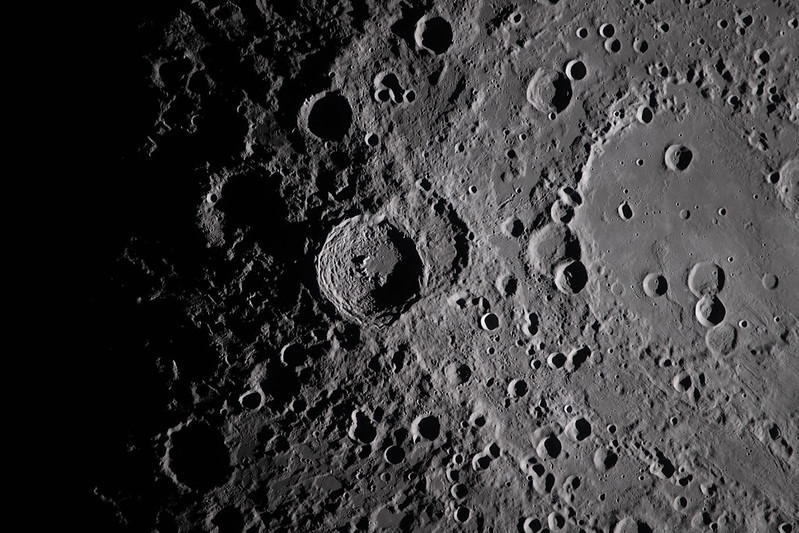
As expected, the mission set a record for the farthest humans have ever traveled from Earth: Artemis 2 reached an apogee of 406,771 kilometers (252,756 miles) away, 6,616 kilometers farther than the previous record held by Apollo 13 in 1970. The record was set on Day 6, Monday April 5th at 7:02 p.m. EDT. Just prior to that, Artemis 2 made its closest approach to the Moon, taking the crew just 6,545 km from the lunar surface. At its most distant point, the mission was traveling at 60,863 miles per hour relative to Earth, and 3,139 mph relative to the Moon.
NASA
The crew dimmed the cabin lights during the flyby to aid their official sight-seeing as they passed over the lunar farside. They watched craters pass by both visually and with cameras angled just so to minimize reflections from the windows. Most of those images have not yet been released, but those that have been are available in NASA's gallery.
The team also made observations of future Commercial Lunar Payload Services (CLPS) mission landing sites, including the enigmatic Reiner Gamma lunar swirl. Intuitive Machines’ Nova-C lander is set to head there on its IM-3 mission later this year.
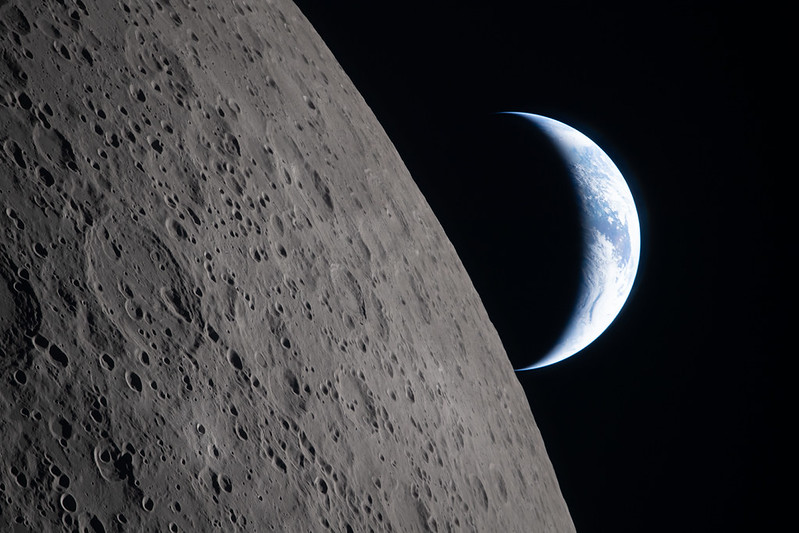
Along with views of the lunar farside, Day 6 also saw the mission pass behind the Moon as seen from Earth — cutting off radio contact for 40 minutes.
NASA
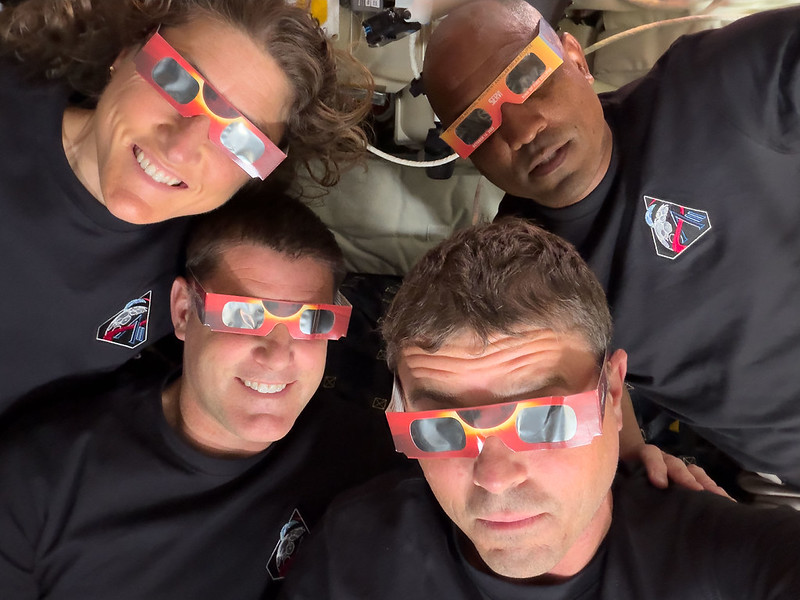
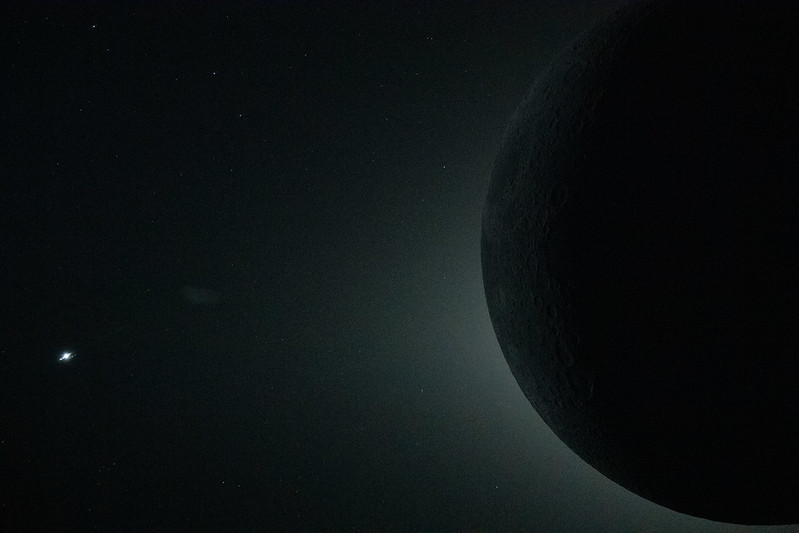
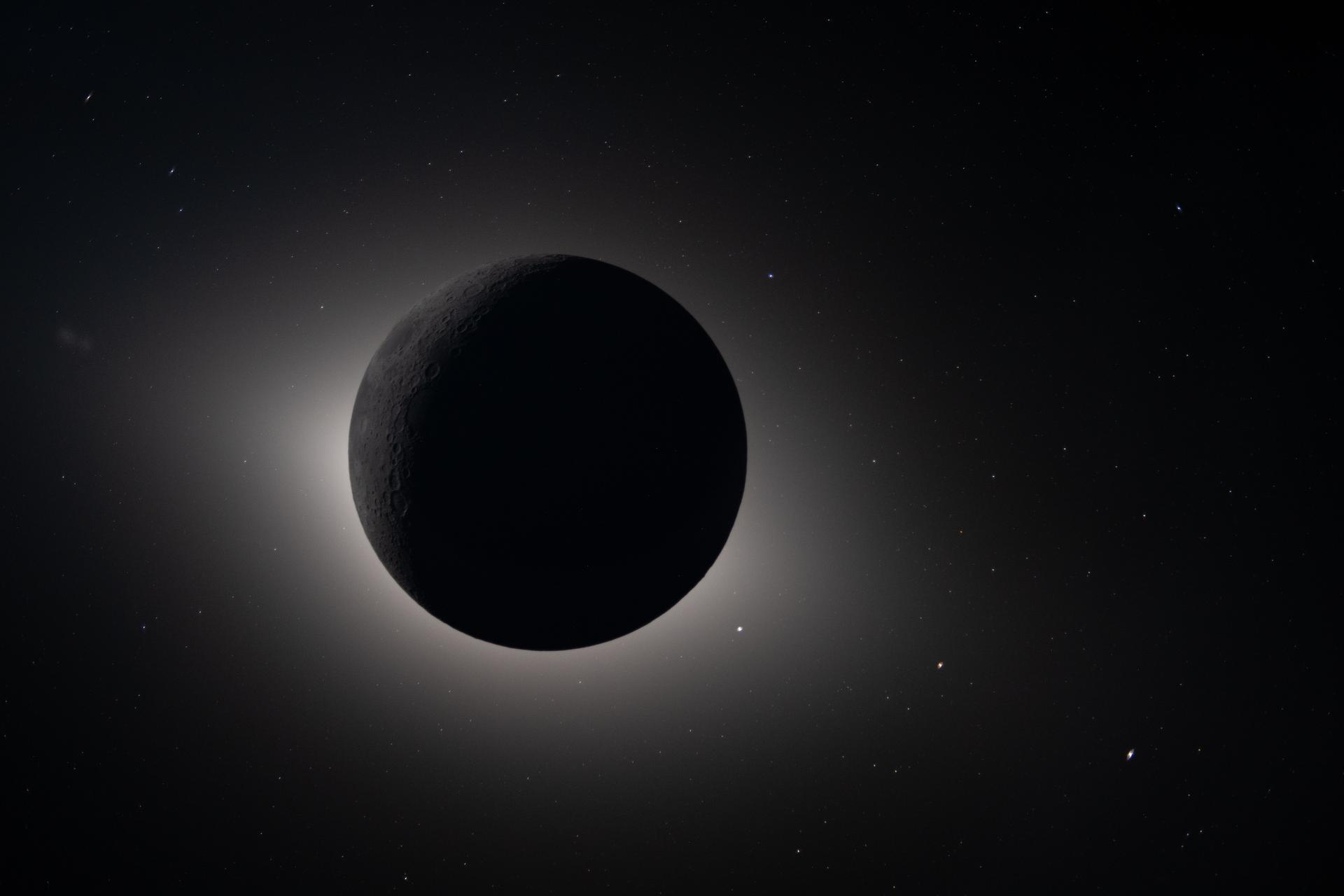
The solar-powered mission then went on to witness a solar eclipse, experiencing totality for a full 50 minutes.
NASA
“As we prepare to go out of radio communication, we’re still going to feel your love from Earth,” said astronaut Victor Glover (Artemis 2 pilot) in a recent update. “And to all of you down there on Earth, we love you, from the Moon. We will see you on the other side.”
NASA
NASA
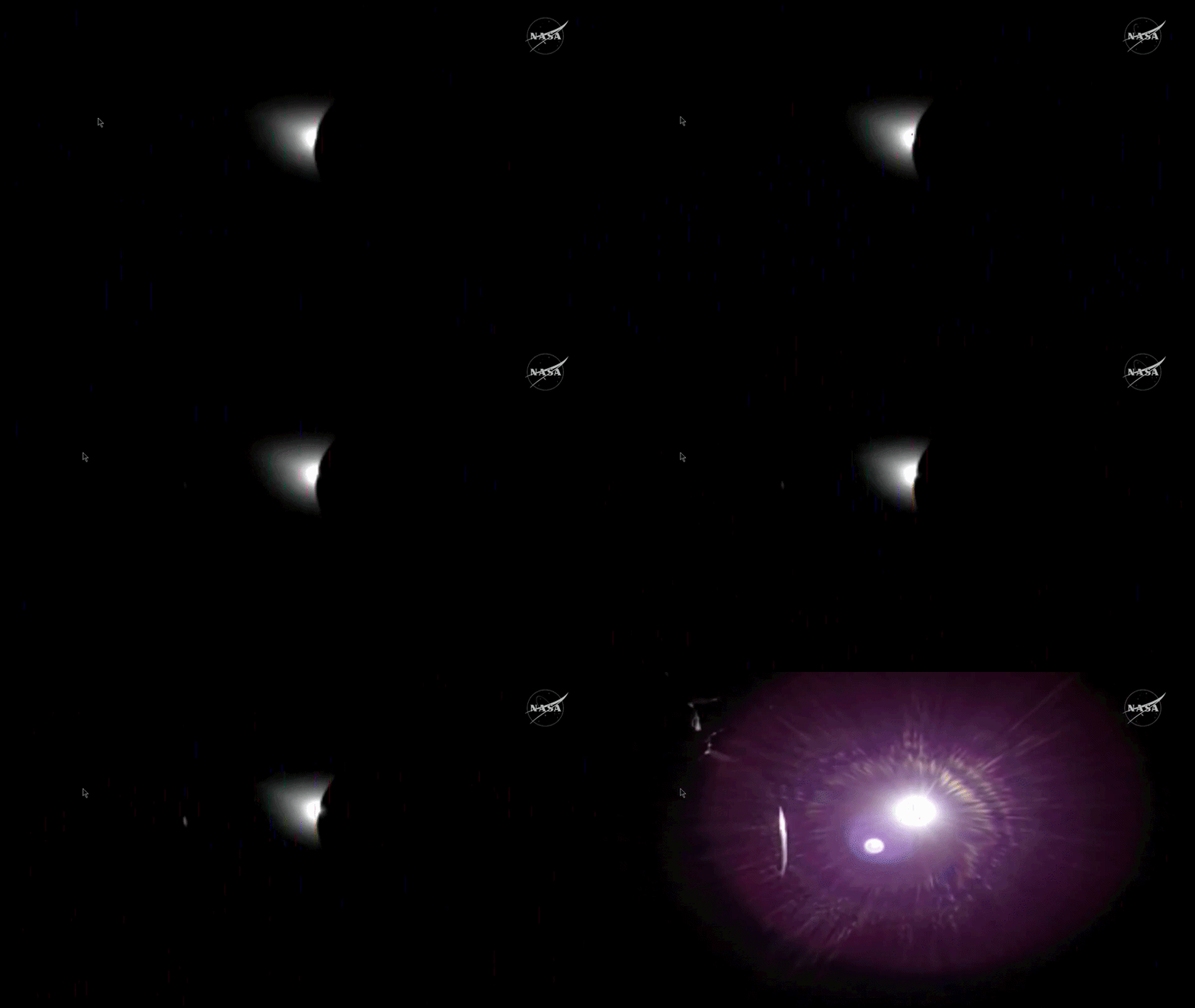
During the eclipse, the crew noted meteoroid flashes on the nighttime side of the Moon and watched as the pearly glow of the elusive solar corona peeked out around the lunar limb. (Firefly Aerospace’s Blue Ghost lander witnessed a similar scene as a solar eclipse crossed its landing site in 2025.)
NASA
The crew also watched for a phenomenon known as lunar horizon glow, documented by the early Surveyor missions and witnessed by the crews of Apollo 15 and 17. The effect is thought to be due to sunlight filtering through small, charged dust particles elevated from the lunar surface by electrostatic fields.
What’s Next For Artemis 2
Now, Integrity and its crew are on their way home. They'll arrive back on Friday, April 10th, splashing down in the Pacific Ocean off the coast from San Diego at 8:07 p.m. EDT (5:07 PDT). The USS John P. Murtha, a Navy ship, is onhand for recovery.
Next up in the Artemis program will be Artemis 3, which will launch in 2027 but stay in low-Earth orbit to test one or both landers from Blue Origin and SpaceX. If all goes according to plan, a landing on the Moon could happen with Artemis 4 as soon as 2028.
It’s great to see NASA back in the business of human exploration in deep space as the crew of Integrity returns to Earth.
About David Dickinson
David Dickinson is a freelance science writer, high school science teacher, retired enlisted U.S. Air Force veteran and avid stargazer. He currently resides with his wife Myscha in Bristol, Tennessee. David also writes science fiction in his spare time. He posts as @AstroDave on BlueSky about space news and sky-watching worldwide.



Comments
Rod
April 8, 2026 at 7:35 am
Thanks for this report and excellent images. Some others I observed during the mission out and around, less than great, very good here S&T 🙂
You must be logged in to post a comment.
[email protected]
April 8, 2026 at 7:01 pm
When or at what distance does having a body block the Sun go from "Eclipse" to "Night"?
You must be logged in to post a comment.
David DickinsonPost Author
April 9, 2026 at 9:52 am
Point taken: the media coverage of the Artemis 2 mission seems to have taken the term 'eclipse' and run with it. The same blurry distinction exists at times between the terms 'transit,' 'eclipse' and 'occultation' in astronomy.
You must be logged in to post a comment.
awmeyer
April 11, 2026 at 11:01 pm
I'll take a stab at this based on usage I've seen. All of the astronomical/visual phenomena listed (eclipse, transit, occultation) involve one body partially or fully blocking the view of of the other by an observer at some distance from either one. "Night" refers to the relative darkness on some of the surface of a non-luminous (opaque) body that is also partly illuminated on the rest of the surface by a "bright" light source, like the sun, a nearby star, etc. The change of "night" to/from "day" happens if the observer on the surface moves from the non-illuminated area to/from the illuminated area. This can be either due to rotation of that body, or the observer moving (walks, drives a rover, etc.) from one area to the other. If there is an atmosphere there, the transition may be gradual (twilight).
Can't resist mentioning a fictional exception: in 1941 a chemistry grad student at Columbia U. wrote a short story about a world where "night" occurs briefly only every 2000 years. Each time it happens the inhabitants see the "stars", they all go insane & burn everything to restore light. The title? "Nightfall"; the author? Isaac Asimov.
You must be logged in to post a comment.
Rod
April 9, 2026 at 10:34 am
Some good stuff here folks 🙂 That image of the Moon blocking out the Sun, well some total solar eclipse there! August 2017, April 2024, I had enjoyable views using my telescope and solar filter of those total solar eclipses. Also, Galilean moons moving across Jupiter and casting their shadows on the surface, an eclipse event there on Jupiter :). Titan shadow on Saturn too in Sept 2025. However, the Artemis 2 crew images from the *dark side* with the Moon blocking out the Sun, fantastic!
You must be logged in to post a comment.
Frankeinstein
April 11, 2026 at 1:55 am
In that picture showing half of the eclipse, is that Saturn, the bright object off to the left with the line through it?
You must be logged in to post a comment.
David DickinsonPost Author
April 11, 2026 at 9:23 am
Am thinking that's the planet Venus, actually... I see the constellation Aries just above it. The line must be an imaging artifact.
You must be logged in to post a comment.
Daniel Crowe
April 12, 2026 at 9:20 am
Perigee should be apogee.
You must be logged in to post a comment.
You must be logged in to post a comment.