 SUNSET:

 1
1The satellites being launched by Amazon are brighter than IAU-recommended limits — which means they’ll interfere with astronomy.
Amazon’s satellites, now known as Amazon Leo (formerly Project Kuiper), are brighter than the limits recommended by the International Astronomical Union (IAU). Marginally visible to the naked-eye, their brightness will impact astronomy.
The average magnitude for these spacecraft is 6.3, based on 1,938 visual and electronic observations collected by the author. For reference, observers can see 6th-magnitude objects from locations where the sky is minimally affected by light pollution, which is what sets the aesthetic limit. The IAU has a separate recommendation for satellites to avoid impacting research astronomy: For satellites at the Amazon Leo altitude of 630 km (390 miles), that limit is 7.2.
Put another way, in 92% of observations, the satellites exceeded the brightness level for astronomical research, while in 25% of obervations, the brightness was even enough to distract from an aesthetic appreciation of the night sky.
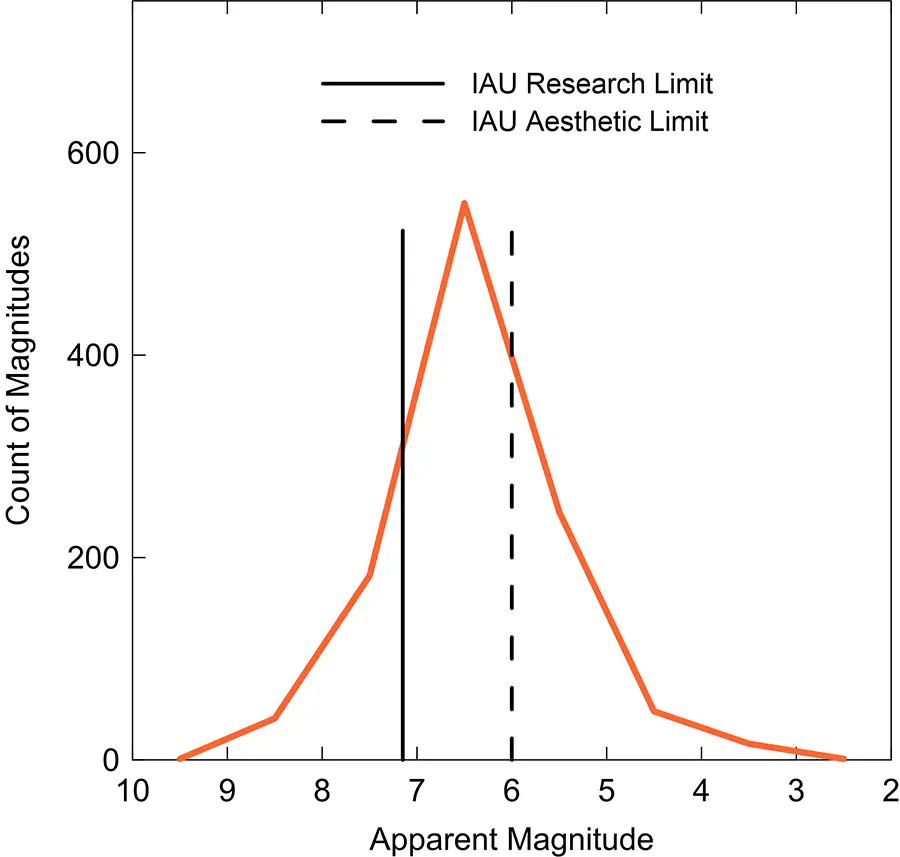
A. Mallama et al. / arXiv 2601.07708
In 2023, Amazon Leo, a subsidiary of Amazon, launched two prototype spacecraft, Kuiper-P1 and Kuiper-P2, to demonstrate the satellites’ communications and power system. The design of P2 included brightness mitigation, while that of P1 did not. This practice enabled them to improve the design of the operational satellites based on lessons learned from the prototypes. Even so, they are still too bright.
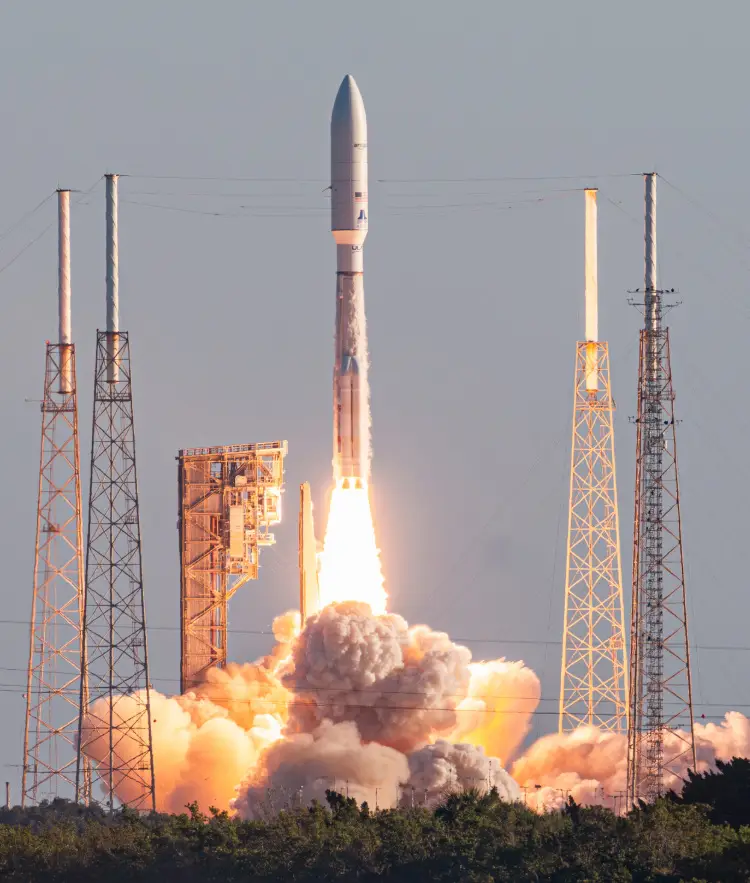
U.S. Space Force photo by Gwendolyn Kurzen
The company plans to launch a constellation of 3,232 satellites to deliver internet service. But so far, they have only placed 333 in orbit. Technically, the slow launches should put Amazon in hot water. The license from the U.S. Federal Communications Commission (FCC) required Amazon to launch half of its constellation by July 30th, and they won’t be able to meet that deadline.
The satellite operator had planned to employ the United Launch Alliance Vulcan rocket, but that is presently grounded because of booster issues. Additional satellites were to be orbited on Blue Origin’s New Glenn launch vehicle; however, those plans are now likely delayed after a New Glenn rocket exploded on the launch pad last month. One provider that the company can still turn to is Arianespace whose Ariane 6 rocket can launch up to 36 Amazon Leo spacecraft at a time.
Meanwhile, the FCC has granted a waiver to Amazon for its launch schedule but placed restrictions on its radio spectrum, according to Via Satellite.
The Amazon Leo network will be a rival to the Starlink system, which is being operated by SpaceX. The Starlink network is far ahead of Amazon’s, though, with more than 10,000 operational Starlink satellites already on orbit and 10 million subscribers. (There are more than 15,000 active satellites in total as of this writing.)
Amazon is only one of the players joining Starlink in the sky. China also has expansive plans for communication-satellite deployments, including their Qianfan and Guowang constellations which are already being populated. The total number of Chinese spacecraft is expected to be in the tens of thousands.
The combined number of communication spacecraft launched by all countries, as well as satellites for military and various commercial applications, may push the total number of low-Earth orbit satellites past 100,000.
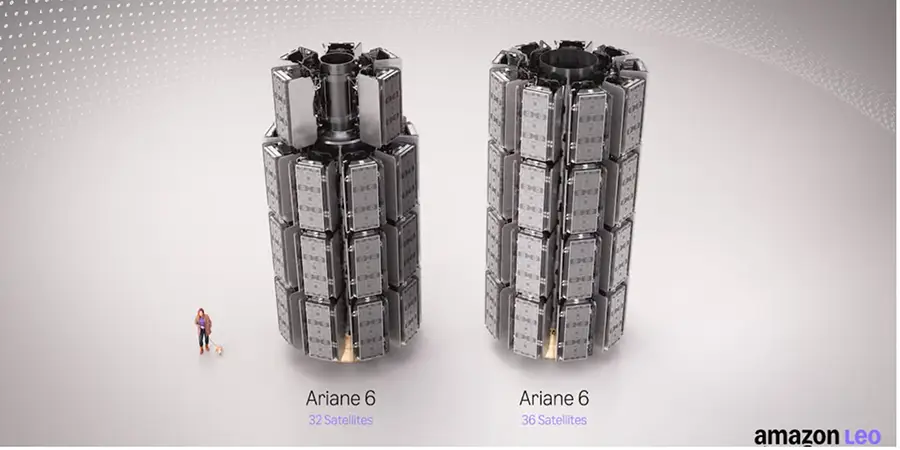
Amazon Leo
The International Astronomical Union sponsors the Centre for the Protection of the Dark and Quiet Sky, which is studying the brightness of all satellite constellations. The Centre also works in other areas such as policy making and public outreach. This brightness study, which is part of the Centre’s larger research effort, is described in our recent paper.






Comments
[email protected]
July 9, 2026 at 5:40 am
The scientific community has to unite in opposition to the destruction of the night sky.
You must be logged in to post a comment.
You must be logged in to post a comment.