 SUNSET:

 0
0Sky & Telescope’s 2025 “Galileo’s Italy” tour offered much more than sightseeing, as participants enjoyed multiple opportunities to stand on astronomical hallowed ground.
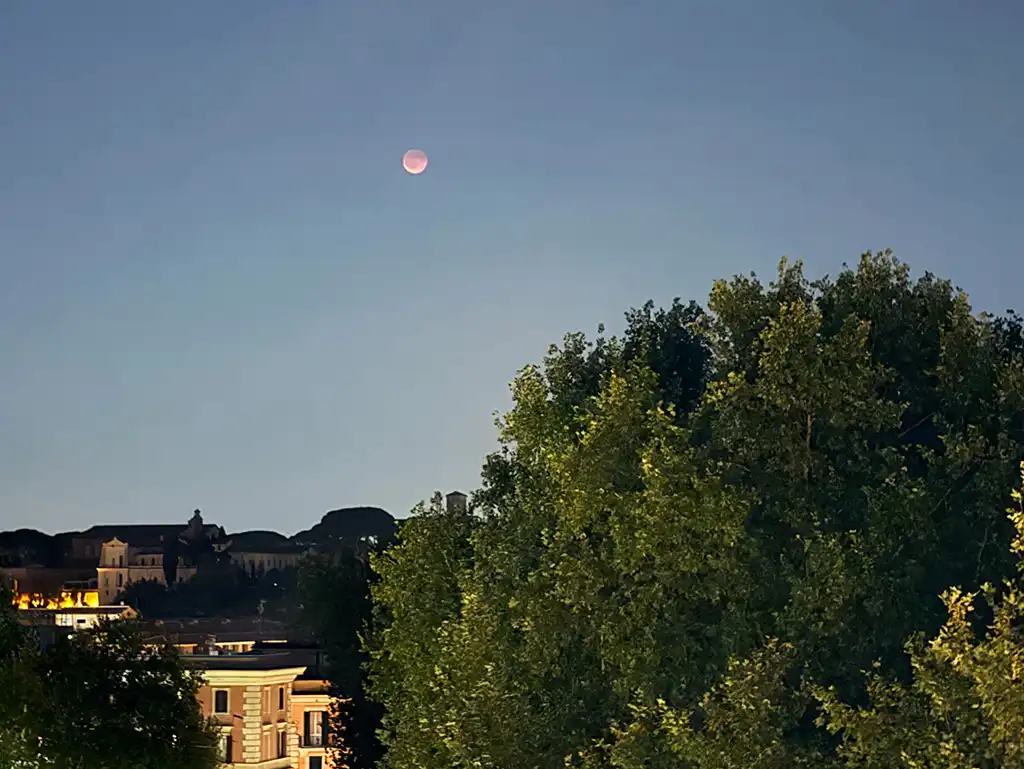
On September 7th, 25 intrepid astronomy enthusiasts gathered in Rome for Sky & Telescope’s “Galileo’s Italy” tour. Organized in partnership with Royal Adventures, we set out to visit where the father of modern science once lived and worked. The date was auspicious, as the full Moon would rise totally eclipsed as seen from the Eternal City — and our hotel featured a rooftop restaurant with a panoramic view to the east.
After a welcome reception and cocktail, we adjourned to the restaurant to have dinner and observe the eclipse. The Sun set and the Moon rose as we were waiting for our orders to be taken, but even those of us who brought binoculars couldn’t find the Moon because of interference from low clouds and haze. Naturally, the Moon climbed above the murk soon after our dinners were served, but that didn’t stop us from getting up from our tables and gathering at the railing to enjoy the spectacle. The eclipsed Moon looked like a dirty copper penny at first, then took on a dramatic 3-D appearance as the advancing limb poked out from Earth’s umbral shadow into bright sunlight. What a way to start our astronomical adventure!
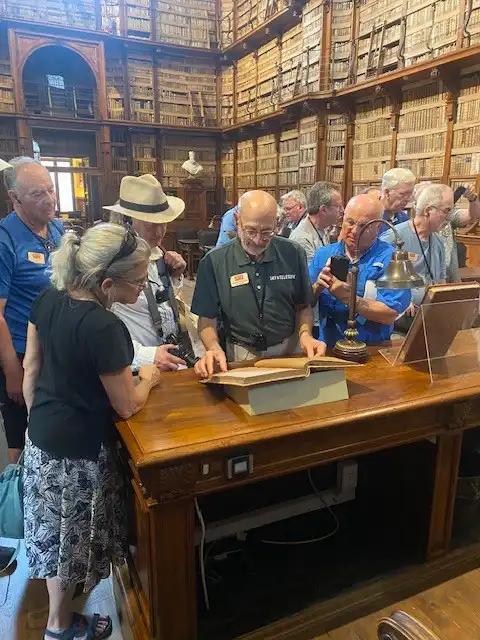
Our first full day in Rome included a walking tour of some of the city’s landmarks, such as the Pantheon, Spanish Steps, Trevi Fountain, and church of Santa Maria degli Angeli. The latter has a meridian line embedded in the floor; a “pinhole” in the roof projects an image of the Sun onto it at local noon, keeping track of time and the seasons. The highlight of the day — and, for me, the trip — was a visit to the Angelica Library, where we got to page through first editions of Galileo’s Sidereus Nuncius (Starry Messenger), in which he reported his first telescopic discoveries in 1610, and Kepler’s Astronomia Nova (New Astronomy), in which Galileo’s German contemporary presented his first two laws of planetary motion in 1609.
Scilla del Mastro
Day two featured visits to the Copernican Museum, which houses a spectacular collection of Renaissance scientific instruments, and the Vatican Observatory at Castel Gandolfo, overlooking scenic Lake Albano, which fills a small volcanic caldera. There we saw several historic telescopes, including one used for the late-19th-century Carte du Ciel, the first photographic sky survey. We also saw the spectroscope that Fr. Angelo Secchi, S.J., often called the father of astrophysics, used in his pioneering effort to classify stars via their spectra (S&T: February 2025, page 26).
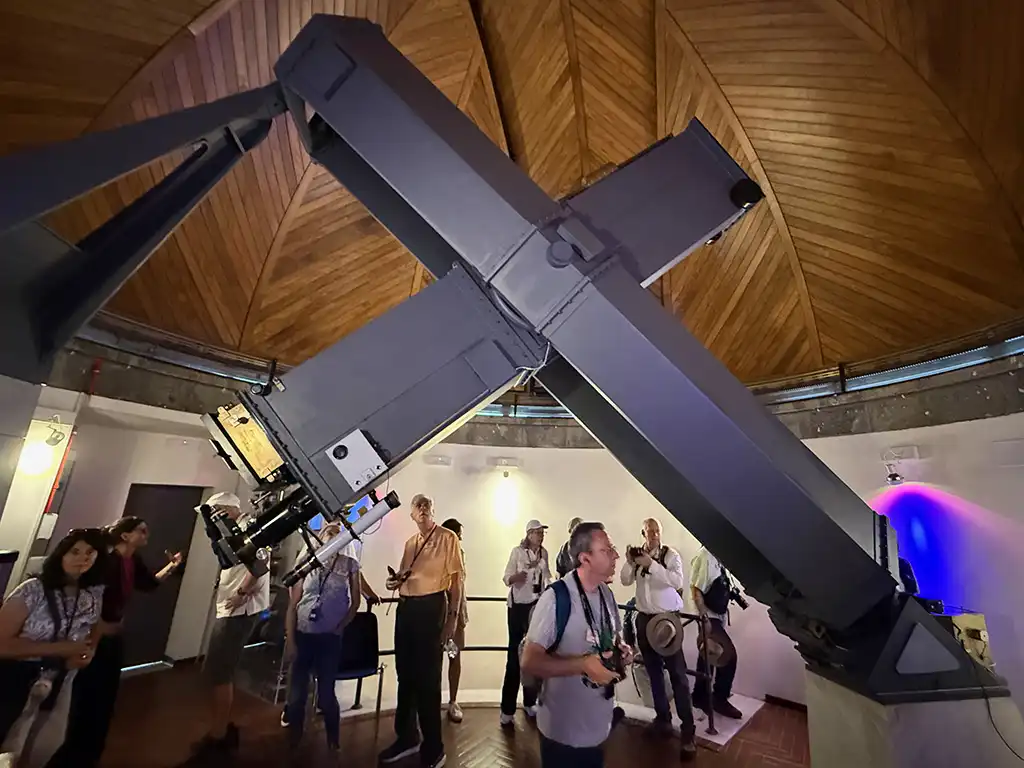
There were an awful lot of security guards in Castel Gandolfo that day, and they seemed particularly antsy. It turns out that Pope Leo XIV had made an unscheduled visit to his summer getaway; we’re lucky we weren’t turned away at the gate.
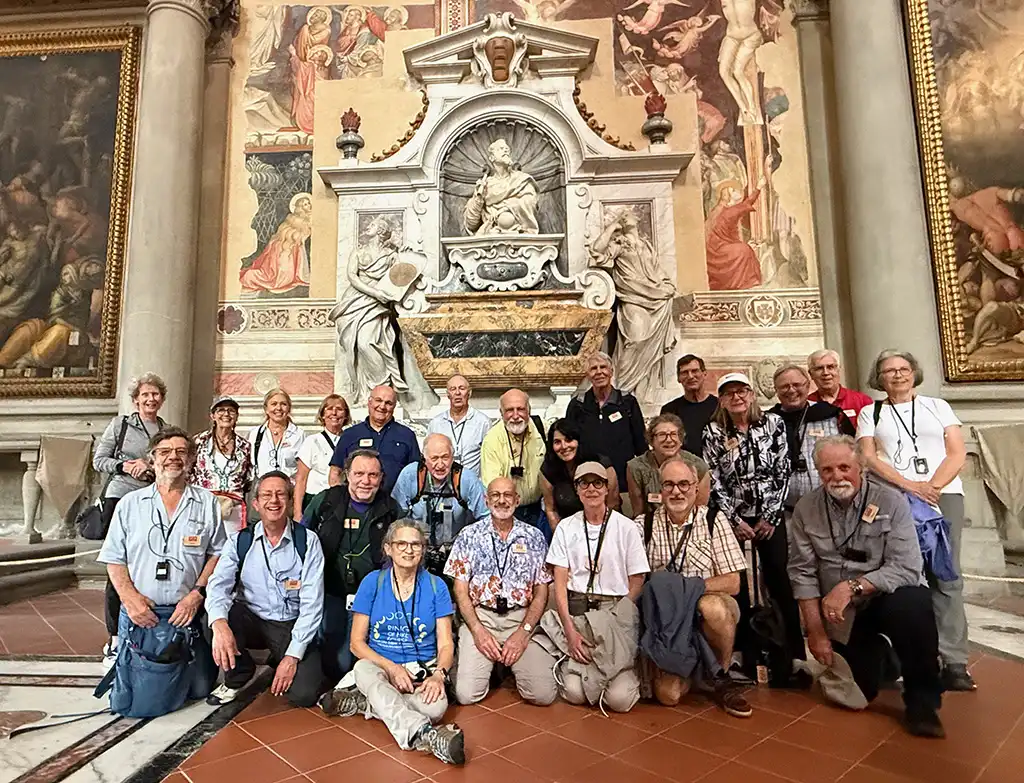
The next day we took a high-speed train to Florence, one of the most beautiful cities in all of Europe. Galileo spent most of his life here and in nearby Pisa, where he was born. We walked around the heart of the city to feast our eyes on the magnificent Cathedral of Santa Maria del Fiore, with its impossibly large dome (“il Duomo”) and adjacent campanile and baptistery. We passed by other Florentine landmarks, too, including the Church of Santa Maria Novella (from whose pulpit in 1614 Galileo was denounced for his Copernican views), the Palazzo Vecchio with its distinctive clock tower, and the Ponte Vecchio, one of the most photographed old bridges in the world. But our group of Galileo-chasers was moved most by a visit to the Basilica of Santa Croce, where Galileo’s remains rest in an elaborate tomb opposite a similar monument to the artist Michelangelo.
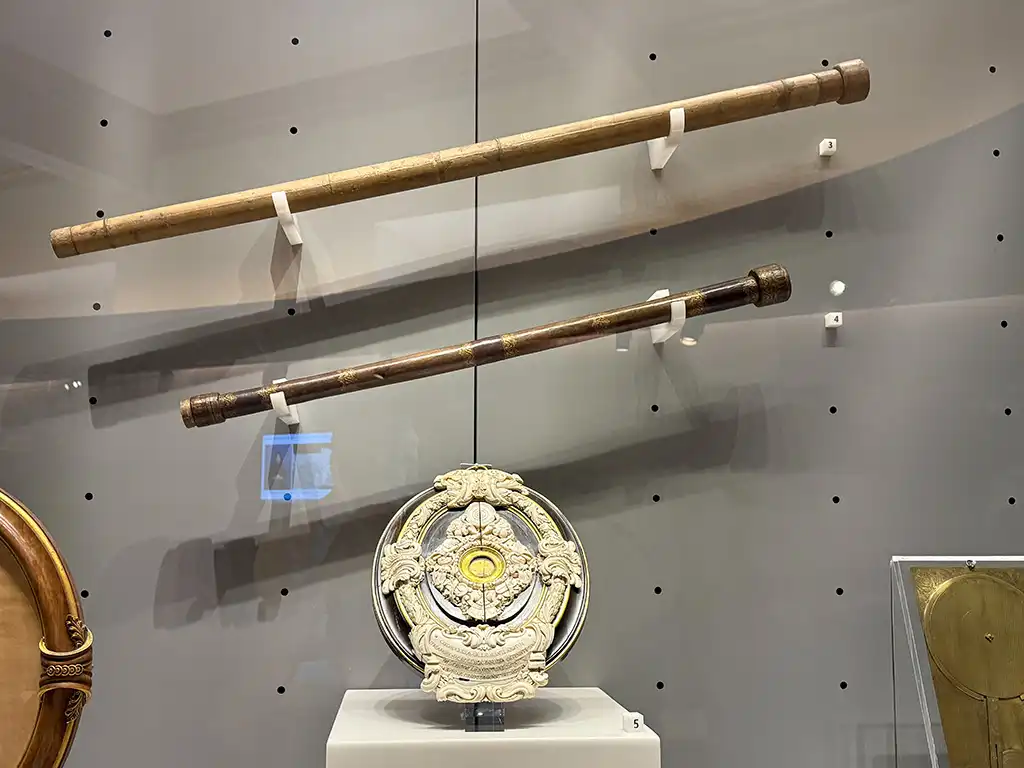
On our second day in Florence, we visited the Galileo Museum and saw two of the famed astronomer’s handmade telescopes, a copy of his book Dialogue Concerning the Two Chief World Systems (which provoked his trial before the Roman Inquisition for its poorly concealed advocacy of a Sun-centered cosmos), and — not for the faint of stomach — his mummified finger. Thanks to Sky & Telescope’s worldwide reputation, we were also able to visit the hagiographic Tribuna di Galileo, opened in 1841 and normally closed to the public. It features statuary and frescoes honoring the Tuscan scientist’s life and work.
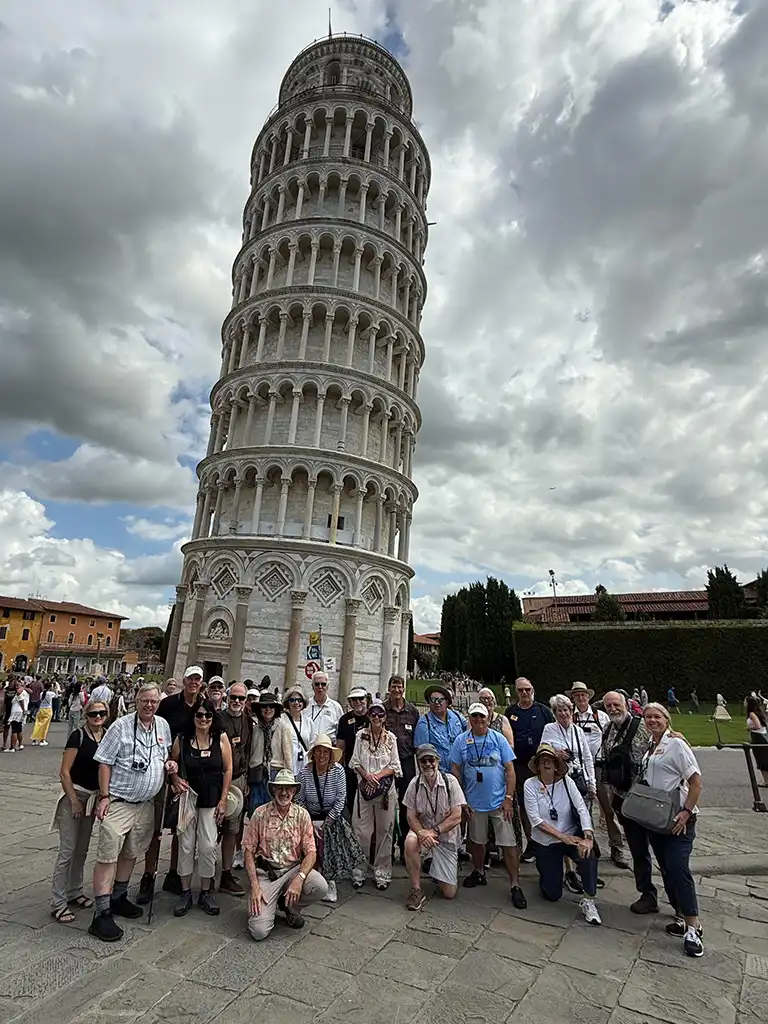
We spent the next morning in Pisa, mostly in and around the Campo dei Miracoli (Field of Miracles). Among its Galileo-related landmarks are the cathedral where Galileo presumably first started thinking about pendulums while watching a lamp swing from the ceiling; the baptistery where he was baptized, and, of course, the Leaning Tower, where he reputedly dropped cannonballs of different masses and sizes to demonstrate that they all fall at the same rate, contrary to what Aristotle taught more than a millennium earlier.
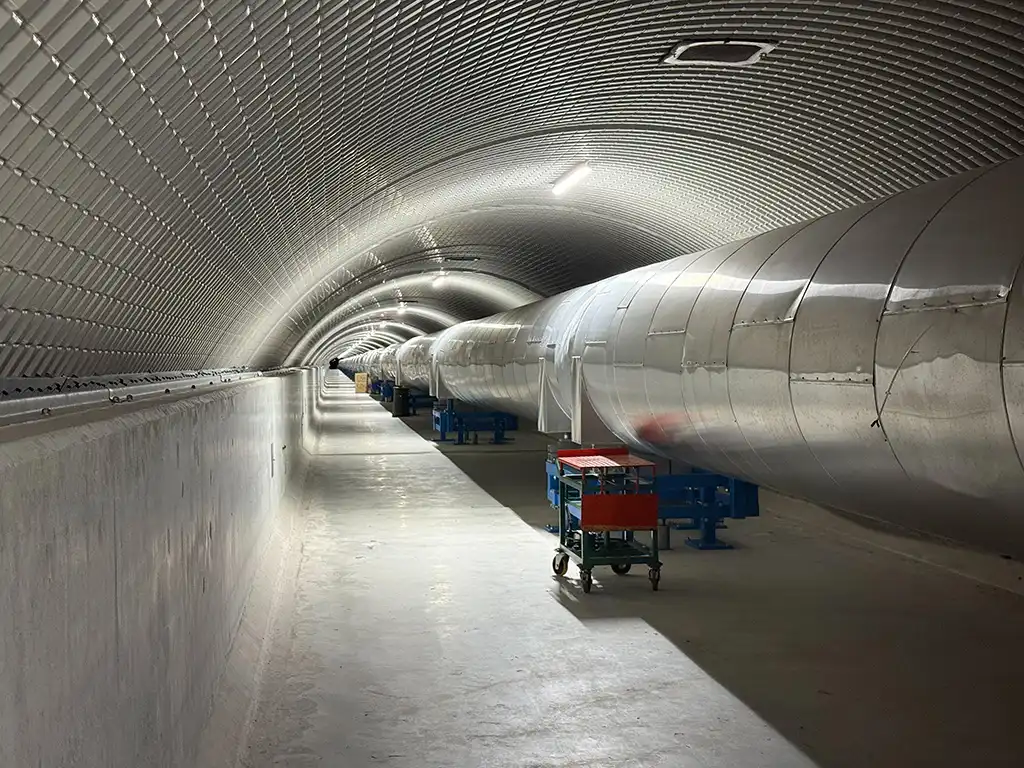
That afternoon we took a half-hour bus ride outside the city to see the European Gravitational Observatory, home of the Virgo gravitational-wave detector. Similar to, and in collaboration with, the two stations of the U.S. Laser Interferometer Gravitational-Wave Observatory (LIGO), Virgo detects ripples in space-time caused by mergers of black holes and neutron stars in distant galaxies. We visited the control room and one of the two 3-kilometer-long tunnels through which laser beams bounce back and forth in tubes with the highest vacuums ever created on Earth.
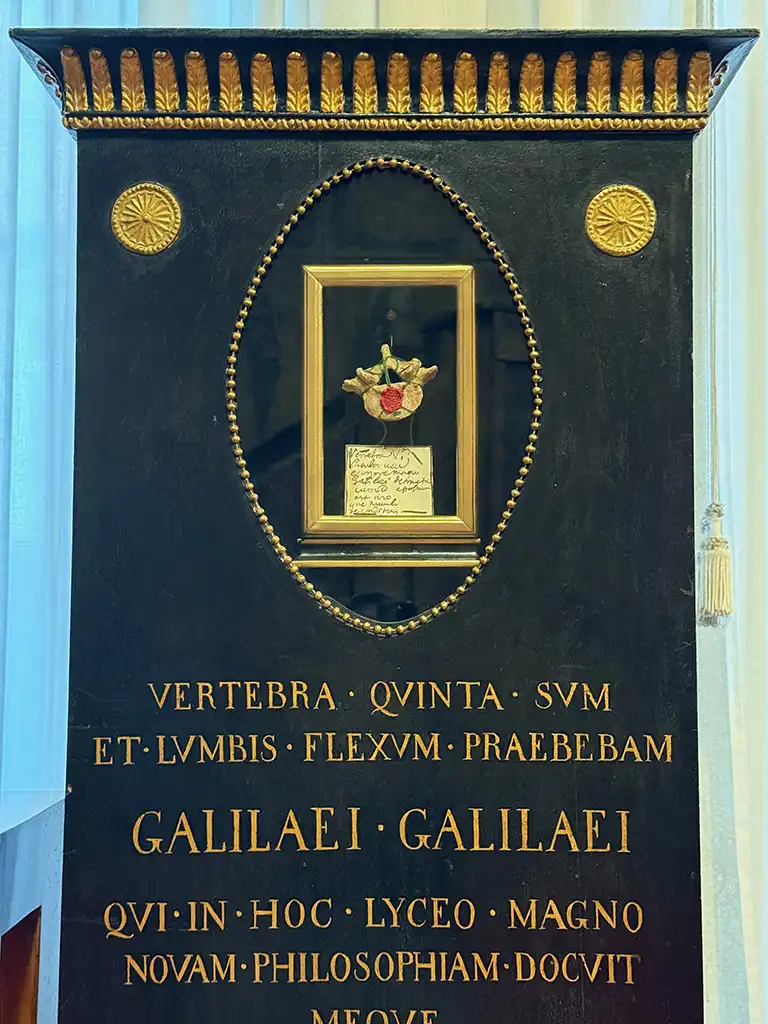
Our tour wrapped up with a two-day visit to Padua, where Galileo lectured at the university’s Palazzo Bo from 1592 to 1610. There we sat in the room where he taught, viewed the lectern built for him by his students, got slightly freaked out in the world’s first anatomical theater — where Galileo, who began his college education by studying medicine — witnessed human dissections, and saw another of his preserved body parts (his fifth lumbar vertebra).
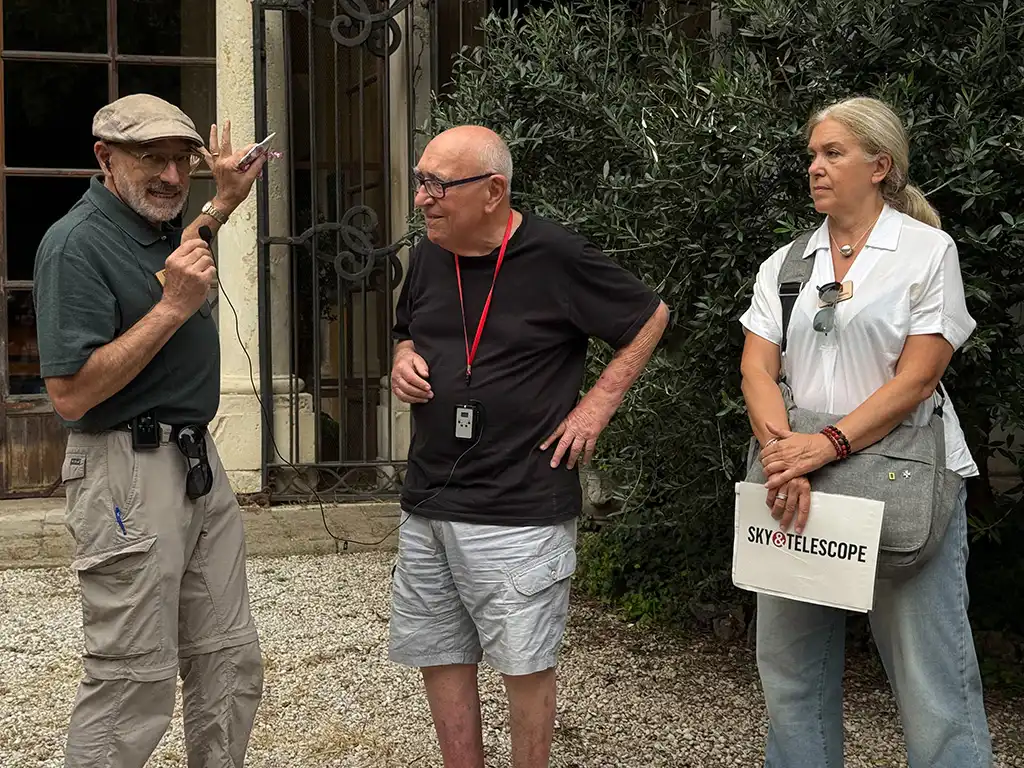
In another coup traceable to S&T’s global reach, we were privileged to visit the private home that now sits on the site of Galileo’s former residence in Padua. The garden where the pioneering stargazer spied lunar craters and mountains, discovered four moons orbiting Jupiter, and resolved the Milky Way into countless stars is still there, though today it is surrounded by trees. As a thank-you to the current owner, who graciously received us and showed us around his property, we gave him a small lunar meteorite as a keepsake.
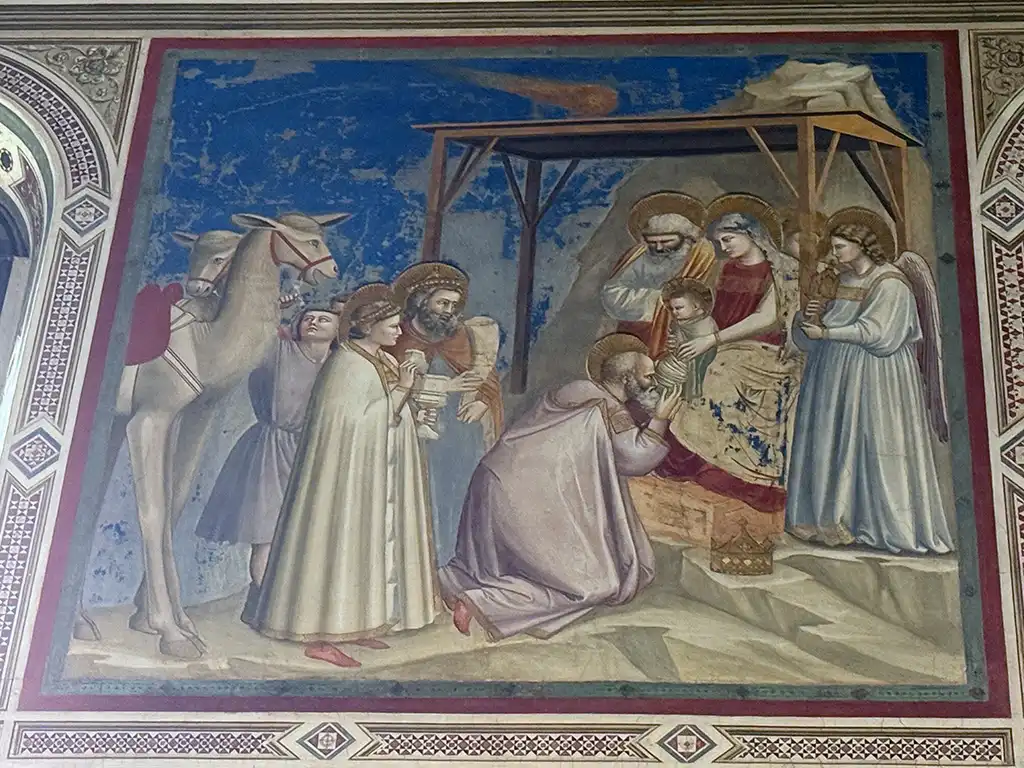
Before departing Padua for our departure airport in Venice, we visited the Scrovegni Chapel, whose walls are covered in early 14th-century frescoes by Giotto, who broke with medieval tradition and painted realistic human faces rather than idealized ones. In another emotional rush for yours truly, one of those frescoes turned out to be the famous scene of infant Jesus in the manger with the Star of Bethlehem rendered as a comet — thought to be the first artistic rendering of Halley’s Comet, which Giotto may have seen in the fall of 1301.
After spending eight days in the company of two-dozen other enthusiastic and inquisitive world travelers who appreciate art, science, history, and good food and wine, it was hard to leave Italy. At our farewell dinner we made it a little easier by recognizing that we’d all shared a unique adventure, learned a lot about Renaissance art and science, and made some new friends.
If that sounds like something you’d like to do too, check out the extensive lineup of future Sky & Telescope tours!
About Richard Tresch Fienberg
Rick Fienberg served as Sky & Telescope’s Editor in Chief from 2001 to 2008 and continues to support the magazine as Senior Contributing Editor and as Senior Advisor to the CEO of the American Astronomical Society, S&T’s publisher.



Comments
You must be logged in to post a comment.